
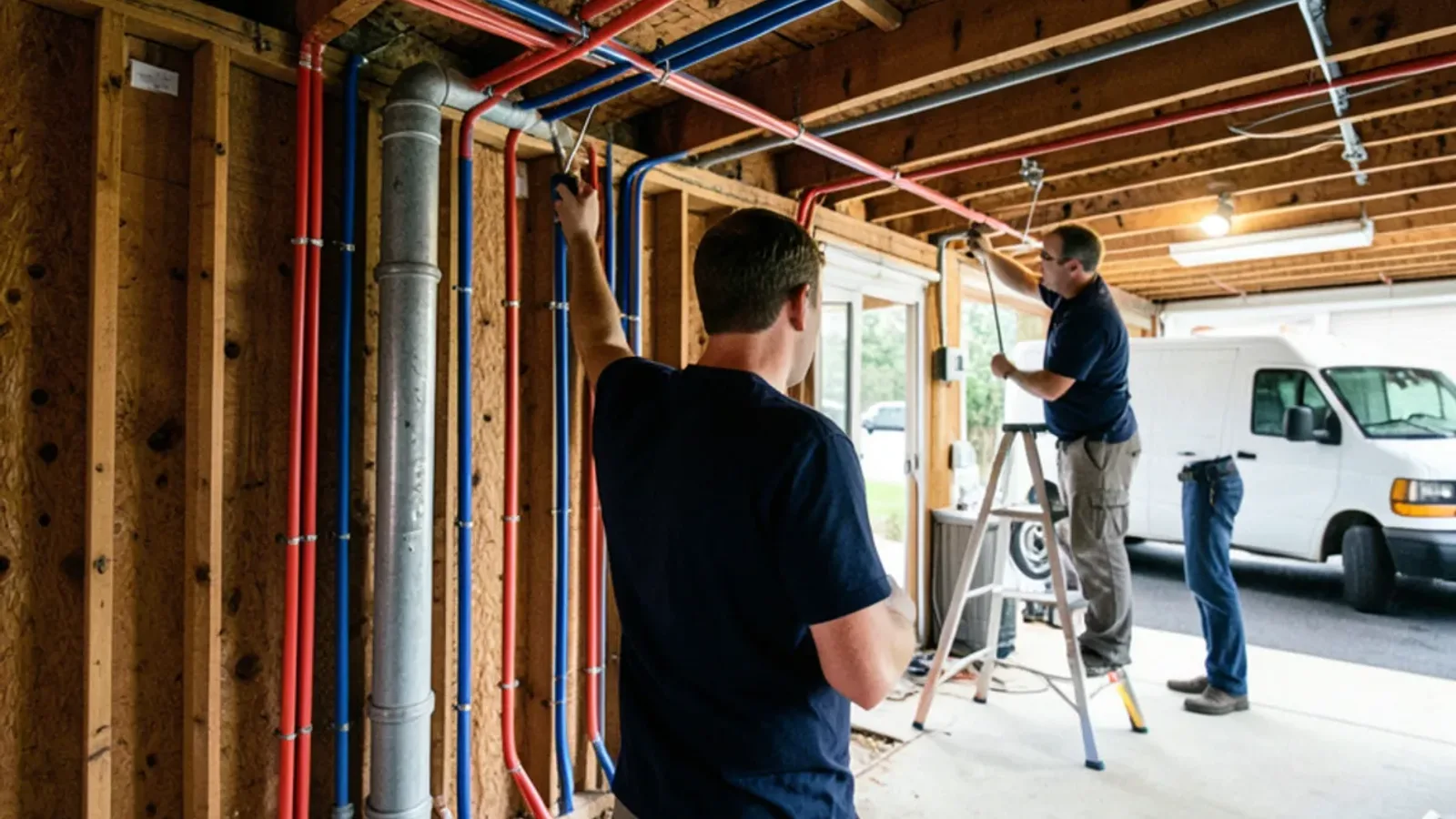
Whole house repiping in Warren means replacing every water supply line in your home. The people who call us about it are usually living with one of two systems. Either it's original galvanized steel in a house from the 1940s or 1950s, or it's 1960s copper that has started to pinhole.
That covers the main line from the meter, the branches across the basement ceiling, and the risers that climb to each sink, tub, toilet and appliance valve. Drains stay as they are.
This page covers the project itself: the pipe choice, the layout, the permit and the work inside your walls. If you're still working out whether your house has galvanized pipe and how far gone it is, start with our galvanized pipe replacement page, which deals with that material on its own.
When repiping the whole house beats another repair
More than half of Warren's homes went up between 1950 and 1969, and the citywide median year built is 1965. In southeast Warren, south of I-696 and east of Van Dyke, almost half the houses predate 1960. Supply pipe in those homes is often 60 to 80 years old. One leak there is a repair. A pattern of leaks is a signal.
| What you are dealing with | A spot repair usually holds | A repipe is worth pricing |
|---|---|---|
| One leak at a single fitting, rest of the copper clean | Yes | No |
| Pinhole leaks turning up in different rooms | Rarely for long | Yes |
| Brown or orange water at several taps | No | Yes |
| Good flow at the basement tap, weak upstairs | No | Yes |
| Kitchen or bath walls already coming open for a remodel | Sometimes | Often the easiest time to do it |
PEX or copper for a Warren repipe?
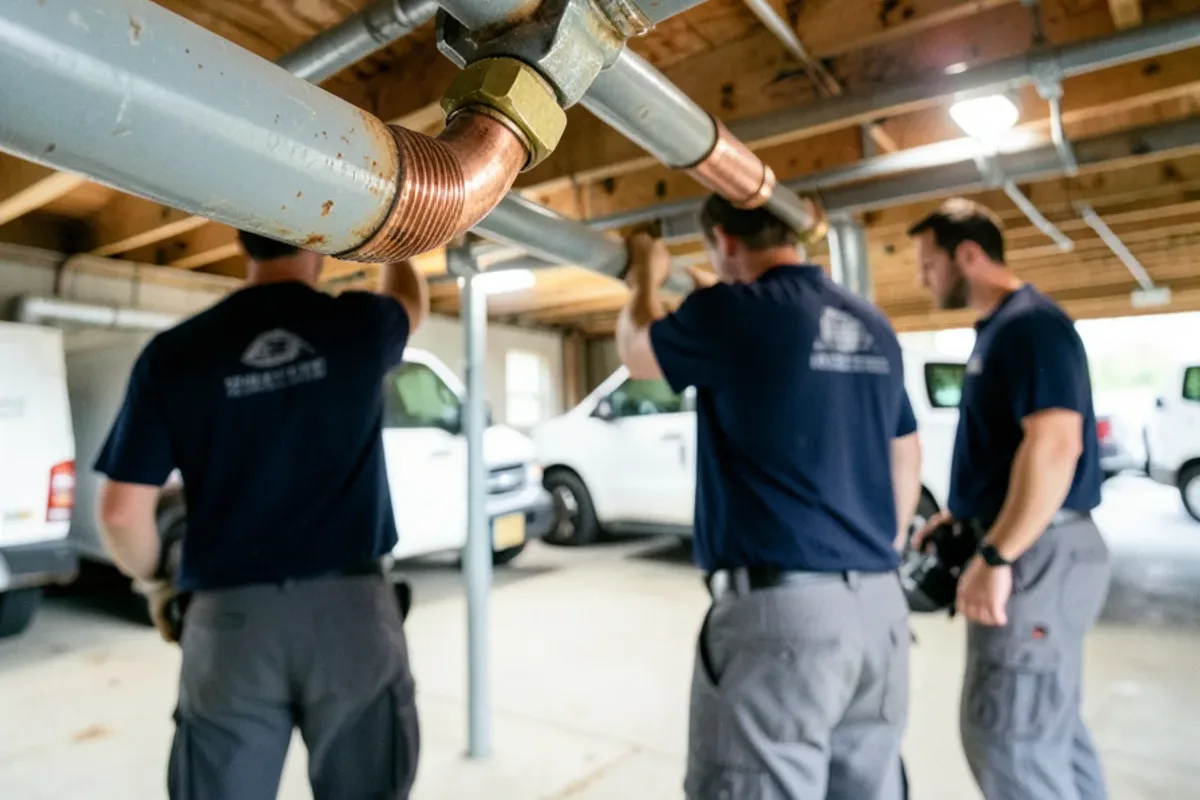
Both are accepted under the Michigan Plumbing Code. The difference is mostly in how they get through your house. PEX is flexible plastic tubing that can be fished through a wall cavity or a floor bay in one long run, so it needs fewer fittings and fewer holes in plaster. Copper comes in straight lengths with a fitting at every turn, which means more openings but a rigid, easy-to-inspect pipe along an open basement ceiling.
| Point of comparison | PEX | Copper (Type L or M) |
|---|---|---|
| Getting through finished walls | Long flexible pulls, smaller openings | Straight runs, an opening at each change of direction |
| Joints | Crimp or expansion fittings | Soldered or press fittings |
| Freezing in an outside wall | More forgiving, though fittings can still split | Splits when ice forms inside |
| Where it should not go | Sunlight, or right against the water heater | Few limits indoors |
Copper systems put in before the mid-1980s were often joined with lead-based solder, which is one more reason owners of older copper houses choose to replace rather than patch. We'll price both for your layout.
How we plan the new supply layout
What a repipe replaces and what it leaves alone
Everything that carries drinking water past the meter is new when the job is done. The drains, the gas piping and the service line from the curb stop stay as they are unless you add them to the scope. A typical whole-house scope lists:
- A new main from the meter, with a new main shutoff valve.
- The basement trunk and every branch, on fresh hangers or through drilled joists.
- Risers to each sink, tub, shower, toilet and washer box, each with its own stop valve.
- New hot and cold connections at the water heater.
- Outdoor faucets and any lines through a garage or crawl space.
Trunk and branch, or a manifold
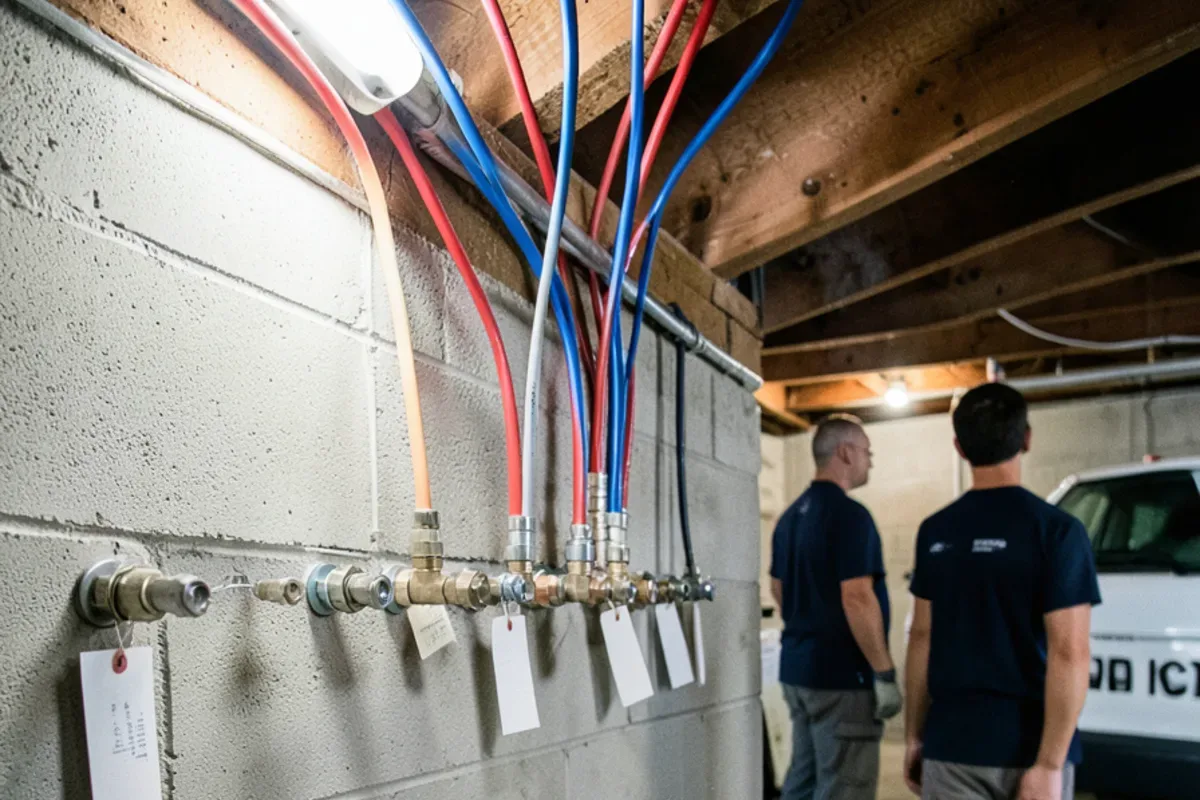
A trunk-and-branch layout runs one main line across the basement with tees feeding each room, the way most Warren houses were first piped. A manifold layout runs a separate line from a central valve panel to each fixture. It uses more tubing, but it hides fewer joints in the walls, and you can shut off one toilet or one shower at the manifold without killing water to the whole house.
Sizing from the meter outward
We count the fixtures, measure the longest run and take a static pressure reading before anything is designed. A one-bath ranch and a two-story with a finished basement need different main sizes. We also look hard at the pipe coming in from the street. From the curb stop to the meter, that line is the owner's responsibility in Warren, and a new interior system fed by a narrow, rusted service line won't deliver the flow you're paying for. Our main water line repair page covers that section.
Permits and the open-wall inspection in Warren
Michigan's Skilled Trades Regulation Act requires plumbing to be done by a journey or master plumber holding a state license, after the plumbing contractor has pulled a permit. In Warren that permit comes from the Division of Buildings and Safety Engineering at One City Square, and the application has a line for water distribution piping. The city's rule that matters most for a repipe is simple: the work stays exposed until the Division accepts it. New pipe gets inspected before drywall or plaster goes back, so we book the inspection a day ahead and plan the patching around it. An owner-occupant may pull a homeowner permit instead; a rental needs a contractor. The inspector works from the 2021 Michigan Plumbing Code, and Michigan LARA's online lookup shows whether a plumber's license is current.
How long does a whole house repipe take?
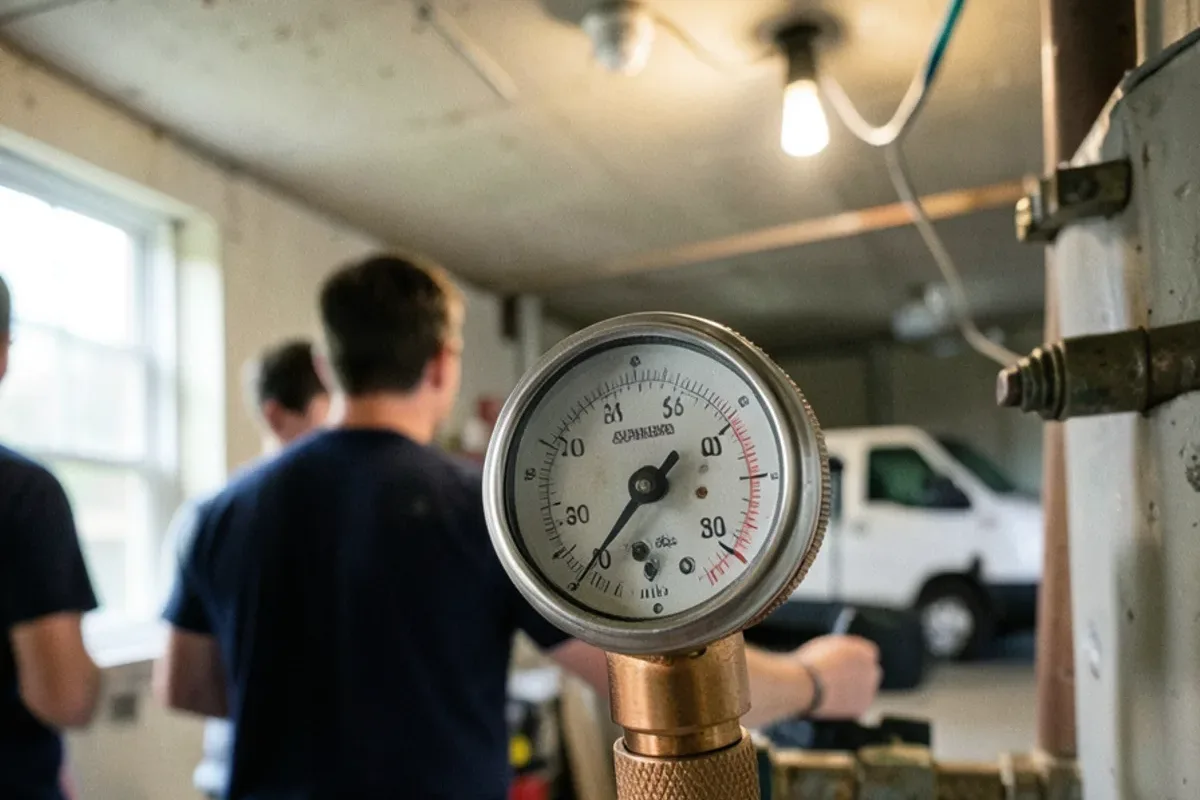
Walk-through and pressure reading
We trace the existing lines, list every fixture, check static pressure and mark where walls will open.
Protect the house
Floor runners go down, nearby furniture gets covered, and you hear in advance when the water will be off.
Run the new main and branches
Basement work comes first. In many houses the new lines go in beside the old ones, so water can stay on overnight until the switchover.
Connect each fixture
Every sink, toilet and appliance gets a new stop valve, and the water heater gets new hot and cold lines.
Pressure test and inspection
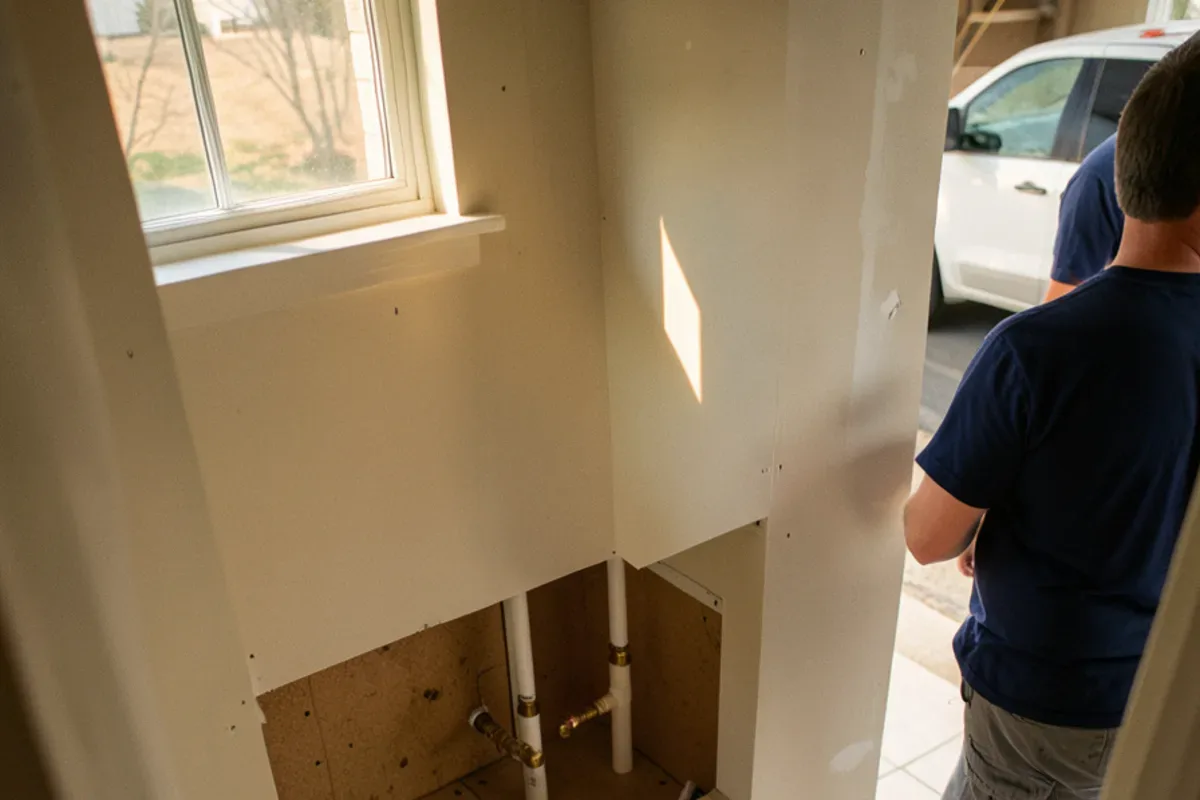
The new system is tested under pressure, then the city inspector sees it with the walls still open.
Close up
Openings stay as small as the route allows. Who patches and paints is agreed before work starts.
A one-bath house with an open basement ceiling often takes a few working days. Plaster, a second floor or a finished basement adds time.
Can you repipe just the kitchen and bath?
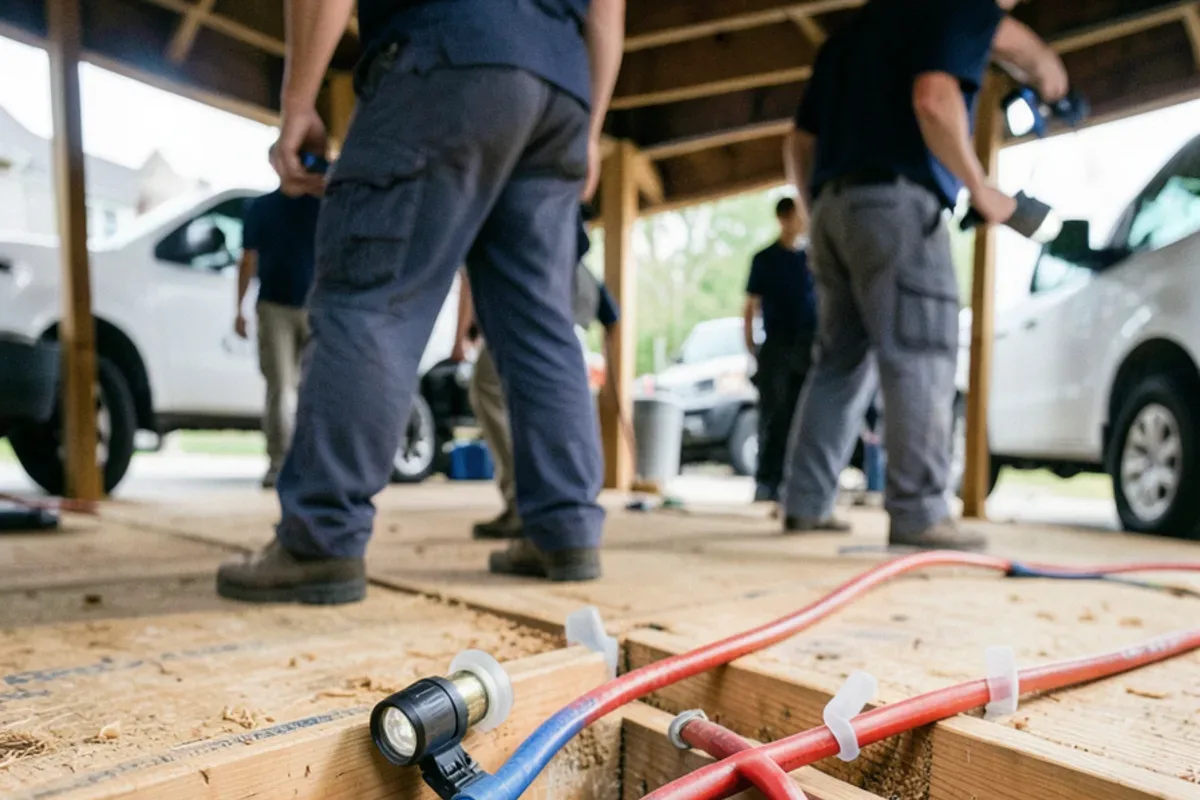
Yes, and it's common when a room is being gutted anyway. We replace the lines feeding that room back to a sound point on the trunk and add a shutoff where new meets old. The trade-off is that the rest of the house stays on the old pipe. If a galvanized trunk in the basement is what's choking the flow, new pipe upstairs won't fix the pressure. Our bathroom plumbing remodeling and kitchen plumbing pages cover the fixture side of a remodel.
What drives the cost of repiping services
We price a repipe from a walk-through of your house. Two homes with the same number of bathrooms can land far apart once plaster walls, a finished basement ceiling or a second floor enter the picture. These are the variables we explain before work starts:
- The number of bathrooms, fixtures and floors the lines have to reach.
- Wall and ceiling finishes. Plaster and a finished basement ceiling take longer to open and patch than drywall or open joists.
- PEX or copper, and a manifold or a trunk-and-branch layout.
- Whether the water service from the curb stop is replaced at the same time.
- New shutoffs, water heater connections and outdoor faucets added to the scope.
- The permit and inspection, and who handles patching and paint.
New pipe asks for little afterward. Clean the faucet aerators a week or two after the job, because bits of old scale knocked loose during the switchover tend to collect there. Keep runs on outside walls insulated and the basement heated, since PEX resists splitting but its fittings can still fail when frozen. Our post on why pipes freeze on exterior walls explains where the cold gets in.
Planning a repipe with a Stephens Rd plumber
We work from 11355 Stephens Rd in southeast Warren, a city where about three in four homes went up between 1950 and 1979, so most supply systems we open have the same age problem. Before a repipe is priced we read static pressure, count fixtures and trace every existing line. The written scope names the pipe, the layout, the cost factors and who patches the walls, and we explain how the permit and open-wall inspection will be scheduled. Owners, landlords and building managers planning a repipe all call one number.
Whole house repiping around Warren and nearby cities
- Plumber in Hazel Park
One home in five predates 1940; Cape Cods and bungalows need new risers fished up to second-floor baths.
- Plumber in Madison Heights
40% of homes went up in the 1950s alone, so whole streets reach the end of original supply pipe together.
- Plumber in Oak Park
Nearly half the homes are 1950s builds, and apartment buildings with shared risers need repipes phased around tenants.
- Plumber in St. Clair Shores
Half of all homes date from the 1950s, with galvanized or early copper supply now around 70 years old.
- Plumber in Harper Woods
Built mostly in one 1950s wave; most city water mains date from the same decades as the house piping.
- Plumber in Clawson
Mostly 1950s and 1960s homes, plus small apartment buildings where one repipe has to keep several units in water.
- Plumber in Roseville
About 70% of homes predate 1970 and a third of households rent, so duplex repipes plan both units at once.
- Plumber in Troy
Mostly 1970s homes with copper supply and finished basements, so repipes are routed around finished ceilings.
- Plumber in Sterling Heights
The city reports zero lead service lines, so a repipe in its 1960s and 1970s homes is about aging copper inside.
Whole house repiping questions from Warren customers
Do you offer bath and kitchen repiping services in Warren?
Yes. A partial repipe of a kitchen or bathroom replaces the supply lines feeding that room back to a sound section of the main, with a new shutoff at the connection. It's a good fit when the room is being remodeled. If the basement trunk is badly corroded, though, we'll tell you that a partial job won't solve low pressure.
How do I know if I need a whole house repipe?
Repeated pinhole leaks in different rooms, rust-colored water from several taps, and weak flow upstairs while the basement tap runs strong are the usual signs. One leak in otherwise clean copper is normally a repair. We check pressure, look at the pipe along its length and tell you which side of that line your house falls on.
Will you have to open every wall in the house?
No. Most of the work happens from the basement ceiling, and openings upstairs are made where a line has to reach a fixture. PEX usually needs fewer and smaller openings than copper because it bends around obstacles. Each opening stays open until the city inspection, then it is patched.
Can we stay in the house during a repipe?
Yes, almost always. New lines are often run beside the old ones, so water stays on for most of the project and goes off for the switchover and certain fixture connections. We schedule those stretches with you in advance so you can plan showers, laundry and meals around them.
Still not sure what you're dealing with? Describe it on the phone and we'll tell you what we'd check first.
(207) 419-2600Last updated October 25, 2026