
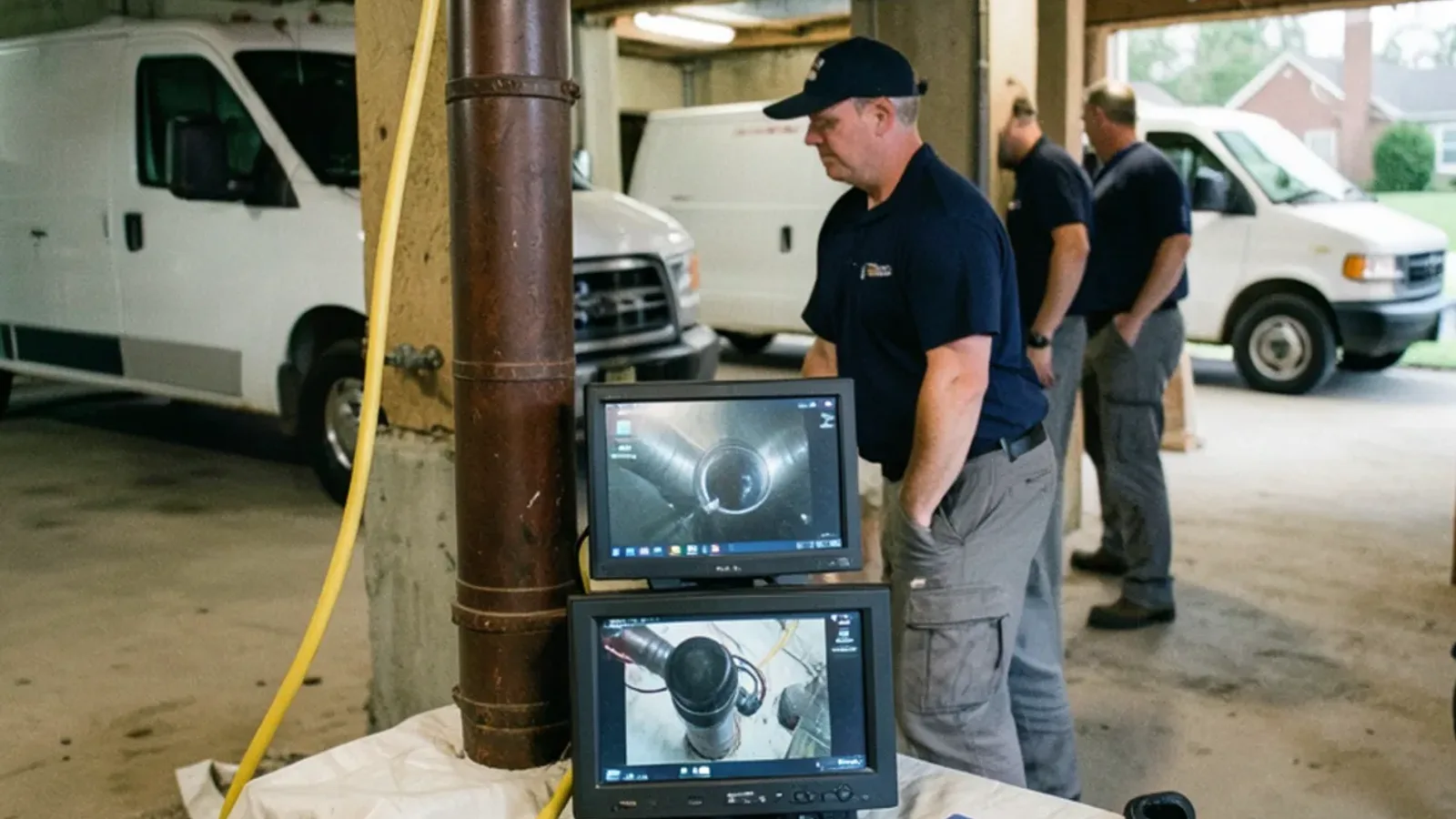
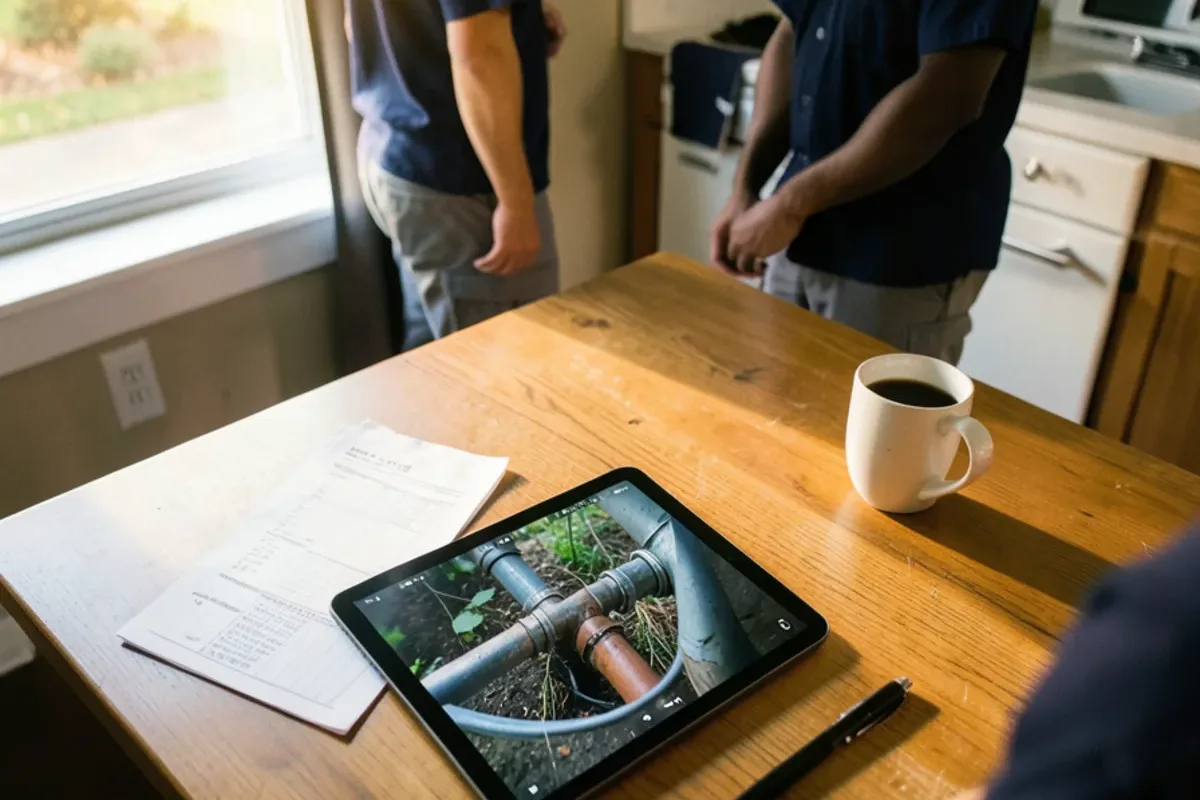
A sewer camera inspection in Warren answers one question before you spend money: what shape is the pipe between this house and the city main actually in? A waterproof camera on a push cable travels down the lateral from a cleanout while we watch and record. You see what we see, joint by joint.
People usually call for one of three reasons. They are buying a house, a line keeps clogging after it is cleaned, or they are about to finish a basement or build over the yard where the sewer runs. None of those needs a repair yet. They need facts.
When a sewer camera inspection makes sense
Before you buy a house
A standard home inspection usually stops at the floor drain. The lateral under the front yard belongs to whoever owns the house, and in Warren that includes the stretch under the sidewalk and out to the main. A cracked or root-filled line can be a large expense that nobody mentions at closing.
When the same clog keeps coming back
If the main has been rodded twice in a year, cleaning is treating a symptom. The camera shows whether there is a sag that holds paper, a joint that lets roots in, or a section that has started to break.
Before a remodel, an addition or a new driveway
Finishing a basement over an old cast iron house drain, or pouring a driveway across the lateral, makes any later repair much harder. Looking first costs far less than cutting out new flooring or concrete.
Should you scope the sewer before buying a Warren house?
For most houses here, yes. The citywide median year built is 1965, and in southeast Warren nearly half the homes predate 1960. Laterals from those decades are commonly clay tile or cast iron, both of which can be in fine shape or close to failing, and there is no way to tell from the basement. Schedule it inside your inspection period so the results can still shape the deal.
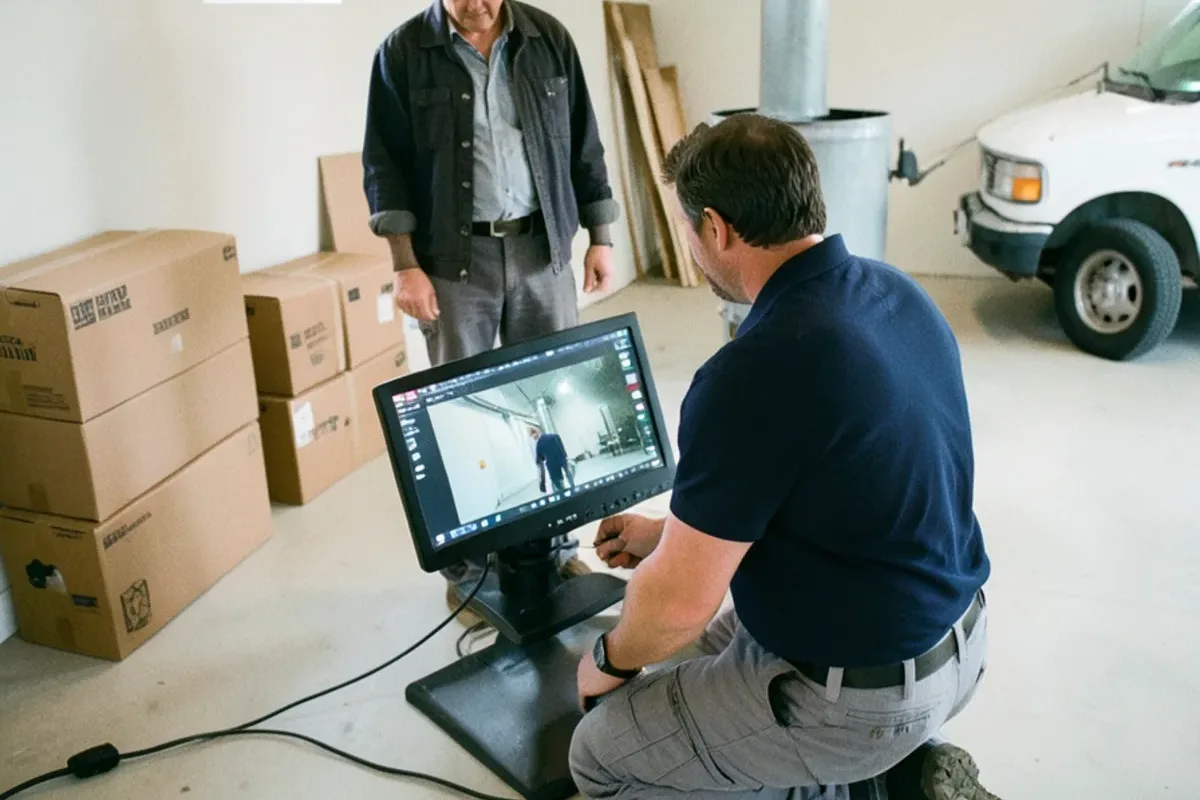
What the camera shows inside a sewer lateral
| On the screen | What it is | How serious it tends to be |
|---|---|---|
| Fine roots hanging at a joint | Root entry through a gap in clay pipe | Manageable with rodding; can grow into a blockage |
| Next pipe section sits lower or to one side | Offset joint from ground movement | Catches waste; often lets roots in |
| Camera dips into standing water | A belly, or sag, in the line | Holds solids; repeat clogs are common |
| Rough, flaking or ridged wall in cast iron | Internal corrosion and scale | Worth watching; the pipe bottom may be thinning |
| Visible crack or missing piece of pipe | Structural break | Usually needs repair before it gets worse |
| Pipe changes from clay to plastic | An earlier partial replacement | Fine, if the transition joint is sound |
How a camera inspection of the lateral works
Open a cleanout
We use the house cleanout where there is one. Without one, a toilet may come off or a roof vent may be used, which takes longer.
Clear the way if needed
A camera cannot see through a full blockage or a line full of sludge. If the line is backed up or heavily coated, it gets cleaned first so the footage is useful.
Push the camera out to the main
The head travels from the cleanout toward the city sewer. A footage counter on the screen records the distance to each joint and defect.
Locate anything worth marking
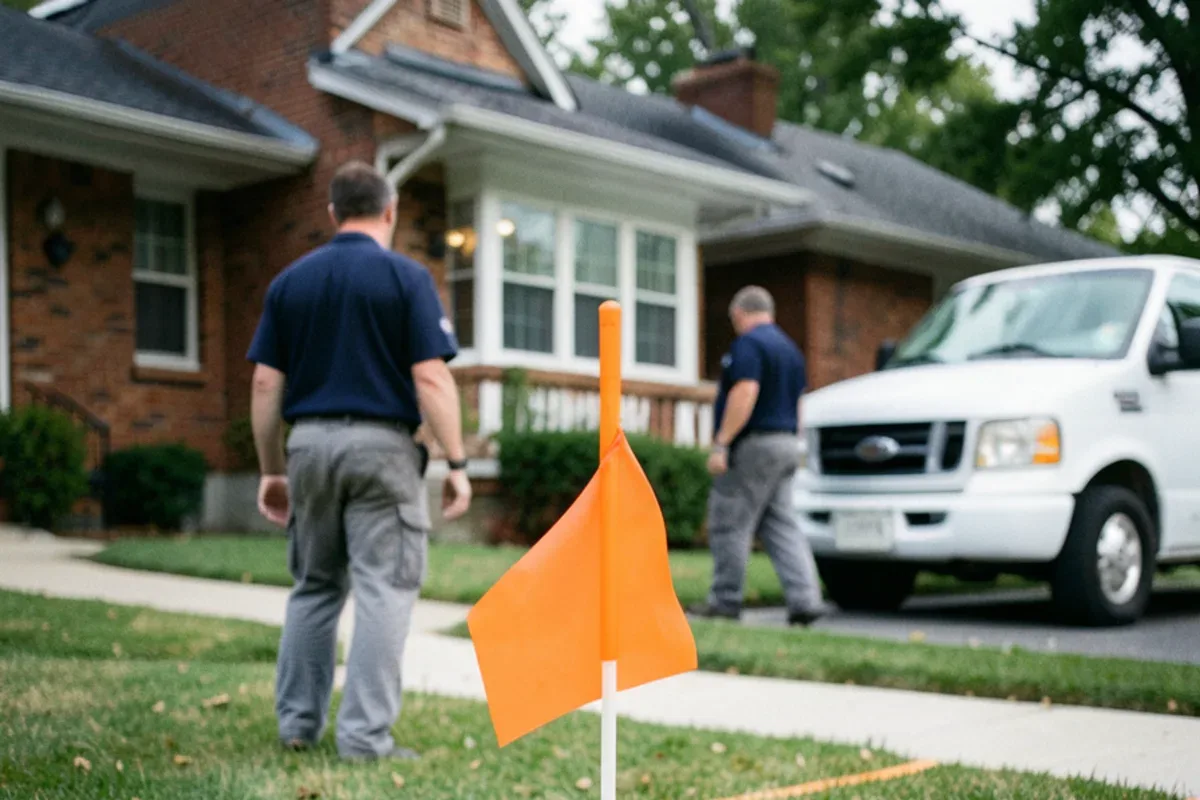
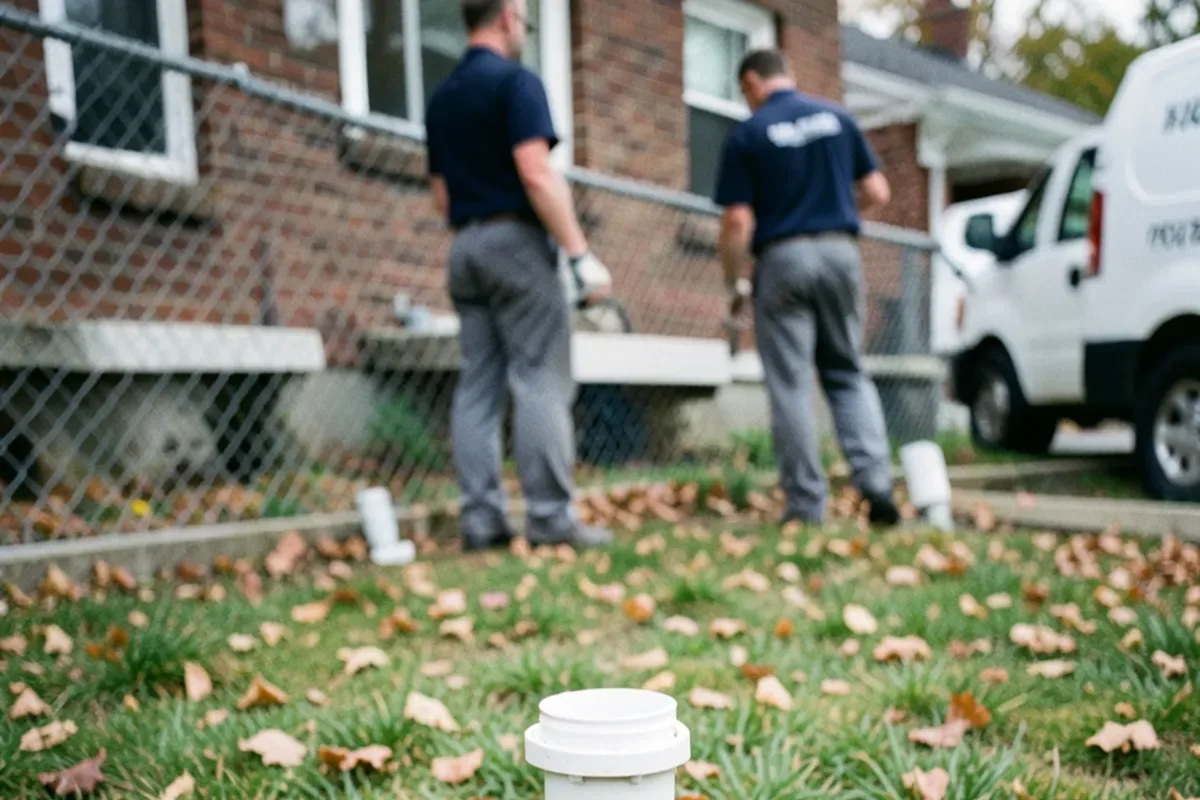
A transmitter in the camera head lets a receiver above ground find its position and depth. Defects get a paint mark or flag in the yard.
Review the video with you
We go back over the recording together and explain each finding in plain terms.
What you receive after the inspection
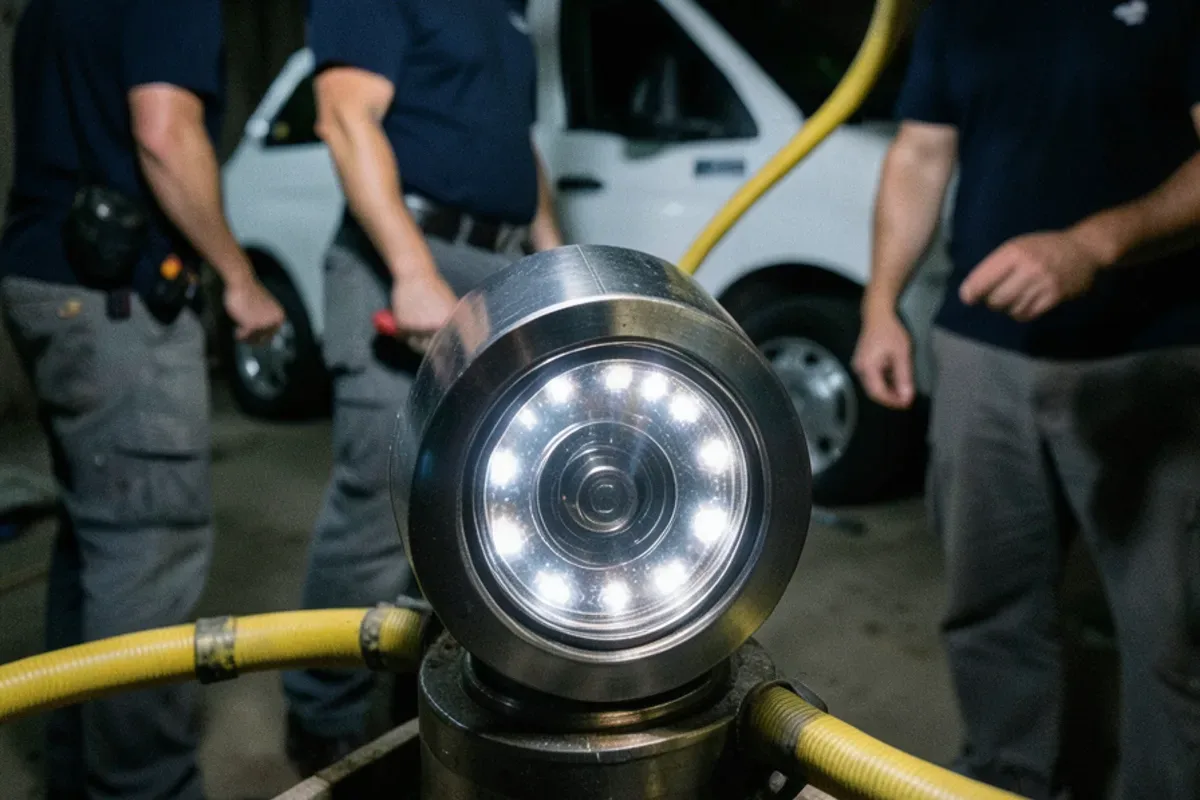
You get the video file of the run, with the footage counter visible, and our notes on each finding: what it is, how far it is from the cleanout, and its approximate depth where we located it. If you are buying, that is what your agent and the seller will want to see. If you are planning a remodel, it shows where the house drain runs and what condition it is in.
- A recorded run from the cleanout to the city main, with the footage counter on screen
- The pipe material on each stretch, including earlier plastic repairs
- The distance to every root intrusion, offset, sag or crack
- Approximate depth and a yard mark over anything worth finding again
- Which findings need attention now and which are worth watching
A few limits are worth knowing. Standing water in a sag hides the bottom of the pipe there. The camera sees the inside surface, so it can show rust and scale in cast iron but cannot measure how thick the wall is. And if a line is fully collapsed, the camera stops at the collapse and the far side stays unseen until it is opened. Our post on cast iron drain pipe problems explains what corrosion looks like as it progresses.
What happens if the camera finds a problem?
Most findings fall into three groups. Roots at a joint or light scale usually mean cleaning, with hydro jetting where buildup is heavy, and a second look later. A single break, offset or sag points to a spot repair, which our sewer line repair page covers. Damage along most of the run, or a collapse, is where sewer line replacement comes in. You decide what to do, and when. An inspection does not commit you to any of it.
What sets the price of a sewer camera inspection
The cost of the inspection itself depends on access (an open cleanout versus pulling a toilet), the length of the run out to the main, whether the line needs cleaning before the camera can see, and whether you want the defects located and marked in the yard.
Access is the big one, and an open cleanout near the front wall is the simple case. Where the Warren main runs along a rear-yard easement instead of under the street, the lateral heads the other way and the cleanout can sit at the wrong end of the house. Cleaning a sludge-coated line so the footage is worth anything is its own line on the scope, and a second pass afterward to see the cleaned pipe wall adds time. We tell you which of these apply before the camera goes in.
Warren permits and what the footage is used for
A camera inspection on its own is not a City of Warren permit item. The footage matters when work follows. Replacing a sewer service line takes a permit and inspection from the Division of Buildings and Safety Engineering at One City Square, on private property and in the right-of-way, and the video defines that job before anyone applies. The repair is built to the 2021 Michigan Plumbing Code, in force since March 2024. Buyers inherit whatever the camera finds, because the lateral is the owner's out to the city main. LARA's online lookup checks any plumbing contractor's license.
Why Warren buyers and owners have us scope the line
Our office at 11355 Stephens Rd is in 48089, where the median house was built in 1962, the oldest housing in Warren. A camera visit from us is an inspection, not a sales call: any repair we suggest is tied to a frame you can see and a distance on the counter. When a main has backed up before, we look inside after cleaning. Buyers, owners, landlords and businesses use one phone line, and if a finding needs work, you get the cost factors and a written scope first.
Sewer camera inspection around Warren and nearby cities
- Plumber in Detroit
DWSD suggests a lateral camera inspection every three to five years for Detroit homes.
- Plumber in Ferndale
The city advises regular sewer line surveys, and its prewar laterals are typically clay tile.
- Plumber in Hazel Park
A 2023 city pilot inspected rear-yard sanitary sewers; the private laterals need their own look.
- Plumber in Berkley
The city has lined about 35 percent of its public sewer; each 1940s lateral is the owner's.
- Plumber in Clawson
The city nearly tripled in the 1950s, so most of its laterals date to that decade.
- Plumber in Fraser
After the 2016 15 Mile interceptor collapse, owners of 1950s to 1970s laterals check their own pipe.
- Plumber in Sterling Heights
Its 1960s and 1970s laterals are about half a century old.
- Plumber in Grosse Pointe Woods
1940s and 1950s laterals under mature maples and oaks are prone to root entry.
Sewer camera inspection questions from Warren customers
Is a sewer scope the same as a sewer camera inspection?
Yes. "Sewer scope" is the term real estate agents and home inspectors tend to use. Either way it means running a waterproof camera through the lateral from a cleanout and recording what it sees, with distances to anything that needs attention.
How long does a sewer camera inspection take?
Usually a short visit when there is an open cleanout and the line is flowing. It takes longer if the line has to be cleaned first, if a toilet has to come off, or if several defects need to be located and marked in the yard.
Can the camera see all the way to the city sewer?
Yes, in most cases. The camera travels from the cleanout through the lateral to where it meets the main, which in Warren usually means under the street and in some neighborhoods along a rear-yard easement. A collapse or heavy blockage can stop it short, and cleaning first often gets it through.
Who pays if the inspection shows a broken sewer line?
In Warren the lateral is the property owner's responsibility all the way to the city main, so a problem on the lateral is the owner's to fix. When you are buying, that is a matter to negotiate with the seller. Our post on who owns the sewer line explains where the boundary sits.
Still not sure what you're dealing with? Describe it on the phone and we'll tell you what we'd check first.
(207) 419-2600Last updated October 25, 2026