
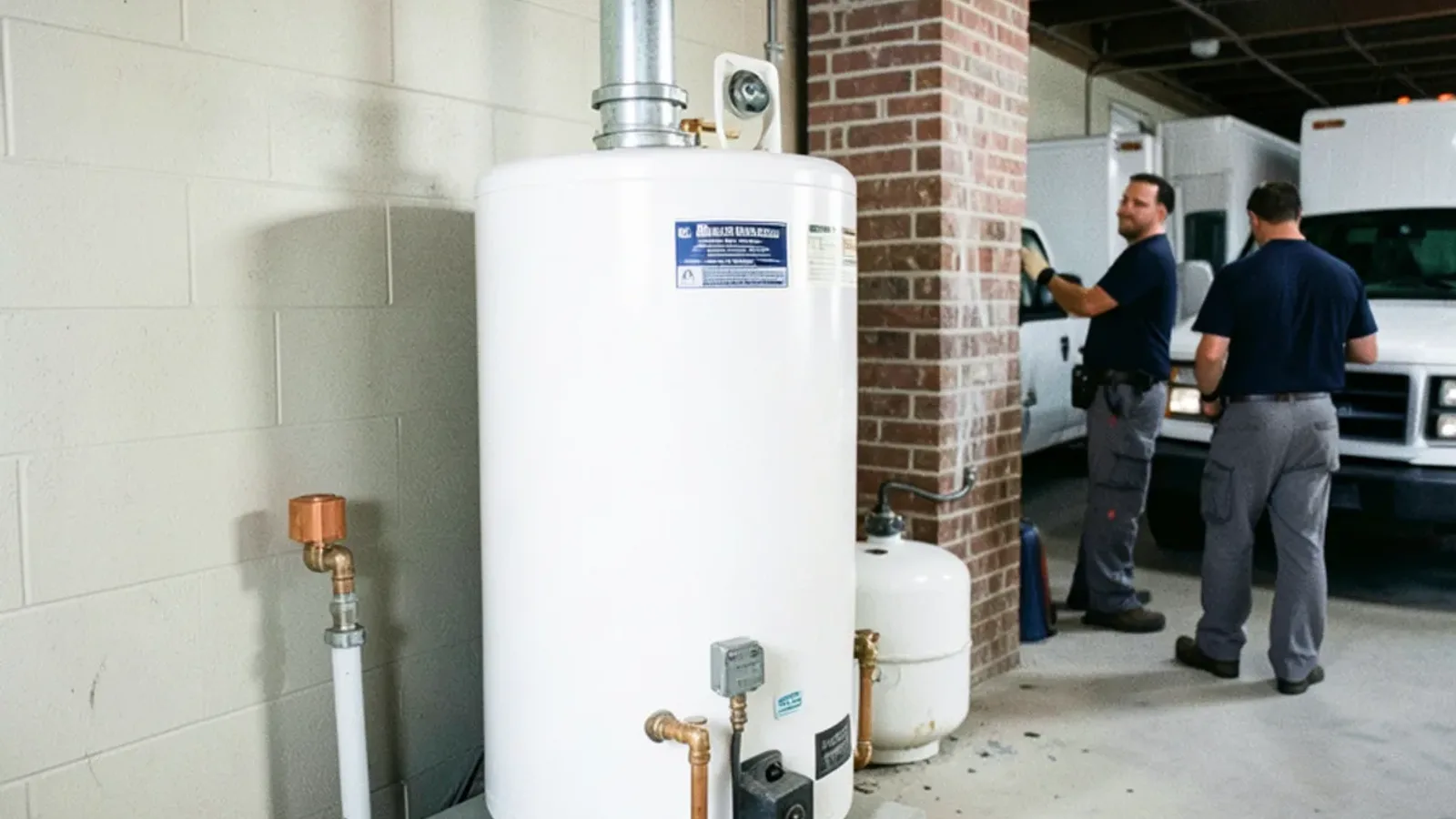
Water heater installation in Warren is mostly replacement work. The typical house here dates from the mid-1960s, so its basement has seen several tanks come and go, and each new one has to fit venting, gas piping and water lines that were set up for an older unit.
We install gas and electric tank water heaters, take the old tank away and bring the hookups up to current code while we're there.
If your current tank still works and you're deciding whether a repair makes sense, see water heater repair and maintenance. If you're considering a switch to tankless, our tankless water heater installation page explains the gas and venting changes that come with it.
When a Warren water heater is due for replacement
Most tank heaters give out somewhere past the ten-year mark, and in a city where the median house was built around 1965, plenty of basements are on their third or fourth tank. Moderately hard water leaves minerals in the bottom of the tank, and a tank that is never drained wears out sooner. In 48089 more than four in ten homes are rentals, and those tanks often run until they leak. Signs it's time to plan the swap:
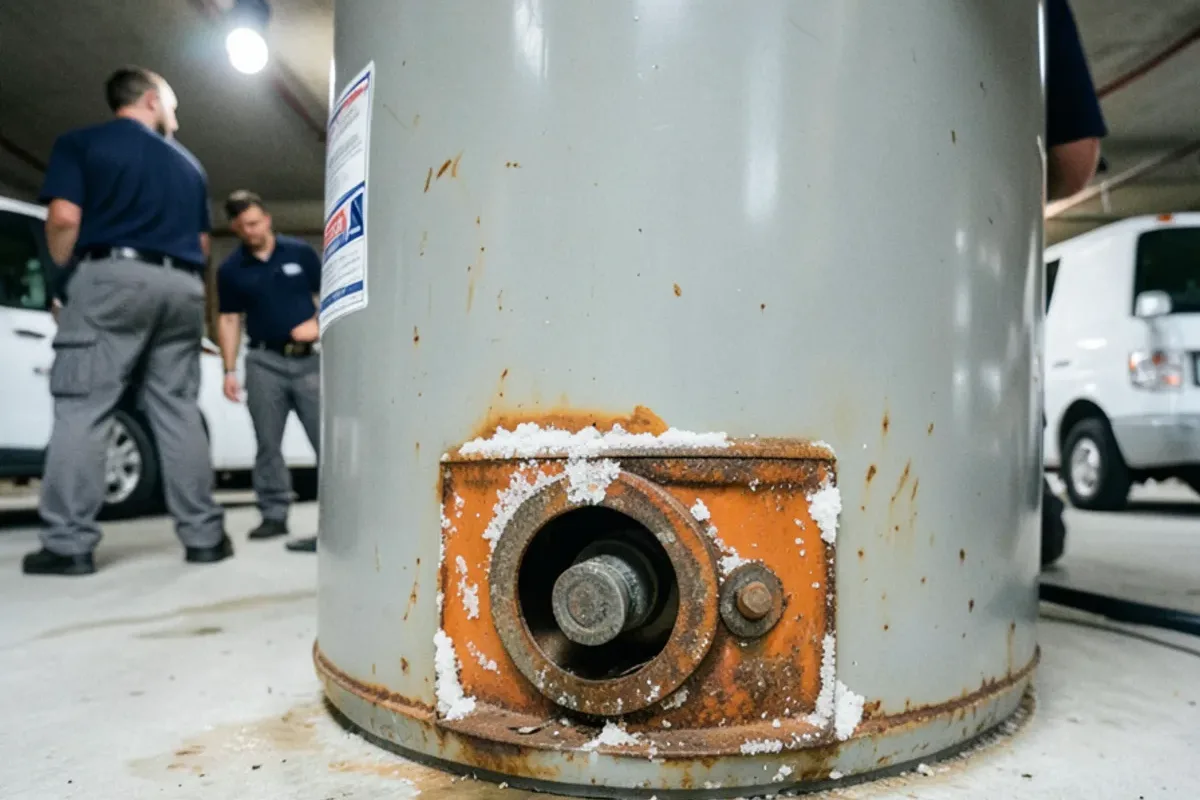
- Water pooling around the base, or rust weeping from a seam.
- Rust-colored hot water while the cold runs clear.
- Popping or rumbling as the burner heats a layer of sediment.
- Hot water running out sooner than it used to.
- A tank past about ten to twelve years, even if it still works.
Gas, electric or heat pump for your next tank
| Type | Fits well when | Watch for |
|---|---|---|
| Atmospheric gas | A gas line and a sound chimney or metal vent are already in place | A chimney that no longer drafts well after a furnace upgrade |
| Power-vent gas | There is no usable chimney, so the vent runs out a wall in plastic pipe | Needs an outlet for its blower and stops during a power outage |
| Electric | There is no gas, or the tank sits far from any vent route | Needs a 240-volt circuit and recovers slower than gas |
| Heat pump electric | You want lower running cost and have open space around the tank | Cools the room it sits in and needs a condensate drain |
Federal efficiency standards that took effect in April 2015 added insulation to most tanks, so a new heater can be wider and taller than the one coming out. Under a basement stair or in a utility closet, that inch or two matters, and we measure before anything is ordered.
What size water heater replacement does your household need?
Tank size on its own can mislead. The number we size to is the first-hour rating on the label, which is how many gallons of hot water the heater can deliver in an hour starting full. Gas recovers faster than electric, so a 40-gallon gas tank can keep pace with a larger electric one. Think about your busiest hour: two showers back to back, the dishwasher, a load of laundry on warm. Winter matters too. Water coming in from the main is much colder in January, so a heater has to work harder to deliver the same shower.
Our post on what size water heater you need goes deeper into first-hour ratings and household habits.
Venting a gas water heater in an older Warren basement
Many houses built in the 1950s and 1960s have a masonry chimney shared by the furnace and the water heater. When the furnace is replaced with a high-efficiency model that vents out the side wall in plastic pipe, the water heater is left alone in a chimney sized for two appliances. It may not draft properly, and condensation can start eating the masonry from inside. A chimney liner or a switch to a power-vent tank are the usual fixes.
After every gas install we check the draft at the hood with the burner running, confirm the vent connector rises toward the chimney and is fastened at each joint, and make sure the heater has enough air to burn cleanly.
Who can install a water heater in Warren?
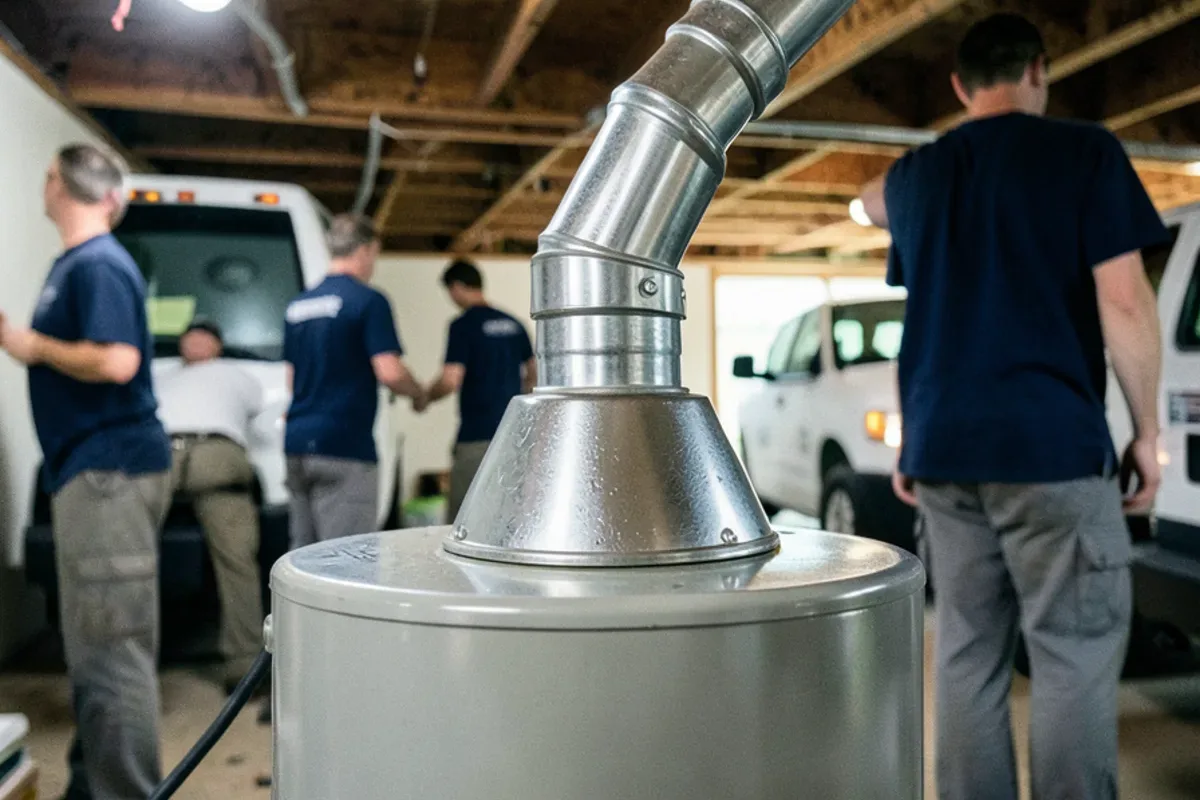
Under Michigan law, plumbing work is done by a journey or master plumber with a state license, after the plumbing contractor pulls a permit. Warren lists hot water tanks among the items that need their own permit, and a water heater line appears on both the city's plumbing and mechanical permit forms. A gas heater can involve both trades, and the Building Division confirms which applies. Any change to the gas piping is gas line work done under a mechanical fuel gas license. Owners of a single-family home they live in can pull their own permit.
Code details come up on almost every swap. A relief valve discharge pipe has to run down to near the floor. When the water supply has a check valve, pressure-reducing valve or backflow device, the model plumbing code calls for thermal expansion control, usually a small expansion tank on the cold line.
Swapping out a hot water tank, step by step
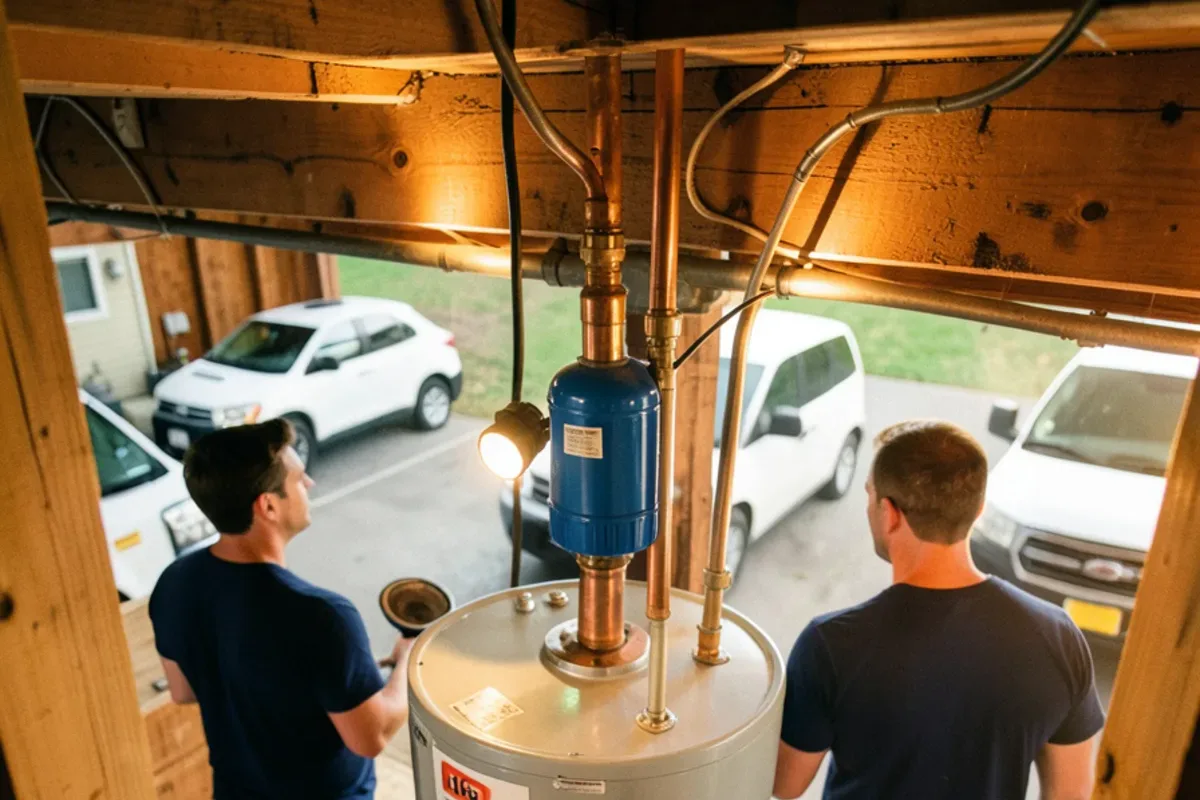
Every install covers the new heater and everything that connects it, so the tank meets current code on the day it is lit:
- Draining, disconnecting and hauling away the old tank.
- New water connectors with dielectric fittings and a cold-side shutoff.
- A gas sediment trap and leak test, or a check of the electric circuit.
- Vent connector, draft check and the relief valve discharge pipe.
- An expansion tank or drain pan where the house calls for one.
Measure the space and the old hookups
We note tank dimensions, vent type, gas line size, water connections and where the drain is, and check the floor for damage.
Shut off and drain
Gas or power goes off, then water, and the old tank drains to the floor drain. Tanks full of sediment drain slowly.
Remove the old heater
The tank is disconnected and carried out, and we take it with us.
Set and connect the new one
The heater goes on a level base with new water connectors, dielectric fittings, an expansion tank where needed and a drain pan if finished space is nearby.
Gas, vent and relief valve
A sediment trap goes on the gas connection, every joint is leak tested, the vent is fastened and the discharge pipe is run.
Fill, fire and test
The tank fills with a hot tap open to push out air, then it is lit or powered, draft is checked and the thermostat is set.
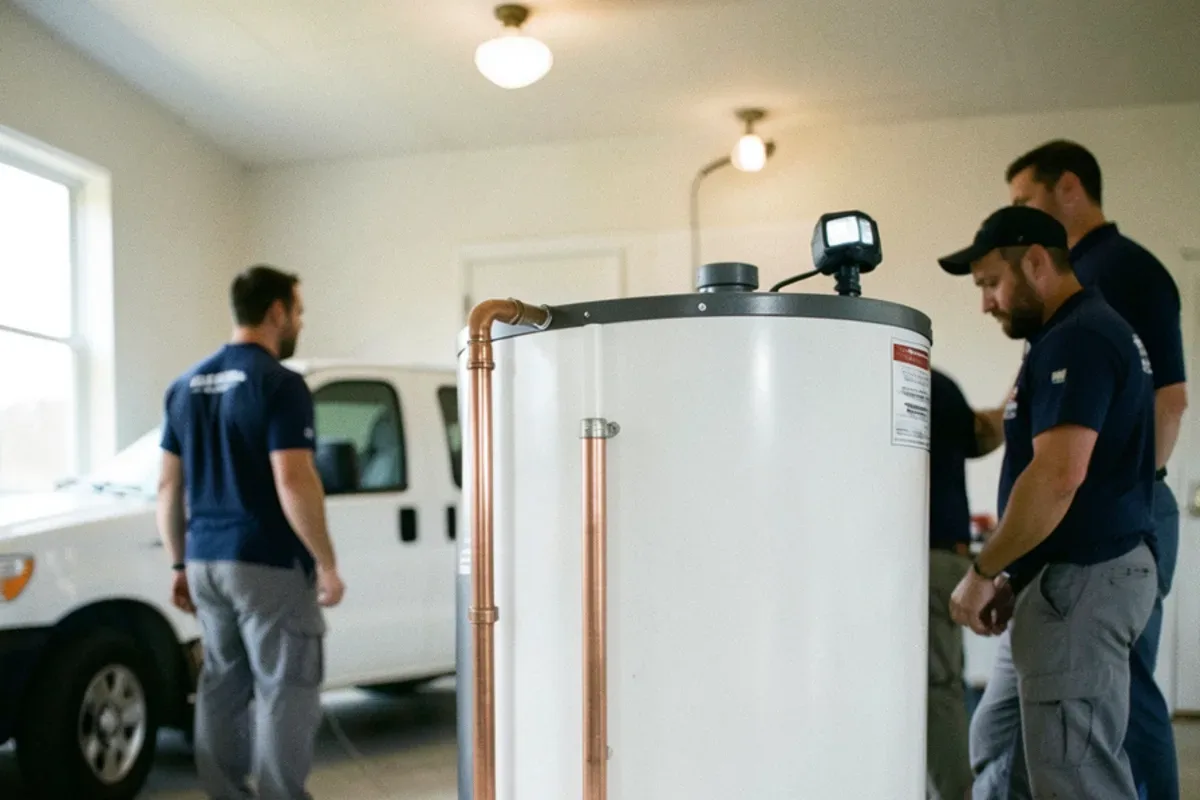
A like-for-like swap usually fits in one visit. Moving the heater, changing the venting or adding gas or electrical capacity takes longer, and the city inspection follows.
What changes the cost of a water heater installation
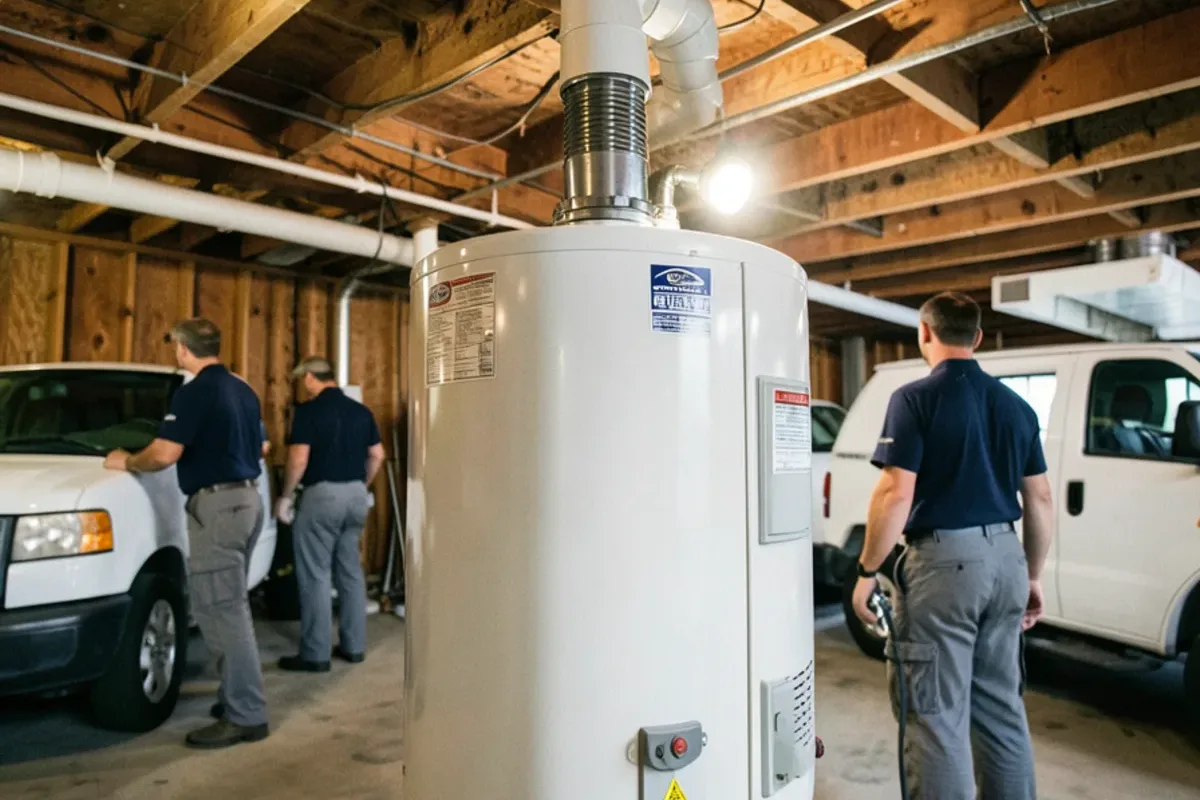
A swap in the same spot with the same fuel is the simplest job. The cost climbs when the house needs changes the old tank got away without, such as a chimney liner, an expansion tank or a larger gas line. These are the variables we price and explain before the old tank is drained:
- Fuel type, venting style and tank size.
- Moving the heater to a new spot versus setting it where the old one stood.
- Chimney liner, new vent route or a switch to power vent.
- Gas line or electrical changes, which bring their own trades and permits.
- Expansion tank, new shutoffs and a drain pan.
- Access, such as narrow stairs or a crawl space, and haul-away of the old tank.
Getting more years from a new tank
Warren's water averages about 105 milligrams per liter of hardness in the city's 2025 water quality report, which the USGS scale calls moderately hard. Some of those minerals settle in the bottom of the tank as sediment. Draining a few gallons once a year, checking the anode rod every few years and keeping paint cans and solvents away from a gas heater all help. We cover that routine on our repair and maintenance page, and our post on how often to flush a water heater explains the timing.
Why a Stephens Rd plumber for your new water heater
Our office sits on Stephens Rd in southeast Warren, and the basements around it hold every generation of water heater, from tanks still venting into 1960s chimneys to power-vent units added after a furnace upgrade. We look at the vent, the gas line and the supply side before recommending a tank, so the replacement fits the house and not only the old footprint. You get the cost factors and a written scope first, and we tell you which Warren permit applies. Whether the tank sits in your own basement, a rental or a business, it's the same phone line.
Water heater installation around Warren and nearby cities
- Plumber in Sterling Heights
About 65% of homes date from 1960 to 1989, so many basements are on a second or third tank, often beside finished walls.
- Plumber in Troy
Median home 1978; replacements are usually second- or third-generation tanks in finished-basement mechanical rooms that need a drain pan.
- Plumber in Fraser
Roughly three in ten homes are condos, townhouses or apartments, where a new tank has to fit a utility closet.
- Plumber in Hamtramck
One building in five has two units, which often means two tanks to size and vent in one shared basement.
- Plumber in Center Line
Nearly half of households rent, so many tank replacements happen on a landlord schedule between tenants.
- Plumber in Eastpointe
Nine in ten homes are single-family and most predate 1960, with gas tanks tucked into small block basements.
- Plumber in St. Clair Shores
Half the homes are 1950s builds, where a gas tank may still share a masonry chimney with the furnace.
- Plumber in Madison Heights
Four in ten homes went up in the 1950s, and a third of households rent, so tank swaps come from owners and landlords alike.
Water heater installation questions from Warren customers
Who installs a water heater, a plumber or the gas company?
A plumber installs the heater and its water connections, and gas piping changes fall under a mechanical fuel gas license. The gas utility, Consumers Energy in Warren, handles the meter and the service to your house, not the appliance. Warren's Building Division issues the permit and inspects the finished work.
Should I replace my water heater before it fails?
Yes, if the tank is past about ten to twelve years, shows rust at the base or rumbles loudly when it heats, planning a replacement beats waiting for a leak. A tank that lets go can put 40 or 50 gallons on a finished basement floor. Replacing on your schedule also leaves time to sort out venting or sizing.
Can the new water heater go in the same spot?
Yes, usually. Most replacements reuse the location, the gas line and the vent route, with new connectors and any code updates. A move makes sense when the old spot is cramped or near finished space, or when you want the heater closer to the bathrooms. Moving it adds piping and venting work.
Do I need an expansion tank with a new water heater?
Yes, when your water supply has a check valve, pressure-reducing valve or backflow device, heated water has nowhere to expand, and the model plumbing code calls for expansion control. A dripping relief valve is a common sign the system is closed. We check the supply side during the install and add a tank when it's needed.
Still not sure what you're dealing with? Describe it on the phone and we'll tell you what we'd check first.
(207) 419-2600Last updated October 25, 2026