
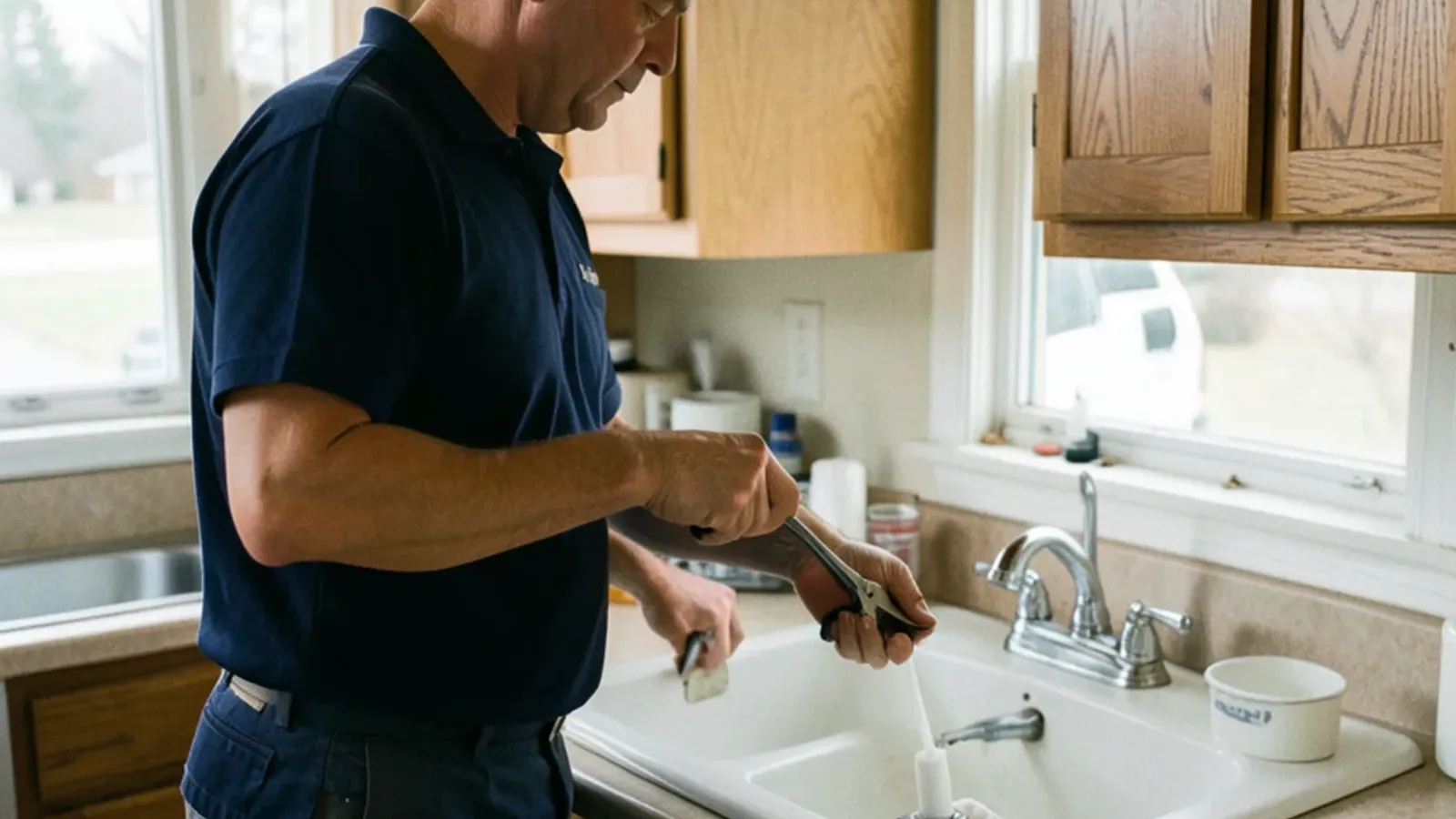
Faucet repair in Warren covers more than the drip you can hear at night. It includes the handle that spins without shutting off, the spray that sputters and the puddle that shows up on the cabinet floor. In the city’s 1950s and 1960s houses, the shutoff valve under the sink that will not budge is often part of the job.
We fix kitchen, bathroom and tub faucets, and the sink drains and traps below them. A lot of these calls end with a repair kit, a new cartridge or a fresh supply line, and the faucet you already own keeps working.
What faucet and sink repair takes in, valve to trap
The job runs from the shutoff valves under the sink to the trap that carries water away, plus the faucet in between. When the faucet is worn out or parts are gone, we install a new one and replace the old stops and lines while everything is apart. Sink swaps belong here too, for kitchens, baths and laundry tubs. A drop-in sink lifts out from above once its clips and sealant are cut loose. An undermount sink hangs under the countertop and takes more care.
- Kitchen, bathroom and two- or three-handle tub faucets, rebuilt or replaced
- Angle stops and supply lines under the sink
- Traps, tailpieces, basket strainers and pop-up drains
- Aerators and pull-down spray heads that lost flow
- Drop-in and undermount sink replacement, with the faucet reset
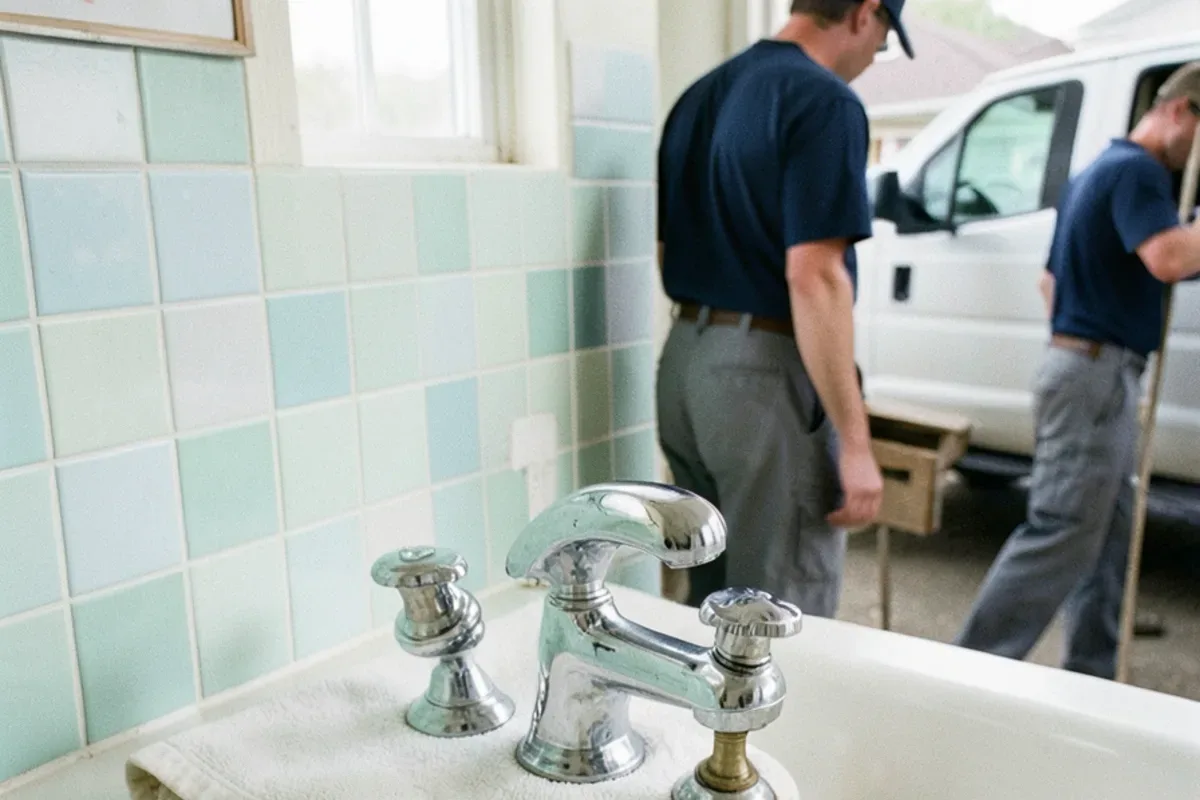
Is it the faucet, the shutoff or the drain under the sink?
Water under a sink can come from four or five places, and the fix depends on which one. Dry the cabinet floor, set down a paper towel, and run the water. Where the towel gets wet first tells us most of what we need to know.
| What you see | Likely source | Usual fix |
|---|---|---|
| Drip from the spout with the handle off | Worn washer, seat or cartridge | Rebuild or new cartridge |
| Water around the base of the handle or spout | Dried O-rings | New O-rings and a cleaned body |
| Wet cabinet only when water runs | Loose trap nut, basket strainer or drain tailpiece | Reseal the strainer or reset the trap |
| Wet cabinet all the time | Supply line, stop valve or the faucet shank | New braided line or a new stop |
| Weak or uneven stream | Clogged aerator or a narrowed supply pipe | Clean the aerator, then check the pipe |
Why faucets drip and sinks leak in older Warren houses
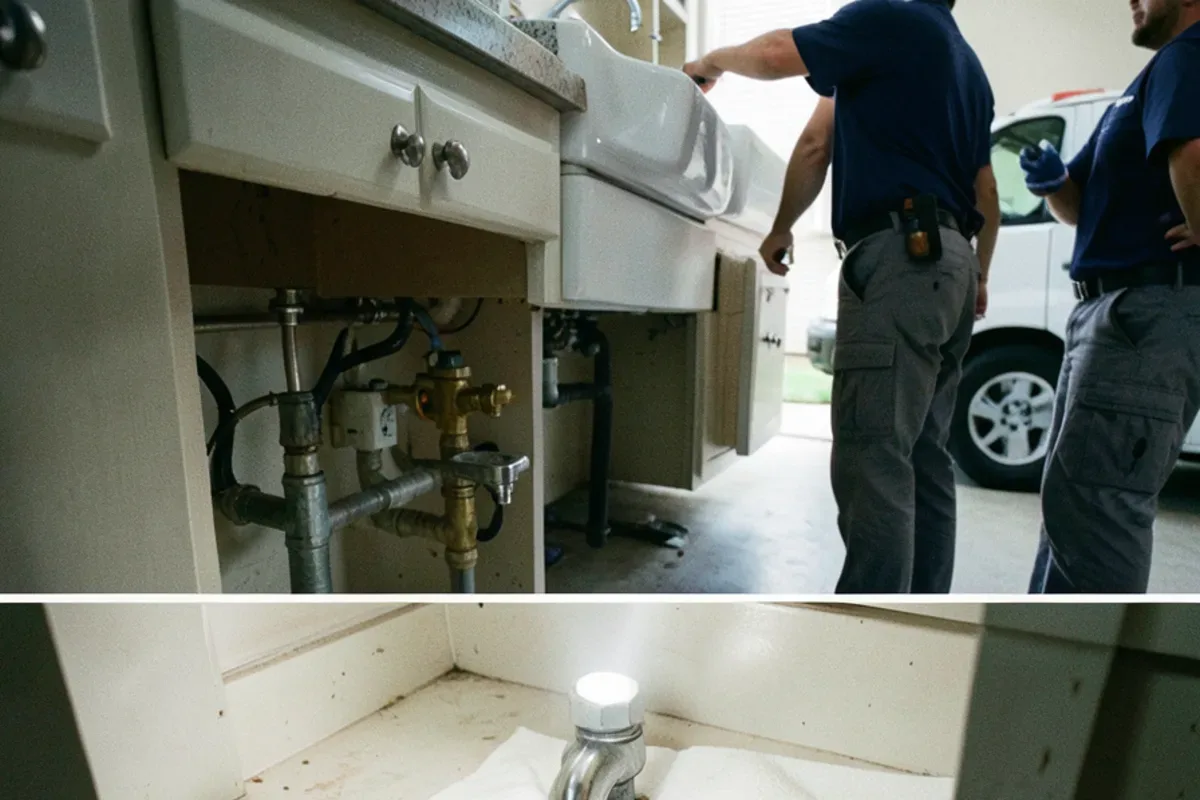
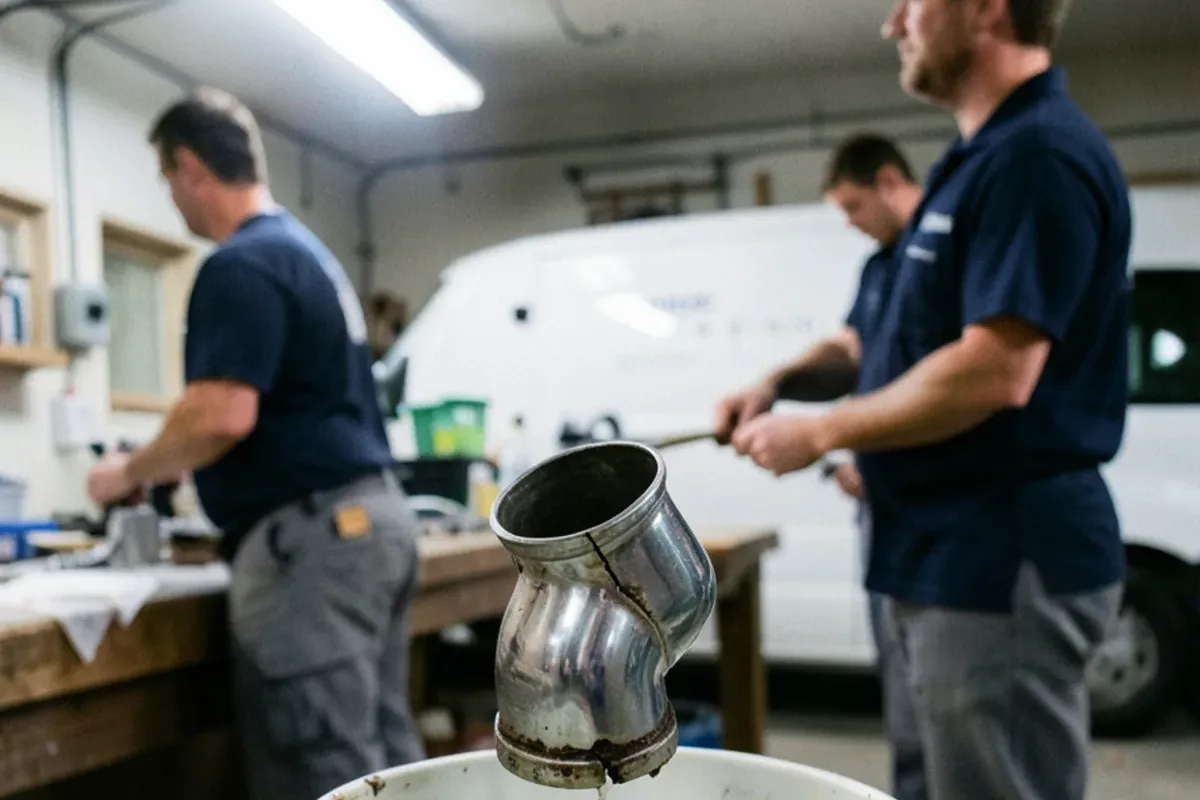
About a third of Warren homes were built before 1960, and most of the rest went up in the 1960s and 1970s. Faucets in those kitchens and baths have been replaced over the years, but the parts behind them often have not. Multi-turn stop valves from that era seize in place. Chrome-plated brass traps thin out and crack at the bottom. Two-handle faucets with rubber washers wear a groove into the seat, and a new washer will not seal on a damaged seat.
Water hardness plays a part too. The city reports an average of 105 mg/L for 2025, which is moderately hard, and that scale collects on cartridges, valve seats and aerator screens. Where the supply pipe is galvanized steel, rust inside the pipe can cut the flow at every tap in that part of the house. If several faucets are weak at once, our post on how to tell if you have galvanized pipes is a good first read.
How faucet repair and kitchen sink repair start
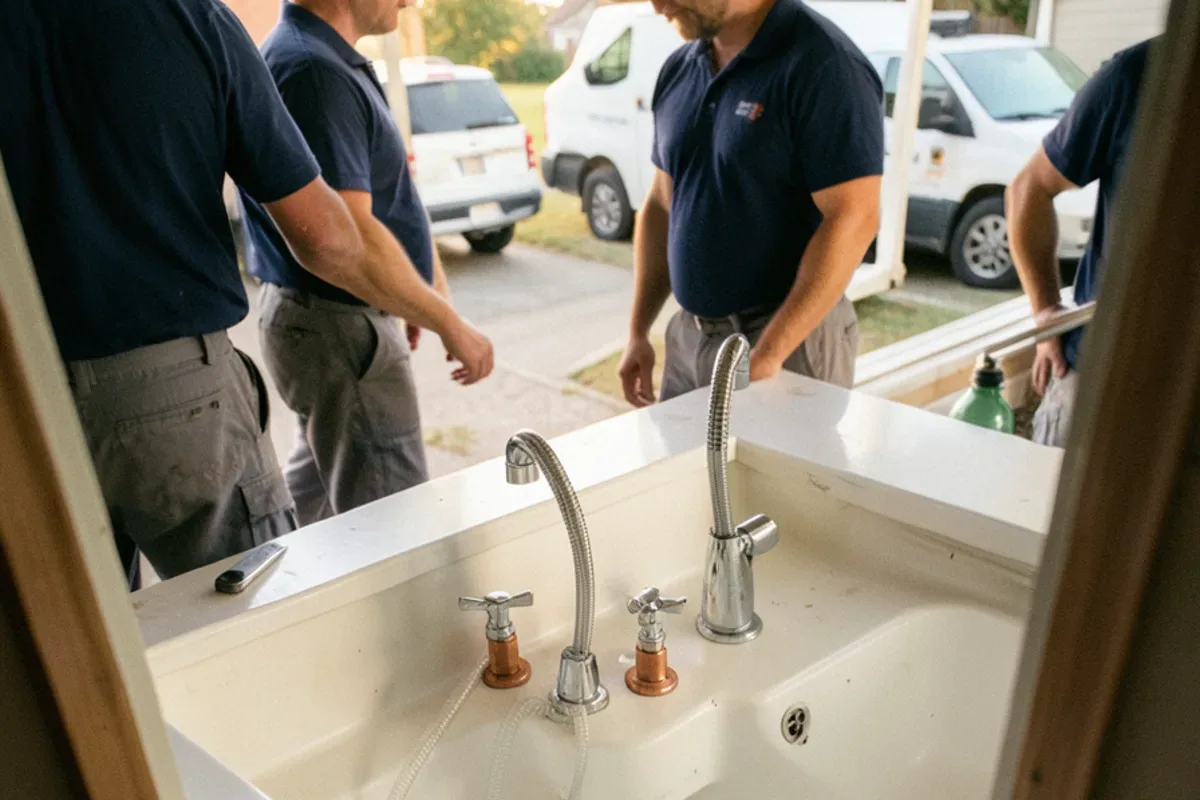
First we work out what kind of faucet it is. A two-handle faucet that takes several turns to close is a compression faucet with washers. One handle that swings in an arc is usually a cartridge or a ball valve. A quarter turn from off to full on means ceramic discs. Each type wears differently and takes different parts, and many need parts from the same maker.
Then we try the stops under the sink. If they close, the repair goes ahead with the rest of the house still in service. If they do not, we shut the main and replace the stops first, since a repair is only as good as your ability to turn the water off next time. We also look under the sink for staining or soft cabinet panels, and below it if the room underneath has a ceiling stain. A slow leak that has run for months may call for leak detection and repair before anything is closed back up.
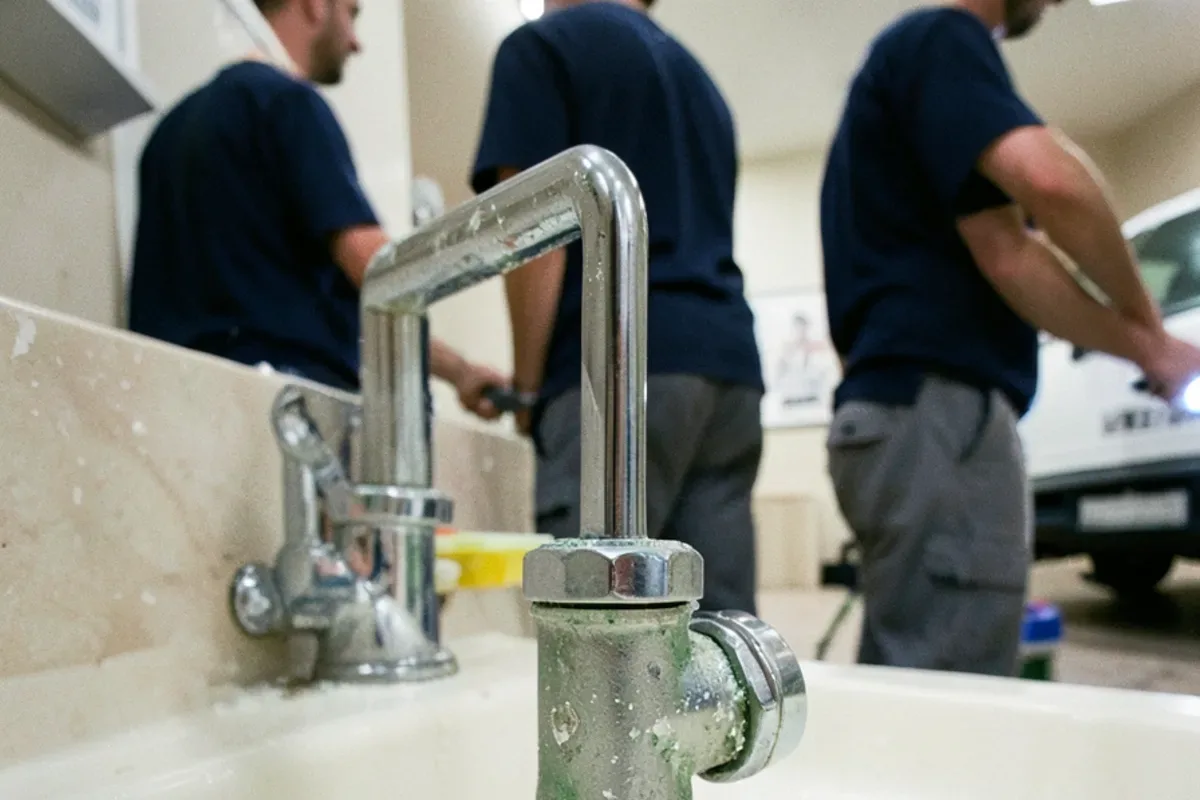
Rebuild the faucet or install a new one?
| Faucet type | What usually fails | Worth rebuilding when | Better replaced when |
|---|---|---|---|
| Two-handle compression | Washers and seats | Seats can be replaced or dressed | The body is corroded or seats are pitted past repair |
| Single-handle cartridge | Cartridge and O-rings | The maker still sells the cartridge | No match can be found |
| Single-handle ball | Seats, springs and O-rings | The body is sound | Repeat leaks after a rebuild |
| Ceramic disc | Disc seals, or debris on the discs | Seals can be replaced | A disc is cracked and the cartridge is gone |
New faucets come with lower flow than old ones. The plumbing code Michigan adopted caps kitchen and bathroom sink faucets at 2.2 gallons per minute, and bathroom faucets with the EPA WaterSense label run at 1.5 or less. Most people do not notice the difference at a bathroom sink. At the kitchen sink, a pull-down sprayer helps.
Steps for a faucet or sink replacement
Shut off and open up
We close the stops, open the faucet to drain the lines, and clear the cabinet. If the stops leak or will not close, they get replaced now.
Remove the old faucet
Mounting nuts under old sinks are often rusted solid. A basin wrench handles most; a few need to be cut. We clean old putty and scale off the sink deck so the new faucet seals flat.
Set the new faucet
The faucet goes on with its gasket or a bead of putty, centered and tightened from below. New braided supply lines connect it to the stops.
Rebuild the drain if needed
A thin or cracked chrome trap is replaced. At a bathroom sink we install the new pop-up assembly; at a kitchen sink we reseal the basket strainer.
Flush and check
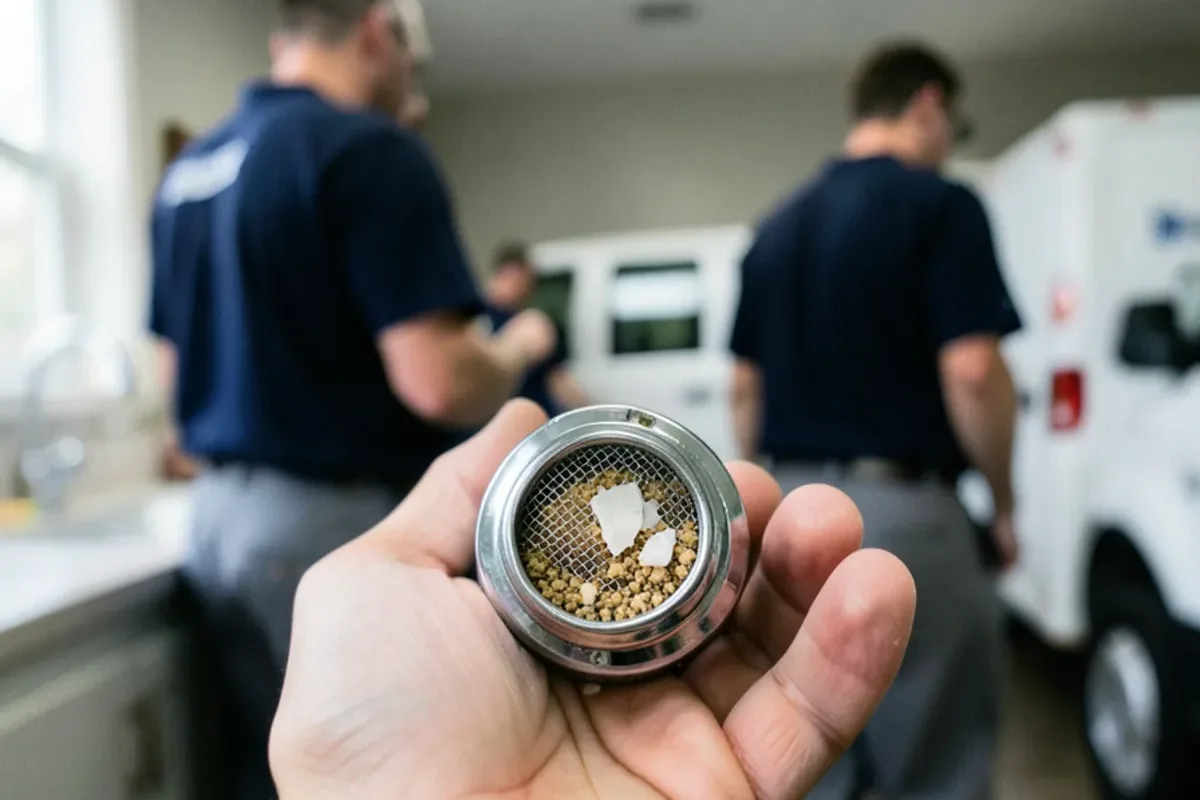
With the aerator off, we run both sides to clear grit from the lines, then reinstall it. We check every connection with a dry towel after the sink has been filled and drained.
If the faucet is part of a bigger kitchen change, such as a new sink, a disposal or a dishwasher, our kitchen plumbing services page covers how that work fits together.
How do I keep a repaired faucet from dripping again?
Close handles until they stop, not as hard as you can. Forcing a compression faucet crushes the washer and wears the seat. Unscrew the aerator two or three times a year and rinse the screen. Turn each stop under the sink off and back on now and then so it stays free. If a dark wet ring shows up in the cabinet, deal with it while it is small. Particle board swells and falls apart quickly once it stays damp. EPA WaterSense puts a once-a-second drip at more than 3,000 gallons a year.
What sets the cost of faucet repair
The biggest cost variable is the age of what sits around the faucet: an original sink setup in a 1950s or 1960s Warren house often needs more than the one part that failed, and we say so before we start. What moves the number:
- Whether parts for your faucet are still made, or the faucet has to be replaced.
- The stops under the sink. Seized valves add a replacement and a shutoff at the main.
- Rusted mounting nuts, which can turn a simple swap into cutting and cleanup.
- The drain below. A cracked trap is extra work, and a slow drain is a job for drain cleaning and unclogging.
- Damage to the cabinet floor, which we can point out but do not repair.
- The faucet you pick, including pull-down sprayers, extra holes and soap dispensers.
When a sink job in Warren needs a permit
A new cartridge or trap on the same sink is repair work, and Michigan’s skilled trades law sets minor repairs apart from new plumbing. Adding or moving a sink is different. Warren’s Division of Buildings and Safety Engineering lists sinks as fixtures on its plumbing permit form, and the city calls for a building permit on kitchen remodels when the setup is rearranged. An owner can pull the plumbing permit for a home they live in. Rentals and businesses go through a plumbing contractor, and you can check any contractor on Michigan LARA’s license lookup.
Why Warren owners call us about a leaking sink
Our office is on Stephens Rd in 48089, the corner of Warren where the median house dates to 1962. Original stops, chrome traps and two-handle faucets are what we expect under those sinks, and in the rentals around them. We trace the drip to the part before anyone sells you a faucet, and we go over the cost factors and put the scope in writing before work starts. Homeowners, landlords with a tenant’s leaking sink and businesses with a restroom faucet that won’t shut off all reach the same Stephens Rd office on one phone line.
Faucet and sink repair around Warren and nearby cities
- Plumber in Center Line
Nearly half of households rent, many off Van Dyke, and unit turnover turns up worn cartridges and stuck stops.
- Plumber in Hazel Park
One home in five predates 1940, so two-handle compression faucets and weak galvanized branches are common.
- Plumber in Eastpointe
A third of homes predate 1950, and their old chrome kitchen traps crack along the bottom bend.
- Plumber in Fraser
Stacked condo kitchens mean a slow trap leak can stain a neighbor’s ceiling before anyone sees it.
- Plumber in Madison Heights
About 65 water main breaks a year send grit from main repairs into aerator screens.
- Plumber in Ferndale
With 42 percent of homes built before 1940, original compression faucets and thin chrome traps still turn up.
- Plumber in Harper Woods
Most water mains date from the 1940s and 1950s, so main work can push scale into faucet cartridges.
- Plumber in Hamtramck
About a fifth of homes are in two-unit flats, where upstairs and downstairs kitchens often share one drain.
Faucet and sink repair questions from Warren customers
Can you fix a kitchen sink that leaks under the cabinet?
Yes. Most cabinet leaks come from the trap, the basket strainer, a supply line or the stop valve, and each one is a contained repair. We dry everything, run the water, and watch where the drip starts. A leak that only appears when the dishwasher drains points to the hose or its connection instead.
Do you repair bathtub faucets too?
Yes. Two- and three-handle tub faucets use stems and washers much like old sink faucets, and we rebuild or replace them. A dripping tub spout can also be a worn diverter. Single-handle shower valves with a cartridge inside the wall are a separate repair that can mean work behind the tile.
Is it worth repairing an old faucet?
Yes, usually, if it is a decent faucet and its parts are still sold. A cartridge or a set of washers is a small repair. If the finish is worn, parts are no longer made, or it has been rebuilt twice already, a new faucet and new stops usually make more sense.
Why did my faucet lose pressure after water main work on my street?
Work on a main can stir up scale and grit, and that debris ends up in the first screens it reaches, which are usually aerators and cartridge screens. Warren repaired 181 broken water mains in fiscal 2025, so it happens. Cleaning the aerator usually brings the flow back. If it does not, the cartridge screen needs a look.
Still not sure what you're dealing with? Describe it on the phone and we'll tell you what we'd check first.
(207) 419-2600Last updated October 25, 2026