
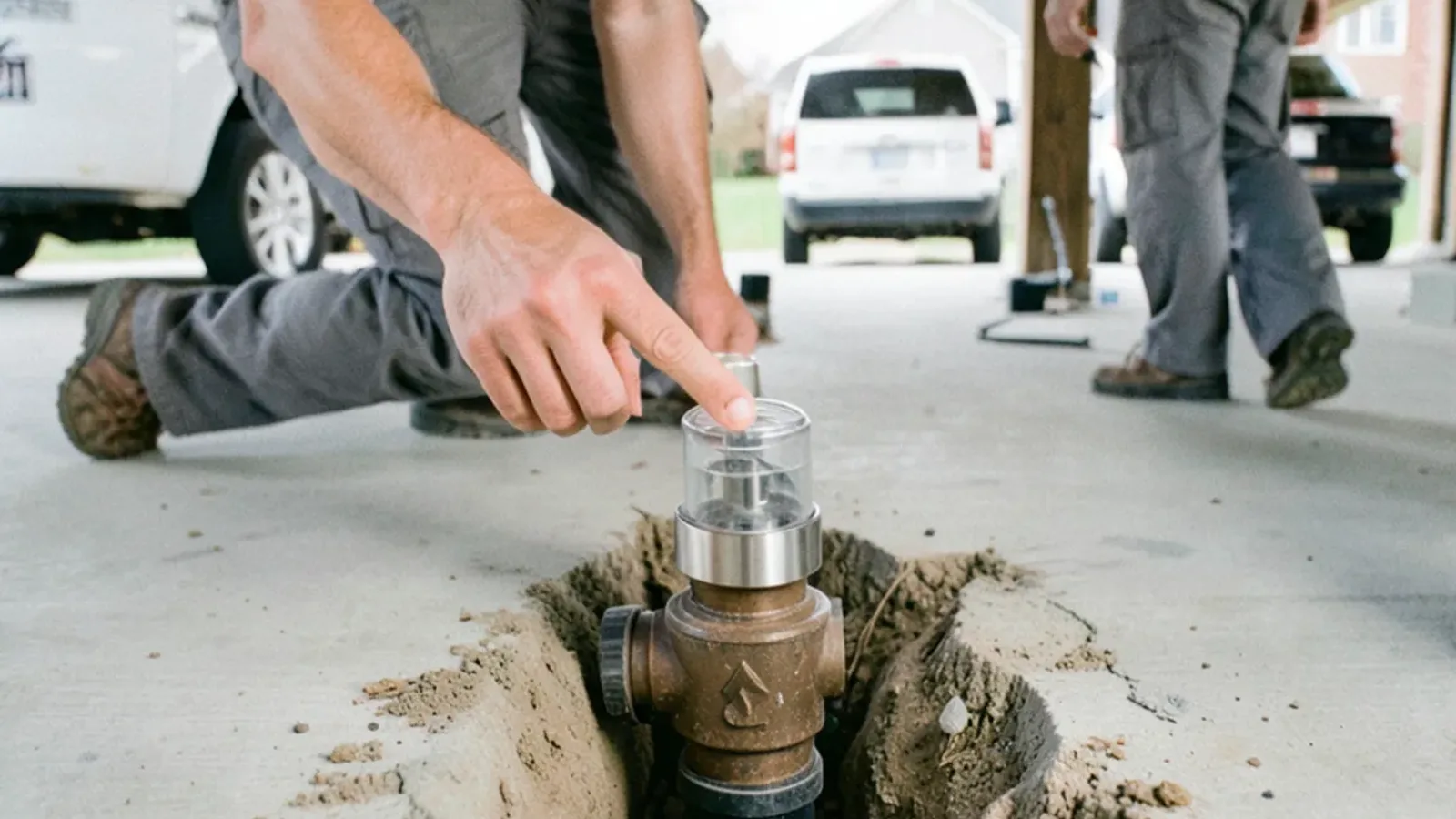
Backwater valve installation in Warren is for one problem: sewage or gray water rising out of the basement floor drain during heavy rain. When the city sewer fills faster than it can drain, water in the main pushes back up your lateral toward the house, and the lowest opening it finds is usually that floor drain.
A backwater valve is a one-way gate in the main drain. House water flows out through it, and when the sewer pushes back, a flap closes and holds the line shut.
Warren's wastewater officials have said the system was designed for about 2 inches of rain over several hours, and that three storms in 2024 overwhelmed it and flooded basements. The August 2014 storm damaged an estimated 18,047 homes in the city. A valve has no effect on groundwater, which is the sump pump's department. It deals only with the sewer.
How sewer water ends up on a Warren basement floor
Your house drains into a lateral, a single pipe that runs under the yard to the city main. In Warren the owner maintains that whole lateral, including the part under the street right-of-way. During a downpour the main can fill and back up, and water in the main has only one other place to go: up the laterals. The floor drain sits at the lowest point of the house, so it overflows first, followed by a basement toilet, shower or laundry tub if you have one.
Not every floor drain backup comes from the city side. If water rises when your own washer drains on a dry day, the lateral is probably partly blocked by roots or grease, and the fix starts with basement floor drain cleaning. A valve on a clogged line just moves the problem.
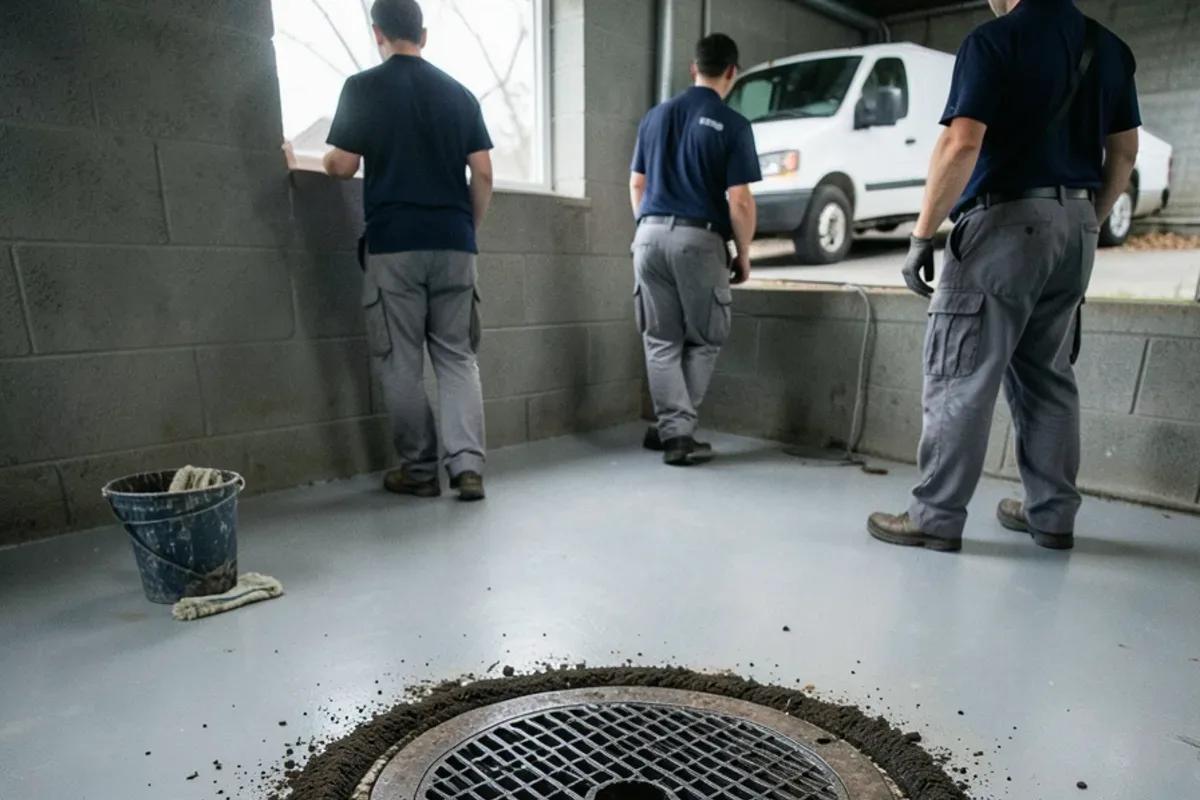
The storm-driven version leaves its own signs: a ring of silt around the drain after heavy rain, a basement toilet that gurgles or rises while it pours, and neighbors on the block bailing out the same night. Water seeping in where the wall meets the floor is groundwater, not sewer, and a valve will not touch it.
Does my house need a backwater valve?
For new work, the Michigan Plumbing Code answers it directly. Where fixtures sit on a floor below the manhole cover of the next upstream manhole in the public sewer, they have to be protected by a backwater valve. Many basements sit below that line. In an existing house the practical test is history. If sewage has come up the floor drain in a storm, if you have a finished basement or a basement bathroom, or if neighbors on your block flood when you do, a valve is worth a serious look.
What a backwater valve installation covers
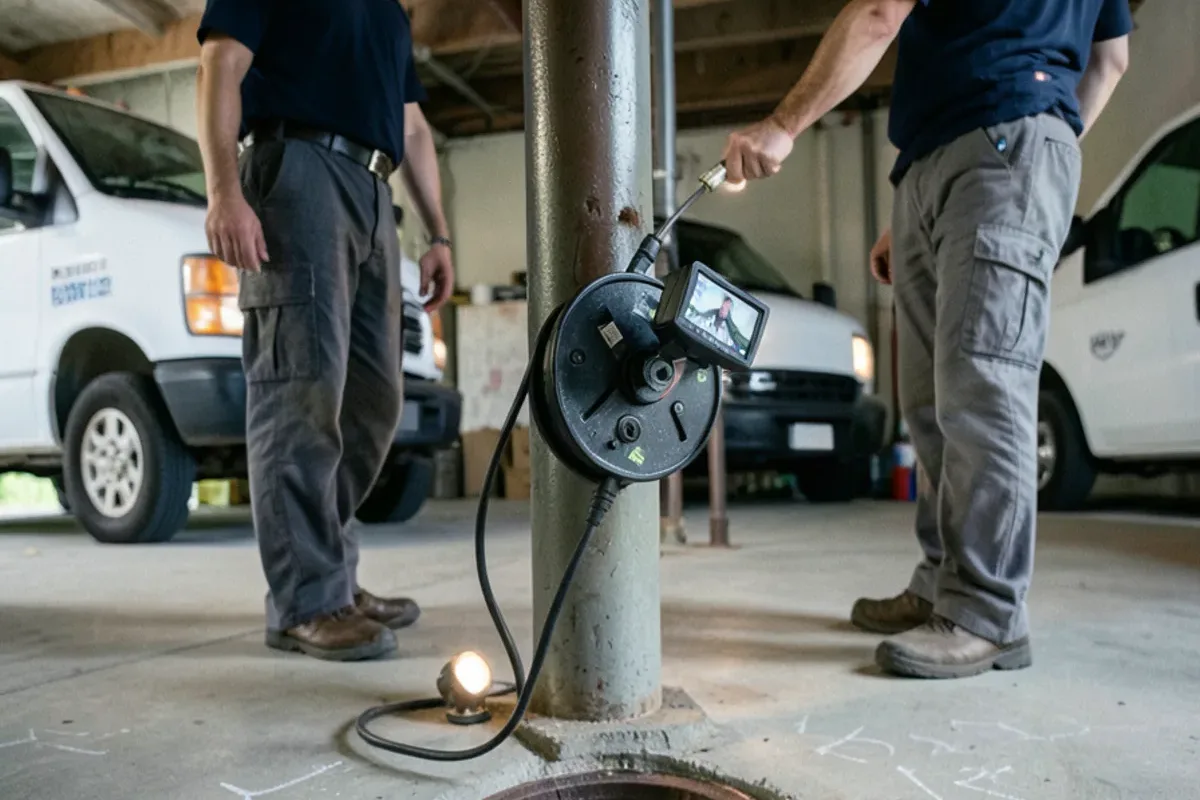
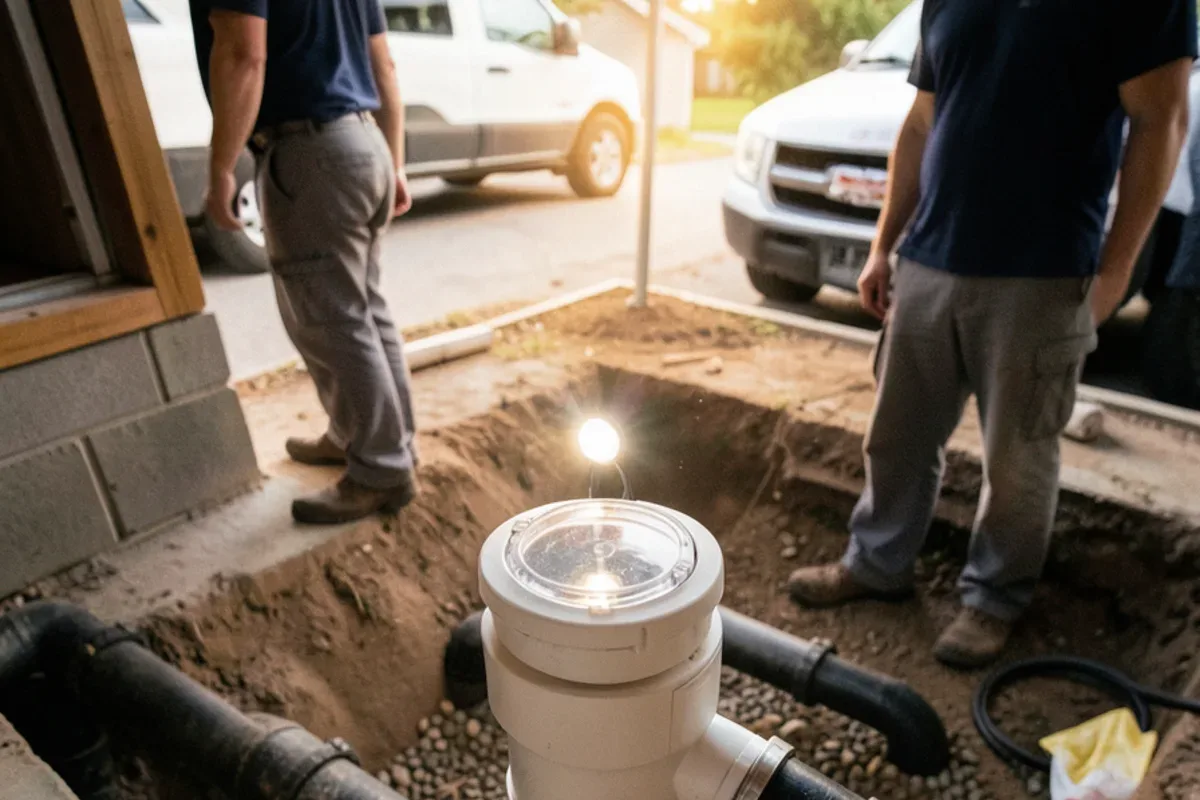
The valve itself is a short length of pipe with a flap inside. The project is getting it into the right spot under a basement floor, joined to cast iron or clay that may be seventy years old. Before any concrete comes out, the drain gets a camera run for its depth, path and condition. We also look for anything tied into the sanitary line upstream, like a footing drain or an old sump discharge, because a closed valve would trap that water inside the house. Then the valve goes in, the city inspects it with the trench open, and the floor closes up around an access cover you can reach.
- A camera inspection of the building drain and lateral
- Tracing footing drain, sump and laundry tie-ins
- Saw-cutting the slab and digging down to the drain
- A code-listed valve set level with banded couplings
- The city permit and an open-trench inspection
- A concrete patch and a flush access cover
Types of backwater valves and where they go
| Option | How it works | Trade-offs |
|---|---|---|
| Normally open inline valve | Flap hangs open and floats shut when flow reverses | Full flow day to day; the seat must stay clean to seal |
| Normally closed inline valve | Flap rests shut and opens for outgoing water | Seals sooner; slightly restricts flow and can catch solids |
| Valve on the main building drain | Installed under the floor where the drain leaves the house | Protects every fixture upstream of it; means cutting the floor |
| Floor drain plug or ball check | Seals only the floor drain opening | Simple, but the pressure can come out another basement fixture instead |
We usually recommend a normally open valve on the main building drain with an access cover at floor level. If you are weighing a plug against a full valve, our post on the floor drain plug vs a backwater valve covers the difference in detail.
Backwater valve installation, from floor cut to inspection
Run a camera down the drain
Before cutting concrete we need the drain path, its depth and its condition. A sewer camera inspection also shows whether the old cast iron or clay is sound enough to cut a valve into.
Choose the spot
The valve goes downstream of the fixtures it protects, on a straight run, where a cover can sit flush with the finished floor.
Cut and dig
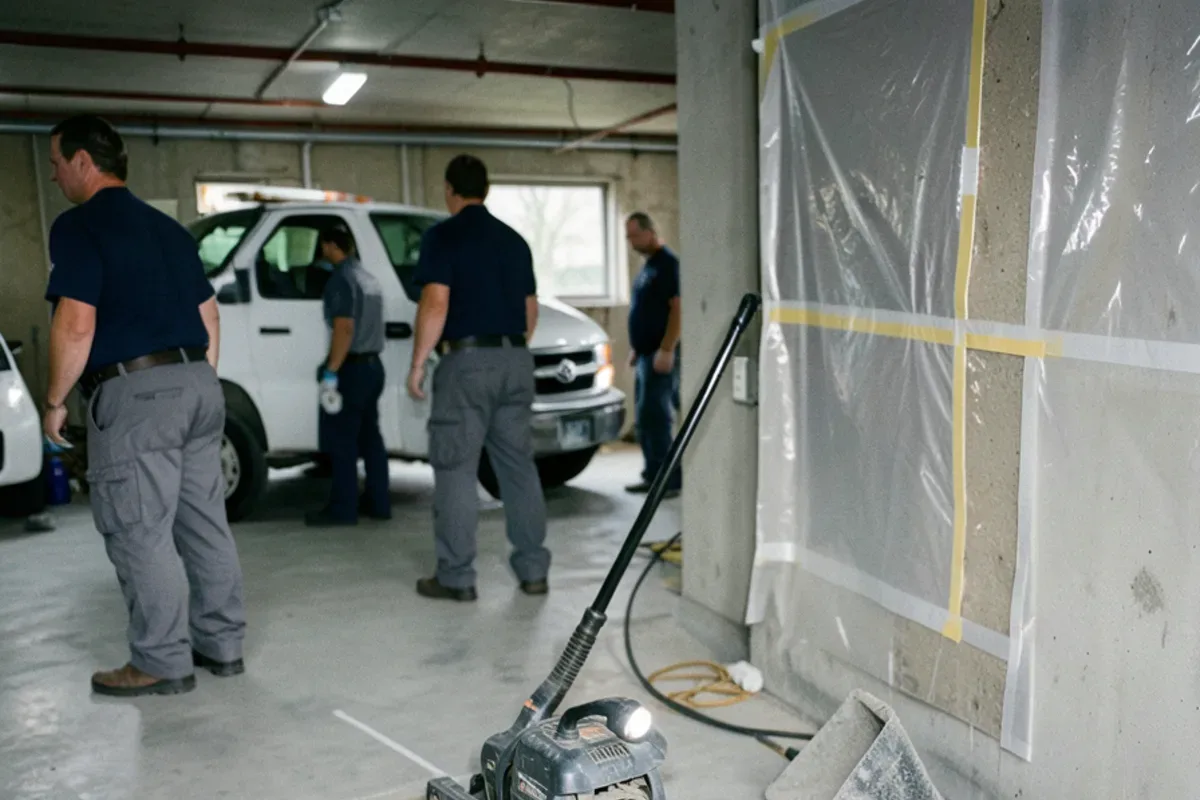
The floor is saw-cut and broken out, and the trench goes down to the drain. Dust and debris stay inside plastic sheeting.
Set the valve
A section of old pipe comes out and the valve goes in level, flow arrow pointing to the street, joined with transition couplings rated for the pipe on each side.
Inspection with the trench open
Warren's plumbing permit has its own line for a backwater valve. The work stays exposed until the Building Division accepts it, and inspections need a day's notice.
Backfill and finish
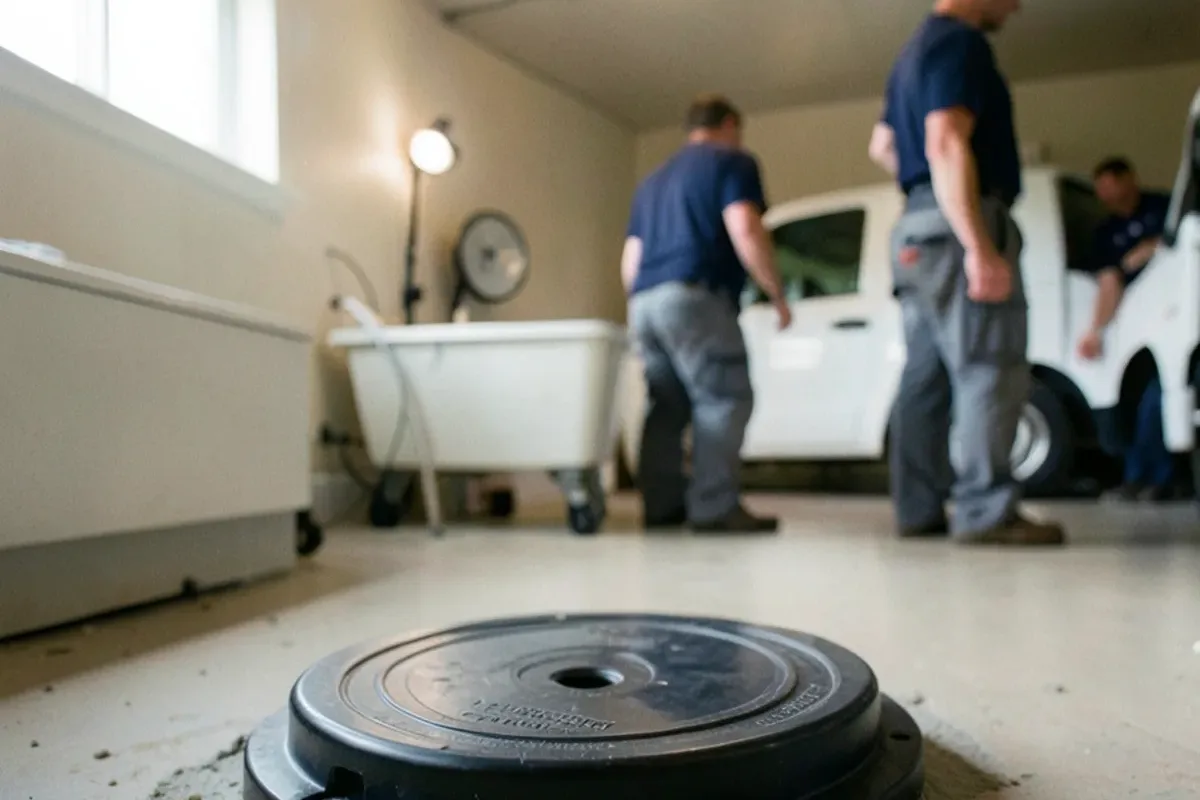
Bedding and stone go back around the pipe, concrete is poured to the access box, and we show you how to open the lid.
Caring for a backwater valve between storms
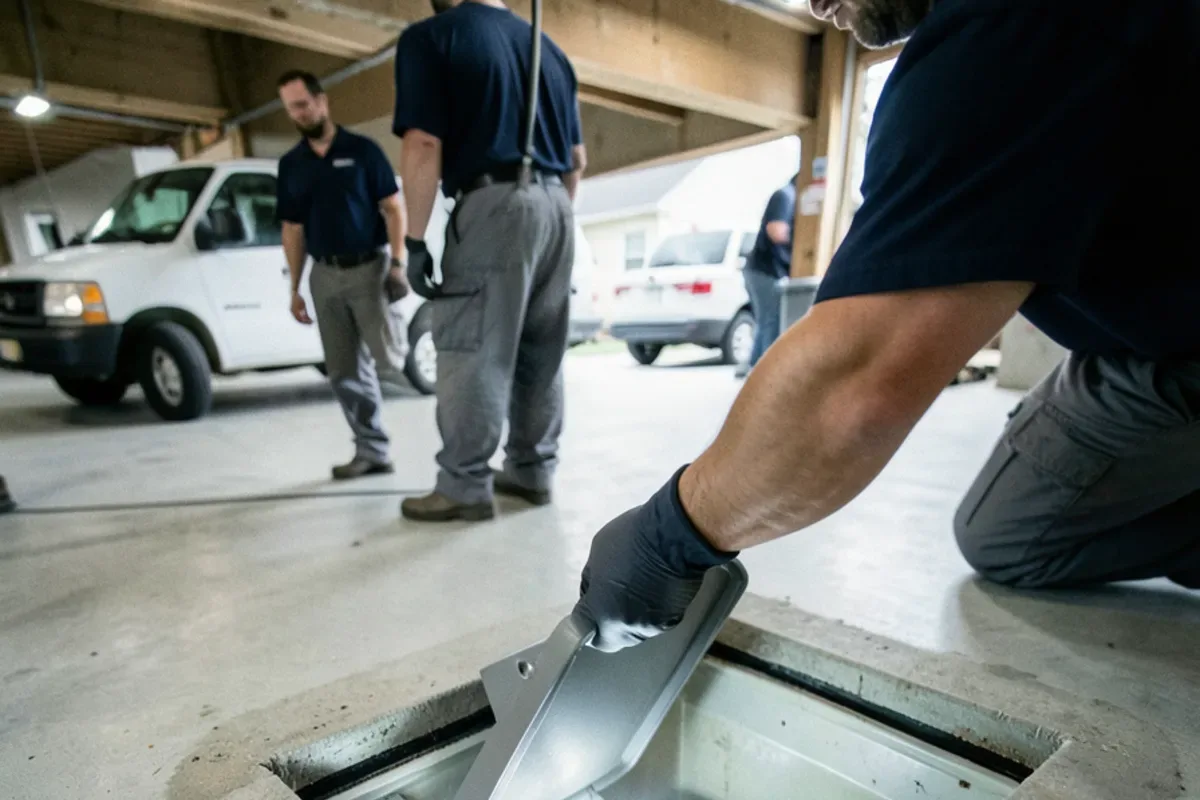
A valve that sits for months can collect grease or debris on its seat, and a flap that cannot close fully lets the sewer through. Lift the access cover in spring and fall, check that the flap swings freely, and wipe the seat clean with gloves on. Look again after any storm that tested it. If you have already had sewage in the basement, our guide on what to do after a basement sewage backup covers cleanup and safety.
What happens to footing drains and sump lines when the valve closes?
While the flap is shut, nothing leaves the house either. Run the dishwasher or a load of laundry during the storm and that water fills the pipe behind the valve until it finds the lowest drain. That is why the city asks residents to hold off on laundry and long showers during heavy rain, and it applies doubly once you have a valve.
The bigger catch is groundwater. In some older houses the footing drain or a sump discharge ties into the sanitary drain upstream of where a valve would go. Close the valve on that arrangement and the groundwater has nowhere to go but the basement. We trace those connections before choosing a location, and in some houses the right plan includes a sump pump so the groundwater leaves by another route.
What affects the cost of a backwater valve
A valve near the wall in bare concrete, on a building drain a foot or so down, is the plain version. Depth adds digging. A drain under a finished room means flooring or a wall comes up and goes back. Cast iron that crumbles at the cut, or clay with an offset joint on the video, may need a section replaced before the valve fits. Rerouting a footing drain that ties in upstream is its own piece of work. We go through these after the camera run and write the scope down before the saw starts.
- How deep the building drain runs under the floor, and how far from the wall.
- The floor itself. Bare concrete is simpler than tile, carpet or a finished room.
- The pipe material, since cast iron and clay need different couplings.
- Whether the camera finds cracks or offsets that need repair at the same time.
- Rerouting a footing drain or sump discharge that ties in upstream.
- The permit and inspection.
Backwater valve permits and plumbing code in Warren
Warren's Division of Buildings and Safety Engineering, at One City Square, gives the backwater valve its own line on the plumbing permit. An owner living in the house may pull that permit; rentals and businesses need a plumbing contractor, and Michigan LARA licenses those contractors and the master plumbers they must hold or employ. The 2021 Michigan Plumbing Code covers the hardware: valves built to ASME A112.14.1 or the matching CSA standards, installed so the working parts can be reached. Replacing the lateral outside is a separate city permit, inspected on private property and in the right-of-way alike.
Sewer backup protection from our Stephens Rd office
We work out of 11355 Stephens Rd in 48089, a ZIP where nearly half the homes predate 1960 and cast iron building drains are everyday work. Homes, rentals and businesses reach us on the same phone line. On a floor drain call the first question is where the water came from, because a dry-weather clog, groundwater and a surcharged sewer each need a different fix. The camera goes down before a saw touches the floor, you see the cost factors and a written scope before work starts, and the permit and open-trench inspection are part of the job.
Backwater valve installation around Warren and nearby cities
- Plumber in Berkley
The August 2014 flood reached 80 percent of Berkley households, with 2,181 claims alleging sewage backups from the city's combined sewer.
- Plumber in Royal Oak
Police took hundreds of flooded-basement calls in August 2014, and the city maintains only the main, leaving the cleanout and connection to owners.
- Plumber in Ferndale
Ferndale's combined sewer feeds the Kuhn basin, and in July 2021 nearly 2 inches fell in under 50 minutes, more than the system could carry.
- Plumber in Hamtramck
A FEMA project page ties frequent basement flooding to an undersized sewer, and the city is extending a relief sewer first built in 2016.
- Plumber in Grosse Pointe Woods
The Woods runs a combined sewer that drains to the Milk River basins, and 5.3 inches fell in three hours on June 25, 2021.
- Plumber in Detroit
DWSD says most Detroit neighborhoods have combined sewers whose water level can rise above the basement floor, through laterals that usually run to the alley.
- Plumber in Wayne County
DWSD's basement backup program put backwater valves in 11 flood-prone Detroit neighborhoods, and only where the lateral was in viable condition.
- Plumber in Roseville
In the July 2019 flash flood, floodwater mixed with sewage filled basements on Blumfield Street near I-696 and the city declared an emergency.
- Plumber in St. Clair Shores
A 2016 study after summer basement backups blamed roots and grease, and the owner's lateral can run to a main across the street.
- Plumber in Madison Heights
The Kuhn basin under I-75 at 12 Mile takes combined flow from 14 communities, and southeast Oakland got over five inches in about three hours in August 2014.
Backwater valve installation questions from Warren customers
Will a backwater valve stop my floor drain from backing up?
Yes, when the city sewer is pushing water back up your lateral, which is the usual cause during heavy rain. It does not clear a clog in your own line, and it does not stop groundwater seeping through the floor. If your floor drain backs up on dry days, the lateral needs cleaning first.
Can I use water while the backwater valve is closed?
Yes, but as little as you can. While the flap is shut, everything you drain stays in the pipe behind it and can come out the lowest basement fixture. Skip laundry and the dishwasher until the rain stops and the sewer drains down, then the valve opens on its own.
Is a backwater valve the same as a backflow preventer?
No. A backwater valve sits in the sewer drain and keeps wastewater from flowing back into the house. A backflow preventer sits on the water supply and keeps irrigation or process water from flowing back into drinking water. Our page on backflow prevention and testing covers the supply side.
Does a backwater valve need maintenance?
Yes. It is a mechanical flap sitting in sewage, and grease or a scrap of debris on the seat can hold it open. Open the access cover each spring and fall, make sure the flap swings, clean the seat, and check again after any storm that closed it. A stuck valve gives no warning until the next big rain.
Who is responsible for the sewer line in Warren?
The property owner. Warren says the owner maintains the sanitary lateral from the building all the way to the city main, including the section under the right-of-way, and the city maintains only the main itself. A backwater valve goes on the owner's side, inside the house.
Still not sure what you're dealing with? Describe it on the phone and we'll tell you what we'd check first.
(207) 419-2600Last updated October 25, 2026