
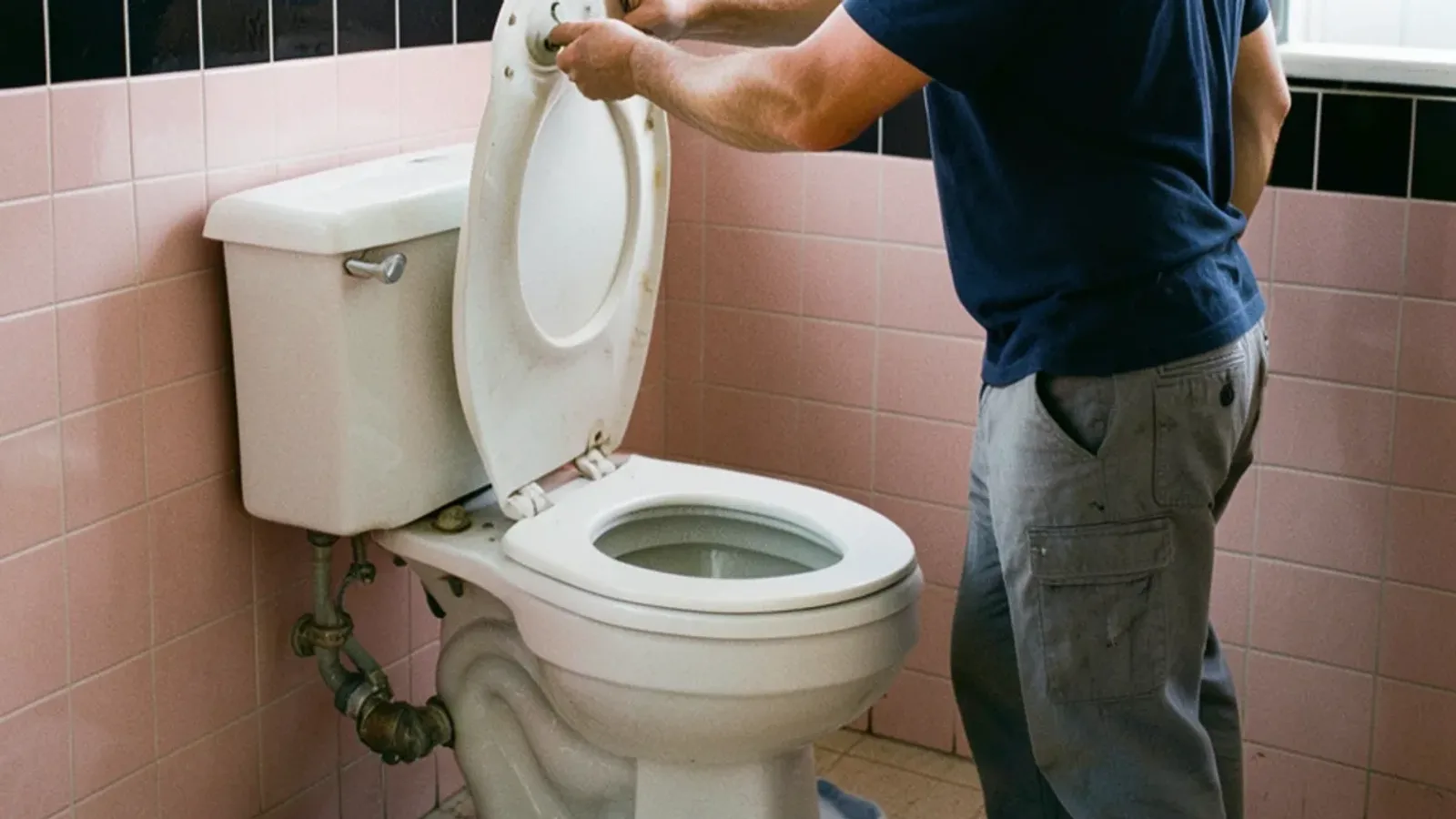
Toilet repair in Warren tends to come down to a handful of parts: the flapper, the fill valve, the wax seal under the bowl, the flange it sits on and the shutoff behind it. Most of the time one of those has worn out, and we can fix that part and leave the rest of the toilet alone.
When the toilet itself is the problem, because the porcelain is cracked or it clogs every week, we install a replacement and set it level on a sound flange. Either way, you hear which part failed and why.
What our toilet repair and installation work covers
The china in a toilet rarely wears out; the rubber and plastic parts around it do. So the job covers the whole setup: the parts inside the tank, the seal and flange under the bowl, and the shutoff and supply line behind it.
- Flapper, fill valve and flush valve replacement
- Tank-to-bowl gaskets and bolts that drip onto the floor
- Pulling and resealing a toilet with a wax or wax-free seal
- Flange repair rings and new flanges on cast iron or plastic drains
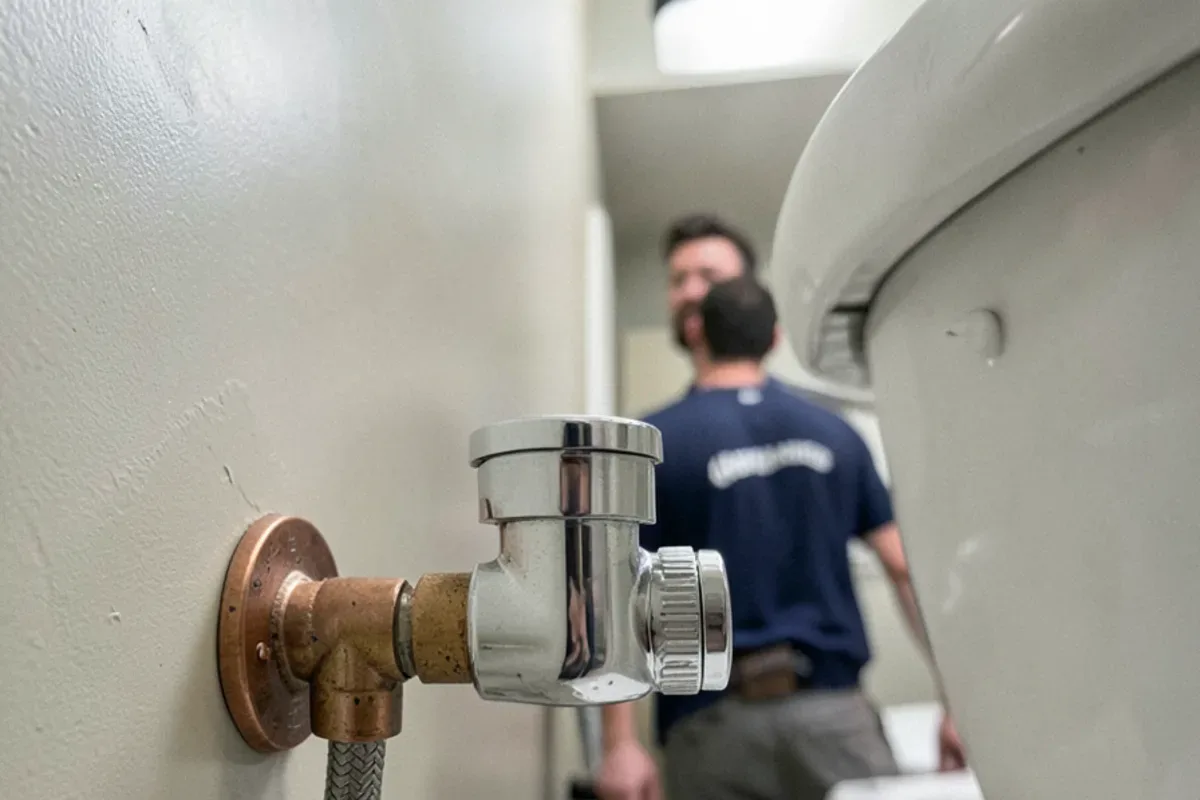
- Shutoff valve and braided supply line replacement
- New toilet installation matched to your rough-in
Why is my toilet running, rocking or leaking?
Each symptom points to a different part, and a few minutes of looking usually narrows it down. The table is where we start.
| What you notice | The usual cause | Typical repair |
|---|---|---|
| Tank refills on its own every so often | Flapper no longer seals against the flush valve seat | New flapper, sometimes a new flush valve |
| Water keeps running into the overflow tube | Fill valve shuts off too late or not at all | Adjust or replace the fill valve |
| Bowl rocks when you sit down | Loose or broken flange, or an uneven floor | Flange repair, then a new seal and shims |
| Water or stain around the base | Failed wax seal, or a cracked bowl | Pull the toilet and reseal, or replace it |
| Weak flush that clogs often | Scale in the rim holes, or an old low-flow design | Clean the jets, or replace the toilet |
How we check a toilet before we touch the parts
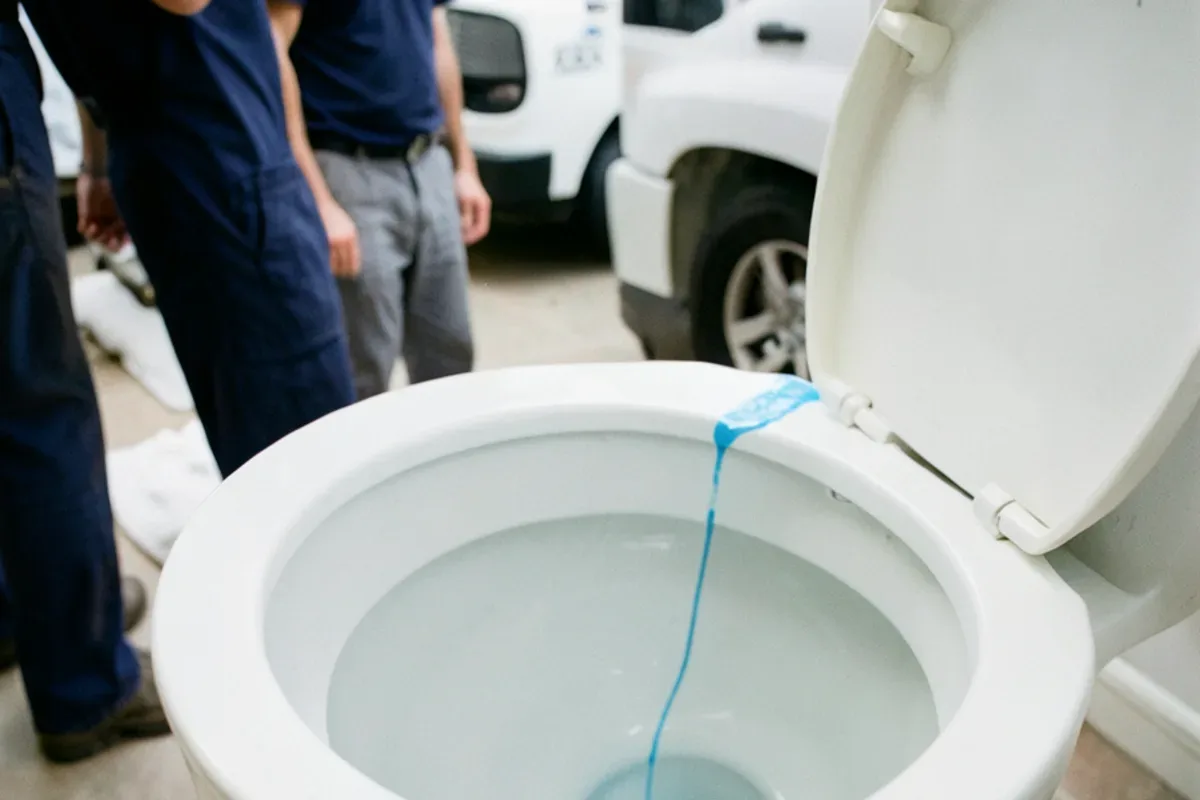
A few drops of food coloring in the tank show whether the flapper leaks. We watch the fill valve through a full cycle, press the bowl from each side to feel for movement at the flange, and look for staining or soft flooring at the base. A stained ceiling below the bathroom deserves its own look, and our leak detection and repair page covers how that is traced.
If the complaint is clogging, we ask whether the tub or basement floor drain acts up too. A toilet that clogs by itself is a toilet or trap problem. One that gurgles when the washer drains points farther down the line, and that is a job for drain cleaning and unclogging rather than a new toilet.
What wears out on toilets in 1950s and 1960s Warren homes
Most Warren homes went up in the 1950s and 1960s, and the median house was built in 1965. Plenty of bathrooms from that era keep their original closet flange, often on a cast iron drain. Iron flanges rust at the bolt slots, and once a slot breaks the bowl can no longer be held tight. The toilet rocks, the wax seal gets crushed, and every flush wets the subfloor.
Inside the tank, the culprit is usually mineral scale. Warren’s 2025 water quality report puts average hardness at 105 mg/L, which is moderately hard. That is enough to stiffen rubber flappers and coat fill valve seals over the years. The other common find is a shutoff behind the toilet that hasn’t been turned in decades and won’t close, or snaps when someone tries. Before we work on a toilet with a stuck stop, it helps to know how to shut off your main water valve.
Keeping a toilet sealed and flushing well
Skip drop-in bleach and blue tablets, which break down the rubber in the tank. Flush only toilet paper; wipes sold as flushable don’t break apart the way paper does. Turn the shutoff off and on once or twice a year so it works when you need it. If the bowl moves at all, get it looked at early; a rocking toilet ruins its own seal, and a sewer smell near the base is often the first sign. Our post on a sewer smell in the basement covers other places that smell comes from.
Toilet repair or toilet replacement?
A sound toilet with a worn flapper or fill valve is worth repairing. Replacement starts to make sense when the china is cracked, when parts are no longer made for an older model, or when a weak flush keeps clogging. Water use matters too. The EPA says older toilets can use as much as 6 gallons per flush, while toilets with its WaterSense label use 1.28 gallons or less.
| Situation | Repair makes sense | Replacement makes sense |
|---|---|---|
| Running or refilling | Flapper or fill valve is the only worn part | The flush valve seat is cracked and parts are hard to find |
| Leak at the floor | Bowl is intact and the flange can be repaired | Bowl is cracked at the base or foot |
| Frequent clogs | Rim jets are scaled or the trap holds a lodged object | An early low-flow design that never flushed well |
| High water bill | One leaking flapper | An old high-volume toilet you want to retire |
What happens during a toilet installation
Measure the rough-in
From the finished wall to the center of the floor bolts. Most toilets fit a 12-inch rough-in, but 10- and 14-inch drains turn up in older bathrooms.
Shut off, drain and pull the old toilet
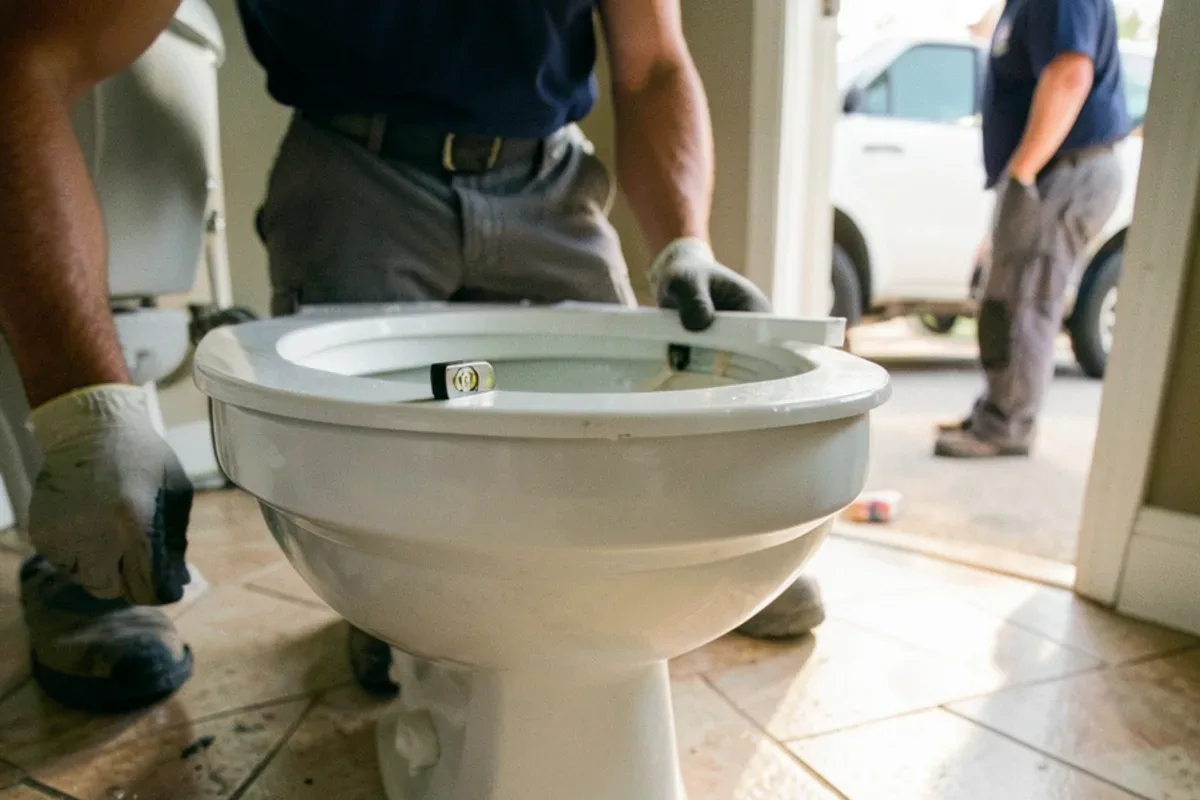
The tank and bowl are emptied and the toilet comes up. We plug the drain opening right away so sewer gas stays out of the room.
Repair or replace the flange
A cracked or rusted flange gets a repair ring or a new flange fastened to the floor. The flange should sit level with the finished floor or just above it, or the seal will not compress evenly.
Seal and set the bowl level
A new wax or wax-free seal goes on, the bowl is pressed straight down and the bolts are snugged in steps. An out-of-level floor gets shims so the base can’t rock.
Connect the supply and test
A new braided supply line goes on, and a seized stop becomes a quarter-turn valve. We flush a few times, check the base and tank bolts with a dry towel, and set the water level.
Warren permits and Michigan code for setting a new toilet
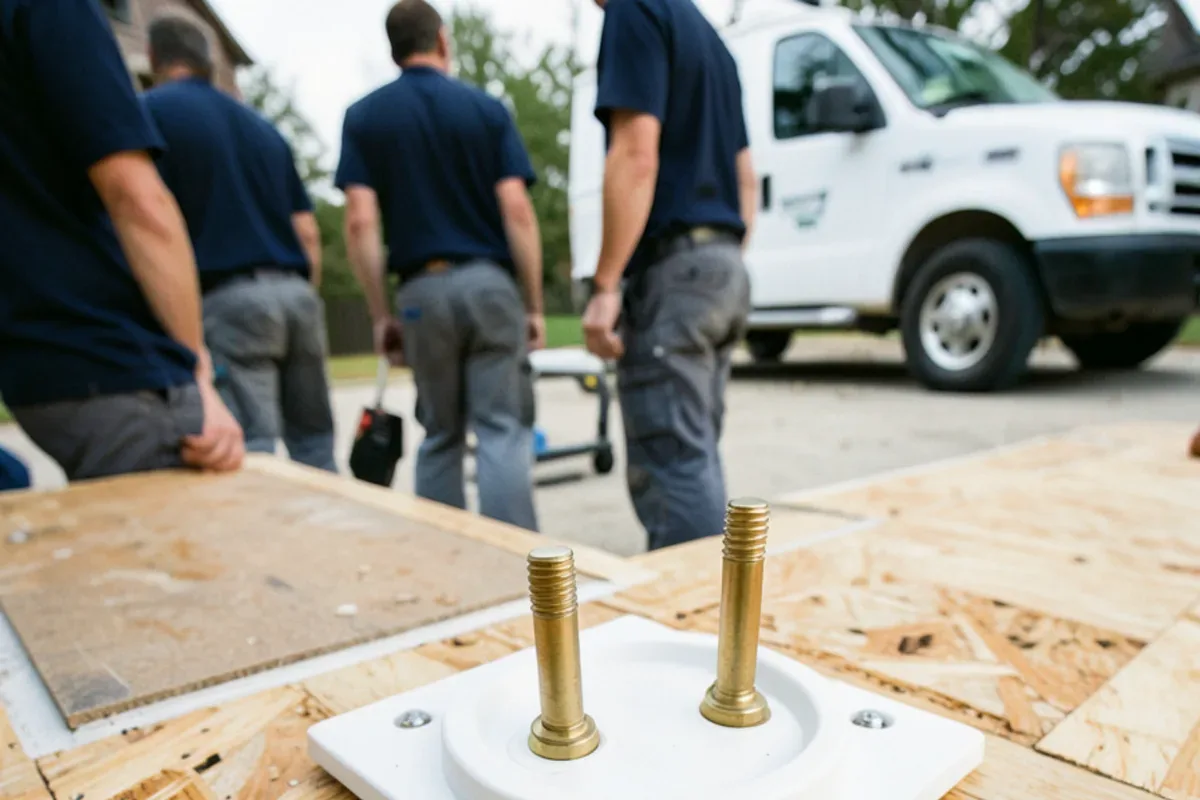
Warren’s Division of Buildings and Safety Engineering lists the water closet as a fixture item on its plumbing permit form and says plumbing alterations may need a permit, so setting a new fixture is treated differently from a repair inside the tank. Michigan law lets owners do plumbing in their own single-family home with a permit; rentals go through a plumbing contractor, and LARA’s online lookup verifies any license. A new toilet also has to meet the 2021 Michigan Plumbing Code, which caps it at 1.6 gallons per flush and requires it to be fastened to the floor or flange with corrosion-resistant bolts or screws.
What changes the cost of toilet repair or installation
Nobody knows what is under a toilet until it comes up, so we explain what could change once the bowl is off the floor. These are the variables:
- Whether the fix is inside the tank or needs the toilet pulled from the floor.
- The flange. A sound flange needs nothing; a broken cast iron one needs a repair ring or more.
- The shutoff valve. A stop that will not close has to be replaced before anything else.
- Floor damage under the toilet, which may need a carpenter before the toilet goes back.
- The toilet you choose, including one-piece or two-piece, bowl height and rough-in size.
- Whether the toilet stays in its spot or moves, which turns the job into bathroom plumbing for a remodel.
Why call a Stephens Rd plumber about a running or rocking toilet
We work from 11355 Stephens Rd in 48089, where the median house dates to 1962 and iron flanges from the 1950s still turn up under toilets. Homeowners, landlords and businesses reach us on the same line. We find the failed part before selling a fix, so a flapper problem gets a flapper, not a new toilet. A toilet that gurgles along with the floor drain gets the main line checked before anyone blames the fixture, and you hear the cost factors and get a written scope before work starts.
Toilet repair and installation around Warren and nearby cities
- Plumber in Center Line
About half the homes predate 1960, and many 1940s and 1950s houses have cast iron under the original flange.
- Plumber in Hazel Park
One home in five predates 1940, and those Cape Cods and bungalows often keep lead-and-oakum cast iron stacks.
- Plumber in Ferndale
With 42% of homes built before 1940, plenty of Ferndale toilets sit on old cast iron soil pipe.
- Plumber in Berkley
Its 1940s bungalows, 40% of homes, often run cast iron under the floor from the toilet to the front wall.
- Plumber in St. Clair Shores
Half the homes went up in the 1950s alone, so original flanges and shutoffs are reaching seventy years old.
- Plumber in Madison Heights
Forty percent of homes are 1950s brick ranches whose cast iron drains often still meet the original flange.
- Plumber in Eastpointe
Nearly four in five homes predate 1960, from 1920s bungalows to 1950s ranches with galvanized supply branches.
- Plumber in Detroit
Homes along 8 Mile in 48205 and 48234 are mostly 1940s and 1950s, with cast iron drains under the bathroom.
Toilet repair and installation questions from Warren customers
How much does it cost to have someone install a toilet?
It depends mostly on what we find under the old one. A sound flange and a working shutoff keep a swap simple. A broken cast iron flange, a seized stop or soft flooring add work. The toilet itself matters too, and so does the rough-in size. We look at the setup first and explain the cost factors before starting.
Is a running toilet worth fixing right away?
Yes. A flapper that leaks a little runs all day and all night, and you pay for every gallon of it. The repair is usually small, often a new flapper or fill valve, so leaving it alone rarely saves anything.
Why does my toilet still rock after I tighten the bolts?
Tightening the nuts cannot fix a broken flange or an uneven floor, and cranking on them can crack the bowl. Once a toilet has rocked for a while the wax seal is usually crushed too. The fix is to pull the toilet, repair the flange, reseal it and shim the base.
Do I need a permit to replace a toilet in Warren?
No, not for a repair inside the tank. Setting a new fixture or moving a drain is different: Warren lists water closets as a fixture item on its plumbing permit form, and the city says plumbing alterations may need a permit. If your job needs one, it is handled before work starts. The Building Division at City Hall has the final word.
Still not sure what you're dealing with? Describe it on the phone and we'll tell you what we'd check first.
(207) 419-2600Last updated October 25, 2026