
 By Plumber in Warren, MI, plumbers on Stephens Rd in WarrenPublished October 25, 2026Last updated October 25, 2026
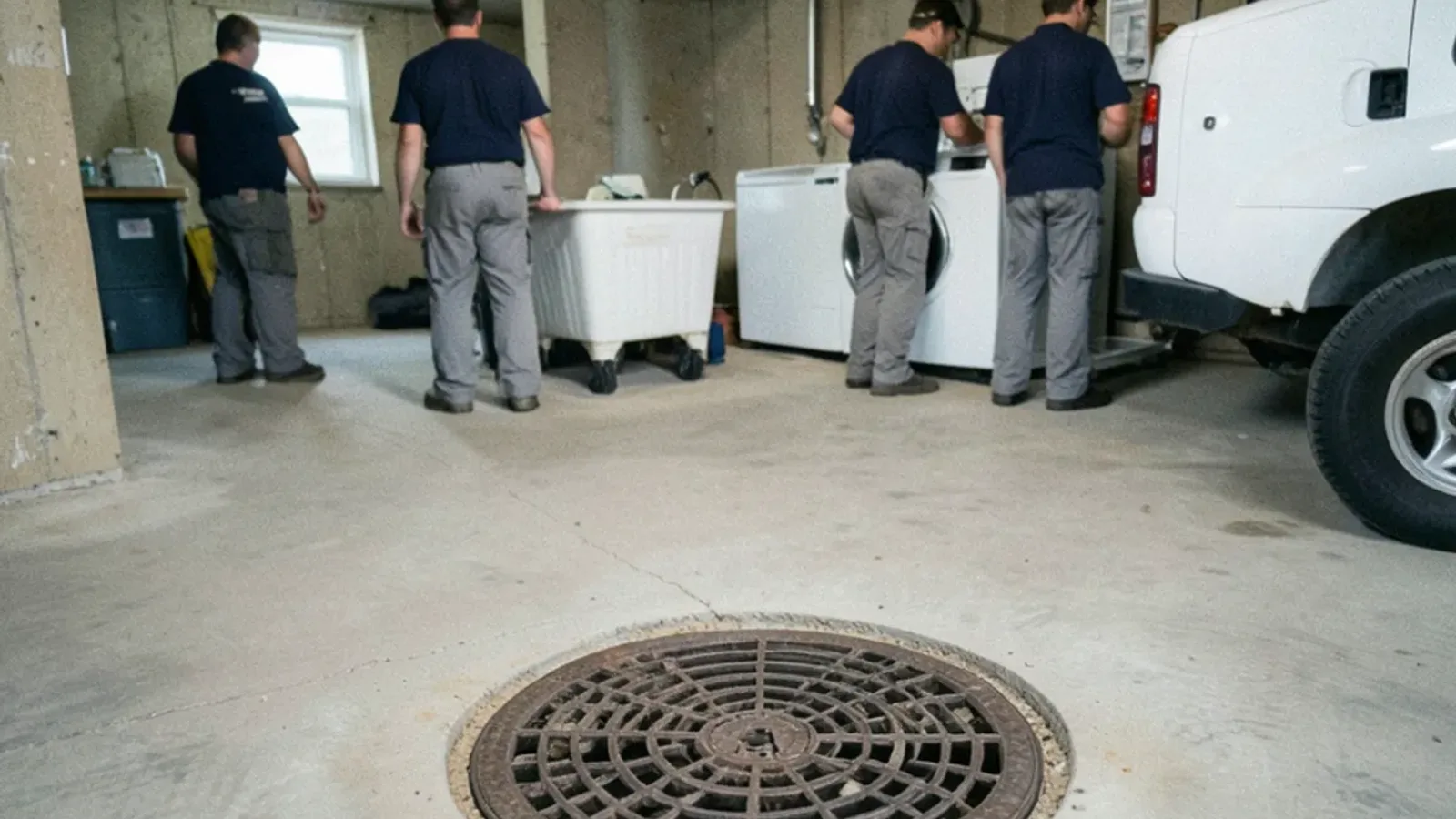
When you notice a sewer smell in basement corners or near the floor drain, sewer gas is getting past a seal that should be holding it back. The most common cause is the simplest: a floor drain or unused fixture whose trap has dried out. A gallon of water often fixes it.
Pour that gallon into every floor drain and any sink or shower you rarely use. If the smell is gone in a day, that was it.
If it isn't, work through the other openings in the drain system one at a time. The smell is a clue to where the gap is, and it's usually strongest right next to it.
Why does my basement smell like sewage?
Every drain in the house connects to the sewer, and the sewer is full of gas. What keeps it out of the house is a series of seals: water standing in each trap, gaskets and plugs on cleanouts, wax rings under toilets, and tight joints in the pipe itself. Vent pipes through the roof let the gas escape outdoors and keep the traps from being siphoned dry. When any of those fail, gas comes in. Basements get it first because they have the most rarely used drains, and because hydrogen sulfide, the gas behind the rotten-egg smell, is heavier than air.
| Where the smell is strongest | Likely cause | What to try first |
|---|---|---|
| Near the floor drain | Dry trap, or a cracked or missing trap seal | Pour in a gallon of water and a spoonful of mineral oil |
| Near a basement shower or bar sink nobody uses | Dry trap | Run water for a minute |
| Around a cleanout plug on the stack or floor | Loose, cracked or missing plug or gasket | Check that the plug is present and tight |
| Around a basement toilet | Failed wax ring or loose toilet | Rock the toilet gently; any movement means the seal is suspect |
| Near the laundry standpipe | No trap, or a trap that siphons dry | Look for a P-trap below the standpipe |
| Everywhere, worse after heavy use | Cracked pipe or a blocked vent | Have the drain system inspected |
Start with the floor drain and other dry traps
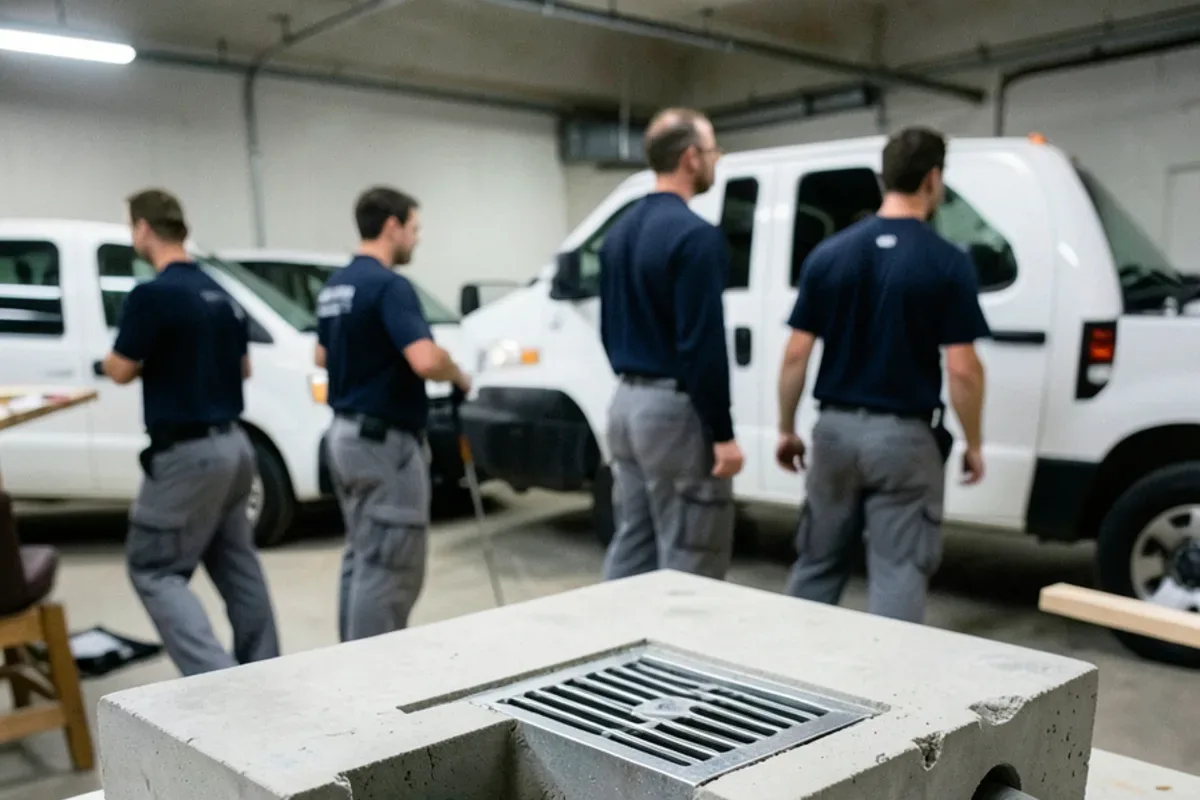
A trap is a bend that holds a few inches of water. In a floor drain that only sees water when the water heater relieves or the basement floods, that water slowly evaporates, faster in winter when the furnace dries out the air. Once the seal is gone, the drain is an open pipe to the sewer.
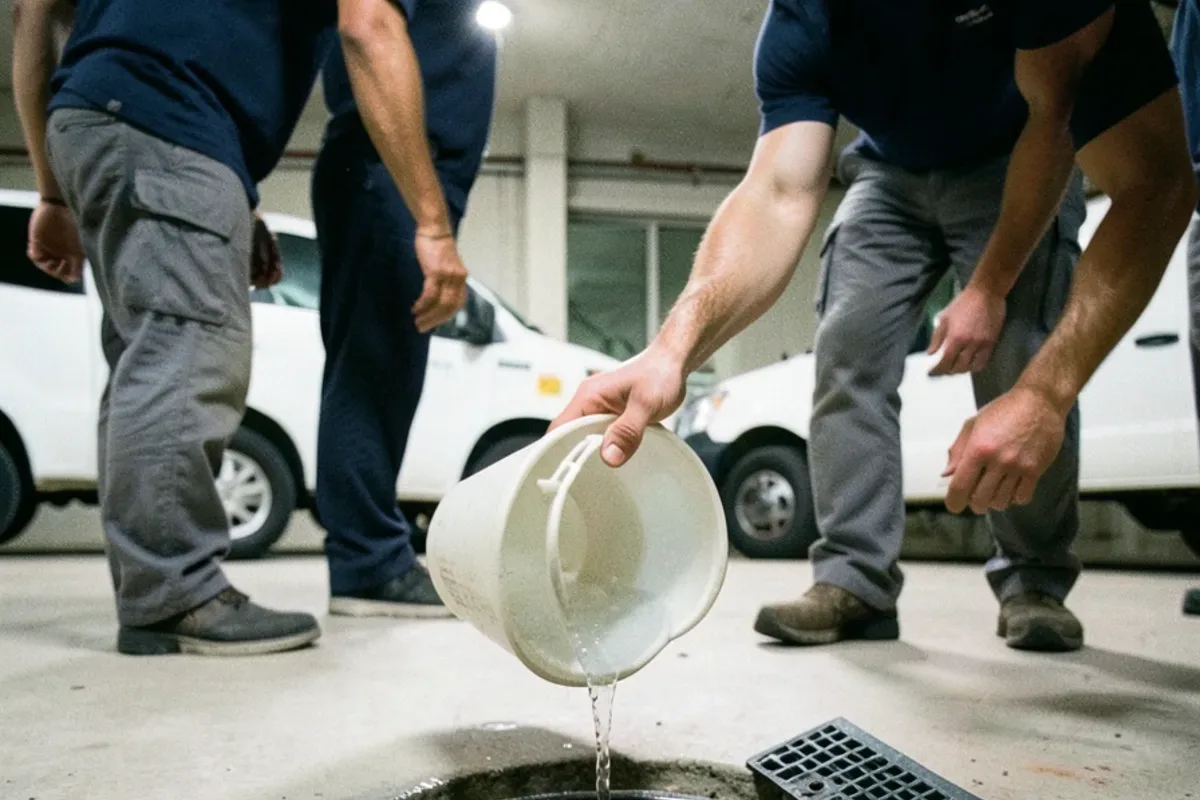
Refill it with a gallon of water, then add a tablespoon or two of mineral oil or cooking oil on top. The oil floats and slows evaporation. Do the same for a basement shower, a laundry tub, or an upstairs guest bathroom that sits empty. Some floor drains have a trap primer, a small line that adds water to the trap automatically. If yours has one and the trap still dries out, the primer isn't working.
If the floor drain smells even when it's full, or water disappears from it within a day or two, the trap may be cracked or the drain may be partly blocked. Basement floor drain cleaning clears the trap and the line beyond it and shows whether the trap is holding water the way it should.
Cleanout plugs, wax rings and other loose seals
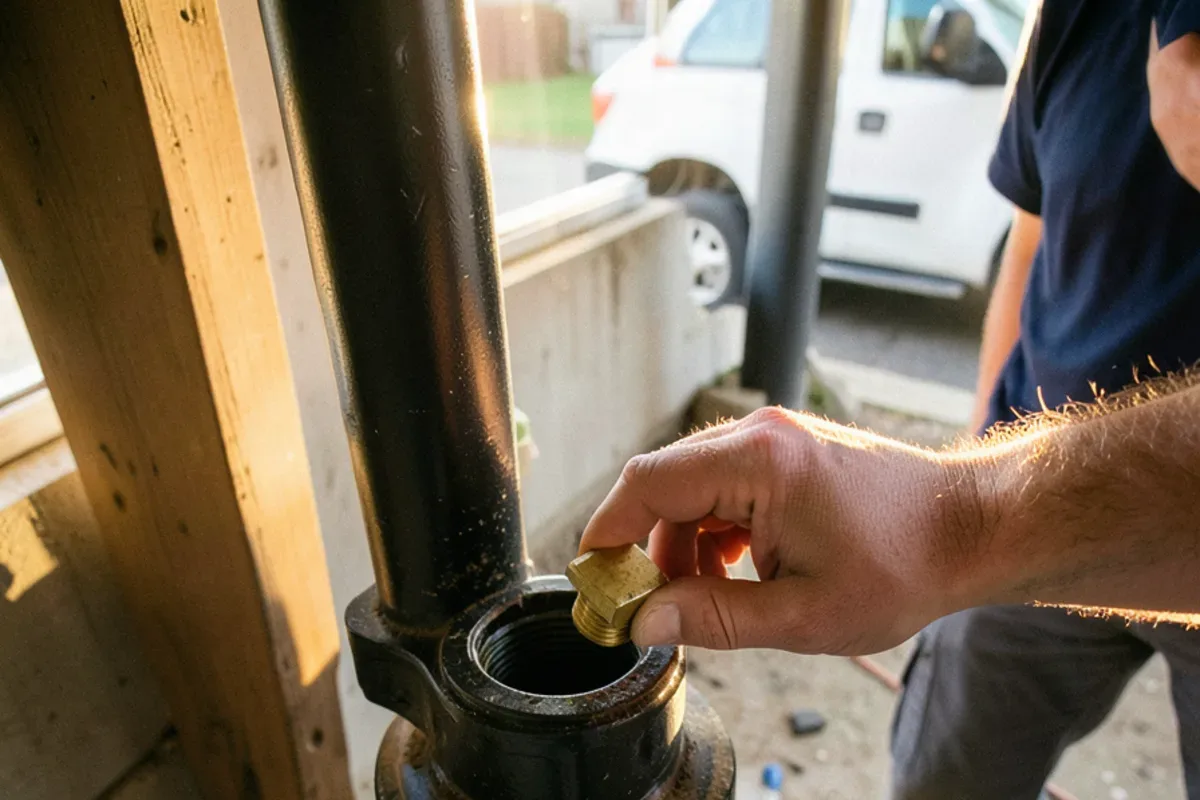
Most basements have at least one cleanout, a threaded plug on the stack or a cap in the floor where a plumber can get into the main line. Plugs get removed during drain cleaning and sometimes go back loose, cross-threaded or without their gasket. An old brass plug can crack. Put your nose near it, check that it's tight, and if it's missing or damaged, replace it. Many older floor drains also have a small cleanout plug inside the drain body, on the sewer side of the trap. If that plug is missing or rusted through, gas goes straight around the water seal no matter how full the trap is.
A basement toilet that wobbles has probably broken its wax ring, and that seal is also what keeps sewer gas out. The laundry standpipe should have its own trap below the floor or behind the wall. A washer hose stuffed into an untrapped drain will smell. So will an old fixture that was removed and its drain left uncapped behind a wall or under a cabinet.
When the vents are the problem
Vents let air into the drain system so draining water doesn't pull the water out of nearby traps. If the vent on the roof is blocked by a bird nest, leaves or frost buildup during a Michigan cold snap, drains start to gurgle and traps get sucked dry. You'll often hear it before you smell it: a toilet that bubbles when the tub drains, or a sink trap that glugs. A plumber can check the vent from the roof or run a camera down from the top.
Cracked pipe and a smell that keeps coming back
If every trap is full, every plug is tight and the smell keeps coming back, the gas is likely escaping through the pipe itself. In older houses that usually means a cracked or corroded cast iron stack, a failed joint, or a broken drain under the floor. Our guide to cast iron drain pipe problems covers the signs on a stack you can see.
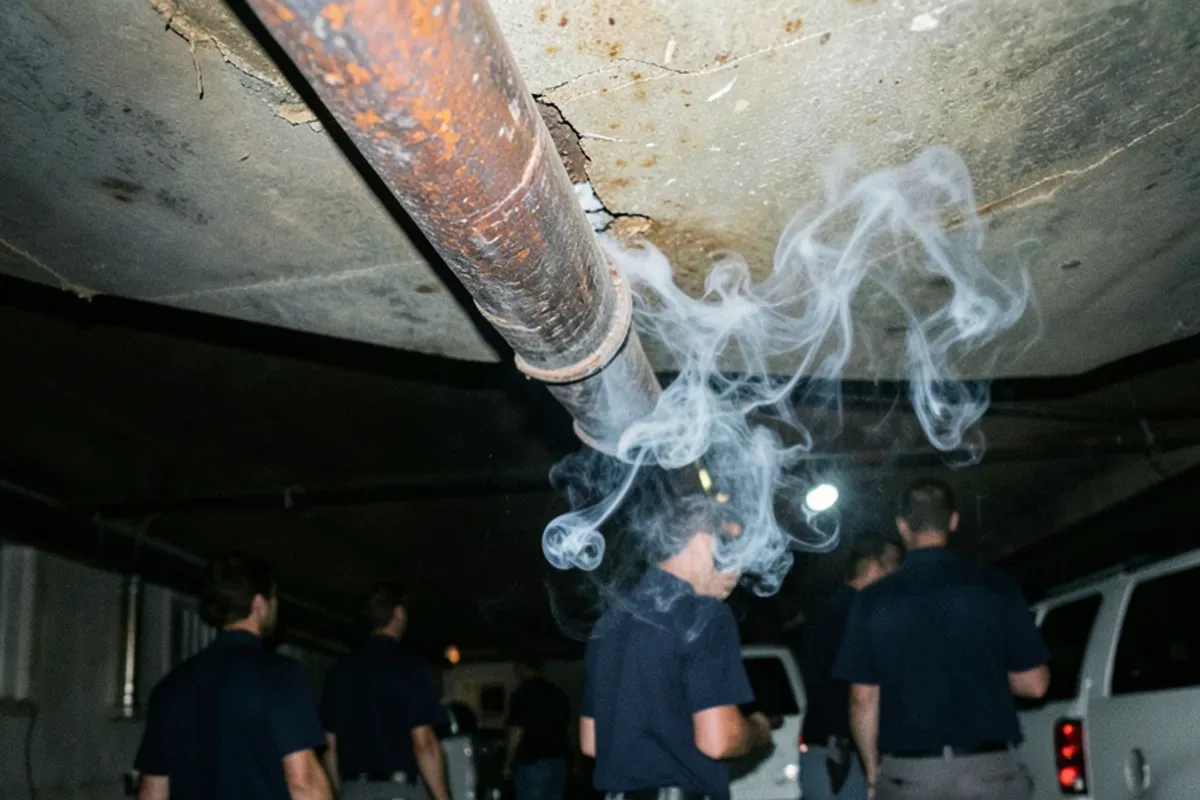
For pipe you can't see, a sewer line repair and inspection uses a camera to look for cracks and separated joints, and sometimes a smoke test, where harmless smoke is blown into the drain system and the leak shows itself wherever smoke appears. That's often the only way to find a crack hidden behind drywall or under the slab.
If the smell showed up after water backed up through the floor drain, the line may have left contamination behind under shelves or carpet. Our post on what to do after sewage backs up into your basement covers cleanup and finding the cause. We serve homes and rentals in Eastpointe and across the area around Warren, and a smell that survives a full round of trap refilling is worth a call.
When a sewer smell is a health concern
A faint smell near a dry floor drain is a nuisance more than a hazard. A strong, steady rotten-egg smell is different. OSHA notes that hydrogen sulfide irritates the eyes, nose and throat at low levels, and that people can lose the ability to smell it with longer exposure or at high concentrations. So the smell fading doesn't always mean the gas is gone.
If anyone in the house gets headaches, nausea or eye irritation that eases when they leave the basement, air the space out and have the drains checked soon rather than waiting.
Smells that fool people, and how a plumber narrows them down
Not every rotten-egg smell in a basement comes from the sewer, and not every sewer leak is where the nose says. A good diagnosis rules out the look-alikes before anyone opens a wall.
- The water heater. If the smell comes only from hot taps, it's usually a reaction between the tank's anode rod and the water, not sewer gas. Swapping the anode on a water heater repair visit is the usual fix.
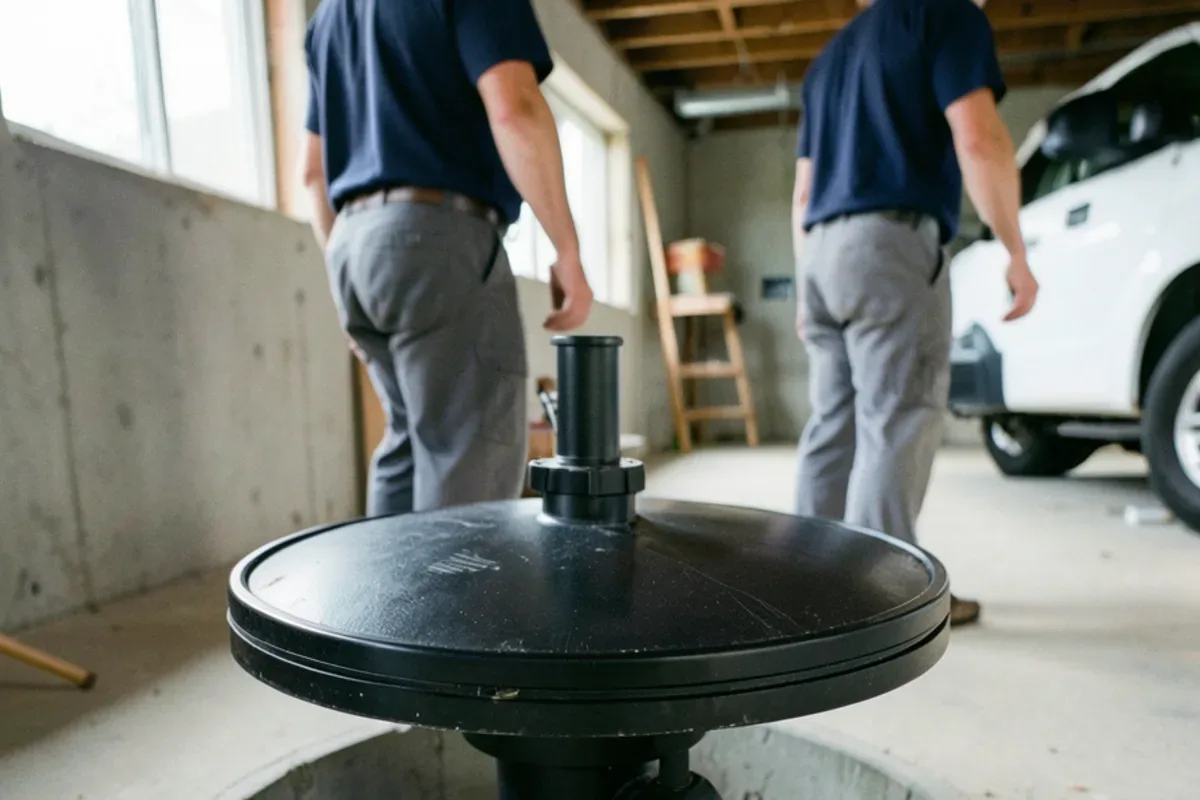
- A sewage ejector pit. A basement bathroom below the sewer line drains to a sealed pit with a pump. A cracked lid, a missing gasket or an unvented pit lets sewer gas out every time the pump runs.
- The sump pit. A sump holds groundwater, not sewage, but standing water in an open pit can smell musty or sulfurous. A sealed lid usually settles it.
- An air admittance valve. Some sinks have a one-way vent valve under the cabinet instead of a pipe to the roof. When one sticks open, it leaks sewer gas into the cabinet.
Smoke testing has trade-offs worth knowing. It finds leaks a camera can't, like a cracked vent above the ceiling, but every trap has to be full first or smoke pours out of each dry drain. The smoke is harmless and clears quickly, and it can only show where the leak is. A crack behind finished drywall still means opening the wall to fix it.
What you can fix with a bucket, and when to call
Refilling traps, adding a little mineral oil, tightening a cleanout plug you can reach and putting a lid on an open sump pit are all fair game. So is checking whether the smell comes only from hot water.
Call when the smell survives a full round of trap refilling, when a floor drain loses its water within a day or two, when drains gurgle or toilets bubble, or when the smell keeps returning after rain. Call right away if anyone feels sick in the basement. If the smell is still there after the bucket test, call us and we'll find the gap it's coming through.
Questions people ask about this
Can a sewer smell in the basement make you sick?
Yes, it can. Low levels of hydrogen sulfide mostly cause eye, nose and throat irritation, headaches or nausea. Higher levels are dangerous, and OSHA notes people can lose the ability to smell the gas with longer exposure, so the smell fading doesn't mean it's gone. Air out the basement and get a strong, persistent smell fixed promptly.
Why does my basement smell like sewage only after it rains?
Heavy rain can fill the sewer and push air and gas back through weak seals, or bring water up through a floor drain whose trap is damaged. If the smell follows storms, have the floor drain and main line checked.
How often should I pour water into the floor drain?
Every few weeks in most basements, and more often in winter when the furnace dries out the air. A tablespoon of mineral oil on top slows evaporation. If the trap needs water every few days, something else is wrong, like a cracked trap, a failed trap primer or a siphoning problem from a blocked vent, and the drain should be checked.
Why does the rotten-egg smell come only from my hot water?
That's usually the water heater, not the sewer. The tank's anode rod can react with the water and give off a sulfur smell that shows up only at hot taps, often in a heater that sat unused for a while. Run the cold side to compare. Replacing the anode with a different type usually fixes it, and the smell isn't sewer gas.
Want a plumber to look at your situation? We're on Stephens Rd in Warren.
(207) 419-2600