
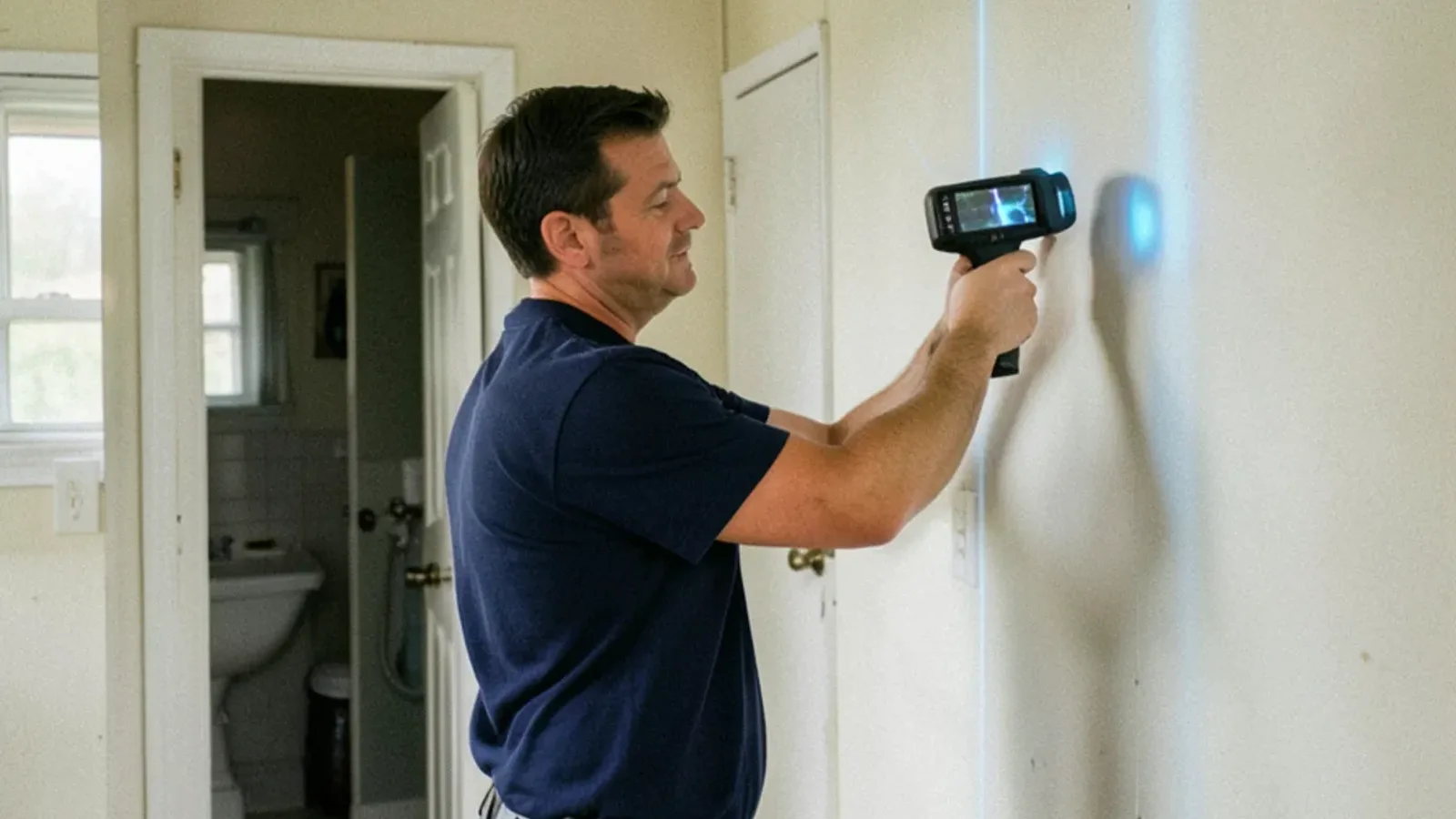
Leak detection in Warren usually starts with a number or a stain. A water bill jumps with no change in how you use water, a brown ring spreads on the ceiling under the bathroom, or the meter keeps turning with every tap off. We track down where the water is going while opening as little of your house as possible, then repair it.
Most hidden leaks here come from aging supply pipe. The median Warren home was built around 1965, and houses of that age often carry copper lines with half a century of wear, galvanized steel in the oldest blocks, and shutoff valves that have been patched more than once. A pinhole in one of those lines can drip inside a wall for months before anything shows on the surface.
Signs of a hidden water leak in your house
| What you notice | Where the water is probably going | Where we start |
|---|---|---|
| Higher bill, nothing visible | A toilet flapper, a line under the floor, or a buried pipe | Meter test with every fixture off |
| Stain on the ceiling below a bathroom | Shower valve, tub drain, toilet seal or a supply line in the floor | Run each fixture alone and map moisture |
| Musty smell or soft drywall near the floor | A supply or drain line inside that wall | Moisture meter, then the thermal camera |
| Hissing with all the water off | A pressurized line or a toilet fill valve | Listen at fixtures, then at the pipe |
| Warm patch on a concrete floor | A hot water line under the slab | Thermal imaging and acoustic listening |
| Soggy strip of lawn in dry weather | The service line from the curb | Pressure and flow at the meter |
That last one is its own job. A leak between the curb stop and your meter often never shows on the bill, because the water escapes before it is metered. We cover it on our main water line repair page.
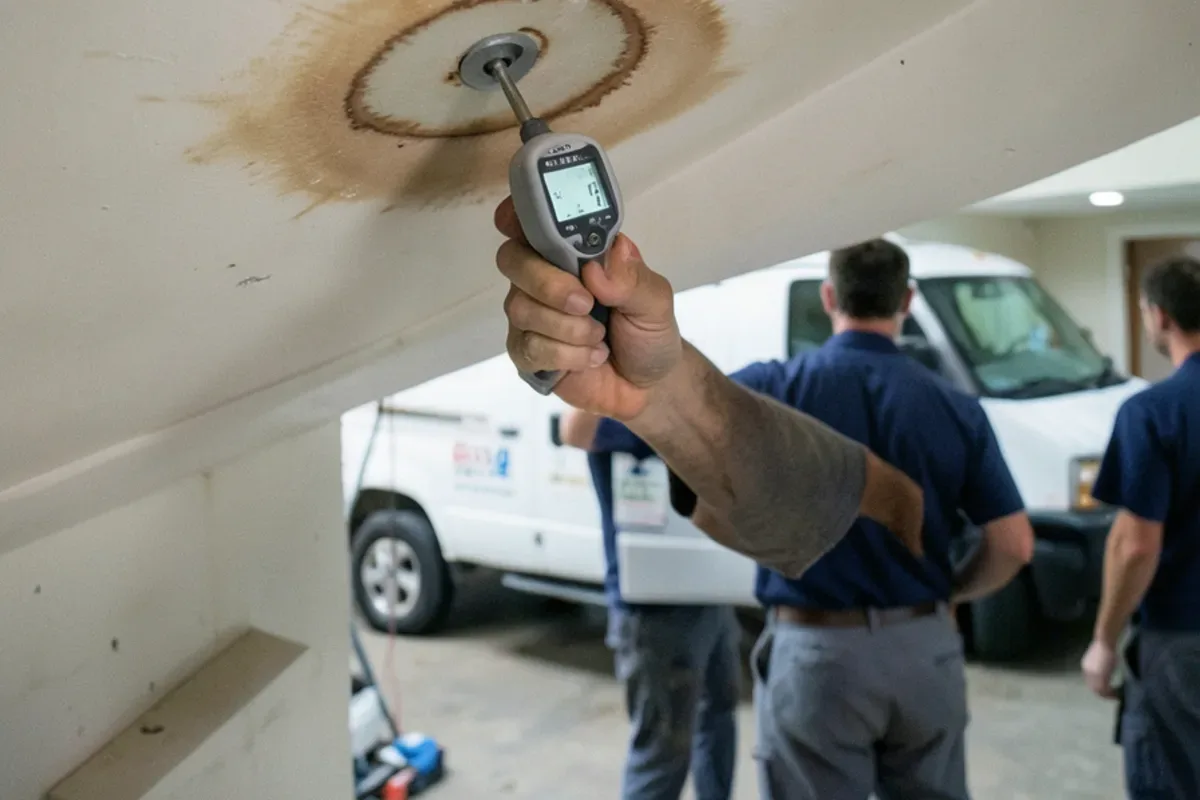
Where leaks hide in houses built in the 1950s and 1960s
Galvanized steel rusts from the inside, and the threads at each joint are the thinnest metal in the run, so that is where it weeps first. Copper tends to fail at pinholes and old solder joints, often near fittings where water turns sharply. Under sinks, original compression stops drip at the packing nut. Toilets are the quiet ones: a worn flapper can trickle into the bowl day and night without a sound you would notice.
Exterior walls get their own share. A hose bib that froze and split over the winter may only leak when you open it in spring, and the water runs back into the wall instead of out onto the patio. Our post on why pipes freeze on exterior walls explains why those runs are the weak spots.
What leak detection and repair include
A leak visit has two halves. The first is proving that water is escaping and narrowing down where, using the meter, the fixture stops and a pressure gauge before any wall gets touched. The second is the fix, which is usually small once the spot is known. Between them sits a decision only you can make: patch the one pinhole, or replace a run of pipe that is likely to fail again. In a 1960s house with original copper, or an older one with galvanized, we show you the pipe on either side of the leak so the choice is yours.
- A meter test with every fixture and appliance off
- Zone isolation, toilet dye tests and a pressure test of the piping
- Acoustic listening, thermal imaging and moisture mapping
- Tracer gas for leaks under a slab or deep in a wall
- A small, square opening at the marked spot
- The repair, a pressure test and a dry check before closing up
How does leak detection work?
Read the meter
With every fixture and appliance off, we watch the low-flow indicator on the meter. If it moves, something downstream of the meter is leaking.
Isolate by zone
We close fixture stops one at a time, shut the water heater supply and put dye in the toilet tanks. Each step rules out a branch of the system.
Pressure test the piping
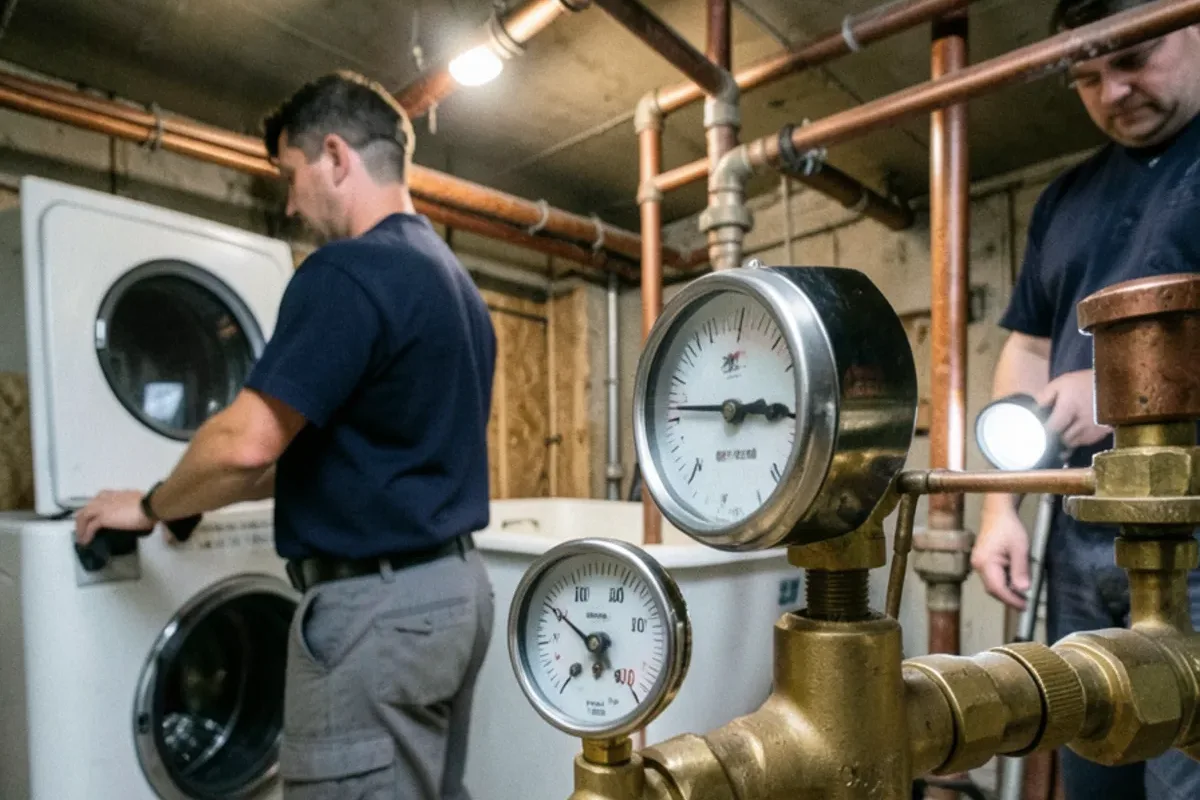
A gauge goes on a hose bib or laundry valve, the main is shut, and we watch for the pressure to fall. Testing the hot and cold sides separately narrows it further.
Listen and image
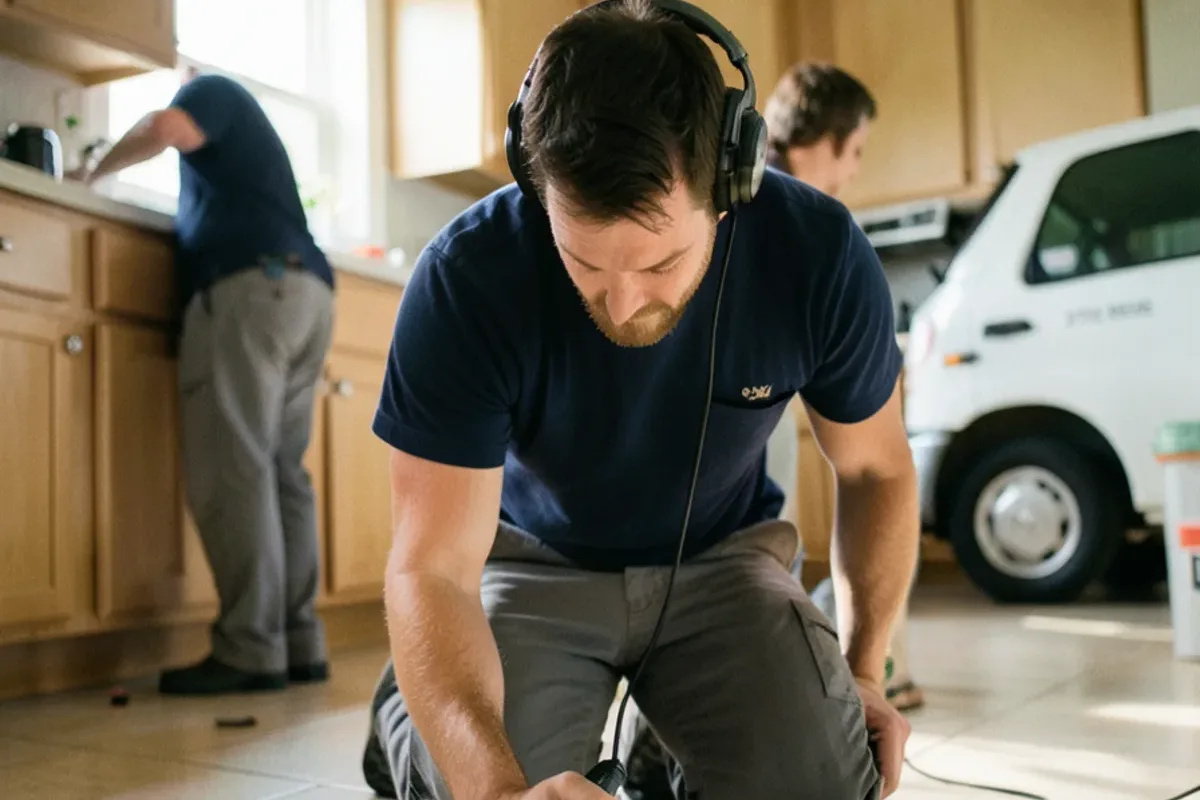
A ground microphone picks up the hiss of water escaping under a floor or inside a wall. A thermal camera shows hot water leaks as warm streaks and wet drywall as cool patches.
Use tracer gas if needed
For a leak the other tools cannot pin down, the line is drained and filled with a hydrogen and nitrogen mix that rises through concrete and soil to a sensor.
Mark the spot and open small
Once the readings agree, we mark the location and cut the smallest opening that gives room to repair the pipe.
Leak repair once the source is found
Most repairs are small. A pinhole in copper gets a cut-out and a new section, a weeping valve gets replaced, and a toilet gets a new flapper or fill valve. Galvanized pipe is different, since the run on either side of a leak is usually just as corroded, and patching one joint often moves the leak a foot down the line. In that case we talk about galvanized pipe replacement for the section. We cut wall openings square and clean so they patch easily, and we pressure test the repair before anything is closed up.
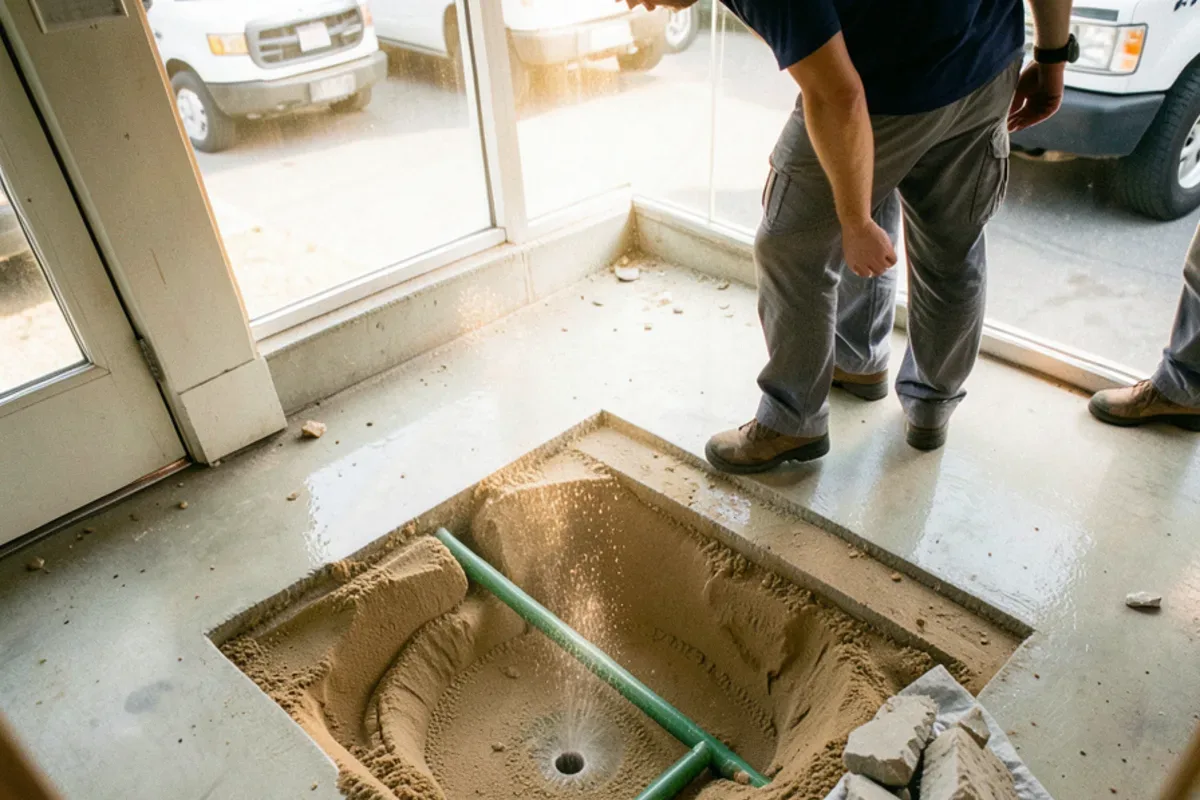
Slab leak detection and repair under a concrete floor
Most Warren houses have basements, but not all. The city's own service line instructions mention slab homes, and basement houses sometimes have a water line running under the basement floor to a laundry, bar sink or a fixture moved in a remodel. A leak in a pipe buried in concrete shows up as a warm spot on the floor, damp carpet at one edge of a room, the sound of running water with everything off, or a meter that never rests.
| Approach | What it involves | When it fits |
|---|---|---|
| Spot repair | Open the floor at the leak, repair the pipe, patch the concrete | One leak on otherwise sound pipe |
| Reroute | Abandon the buried line and run a new one through walls or the ceiling | Old pipe, or a second leak on the same line |
| Repipe | Replace the supply piping throughout the house | Several failing lines of the same age |
Rerouting avoids breaking more floor and gets the line out of the concrete for good, which is why it is often the better choice on 60-year-old copper. When the whole system is that age, see our page on whole house repiping.
What changes the cost of leak detection and repair
Most of the cost sits in the finding, not the fixing. A toilet flapper caught by a dye test is a short visit, while a hot water line leaking under a basement floor can take the full sequence of meter, pressure, acoustic and tracer tests before the concrete is cut. We explain the factors as the tests narrow things down and put the repair scope in writing before any opening is made.
- How hidden the leak is. A meter test and one fixture take little time; tracer gas under a slab takes longer.
- Access. A basement ceiling opens easily; tile, plaster or a finished floor takes more care.
- The pipe. Copper repairs are simple, while corroded galvanized often needs a longer section replaced.
- Whether one leak turns out to be several on the same aging line.
- Concrete work for a slab repair, or new piping for a reroute.
Can you find a water leak yourself?
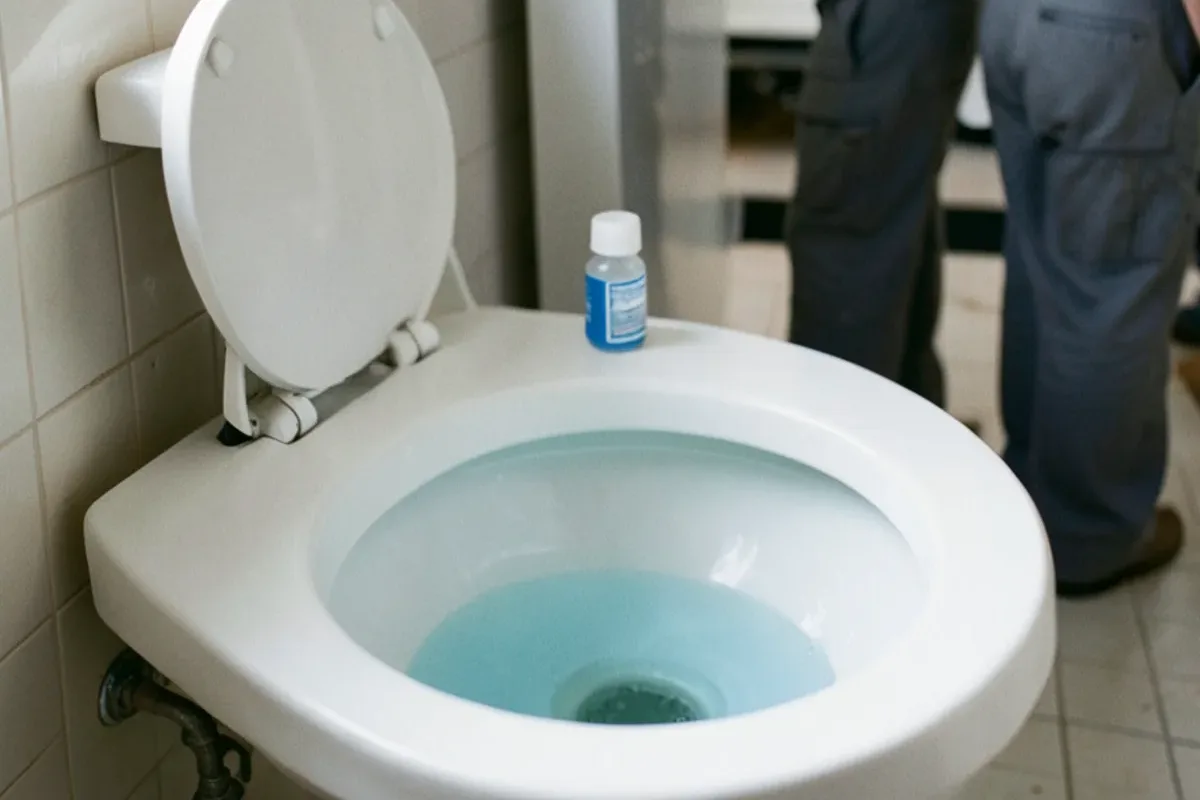
You can narrow it down. Write down the meter reading before bed and check it in the morning before anyone runs water; any change means a leak inside the house. Add a few drops of food coloring to each toilet tank and wait without flushing; color in the bowl means a leaking flapper. Look under every sink, around the water heater base and along the basement wall where the water line comes in. Before you call, find your main shutoff, and our guide on how to shut off your main water valve shows where it usually is.
Permits for leak repairs, reroutes and repipes in Warren
A new flapper, a replaced stop valve or a cut-out on one pinhole is repair work on existing piping. Rerouting a buried line through the walls or repiping the house is different: it changes the system, and Warren's Division of Buildings and Safety Engineering lists plumbing alterations among the items that may need a separate permit, with the new piping left exposed until it is inspected. Owner-occupants can pull their own plumbing permit; rentals and businesses need a plumbing contractor, and Michigan LARA licenses contractors and the plumbers who work for them. The 2021 Michigan Plumbing Code governs any new pipe that goes in.
Why a 48089 plumber tests before cutting
We work from 11355 Stephens Rd in southeast Warren, where nearly half the houses were built before 1960 and the original pipe is often still in the walls. Homeowners, landlords and businesses use the same phone number for us. Our rule on leaks matches the rest of our work: find the cause before selling a fix. The meter and pressure tests come first, the opening comes last, and you hear the cost factors and get a written scope before any repair. When a reroute or repipe needs a permit, we pull it the city's way.
Leak detection and repair around Warren and nearby cities
- Plumber in Fraser
About 18 percent of Fraser homes sit in buildings of five or more units, where a supply leak often shows up first in a neighbor's ceiling.
- Plumber in Troy
Troy is mostly 1970s and newer houses, and finished basements put drywall and carpet over the copper where a slow leak hides.
- Plumber in Sterling Heights
Two-thirds of homes went up between 1960 and 1989, so much of the copper supply in those basements is now 40 to 60 years old.
- Plumber in Oak Park
Nearly half of Oak Park homes are from the 1950s boom, with copper and some galvanized supply running beside basement walls.
- Plumber in Royal Oak
Six in ten homes predate 1960, and older bungalows often carry decades of repairs in mixed pipe materials that leak at the transitions.
- Plumber in Clawson
About one in five Clawson units are in apartment buildings, where shared stacks and one water service make a leak hard to place.
- Plumber in Center Line
Half of Center Line's homes predate 1960, and 13 percent of units are in 50-plus unit buildings with long shared risers.
- Plumber in Hamtramck
With a median build year of 1938 and one home in five a two-unit flat, galvanized supply and stacked kitchens hide many leaks.
- Plumber in Harper Woods
Almost half of Harper Woods homes are from the 1950s, an age when copper or galvanized supply lines are now well into their wear.
Leak detection and repair questions from Warren customers
Do you offer underground leak detection for the line in the yard?
Yes. A leak on the buried service line shows up as a soggy patch, weak pressure or water seeping in at the foundation. Because Warren meters sit inside the house, that water often escapes before it is metered. We use pressure and acoustic tests to locate it, then repair the line from the curb stop to the house.
Can you find leaks in drain lines too?
Yes, though the method is different. Drains are not under pressure, so the meter and pressure tests do not see them. We run water through one fixture at a time and look for where it shows up, and for buried or under-floor drains a sewer camera inspection shows cracks and failed joints.
Will you have to open my walls to find the leak?
Yes, but only at the end. The meter, pressure, acoustic and thermal tests are done from the outside of the wall or floor, so the only opening is the one at the leak itself. We cut it square and as small as the repair allows, which keeps the patch simple.
Does homeowners insurance cover a slab leak?
No, not automatically. Policies tend to treat a sudden break differently from a slow leak that went on for months, and what is covered under a slab varies by policy. Ask your insurer before work starts, photograph the damage, and keep the written leak location and repair notes. Finding the leak early helps whichever way the policy reads.
Is a high water bill always a leak?
No, not always. A new household member, a summer of lawn watering or a billing estimate can raise it too. If your use has not changed, check the meter overnight with everything off. If it moves, there is a leak somewhere downstream of the meter, and a running toilet is the most common culprit.
Still not sure what you're dealing with? Describe it on the phone and we'll tell you what we'd check first.
(207) 419-2600Last updated October 25, 2026