
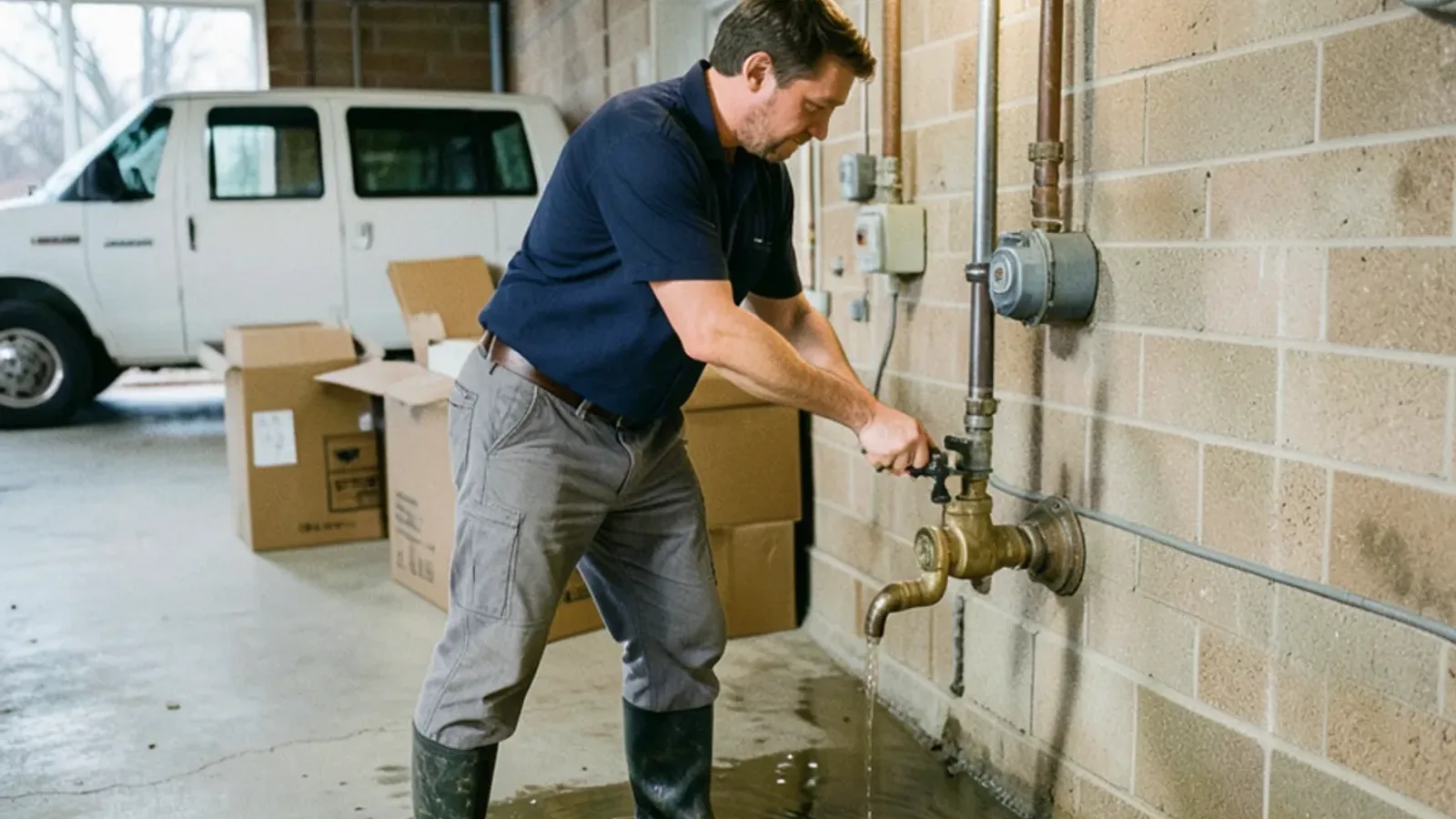
A plumbing emergency is any problem where water, sewage or gas is going somewhere it shouldn't and you can't make it stop. In Warren that usually looks like a copper line spraying across the basement ceiling, a floor drain pushing up gray water during a storm, or a water heater emptying itself onto the floor.
Call an emergency plumber for those. But take the first few steps yourself, because what you do before anyone arrives decides how much drywall and carpet you lose.
About three out of four Warren homes were built between 1950 and 1979. The valves you'll be reaching for in a panic are often as old as the house, and some of them haven't been turned in decades. Below is what to shut off, what we'll ask, and what the repair looks like.
What counts as a plumbing emergency in a Warren home?
The test is simple. If water or sewage is actively coming out and you can't stop it by closing one fixture valve, it's an emergency. If you can stop it, it's a repair that can be scheduled. Here are the calls that can't wait.
| What is happening | Why it can't wait | Your first move |
|---|---|---|
| A pipe has split or a fitting blew off | A supply line under city pressure keeps flowing until the main is closed | Close the main water valve at the meter |
| Sewage or gray water is coming up a floor drain, tub or toilet | Every flush and drain cycle upstairs adds to it | Stop all water use in the house |
| The water heater tank is leaking or its relief valve keeps discharging | A failing tank can let go all at once, and the water is scalding | Turn off the gas control or the breaker, then close the cold inlet |
| No water anywhere in the house on a bitter morning | A frozen service line can split as it thaws | Open a faucet and keep watching the basement |
A dripping faucet, a running toilet, one slow drain, or a water heater that stopped heating but isn't leaking can usually wait for a scheduled visit. Our guide on whether it's a plumbing emergency sorts more of these out.
Warren's emergencies follow the calendar. January lows average about 19 degrees at the Detroit weather station, and that's when supply lines in rim joists split. Summer cloudbursts overload the sewers: the August 2014 storm damaged an estimated 18,047 Warren homes, and the city's wastewater chief counted three severe rain events in 2024 that flooded basements. Water heaters can fail in any month.
What an emergency plumbing visit covers in a Warren house
An emergency visit has two jobs: stop the damage, then decide whether the permanent repair happens now or gets planned. Most Warren emergencies come down to a handful of failures, each needing different parts and tools, which is why the phone questions matter. A gas leak before the utility has made the house safe, or a break on the city's side of the curb stop, isn't part of it. The visit can include:
- Cutting out a split supply pipe or remaking a blown fitting
- Clearing a main line backup from the cleanout, with a camera look if it has backed up before
- Draining and isolating a leaking water heater while a replacement is planned
- Capping a damaged branch so the rest of the house has water
- Stopping an overflowing toilet and fixing the fill valve or the wax seal
Shut off the water first, then everything else
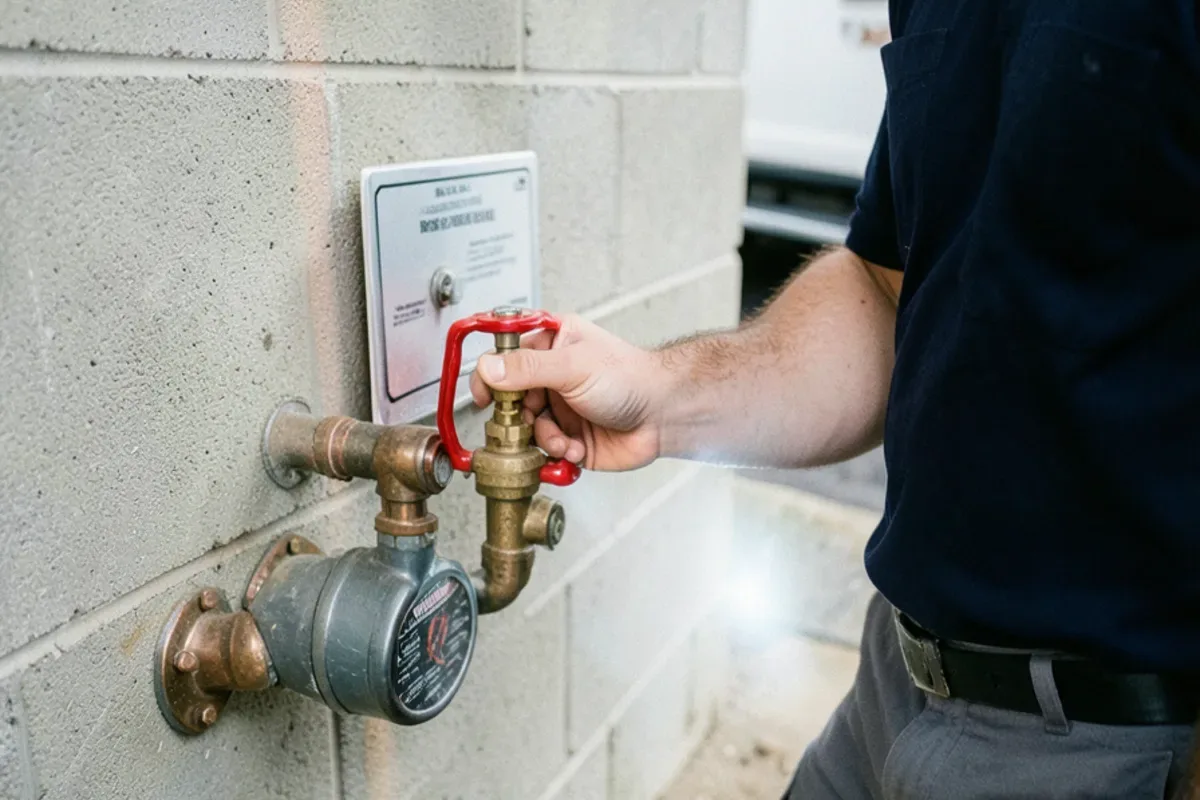
Close the main
In most Warren basements the main valve sits next to the water meter, on the wall closest to the street. Turn the handle clockwise until it stops. If it's an old gate valve with a round wheel that won't move, don't put a pipe wrench on it; a corroded stem can snap and make things worse. How to shut off your main water valve shows the common valve types.
Take the water heater off line
With the main closed, the heater can't refill. Set a gas heater's control knob to pilot or off. Switch off the breaker for an electric one so the elements don't burn out in an empty tank.
Keep water and electricity apart
If water is near outlets, a furnace or an extension cord, don't wade through it. Shut off power at the panel only if you can reach it on dry floor. Otherwise wait outside the room.
Stop using drains during a backup
When sewage is the problem, closing the main helps too. Nobody flushes, showers, runs the dishwasher or starts the washer until the line is open again.
Photograph, then move things
Take pictures of the water and the failed part before you clean up. Then lift boxes, rugs and anything electrical off the floor.
What we ask when you call an emergency plumber
The questions sound basic. Is the water off? Where is it coming from, and is it clean water or sewage? Can you see the pipe, and is it copper, gray threaded steel or white plastic? Is any water near the electrical panel? How old is the house, roughly? A burst copper line and a main line full of roots need different parts and tools on the truck.
We'll tell you plainly when a plumber can get there, and what you can do in the meantime to limit the damage.
What happens when the plumber gets to your door
Confirm it’s safe
Main closed, water away from wiring, and the gas control off if a heater is involved.
Trace the water
It gets followed back along joists and pipes to where it started.
Open the smallest area
Drywall or ceiling is cut only at the source.
Repair or isolate
A permanent fix when parts and access allow, or a cap so the house has water.
Test before leaving
Water comes back on slowly while joints and the meter are watched; after a backup, the drains are run.
Write up what’s next
A second visit, permit or replacement goes into a written scope.
Make it safe and find the source
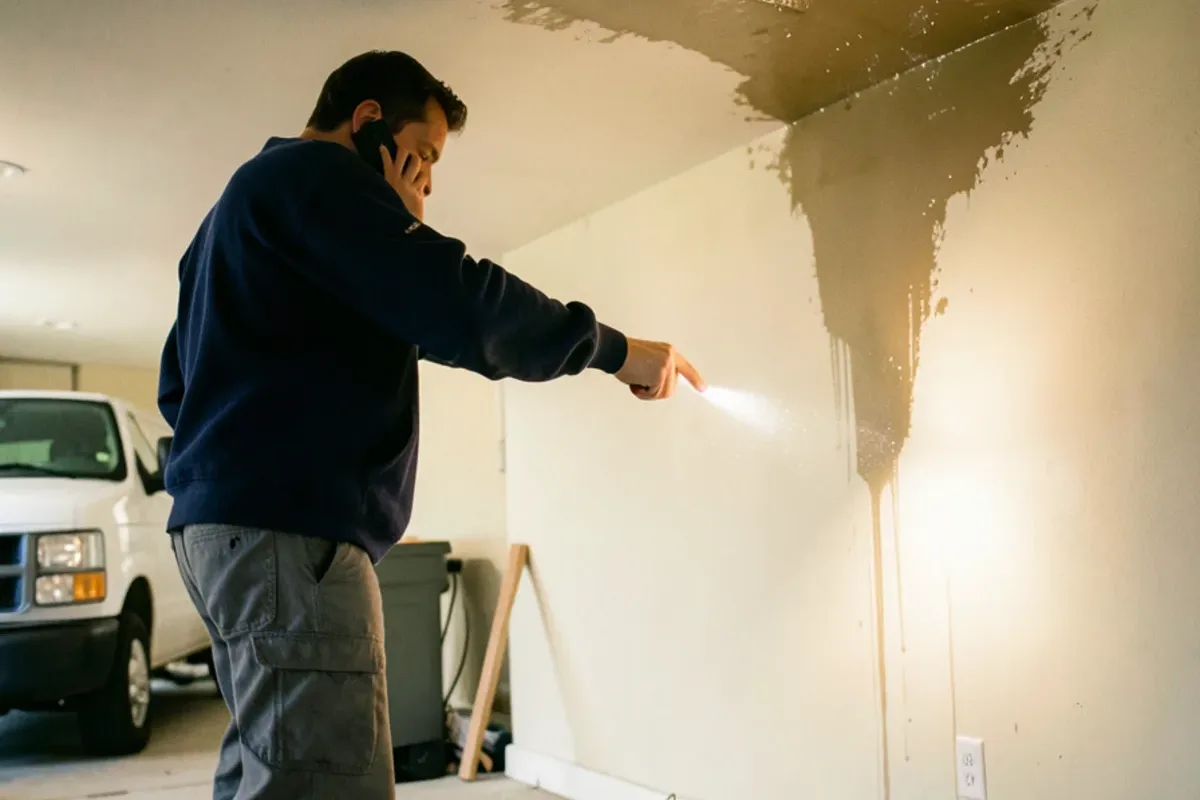
First comes a check that the main is fully closed and that no water is near live wiring. Then the plumber follows the water back to where it started. Water runs along joists and pipes before it drips, so the stain on the ceiling is often a few feet from the actual split. The smallest possible opening in the drywall comes first.
A temporary fix or the permanent repair
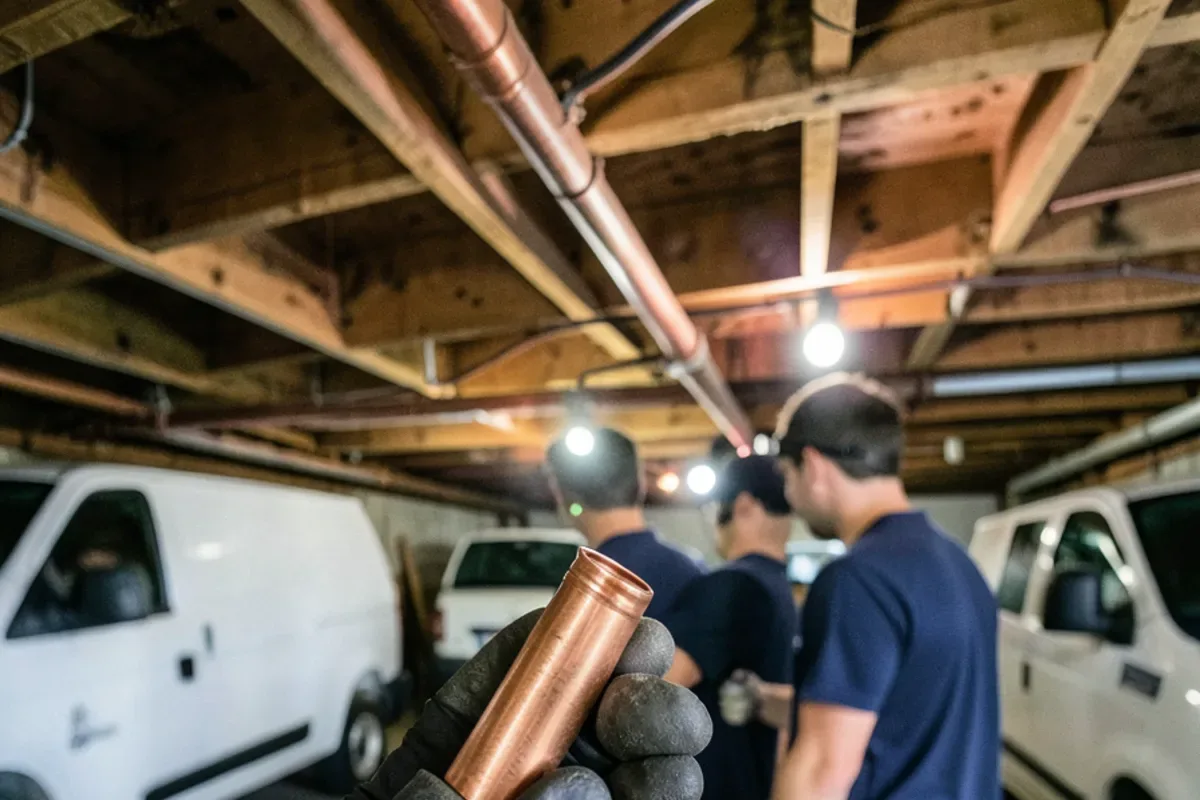
Often the permanent repair happens on the first visit: a split section of copper replaced, a failed fitting remade, a main line cleared. Sometimes the right move is to cap one branch so the rest of the house has water again, then come back for the larger job. A leaking water heater, for example, gets drained and isolated while a replacement is planned. If the problem is a main line backup, our basement floor drain cleaning page explains how that line gets opened and checked.
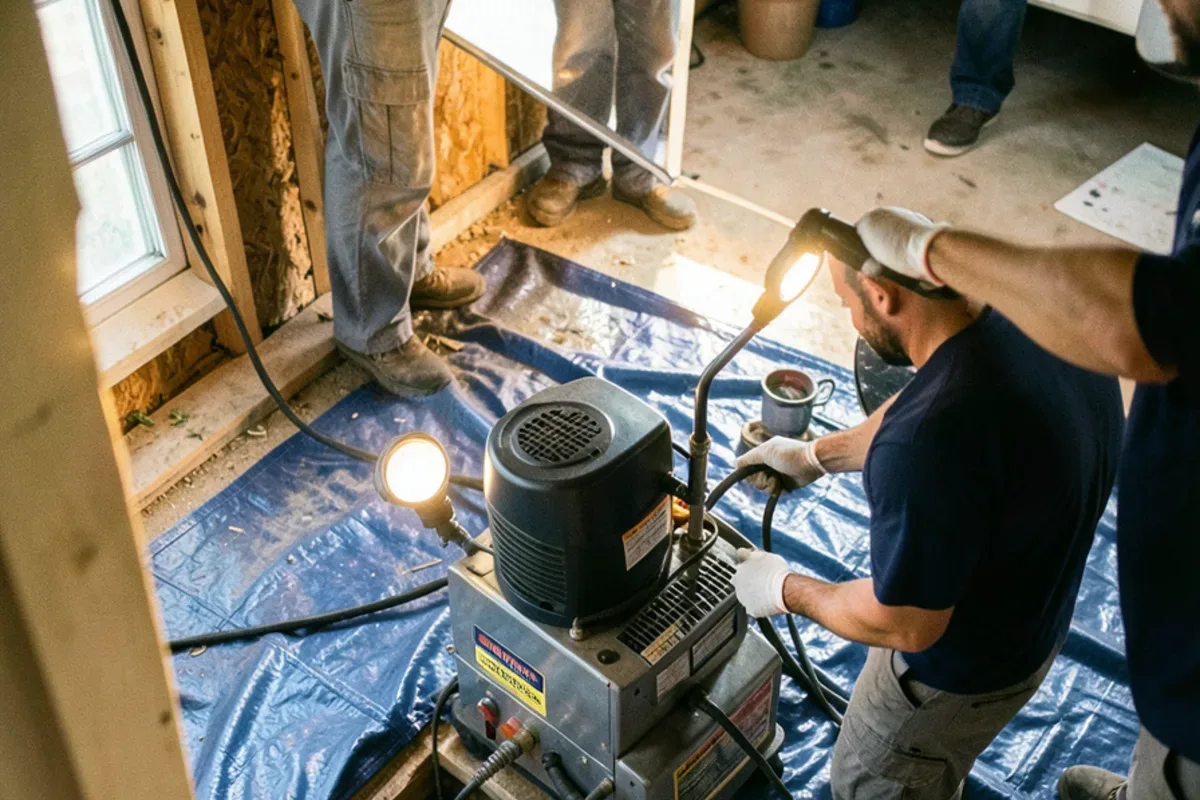
What drives the cost of emergency plumbing repairs in Warren?
- What failed. A blown fitting under a sink is a short job. A cracked cast iron drain under the basement floor is not.
- Access. Exposed basement ceilings are easy. Finished ceilings, tiled walls and cabinets have to be opened and protected.
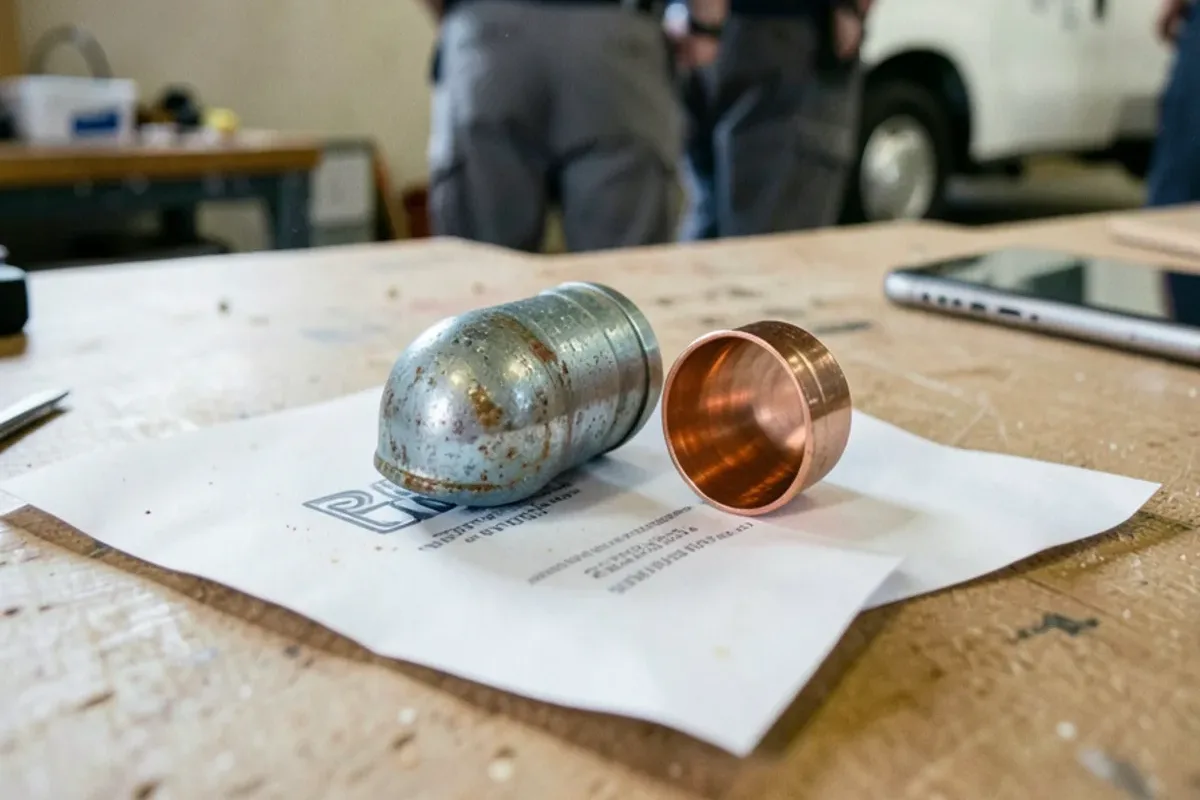
- Pipe material. Galvanized steel usually needs transition fittings, and old threads near the break may not hold.
- Whether it takes one visit or two, such as a temporary cap now and a planned replacement later.
- Timing. Ask when you call whether the time of the visit changes the rate.
- Permits for the permanent work. Warren lists hot water tanks and plumbing alterations among jobs that may need a separate permit.
Keep the failed part. A split fitting or a rusted-through nipple is useful if you file a claim, and the photos you took before cleanup show what the water reached.
Permits and licensing once the water is stopped
Stopping water and replacing a short split section is repair work. The permanent fix sometimes isn't: a new water heater, a replaced run of supply pipe or a new sewer section can need a permit from Warren's Division of Buildings and Safety Engineering at One City Square, and the city warns that work without one can bring fines up to $1,000. The 2021 Michigan Plumbing Code sets how that work is done, and Michigan LARA licenses the plumbers and contractors who do it, with an online lookup for checking one. Owners can pull a permit for their own home; rentals need a contractor.
Emergency calls into our Stephens Rd office in southeast Warren
We're at 11355 Stephens Rd, between 9 and 10 Mile just west of Hoover, in the 48089 ZIP where Warren's oldest houses and most of its rentals are. Homeowners, landlords with a tenant on the other line and businesses that can't keep a restroom closed all reach the same phone. An emergency doesn't change how we work: find the source before selling a fix, run a camera on a main line that has backed up before, explain the cost factors and write down the scope before permanent work, and handle permits the way the city requires.
Plumbing repairs worth doing before the next emergency
The best time to find your main valve is a quiet afternoon. Turn it once a year so it doesn't seize, and replace an old gate valve that barely moves; a ball valve closes with a quarter turn. Tag it, and keep the floor drain and cleanout clear of boxes.
Swap rubber washer hoses for braided ones, and replace a water heater that's past its life on your schedule, not the tank's. If a line has frozen before, see frozen pipe repair. When a pipe does let go, burst pipe repair explains how the damaged section gets replaced.
Emergency plumbing repairs around Warren and nearby cities
- Plumber in Center Line
Nearly half of households rent, and 13 percent of units are in 50-plus unit buildings where one failure reaches many tenants.
- Plumber in Eastpointe
About 78 percent of homes predate 1960, so the main is often an original gate valve that resists turning.
- Plumber in Roseville
The July 2019 flash flood brought a state of emergency and sewage-mixed water into Blumfield Street basements.
- Plumber in St. Clair Shores
In 2019 high lake water flowed backward through storm sewers on low streets, so a wet basement isn’t always a pipe.
- Plumber in Hamtramck
The city’s federal grant filing blames frequent basement flooding in big storms on an undersized combined sewer.
- Plumber in Ferndale
Nearly 2 inches in under 50 minutes in July 2021 overran Ferndale’s 80-year-old combined sewer.
- Plumber in Berkley
August 2014 flooding reached 80 percent of households, and a 2017 storm pushed sewer water up floor drains again.
- Plumber in Grosse Pointe Woods
On June 25, 2021, 5.3 inches fell in three hours and many basement water heaters were damaged.
- Plumber in Detroit
The city’s sewer handbook warns that combined-sewer water can rise above basement floor level, showing first at floor drains.
Emergency plumbing repairs questions from Warren customers
What does an emergency plumber in Warren handle?
Anything where water or sewage is escaping and you can't stop it: split supply pipes, blown fittings, sewage coming up through a floor drain, leaking water heater tanks and toilets that won't stop overflowing. Gas smells go to Consumers Energy or 911 first. The repair to the house piping comes after the utility has made it safe.
Are emergency plumbing services more expensive than a regular visit?
Yes, they can be. It depends on what failed, how hard it is to reach, whether the fix takes one visit or two, and when the work happens. Ask about the rate when you call. Closing the main right away and moving belongings out of the water often saves more money than anything else you can do.
Who should I call if water is coming up near the street?
Call the city's Water Division first. Warren owns the service line from the main to the curb stop, so water rising in the road or around the curb box is usually theirs. If the water is coming into your basement or the leak is between the curb stop and your meter, that part is yours, and a plumber repairs it.
Can I keep living in the house with the main water shut off?
Yes, for a short while. Fill a few pitchers before you close the valve if there's time, and turn off the water heater. A toilet still flushes if you pour a bucket of water into the bowl. The goal of the first visit is usually to cap the damaged branch so the rest of the house has water again.
There’s no water anywhere in the house. Is it my pipes or the city’s?
It can be either, so ask a neighbor first. Warren repaired 181 broken water mains in fiscal 2025, and a main break dries up a whole street. If the neighbors have water and it's a bitter morning, suspect a frozen service line where it enters your basement. If the meter shows water moving with every fixture closed, there's a break on your side.
Still not sure what you're dealing with? Describe it on the phone and we'll tell you what we'd check first.
(207) 419-2600Last updated October 25, 2026