
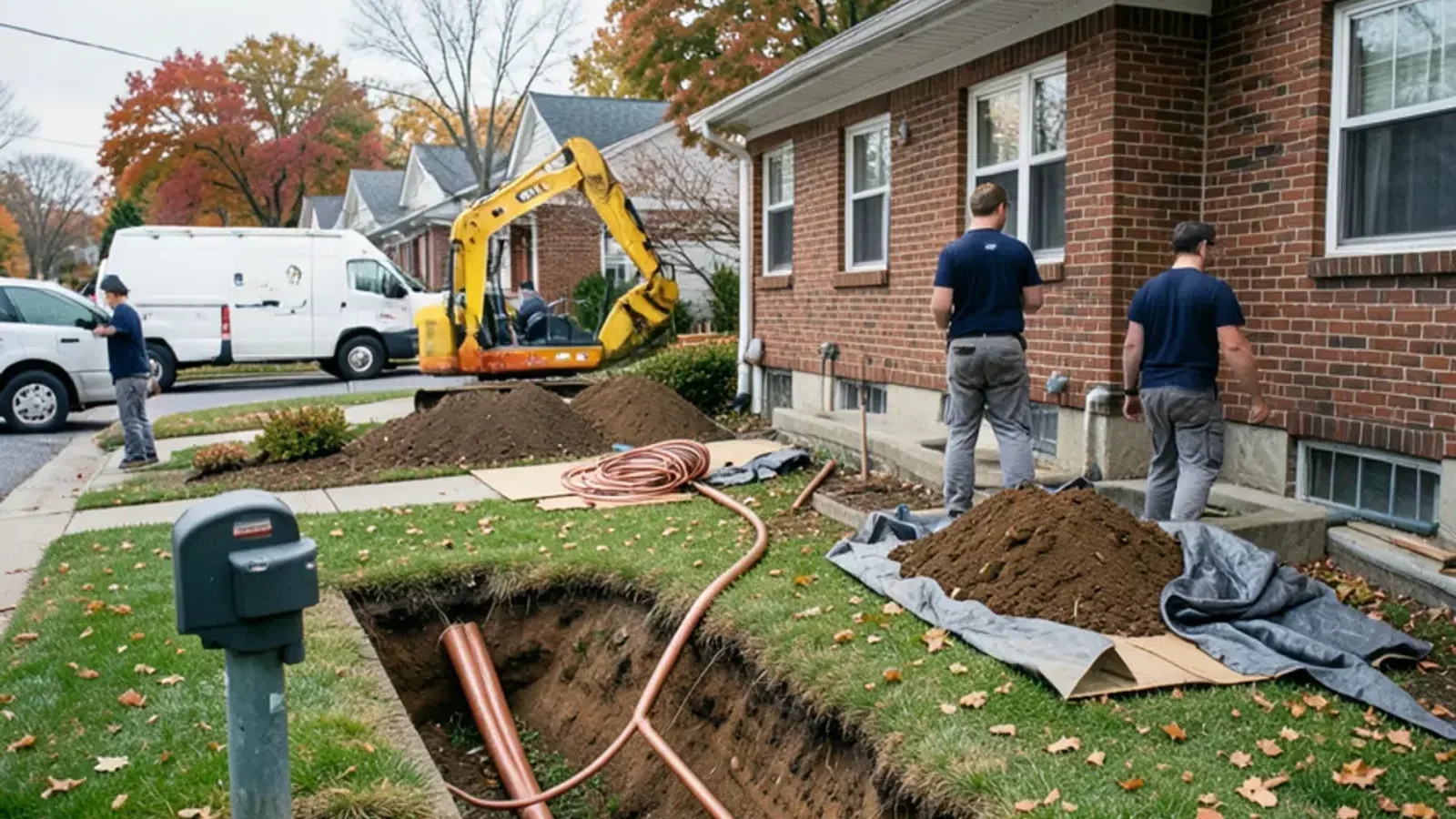
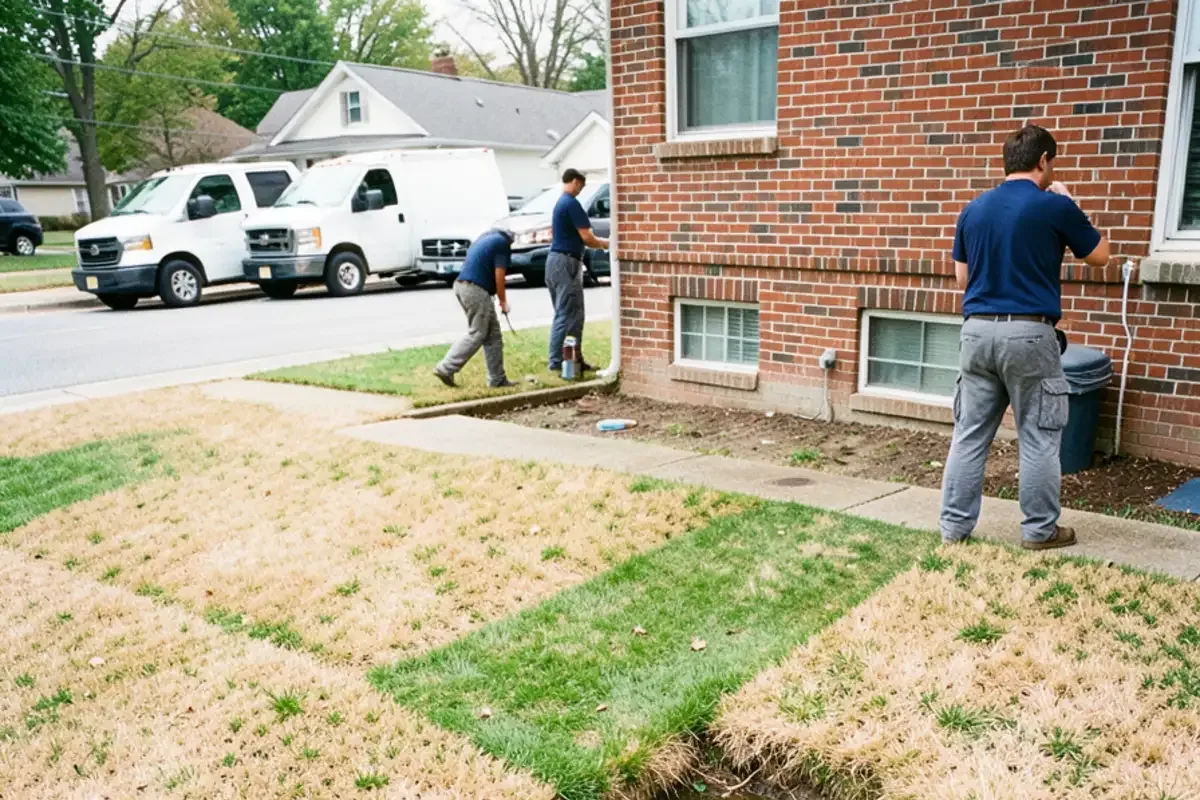
Main water line repair in Warren covers the pipe that carries city water from the curb stop near your property line, under the yard and through the foundation to your meter. When it fails, you might see a strip of lawn that never dries, water seeping in where the pipe enters the basement wall, or pressure that has slowly dropped at every tap at once.
We find the break, repair it or replace the line, and close the trench. That stretch of pipe belongs to you. Warren owns and maintains the service from the main to the curb stop, and the owner is responsible from the curb stop to the meter inside the home. The city repaired 181 broken water mains in fiscal 2025. Those are the city's problem. The line under your lawn is yours.
How do you know the main water line is leaking?
| What you see | What it usually means |
|---|---|
| A wet or sunken strip between the street and the house in dry weather | Water escaping somewhere along the buried line |
| Water on the basement wall or floor where the pipe comes in | A leak at the foundation penetration or just outside it |
| Pressure has dropped at every fixture together | A leak, a crushed section, or galvanized pipe narrowed by rust |
| Hissing at the meter with all the water off | A leak near the meter or a failing main shutoff valve |
| Rusty water at the first draw of the morning | A corroding galvanized service line |
| No water at all while the neighbors have it | A break, a frozen line, or a closed curb stop |
Don't wait for the bill to warn you. Water lost on the street side of the meter is never measured, so a service line can leak for a long time with no change on your statement. If the problem is inside the house instead, our leak detection and repair page covers how we trace it.
What main water line repair covers
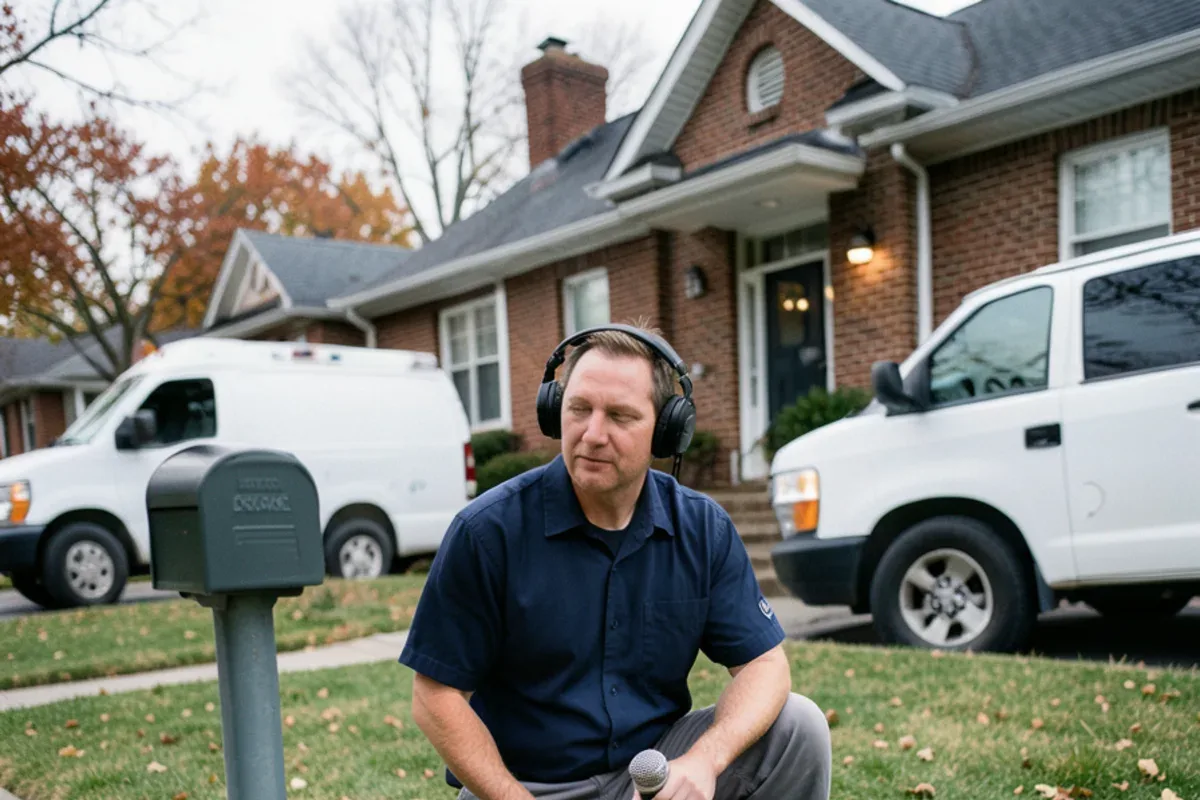
The first job is proving where the water is going. A wet lawn can be your service line, a city main, a sprinkler or groundwater. The meter sits inside, so a leak between the curb stop and the meter never spins the dial; we listen along the line with an acoustic ground microphone, check pressure at the house and look at the pipe at the wall. Then you get a choice of spot repair or new line, with the reasons for each.
- Locating the leak with listening gear and a pressure gauge
- Identifying the material, and flagging possible lead before digging
- Coordinating the curb stop shutoff with the Warren Water Division
- A spot repair, or a new line by trench or by boring
- A sealed foundation entry and a new main shutoff valve
- Pressure test, flush, inspection and rough grading
Who owns which part of a Warren water service line?
The curb stop is a valve in a small metal box near the property line. The street side of it, main included, is the city's. From the curb stop to the meter in your basement, crawl space or slab-home utility room, the pipe is the owner's to maintain. The curb stop itself belongs to the city, so when a repair needs it closed, we coordinate with the Warren Water Division. If water is gushing from the street or the main, that is a city call.
What older Warren service lines are made of
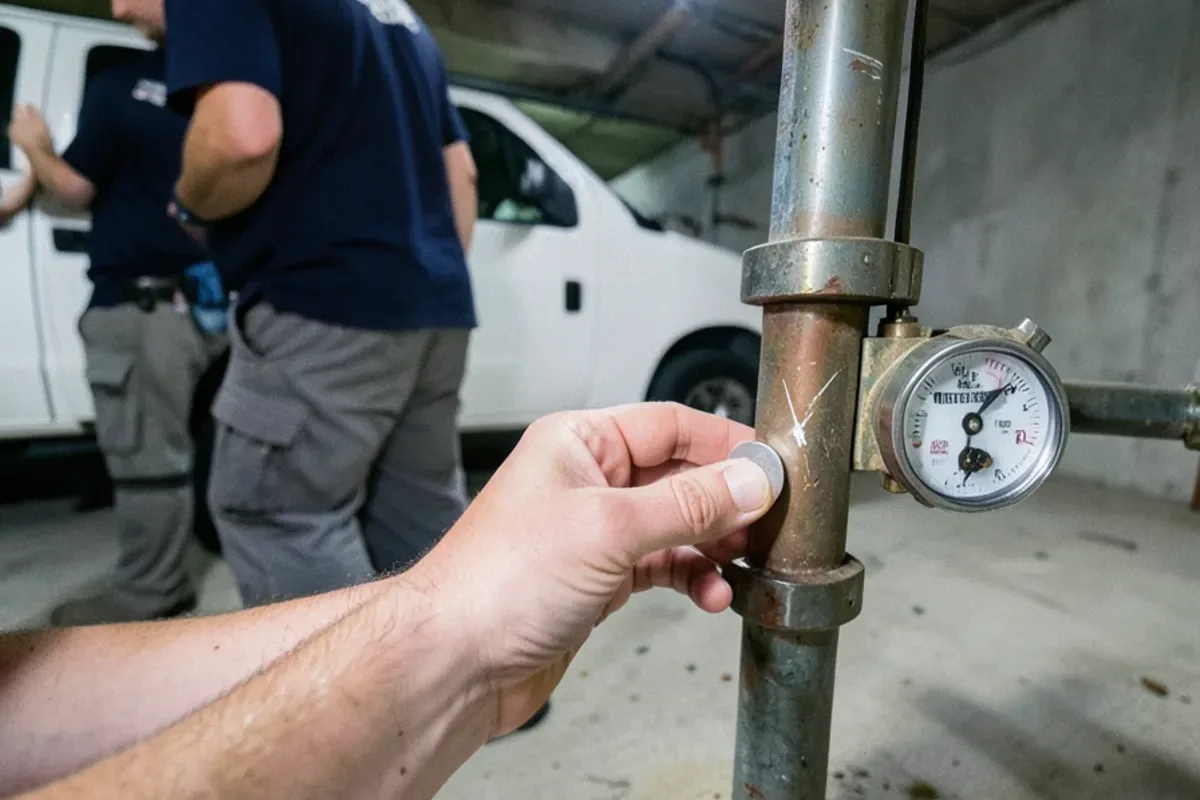
Warren names three main service line types in town, galvanized steel, lead and copper, with plastic in newer homes. You can usually tell which you have at the meter. Scratch the pipe where it comes through the wall with a key and hold a magnet to it. Copper scratches to a penny color and the magnet will not stick. Galvanized stays dull gray and the magnet grabs it. Lead scratches to a bright silver and the magnet will not stick. Our post on how to tell if you have galvanized pipes has photos of each.
Galvanized service lines rust shut from the inside and leak at the threads, which is why pressure fades in older south Warren homes long before a visible leak. Copper lasts much longer but can be pinholed, kinked by settling or cut by a fence post. Plastic lines fail mostly from digging damage.
Main water line repair or full replacement
| Option | What it involves | When it makes sense |
|---|---|---|
| Spot repair | Dig at the leak and install a repair coupling or short new section | One leak on otherwise sound copper or plastic |
| Open-trench replacement | Dig from the curb box to the foundation and lay a new line | Galvanized, repeat leaks, or a line too shallow for the frost |
| Trenchless replacement | Dig a pit at each end and pull or bore a new line between them | A driveway, mature trees or landscaping in the path, where soil allows |
A single leak on 50-year-old copper is usually worth a spot repair. Galvanized is another story, because every joint on that line is the same age, and fixing one tends to uncover the next. The replacement line is typically copper or an approved plastic, the same materials on the city's list of non-lead service types. If the steel continues inside the house, galvanized pipe replacement handles the indoor runs.
Replacing a water service line, step by step
Call MISS DIG
Buried gas, electric and cable lines get marked before any digging. Warren's water page says to call three working days ahead.
Pull the permit
Service line work goes through the city's Building Division, and the trench stays open until the inspector accepts it.
Shut the water at the curb
We arrange the curb stop shutoff with the Water Division and drain the line before cutting into it.
Dig or bore
For an open trench, the line is exposed from the curb box to the wall. For trenchless work, pits at each end are enough. The new pipe sits below the frost; for reference, Warren's building rules set footings at 42 inches.
Through the foundation
A new sleeve and seal go through the wall, with a new main shutoff valve on the house side.
Test, inspect and backfill
The line is pressure tested and flushed, inspected with the trench open, then backfilled in compacted layers and rough graded.
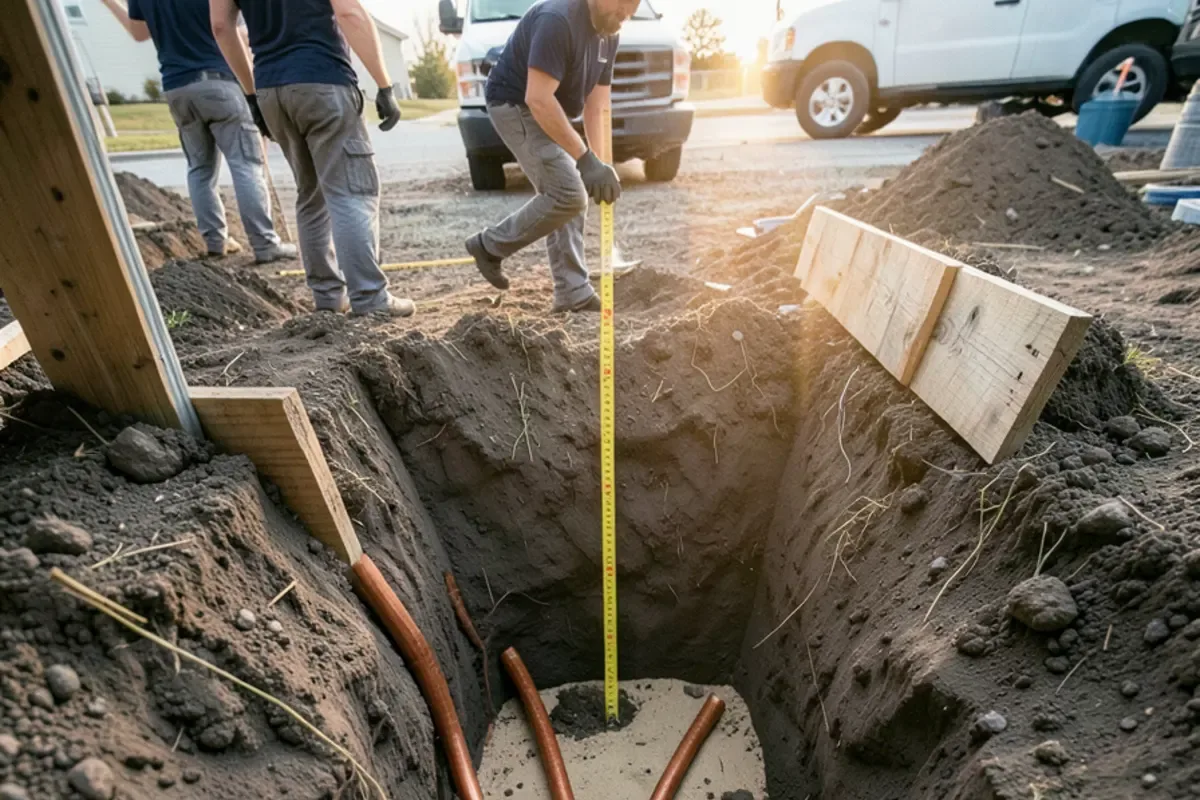
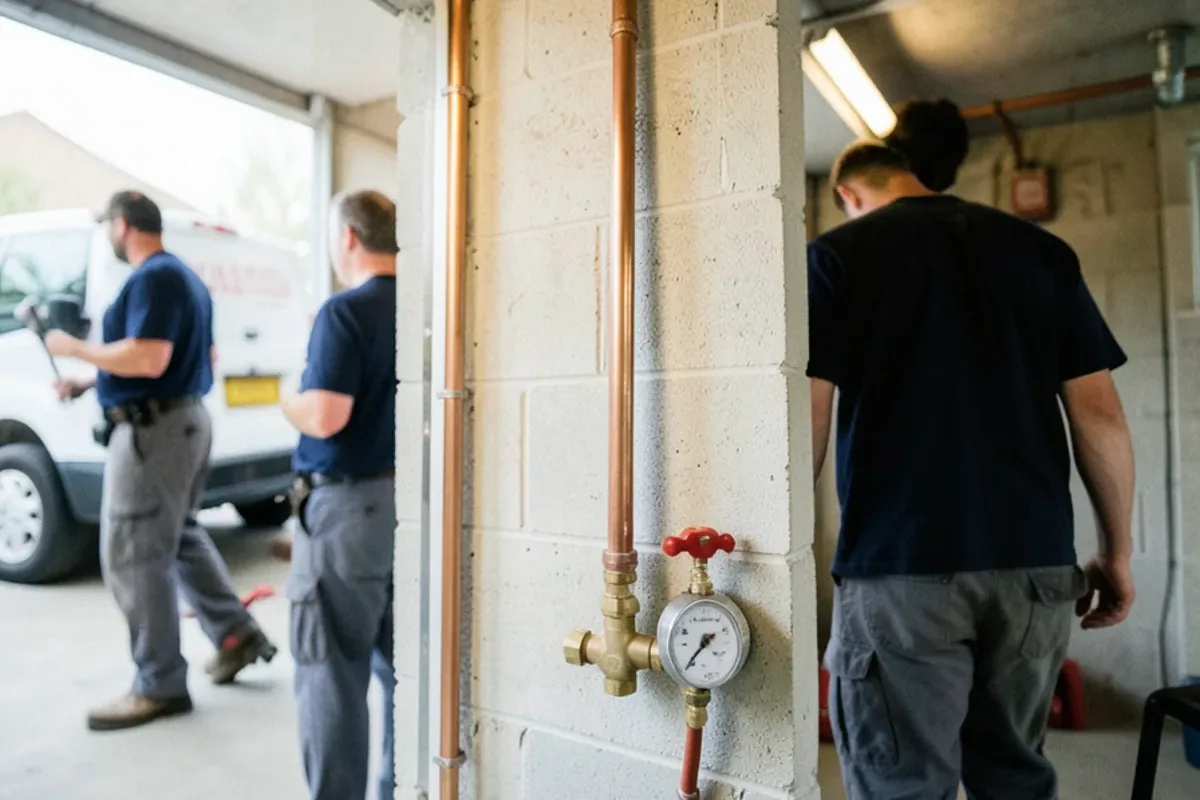
A spot repair is usually one visit once the leak is located. A full replacement takes longer, mainly for digging, inspection and putting the yard back. Frozen January ground slows any excavation. If the line froze rather than broke, start with frozen pipe repair.
Protecting the line between the curb and your basement
Keep the curb box visible so it can be found in an emergency. Turn your main shutoff once a year so it does not seize; our guide on how to shut off your main water valve shows how. Call MISS DIG before setting fence posts or planting trees near the line. And if the pipe runs through an unheated crawl space or garage on its way to the meter, insulate it before winter.
What changes the cost of water service line work
A job can be a coupling on a few feet of copper or a new line from curb to basement. A driveway or old maple in the path can tip it toward boring, and a possible lead line changes the plan entirely. Once the leak and material are known, we walk you through the factors and put the scope in writing.
- The length of the line from the curb box to the house, and its depth.
- What is in the way. Driveways, sidewalks, trees and patios change the method.
- Open trench or trenchless, which depends on soil, obstructions and the old pipe.
- The material being replaced and the material going in.
- Where the line enters the house and how much interior work the new valve needs.
- Winter conditions, permit and inspection, and restoring the yard.

Service line permits, MISS DIG and licensing in Warren
Replacing or repairing the pipe on your side of the curb stop is plumbing work under Warren's Division of Buildings and Safety Engineering, and the trench stays open until an inspector accepts it. An owner who lives in the house can pull the permit; rentals and businesses need a plumbing contractor. Under Michigan's Skilled Trades Regulation Act the work goes to licensed master or journey plumbers once the permit is pulled, and LARA keeps the license records. Before a shovel goes in, MISS DIG needs three working days to mark buried utilities. The curb stop belongs to the Warren Water Division, and on a lead line the state Lead and Copper Rule allows a partial replacement only in an emergency repair.
A curb-to-basement plumber based in 48089
Our office is at 11355 Stephens Rd, on the same road as the Warren Water Division's maintenance yard, in the ZIP code with the city's oldest homes. Nearly half of them predate 1960, the age the city flags for possible lead or galvanized service lines. Homes, rentals and businesses call the same number. We confirm the leak is on your line, and not an indoor pipe or a city main, before talking about a dig. The material gets checked before any quote, you see the cost factors and a written scope first, and the permit, MISS DIG ticket and curb stop shutoff are handled the city's way.
Main water line repair around Warren and nearby cities
- Plumber in Center Line
Center Line is verifying the material of every service line by DPW inspection or owner photos, so we check the pipe at the meter first.
- Plumber in Madison Heights
The city averages 65 water main breaks a year, and after an October 2025 lead notice it is removing lead service lines.
- Plumber in Harper Woods
Nearly three-quarters of Harper Woods mains went in during the 1940s and 1950s, and 1,500 service lines were still of unknown material in 2025.
- Plumber in Grosse Pointe Woods
The city's 2023 report listed 6,741 of its 6,870 service lines as unknown material, so the pipe gets identified before we dig.
- Plumber in Highland Park
The Building Department says anything from the sidewalk to the house is a plumbing permit, on a system with mains about a century old.
- Plumber in Hamtramck
At the end of 2025 Hamtramck counted 577 known lead and 2,959 unknown service lines among 6,029, after replacing 780 that year.
- Plumber in Ferndale
Ferndale's 2025 inventory lists 1,009 lead and 4,481 unknown service lines, and residents can self-report the pipe they see at the meter.
- Plumber in Sterling Heights
The city reports zero lead and zero unknown lines among 39,866, so repairs here are mostly aging copper under 1960s and 1970s yards.
Main water line repair questions from Warren customers
Can a water line be replaced without digging up the whole yard?
Yes, often. Trenchless replacement uses a pit at the curb box and another at the foundation, and the new line is bored or pulled between them. It depends on the soil, what is buried nearby and the old pipe. Where trenchless will not work, we keep the trench as narrow as the job allows.
What should I do if my main water line breaks?
Close the main shutoff inside the house first. If the leak is on the street side of that valve, it will keep running, because only the curb stop can stop it, and that valve is the city's. Contact the Warren Water Division to shut it, then call us for the repair.
How long does main water line replacement take?
It depends on the line's length, what is in the way, and trench or boring. Water is off only while the old line is disconnected and the new one tied in. Inspection timing and yard restoration add to the schedule, and you get a plan before digging starts.
Does homeowners insurance cover the water line from the street?
No, not automatically. Many standard policies leave out buried service lines, so ask your insurer what it covers before you need it. Warren says it has nothing to do with the water and sewer line insurance offers mailed to residents and makes no recommendation about them. Keep photos, the leak location and the written diagnosis if you file a claim.
Do I need a permit to replace my water service line in Warren?
Yes. Replacing a service line is plumbing work that goes through the Building Division, and Michigan's licensing law ties plumbing work to a permit. Warren homeowners can pull a permit for their own owner-occupied house. The work stays exposed until the inspector accepts it.
Still not sure what you're dealing with? Describe it on the phone and we'll tell you what we'd check first.
(207) 419-2600Last updated October 25, 2026