
 By Plumber in Warren, MI, plumbers on Stephens Rd in WarrenPublished October 25, 2026Last updated October 25, 2026
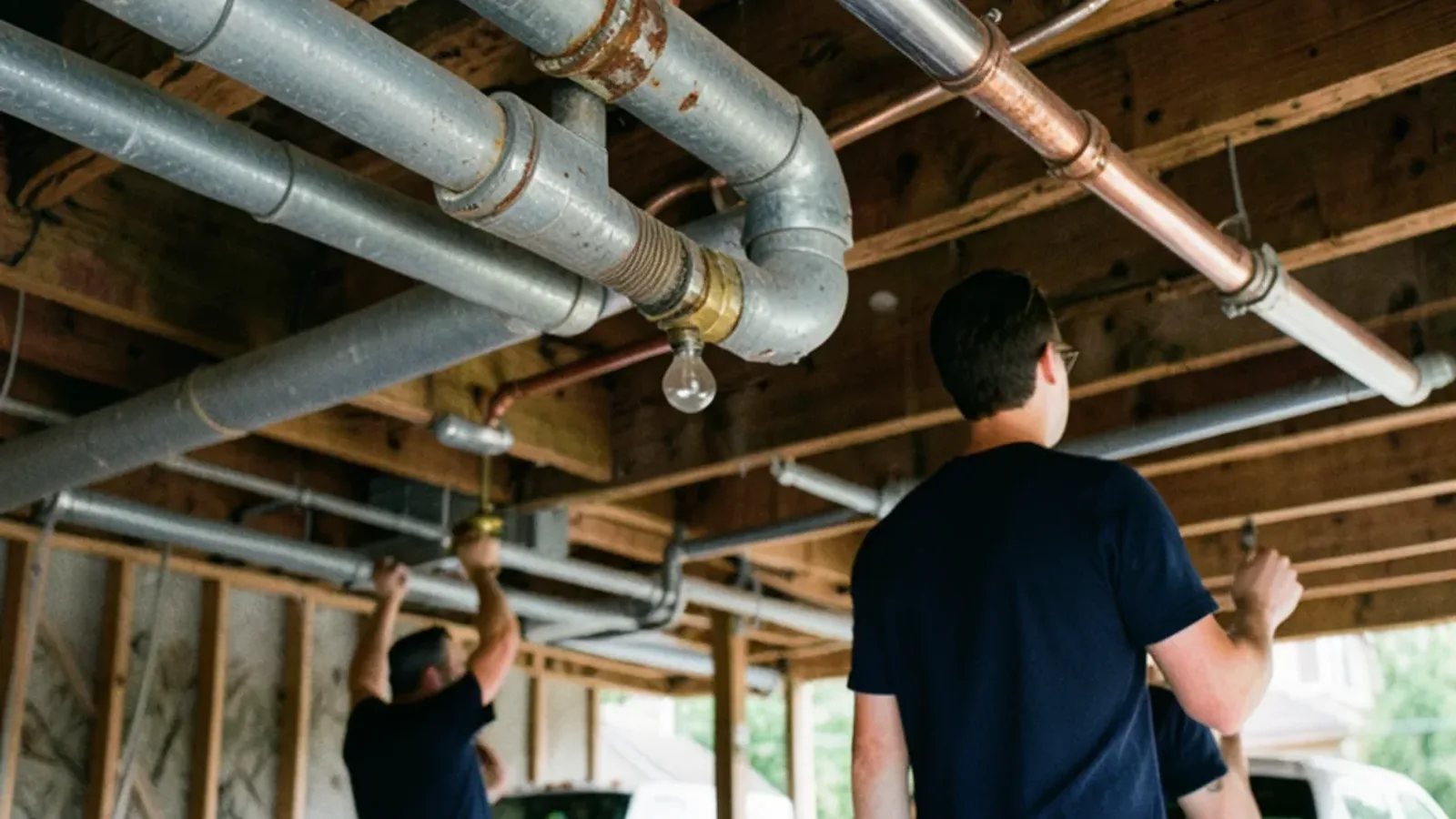
If you're wondering how to identify galvanized pipes, take a magnet to the basement and look at the water lines running along the ceiling. Galvanized steel is a dull, flat gray. Its joints are fittings that screw together on threads, and a magnet grabs it firmly.
Copper is penny-colored with smooth soldered joints, plastic comes in white, gray, red or blue, and a magnet won't stick to either.
Galvanized steel was the usual water pipe in houses built through the 1940s and into the 1950s, before copper took over. Plenty of it is still in service, often with a few copper repairs spliced in. This guide covers the checks, where to look, why old galvanized causes trouble, and how it connects to the lead service line question.
Four checks that identify galvanized pipe
Look at the color
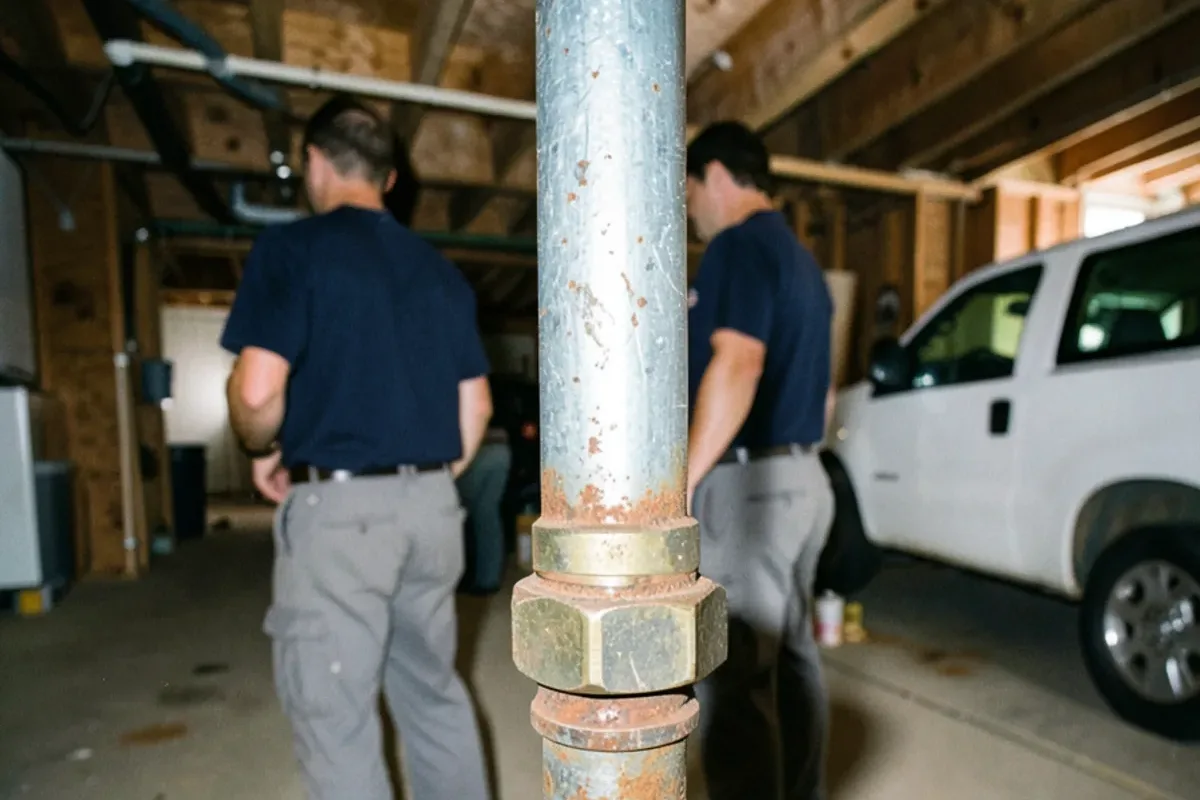
Galvanized has a matte gray finish, sometimes with white crust or orange rust spots at the joints. Wipe off dust or paint first, since a painted pipe tells you nothing.
Look at the joints
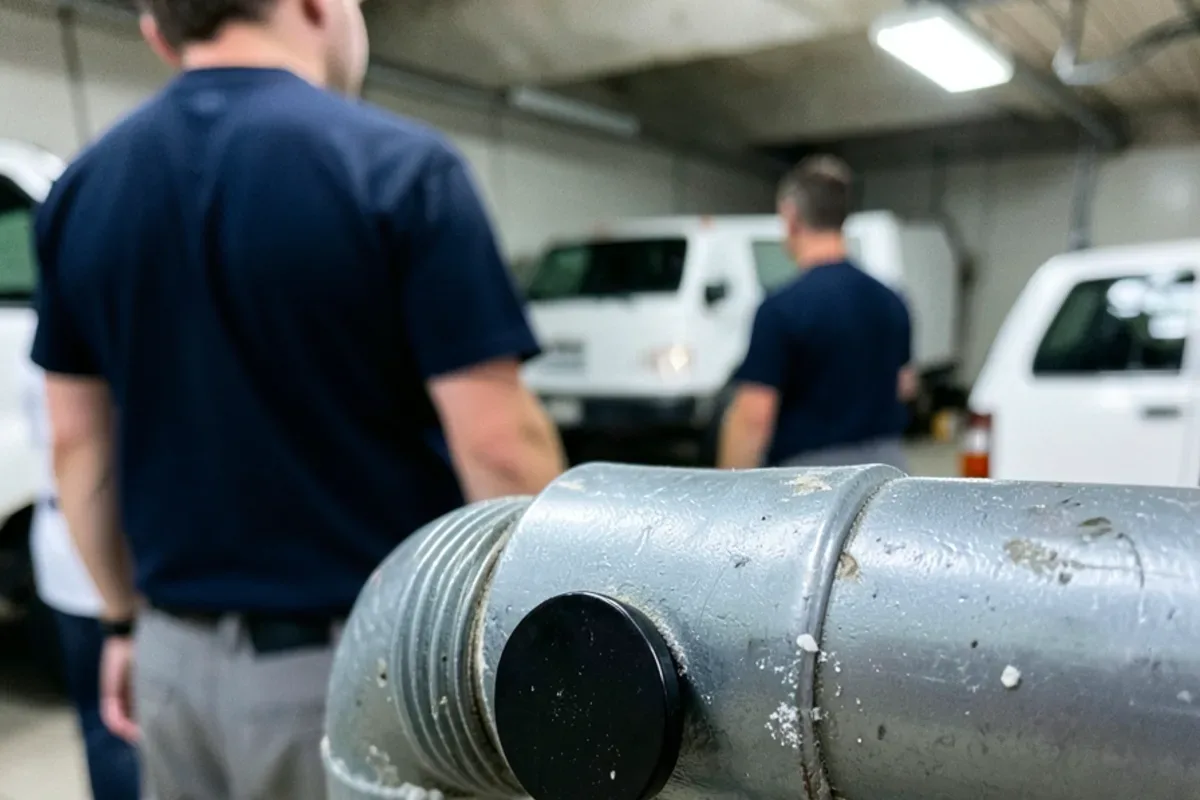
Galvanized pipe is threaded. You will see the threads where a pipe enters an elbow, tee or coupling, and you may see a larger fitting with a big hex nut in the middle, called a union. Copper joints are smooth sleeves with a ring of solder.
Try a magnet
A strong refrigerator magnet clings to galvanized steel. It slides right off copper, brass, lead and plastic.
Scratch it lightly
Scrape a small spot with a key or coin. Galvanized stays hard and gray. Copper shows bright penny color. Lead is soft, scratches easily and turns shiny silver, and that one is a call to your water utility. On a pipe that is flaking with rust, skip this step and rely on the magnet.
| Pipe | Color | Joints | Magnet | Scratch |
|---|---|---|---|---|
| Galvanized steel | Dull gray | Threaded fittings and unions | Sticks | Stays hard and gray |
| Copper | Brown to penny color, green at old joints | Soldered sleeves | No | Bright copper |
| Lead | Dull gray | Wiped bulb-shaped joints | No | Soft, shiny silver |
| Plastic (PEX, CPVC) | White, cream, red or blue | Crimp rings or glued fittings | No | Plastic |
| Black iron gas pipe | Black or dark gray | Threaded | Sticks | Hard; this is gas pipe, not water |
That last row trips people up. Gas pipe is also threaded steel, and a magnet sticks to it. Follow the line. If it runs to the furnace, water heater burner, range or dryer, or back to the gas meter, it's gas. Water lines lead to faucets, the water heater's cold inlet and the water meter. Some utility guides also mention tapping the pipe with a coin: lead gives a dull thud, while copper and steel ring. Treat that as a tiebreaker, never the main test.
Where to look in your basement
Start at the water meter, where the service line comes through the wall or floor. The pipe on the street side of the meter is your service line. The pipes on the house side are your interior supply. They're often different materials, and both matter.
Then follow the main line across the ceiling. Check the pipes near the water heater, where a plumber may have switched to copper during a heater replacement. Look at the laundry tub and the line to the washer, and under the kitchen and bathroom sinks where the supply pipes come out of the wall. A house can show copper everywhere you can see it and still have galvanized inside the walls going up to the bathroom.
Watch for transitions. Where copper meets galvanized, a proper repair uses a dielectric union or a brass fitting between them, because the two metals touching directly corrode each other. A green, crusty joint where copper is screwed straight into steel is a leak getting ready to happen.
Why do galvanized pipes cause problems?
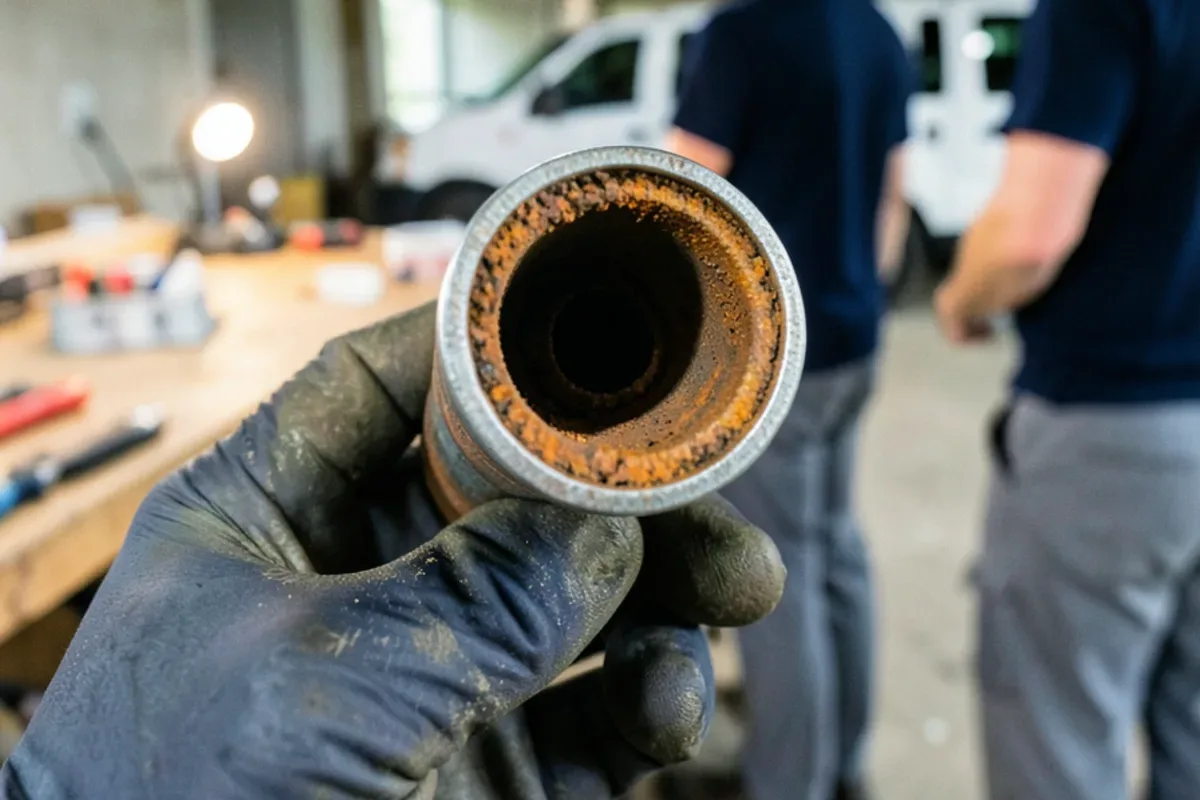
Galvanized pipe is steel dipped in zinc. The zinc slows rust, but over decades it wears away on the inside and the steel underneath starts to corrode. Rust and mineral scale build up on the pipe wall and narrow the opening, the way a clogged artery narrows. The pipe looks fine from outside while the inside closes up.
- Pressure fades, usually worst upstairs and on the hot side, because hot water speeds up the corrosion.
- Water comes out brown or orange after sitting overnight or after the city flushes hydrants, then clears.
- Aerators and showerheads clog with rust flakes.
- Leaks start at threaded joints, where cutting the threads left the pipe wall thinnest.
- A repair on one section knocks scale loose and clogs the next faucet downstream.
None of this happens overnight. If pressure has been sliding for years and two or three of those signs fit, the galvanized is likely near the end of its useful life.
Galvanized pipe and the lead service line question
The service line between the curb and your meter is a separate check. Warren's water division names galvanized steel, lead and copper as the main service line types in the city, with plastic in newer homes, and it says a Warren home built before 1960 may have a lead service line. Michigan's lead rules also treat galvanized pipe that is or was connected downstream of lead as its own category, because it can hold lead particles that came from upstream.
So if the pipe at your meter is gray, do the magnet and scratch tests carefully. Then take it to the utility. Warren residents can look up their address, send a photo or ask for an inspection through the city's lead service line inventory and replacement program. Until you know, Warren's water report advises running the tap at least five minutes before drinking if you have a lead line or galvanized that needs replacement, and using only cold water for drinking and cooking.
What a plumber checks before deciding how bad it is
Finding galvanized tells you the material, not the condition. The first thing worth measuring is pressure two ways. A gauge on a hose bib with everything shut off shows static pressure from the street. Then open a tub faucet upstairs and watch how far the flow drops. Good static pressure with a weak tub points at narrowed pipe inside the house; low static pressure points back toward the service line or the street.
Next is where the scale has built up. The short nipples at the water heater and the first few feet after the meter usually corrode fastest, and swapping them can bring back some flow for a while. That's an honest stopgap, not a fix. Cutting into old galvanized also loosens rust, so expect a few days of brown water and clogged aerators after any partial repair.
Then comes the question of the line coming in. In Warren the city owns the service up to the curb stop, and the stretch from the curb stop to your meter is the owner's. If that stretch is galvanized and the city's records list it as unknown, the material question goes to the utility before anyone replaces it, since Michigan's lead rules treat galvanized that sat downstream of lead differently. When it's plain galvanized with no lead history, a main water line repair replaces it like any other aging service.
Replace a section or repipe the whole house
If only a run or two of galvanized is left, usually the main across the basement ceiling or the line to a bathroom, galvanized pipe replacement can target those sections and tie them into the copper or PEX already there. When galvanized still feeds most of the house, replacing it piece by piece tends to cost more in the end, and whole-house repiping is the cleaner answer.
Cost depends on how many fixtures and floors are involved, how much finished wall and ceiling is in the way, the pipe material you choose, and whether the drains need work too. Old galvanized supply often shares the walls with an aging cast iron stack, and the signs of a failing cast iron drain are worth checking while the walls are open. In Warren, new water distribution piping is a plumbing permit item, so plan on an inspection.
This is a common find in older Oakland County suburbs. In Berkley, about 40 percent of homes were built in the 1940s, and a bungalow from that decade that never had a full repipe is a strong candidate for galvanized somewhere in the walls.
When to call about galvanized pipe
You can do every check on this page yourself, and you should, starting with Warren's online service line lookup for your address. If you find galvanized with steady pressure and clear water, there's no emergency. Plan for it the next time a bathroom or the water heater gets work.
Call when pressure keeps dropping, when brown water shows up every morning, when a threaded joint is wet or crusted, or when the pipe at the meter is soft and silver under a scratch. Tightening a leaking galvanized fitting often cracks the thinned threads. If you've found gray pipe and aren't sure what to do with it, give us a call and we'll look at it with you and lay out the options.
Questions people ask about this
Does a magnet stick to galvanized pipe?
Yes. Galvanized pipe is steel under a zinc coating, so a strong magnet holds firmly. It won't stick to copper, brass, lead or plastic, which makes it the quickest single test. Just make sure you're on a water line: black iron gas pipe is also steel, and a magnet grabs it the same way.
How long do galvanized water pipes last?
It depends on water chemistry, how much hot water runs through them and how they were installed. Many systems in homes from the 1940s and 1950s are now at the point where pressure loss and leaks show up. Condition matters more than age, and a cut section from the line near the meter shows it plainly.
What is the drinking water concern with galvanized pipe?
Rust and low pressure are the usual problems. The bigger question is whether the galvanized is or was connected downstream of a lead service line. EPA says testing is the only way to confirm lead in your water and recommends a certified lab. For health questions and testing, start with your water utility.
Can old houses have galvanized drain pipes too?
Yes. Houses from the 1940s and 1950s often used threaded galvanized steel for smaller drain and vent lines, like the kitchen sink drain or a bathroom vent, alongside the cast iron stack. Those lines rust closed from the inside the same way supply pipe does, and a slow kitchen drain that keeps coming back can be the first sign.
Want a plumber to look at your situation? We're on Stephens Rd in Warren.
(207) 419-2600