
 By Plumber in Warren, MI, plumbers on Stephens Rd in WarrenPublished October 25, 2026Last updated October 25, 2026
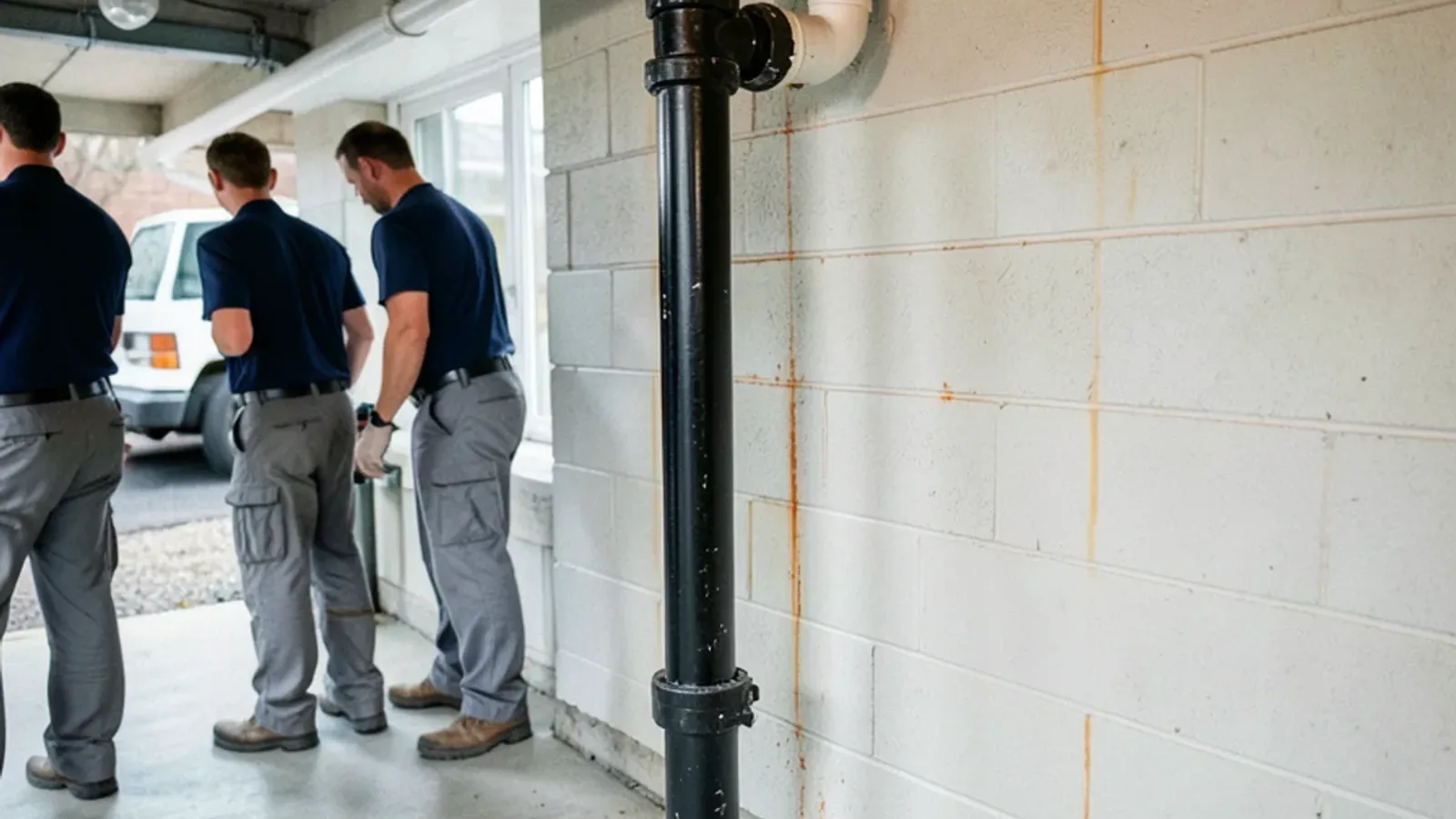
Most cast iron pipe problems start on the inside, where you can't see them. Sewer gas turns into acid along the top of the pipe, flowing water and debris wear a channel along the bottom, and scale narrows what's left. A rust streak on the stack is often the first outside sign.
By the time you notice that streak, or a drain that clogs every few months, the wall of the pipe can be much thinner than it looks from outside.
Cast iron was the standard drain pipe in houses for generations, and a lot of it is still working. This guide covers how it fails, the signs to look for in your basement, and how a plumber decides between fixing a section and replacing a run.
How cast iron drains wear out from the inside
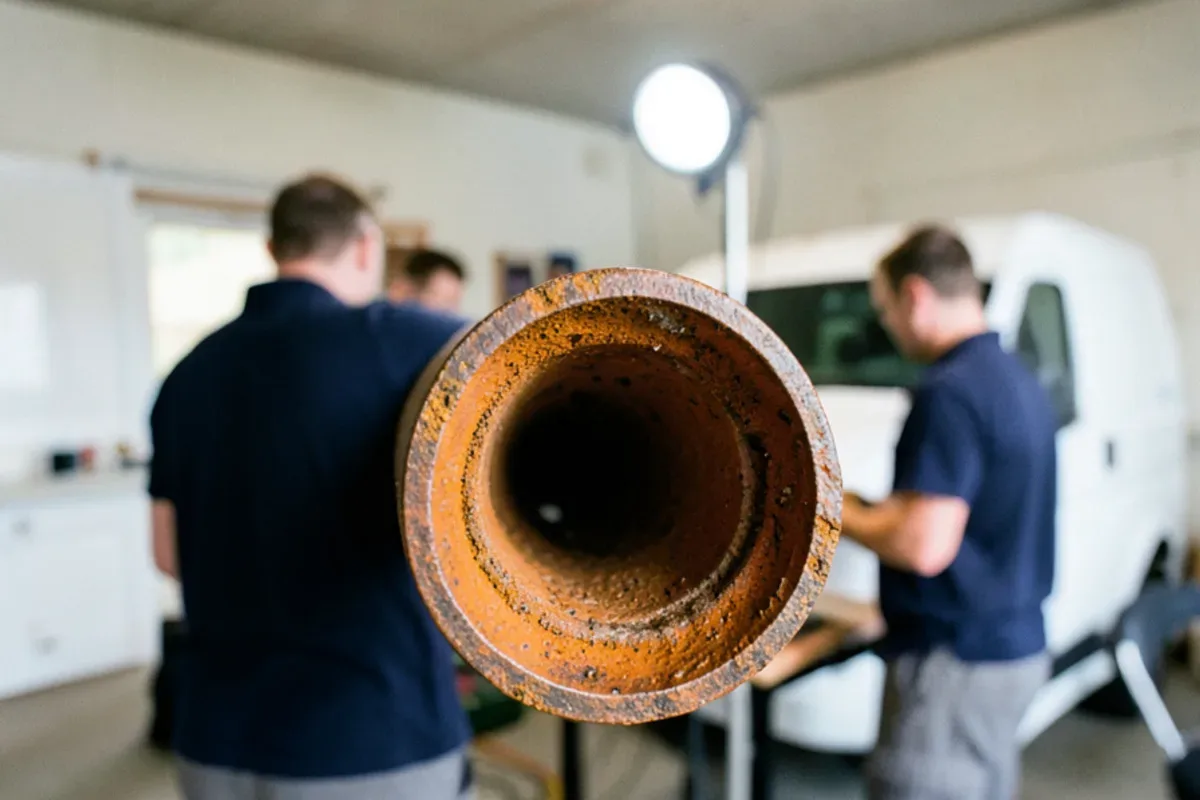
Cast iron fails from two directions at once. Along the top of a horizontal drain, hydrogen sulfide gas from wastewater is turned into sulfuric acid by bacteria living on the moist pipe wall. The EPA has documented this crown corrosion in sewers for decades. In a house drain it shows up as flaking, pitted iron along the upper half of the pipe.
Along the bottom, water and solids run over the same strip of iron every day. Rust forms, gets scoured away, and forms again. Over many years that wears a groove, sometimes called channel rot, until the bottom of the pipe is thin or open. Under a basement floor, an open channel lets wastewater soak into the soil instead of reaching the sewer.
Meanwhile, scale builds up on the rough interior. A 4-inch line can end up with a much smaller opening, which is why old cast iron catches paper and grease that a smooth pipe would pass.
Signs a cast iron stack is failing
- Rust-colored streaks or a white, crusty deposit running down from a joint or a spot on the pipe.
- Damp spots or drips at hub joints, especially after a tub or washing machine drains.
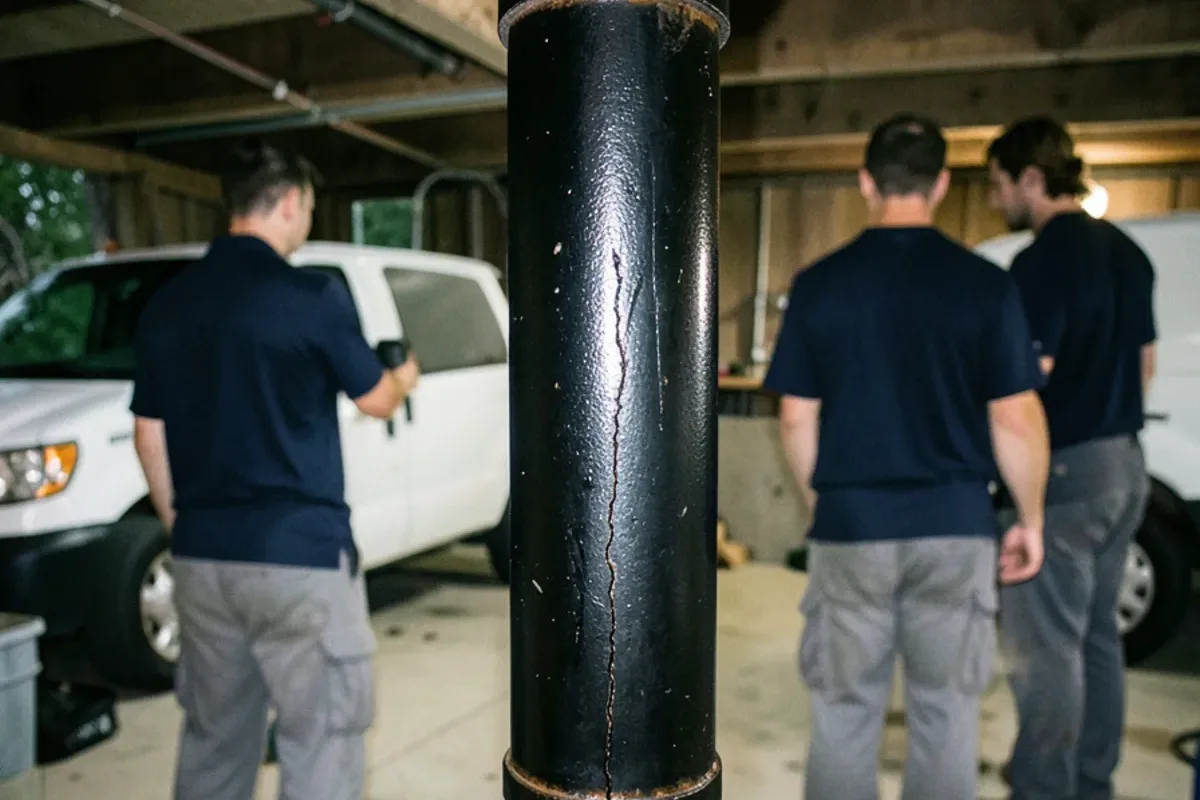
- A hairline crack running along the length of the pipe, often with a dark damp line beside it.
- A sewer smell in the basement with no dry trap to blame.
- The same drain clogging again a few weeks or months after it was cleaned.
- Gurgling in a floor drain or toilet when other fixtures run. That points to a restriction in the main line.
- Bubbling, stained or damp concrete along the path of a buried drain line.
- A water stain on a ceiling below an upstairs bathroom, where a horizontal cast iron branch runs through the joists.
One sign alone isn't a verdict. A single weeping hub joint can be repaired. Rust streaks at several points, plus repeat clogs, usually mean the pipe is wearing out along its whole length. A smell is worth chasing on its own, and our guide on where a sewer smell in the basement comes from walks through the easier causes first.
How do you check a cast iron pipe you can't see?
Start with what is visible. Look along the stack and any exposed horizontal pipe with a flashlight held at a low angle, which makes cracks and pitting stand out. Check every hub and coupling. Tapping lightly with the handle of a screwdriver can help: sound iron rings, while badly thinned iron sounds dull. Don't strike it hard. Old pipe can crack.
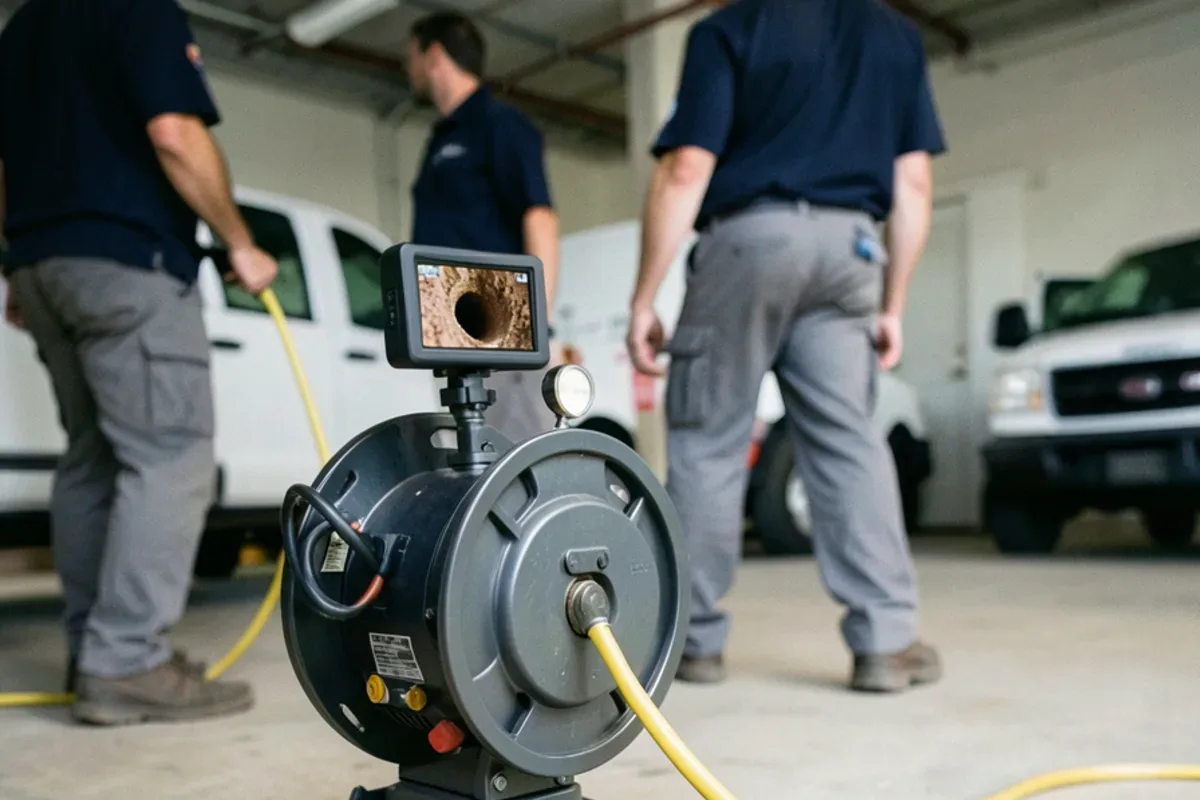
Everything under the floor and inside walls needs a camera. A sewer line repair and inspection visit runs a camera from a cleanout through the building drain and out toward the street, showing scale, cracks, channel rot, roots at joints and any section where the bottom of the pipe is gone. The recording also tells you how far the damage runs, which is the number that decides repair versus replacement. If the problem turns out to be past your foundation, our post on who owns the sewer line between your house and the street covers where responsibility usually changes hands.
Hub joints, no-hub bands and other weak spots
Older cast iron was joined hub and spigot: one pipe end slid into the bell of the next, and the gap was packed with oakum, an oiled hemp, then sealed with molten lead. Those joints can last a long time, but they loosen when the stack shifts or a heavy fixture is replaced. A leaking lead joint usually weeps at the top edge of the hub.
Newer cast iron uses no-hub pipe joined with a neoprene sleeve under a stainless steel band. The bands can rust and the rubber can harden with age. Watch also for the places where someone already repaired the line, such as a plastic section clamped into the old iron with rubber couplings. Those transitions are fine when they're supported properly and a common leak point when they aren't.
Repair a section or replace the whole run
| What the camera and eyes show | Usual approach |
|---|---|
| One cracked fitting or leaking hub, sound pipe around it | Cut out the bad section and splice in new pipe with shielded couplings |
| Heavy scale but sound walls | Descaling or jetting to restore the opening, then re-inspect |
| Rust and cracks at several points on the stack | Replace the stack from the basement floor up, often floor by floor |
| Channel rot or holes in the buried building drain | Replace the line under the floor, or line it where the pipe shape allows |
| Damage that continues past the foundation | Repair or replace the lateral as a separate sewer job |
Cost depends on how much pipe is involved, whether the concrete floor has to be opened, how many finished walls and ceilings are in the way, and whether the work is a stack, a buried line or both. When the supply side is old galvanized pipe too, it can make sense to plan the drain work alongside whole-house repiping, since the same walls get opened once instead of twice.
If you own one of the older homes south of I-696 in Hazel Park or an older bungalow in Ferndale, it's worth finding out whether the stack in your basement is original. A camera look before you finish a basement or remodel a bathroom costs far less than opening new drywall later.
The honest trade-offs in fixing old cast iron
Every option for old cast iron has a catch, and it's better to hear it before the work starts than after.
- A spot repair is only as good as the pipe beside it. Shielded couplings need sound iron to clamp onto, and thin pipe can crack when it's cut. If the camera shows wear on both sides of the bad spot, the next leak is often a foot away from the repair.
- Descaling opens the pipe and can expose holes. Mechanical descaling or hydro jetting cuts away the scale that was choking the line, but in a badly worn pipe that scale may have been covering a thin bottom. A second camera pass after cleaning shows what was underneath.
- Lining needs a pipe that still has its shape. A liner can't bridge a collapsed section or a missing bottom, it narrows the inside slightly, and every branch connection has to be reopened from inside afterward.
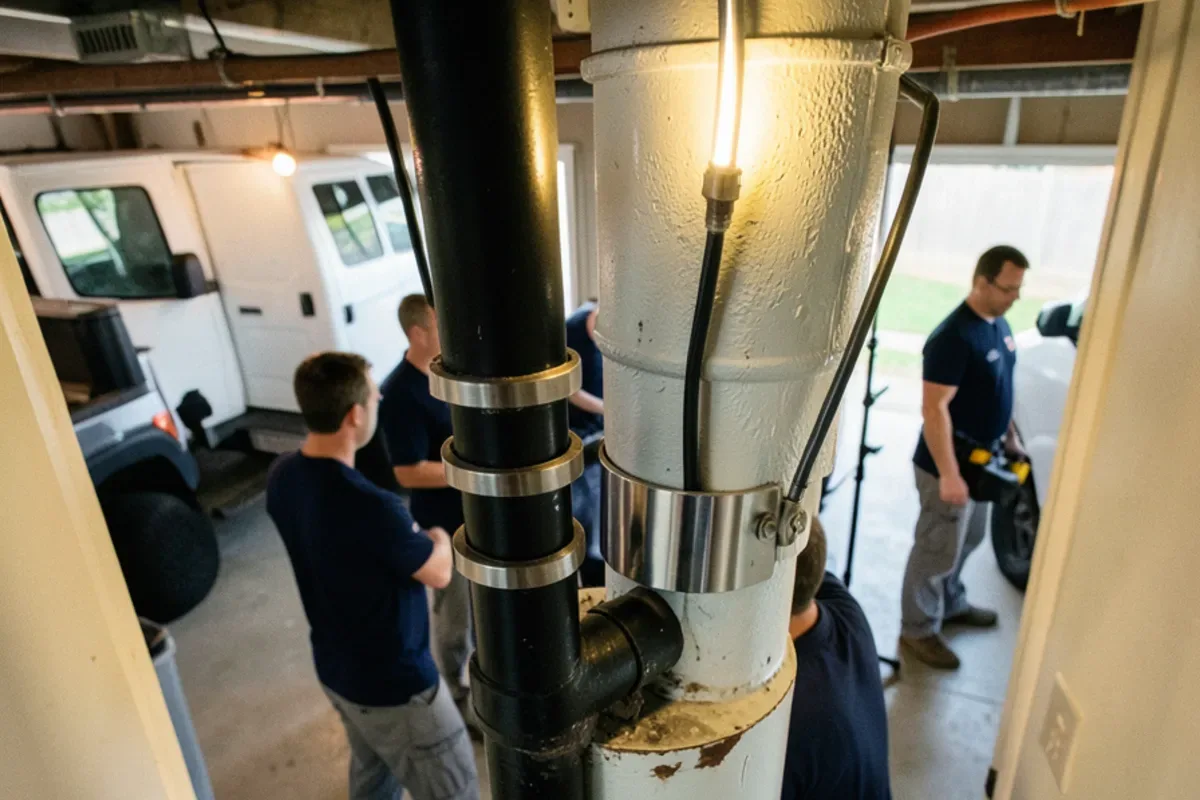
- Stack work starts with support. A cast iron stack is heavy, so riser clamps go on above the cut before any section comes out, and the upper floors stay off-limits for water until it's back together.
None of this means old cast iron has to go. A stack with one weeping hub and clean walls on camera can keep working for years after a small repair. The point of the inspection is to put your money where the pipe is actually failing.
What you can keep an eye on, and when to call
Looking is free. Check the stack and any exposed drain with a flashlight a couple of times a year, note where rust streaks or damp spots show up, and keep track of how often each drain clogs. Use a strainer in kitchen and tub drains, and skip caustic drain openers, which are hard on old iron.
Call when a joint drips, a crack shows along the pipe, a ceiling stains under a bathroom, or one drain clogs again within months of being cleared. The same goes before you finish a basement or open a bathroom wall, since that's the cheapest moment to deal with the pipe behind it. If any of that sounds familiar, call us to film the line and show you where it stands.
Questions people ask about this
How long do cast iron drain pipes last?
There's no single number. Pipe that carries little water and sits in dry conditions can last a very long time, while a kitchen line that handles grease every day can wear through much sooner. The condition you see on camera matters far more than the age.
Can a cast iron pipe be repaired instead of replaced?
Yes, often. A cracked fitting or a leaking hub can be cut out and replaced with a short section of new pipe held by shielded couplings, as long as the iron on both sides is sound. Replacement makes more sense when the damage shows up in several places along the stack or the bottom of a buried building drain has worn through.
Is rust on the outside of a cast iron pipe a problem?
No, not by itself. Light, even surface rust is normal on old iron and doesn't mean the wall is thin. Rust that streaks downward from one spot, flakes off in layers or comes with dampness is different. It usually means the pipe is weeping there, and that spot should be checked and the line filmed.
Should I replace the cast iron before finishing my basement?
No, not automatically, but have it filmed first. Finishing a basement covers the stack and often the cleanout, and the building drain sits under the new floor. If the camera shows channel rot, heavy scale or cracks, replacing that pipe now costs far less than opening new drywall and flooring later. If it looks sound, leave it and keep the cleanout accessible.
Want a plumber to look at your situation? We're on Stephens Rd in Warren.
(207) 419-2600