
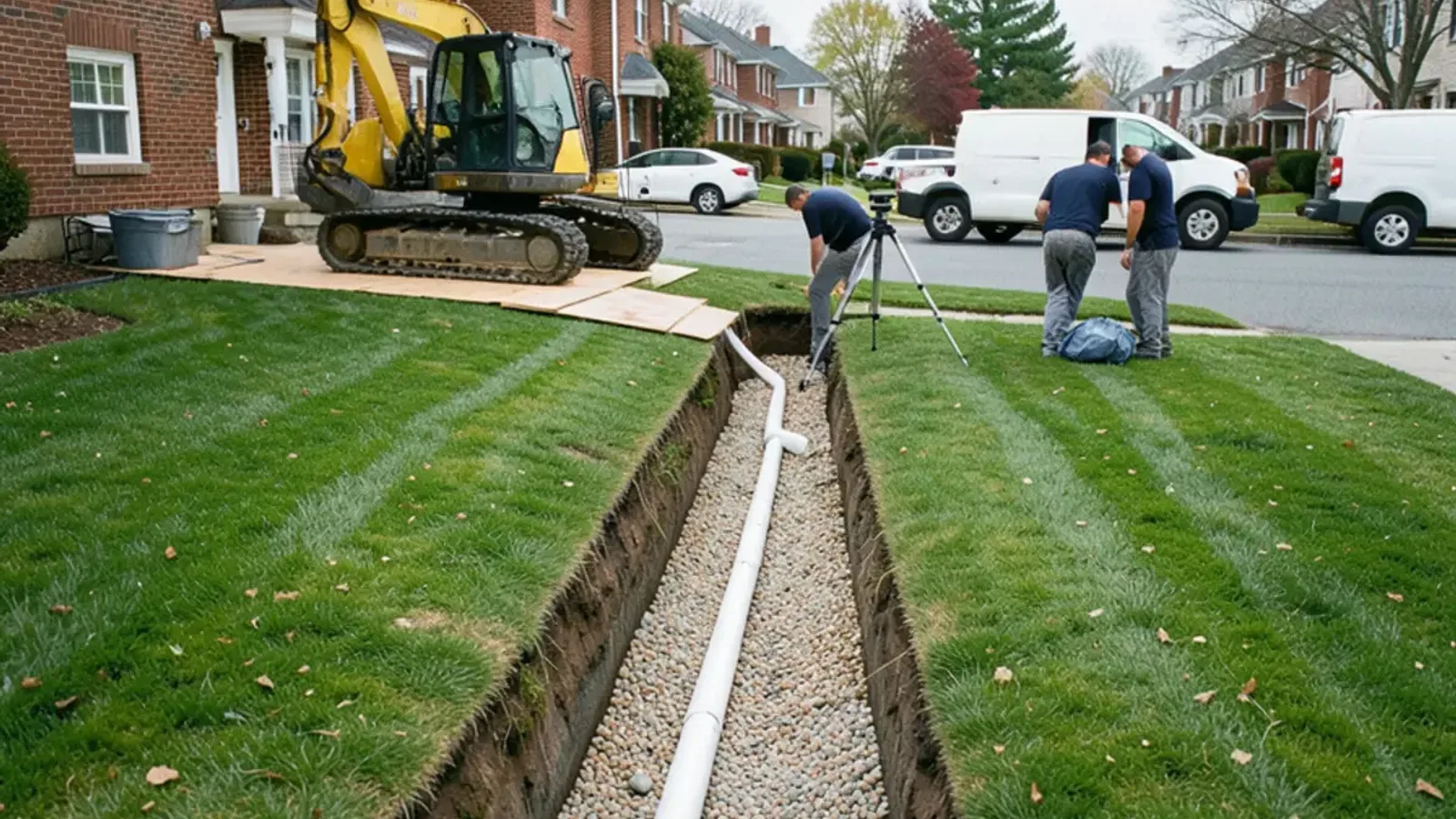
Sewer line replacement in Warren means taking out the old lateral, the pipe that carries everything from your house to the city sewer main, and putting in a new one from the foundation to the city tap. In Warren, most of the lines being replaced are clay tile or cast iron laid in the 1950s and 1960s.
Replacement is the answer when the camera shows a line that is collapsed, flattened, sagging along its length, or cracked at so many joints that fixing one spot at a time no longer makes sense. It is also a permitted, inspected project with a few days of disruption in the yard. Below is how the old pipe comes out, what goes in and what the city requires.
What a whole-line sewer replacement includes
The result is one continuous new lateral. Spot repairs and liners keep the pipe you have; replacement retires it. The new line starts at the foundation wall, where it joins the house drain, and ends at the tap on the city main, including the stretch under the sidewalk or the street. Every joint in between is new, the slope is set from end to end, and the city inspects the whole run before it is buried. That suits a line failing everywhere, not in one spot.
- Camera record and locate of the old line, with depth at both ends
- Removal or bursting of the old clay, cast iron or fiber pipe
- New PVC or HDPE laid to a steady slope, foundation to main
- A cleanout at the house, and a second on long runs
- Permit, city inspection, backfill and surface restoration
When is sewer line replacement the right call?
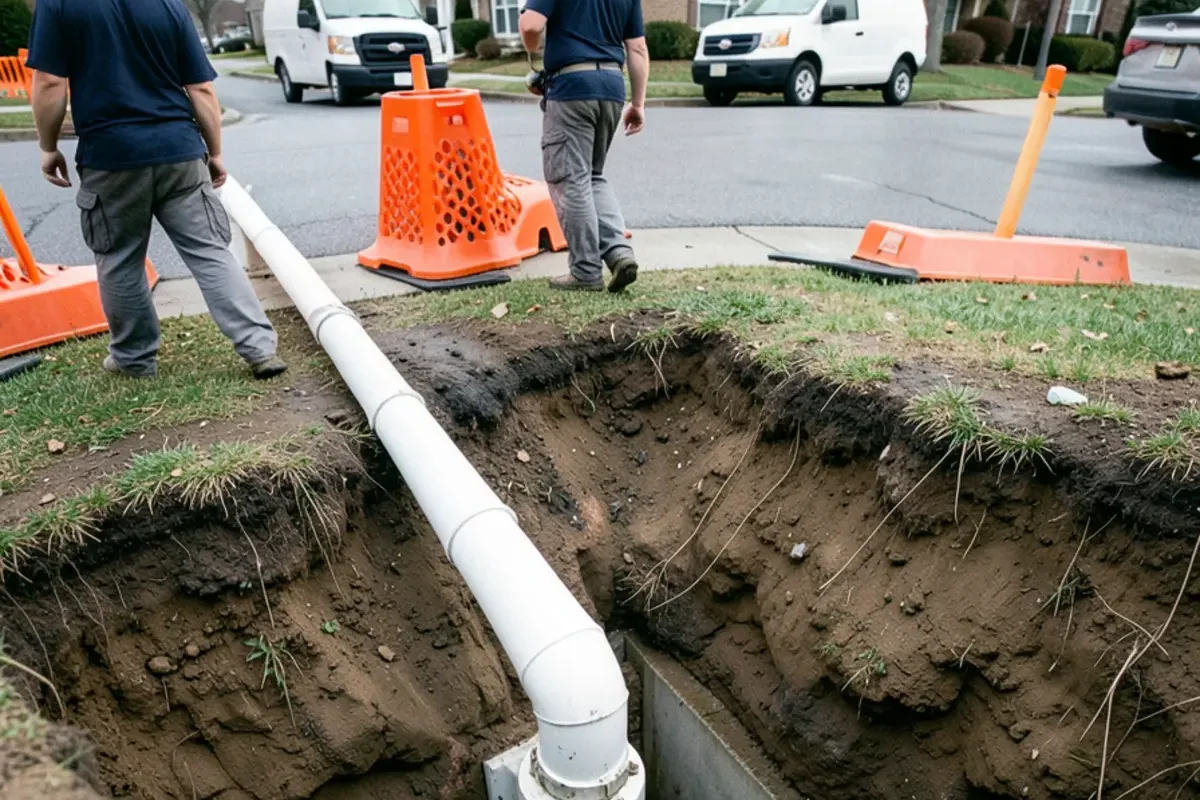
A single crack or one bad joint is a repair. Replacement makes sense when the problems are spread out. Typical signs on camera are roots at joint after joint, a long belly that holds water, cast iron with the bottom rusted through in several places, or a section that has caved in. Lines like that tend to fail somewhere new soon after the last spot was fixed.
In Warren this is mostly a question of age. About three-quarters of the city's homes were built between 1950 and 1979, and the laterals from that era are commonly clay tile or cast iron that has now been in the ground for half a century or more. The city's own handout describes replacing an old lateral with new plastic pipe as the long-term fix for recurring roots. If you are not sure the line is past repair, start with our sewer line repair and inspection page.
Open trench or pipe bursting for a Warren lateral?
| Factor | Open trench | Pipe bursting |
|---|---|---|
| How it works | Dig along the line, remove the old pipe, lay new pipe on a graded bed | Pull a bursting head through the old pipe from a pit at each end; new pipe follows behind it |
| Digging | A trench the length of the run | Two or more access pits |
| Fixes a sag? | Yes; the new pipe is laid to grade | Mostly follows the old path, so a deep sag may remain |
| Best fit | Shallow lines, open lawns, badly sagging pipe | Lines under driveways, mature trees or landscaping |
| Limits | Surface restoration over the whole trench | Needs a continuous old pipe to follow; nearby utilities must be clear |
Some jobs mix the two, opening a trench in the yard and bursting the short run under the sidewalk. Lining the old pipe is a third option when it still holds its shape, and it is covered on our trenchless sewer repair page.
Pipe, slope and cleanouts in a new sewer line
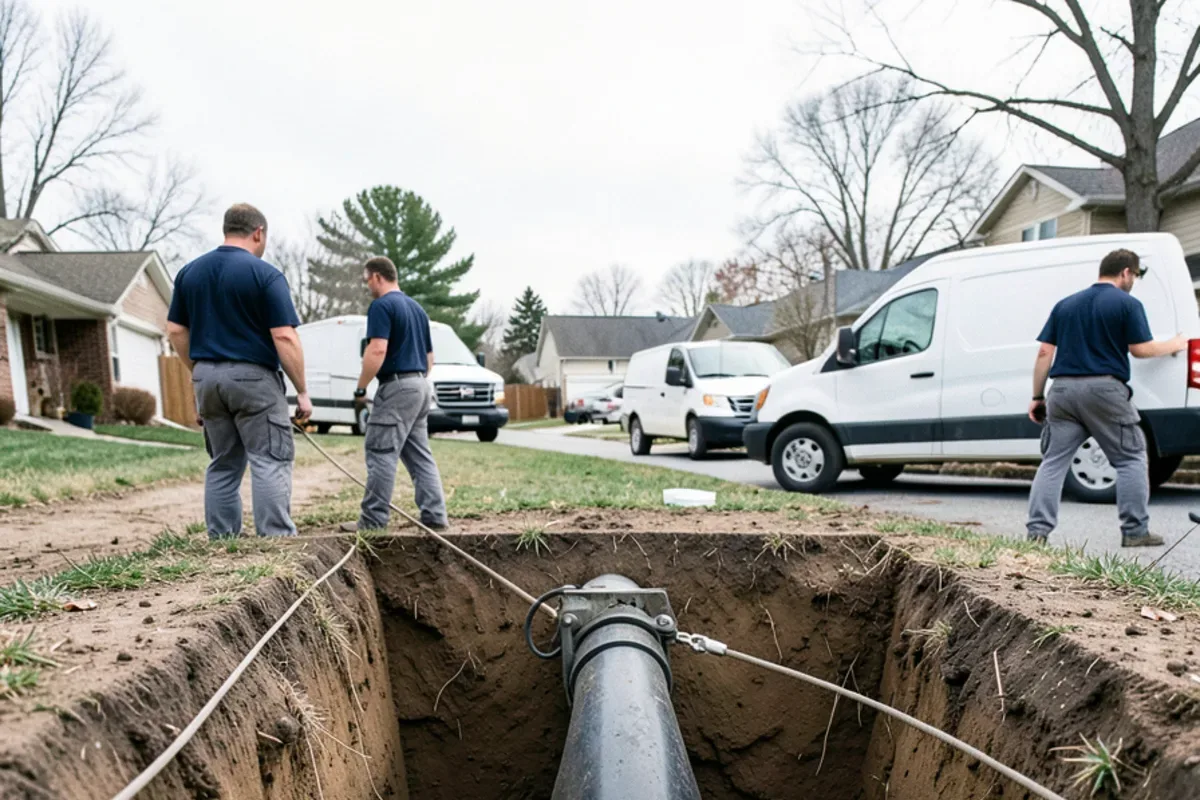
New laterals are typically PVC sewer pipe, or HDPE when the line is burst, with glued or fused joints that roots have a hard time getting into. A house lateral is commonly 4 inches. The pipe has to slope steadily toward the main. The model plumbing code Michigan's code is based on calls for at least 1/8 inch of fall per foot for drain pipe 3 to 6 inches in size, and a laser level checks it along the trench.
We also plan the access points. A cleanout near the house makes every future cleaning and camera run simpler, and on a long run a second one near the property line helps. The far end ties into the city main, which in most of Warren runs under the street and in some neighborhoods along a rear-yard easement. That decides which direction the trench goes.
Permits and inspection for sewer replacement in Warren
The City of Warren requires a permit and inspection to replace a sewer service line, both on private property and in the public right-of-way or utility easements. Permits go through the Division of Buildings and Safety Engineering at City Hall, and the new pipe has to stay exposed in the trench until the inspector accepts it. MISS DIG must also be notified three working days before excavation so other buried utilities get marked.
Under Michigan's Skilled Trades Regulation Act, a building sewer is plumbing work done by a journey or master plumber under a permit pulled by the plumbing contractor. Owners replacing the sewer at their own single-family home can do the work themselves if they pull the permit. Either way, the lateral is the owner's responsibility all the way to the main, as our post on who owns the sewer line explains.
How a sewer line replacement project runs
Camera, locate and plan
A sewer camera inspection records the old line. We locate its path and depth, and decide on trench, bursting or a mix. The permit is pulled and utilities are marked.
Protect the house and yard
Plywood goes down for equipment. Plants and pavers in the path get moved where possible. Water use in the house has to stop while the line is open.
Remove and replace
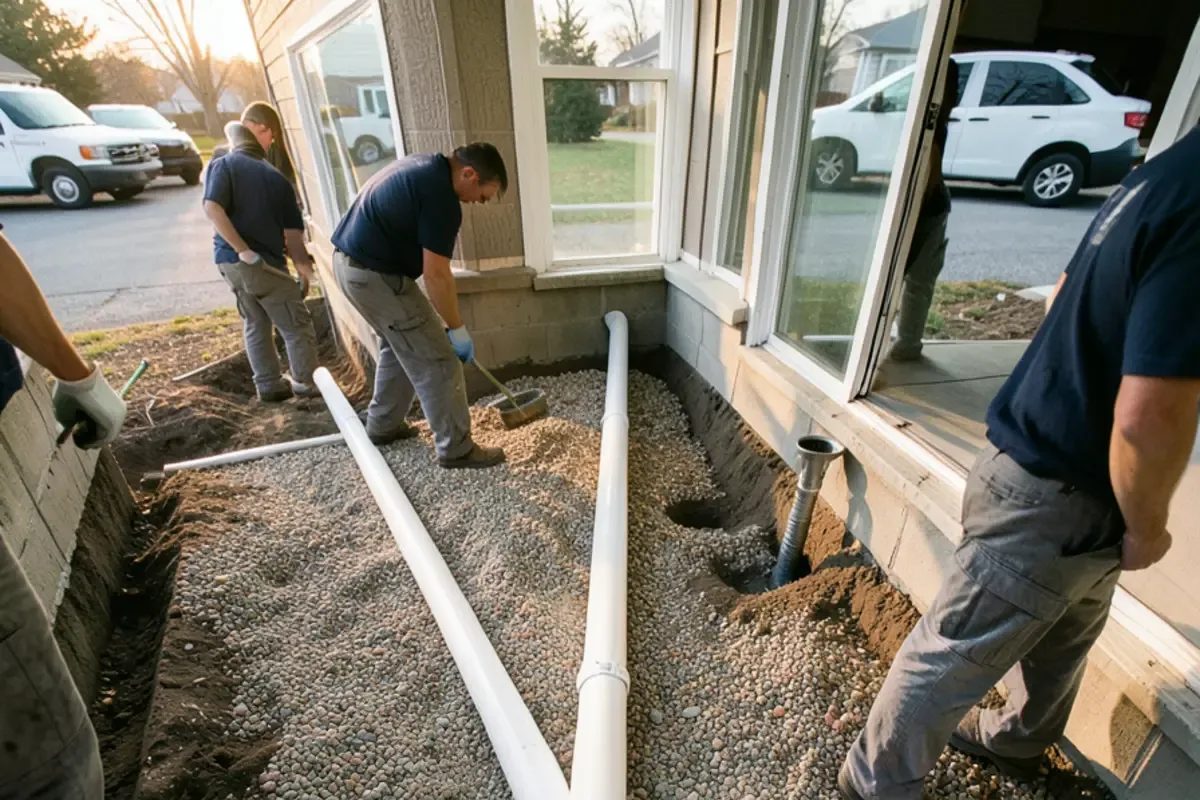
The old pipe comes out or is burst in place. New pipe is laid to grade on bedding, joined at the foundation and connected at the main.
Inspection
The city inspector checks the exposed pipe, joints and connections before anything is covered.
Backfill and restore
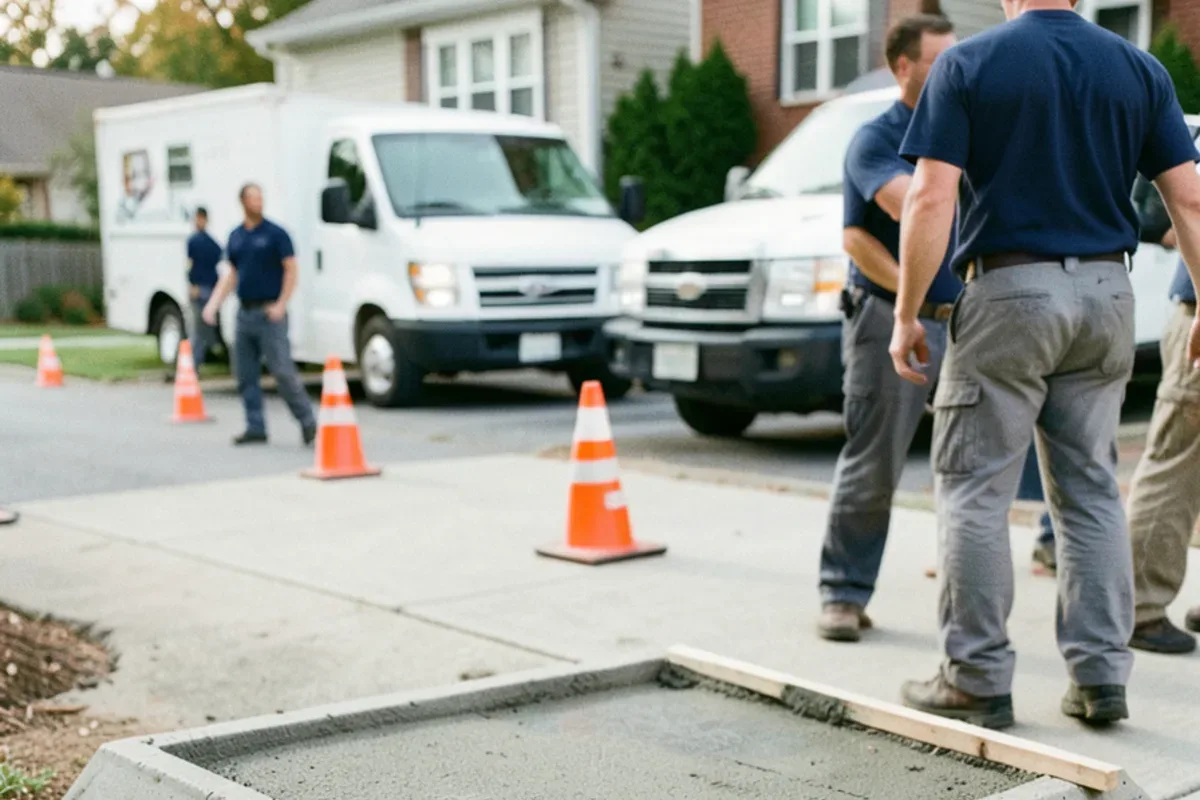
The trench is backfilled in layers and compacted. Lawn gets topsoil and seed; concrete and pavers are patched or replaced as agreed.
A typical residential job takes a few days on site, plus the MISS DIG notice period and the time to get an inspection on the schedule. Some settling over the trench in the first season is normal, and the low spots get topped up with soil.
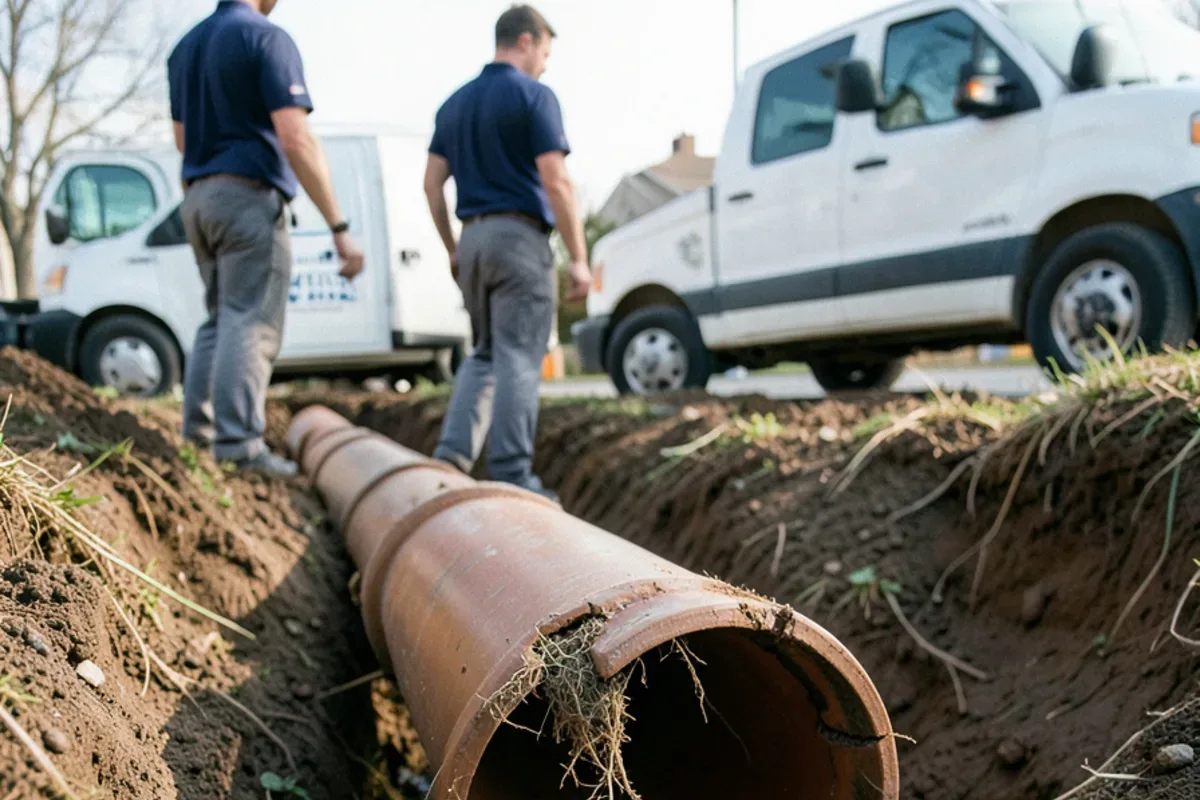 Before
 After
What changes the cost of replacing a sewer line
Replacing a whole lateral is one of the larger repairs a house gets, and two lines of the same length can cost very differently. Depth, what is built on top and whether the work reaches the right-of-way make most of the difference. We go over each factor after the camera run and before any digging, so the written scope reflects your yard.
- Length of the run and its depth at the house and at the main.
- Method. A trench through open lawn costs differently from bursting under a driveway.
- What sits on top: concrete, pavers, a porch, mature trees or a finished basement floor.
- Work in the right-of-way, such as a sidewalk or a connection under the street.
- New cleanouts, and any work on the house drain under the basement floor.
- Permit and inspection requirements, and surface restoration once the trench is closed.
Caring for a new lateral
Plastic pipe does not rust, and its joints give roots far fewer openings than clay. It still clogs if it is asked to carry grease, wipes or paper towels, which the city lists among the common causes of blocked laterals. Keep trees with aggressive roots away from the line when you replant the yard. If you ever need a cleaning, the new cleanout is where it starts. A camera run every few years, or before you sell, confirms the line is still clear. And if storms have ever pushed water up through your floor drain, the trench is already open at the foundation, which makes it a good moment to add a backwater valve.
Why Warren owners call us when the whole line is shot
We work from Stephens Rd in 48089, where nearly half the houses predate 1960 and their laterals have been in the clay for 60 years or more. A replacement is a big decision, so we don’t start there. The line gets cleaned and filmed first, you watch the footage with us, and we only recommend replacing it when the damage runs the length of the pipe. You get the cost factors and a written scope before digging, and the permit and inspection go through the city. Homeowners, landlords and business owners all reach us on one line.
Sewer line replacement around Warren and nearby cities
- Plumber in Detroit
DWSD mails a Fix It Letter when its camera finds a bad lateral, and replacing it takes a DWSD permit.
- Plumber in Hamtramck
With 63 percent of homes built before 1940, many laterals are clay tile close to a century old.
- Plumber in Hazel Park
Where sewers run behind the homes, a replacement trench crosses the backyard instead of the front lawn.
- Plumber in St. Clair Shores
A lateral that crosses the street to the main turns full replacement into right-of-way work, permitted by Community Development.
- Plumber in Royal Oak
Owners are responsible through the sewer connection itself, so a full replacement here includes the tap at the main.
- Plumber in Roseville
Duplexes and small apartment buildings often share one lateral, so a replacement is planned around several households.
- Plumber in Fraser
In its condos and townhouses, association documents decide who replaces a lateral shared by several units.
- Plumber in Madison Heights
Forty percent of homes are 1950s builds, so many laterals are about 70 years old.
- Plumber in Harper Woods
A city contractor is televising sewers in phases; the 1950s laterals feeding them are just as old.
Sewer line replacement questions from Warren customers
When should I replace my sewer line instead of repairing it?
Repair when the camera shows one or two problems in a line that is otherwise sound. Replace when the damage runs along most of the pipe, the line has collapsed or sags for a long stretch, or roots come through joint after joint. Fixing a failing line one spot at a time usually costs more in the end.
How much of the yard gets dug up for a sewer line replacement?
With an open trench, a strip along the whole run from the house to the main. With pipe bursting, usually a pit at the house end and one near the connection, plus any spots where the line changes direction. Some jobs combine the two to avoid cutting a driveway or sidewalk.
Do I need a permit to replace a sewer line in Warren?
Yes. The city requires a permit and inspection for replacing a sewer service line on private property and in the right-of-way or easements. The new pipe stays exposed until the city inspector accepts it. Owner-occupants of a single-family home may pull the permit themselves; otherwise the plumbing contractor pulls it.
Does homeowners insurance pay to replace a sewer line?
No, not usually. Standard policies tend to exclude wear on an aging line, so ask your agent what yours covers. The City of Warren’s sewer handout notes that most homeowner policies don’t cover sewer backups either and suggests asking about a backup rider. The city also says it has nothing to do with line-insurance offers mailed to residents.
Can I use my plumbing while the sewer line is being replaced?
No, not while the line is open. Once the old pipe is cut, nothing can drain out of the house, so showers, laundry and toilets wait until the new line is connected. Plan on at least one day without drains, and talk with us about timing if that is hard for your household.
Still not sure what you're dealing with? Describe it on the phone and we'll tell you what we'd check first.
(207) 419-2600Last updated October 25, 2026