
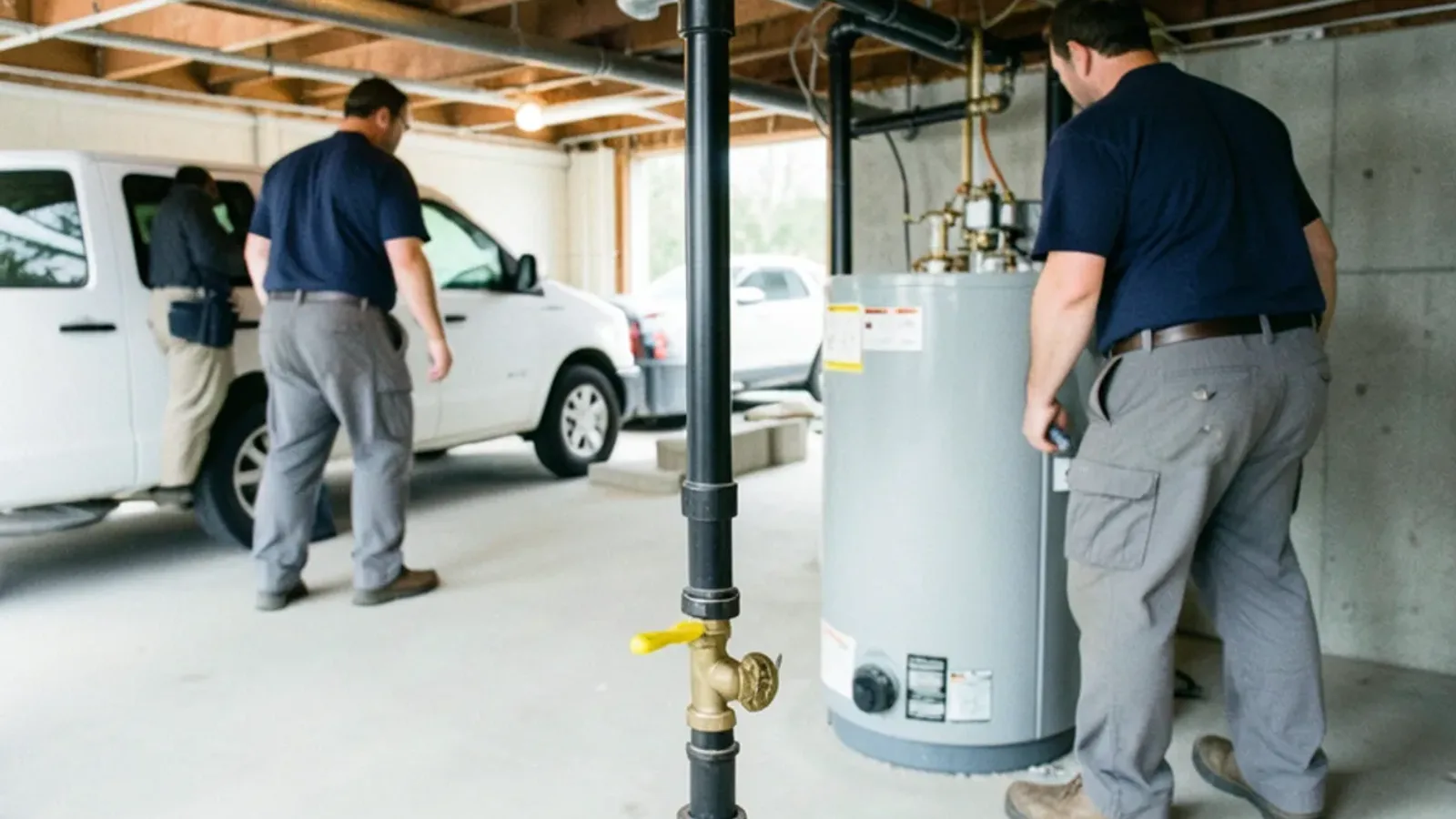
If you smell gas right now, stop reading. Leave the house without touching switches or flames, and call 911 or Consumers Energy once you're outside. This page is for planned gas line installation and repair in Warren homes, rentals and businesses.
That means gas line installation for a new range in the kitchen, a dryer line to the basement laundry, a standby generator, a grill on the patio, or a water heater that needs a bigger feed than the old one.
Gas piping in Michigan is mechanical work. The state licenses it under fuel gas classifications, and Warren permits it on its mechanical permit rather than the plumbing one. The pipe has to be sized for every appliance on it, inspected, and pressure tested before any gas goes in.
Black iron, CSST or polyethylene for a new gas line?
| Material | Where it is used | Trade-offs |
|---|---|---|
| Black steel (black iron), threaded | Basement mains and branches; most original Warren gas piping | Durable and familiar to inspectors; every joint is cut and threaded, which takes time |
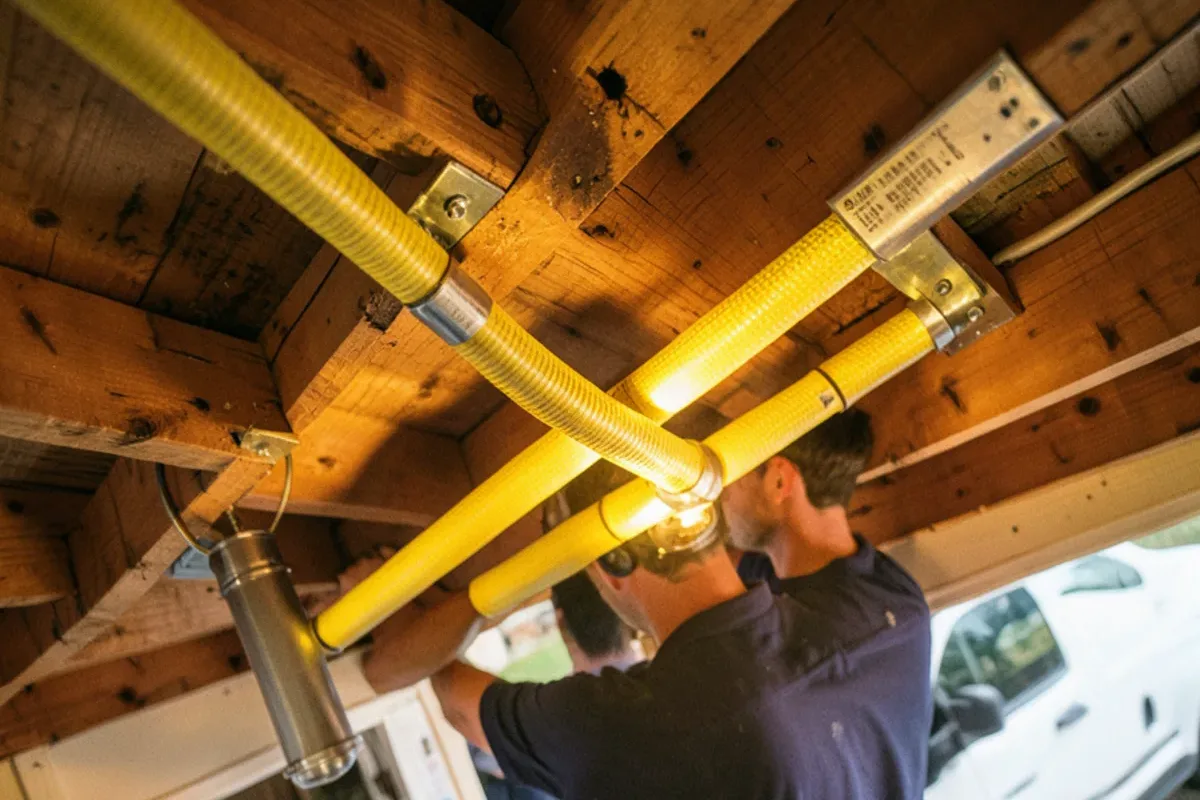
| CSST (corrugated stainless steel tubing) | Long runs fished through finished walls and ceilings | Fewer joints and less wall opening; needs a bonding connection to the electrical grounding system, as its instructions and code require |
| Polyethylene (PE), buried | Underground runs to a detached garage, grill or generator | Doesn't rust; must be buried, with a tracer wire and a riser to come above ground |
| Flexible appliance connector | The last few feet from the shutoff valve to the appliance | Made for that job only; not a substitute for fixed piping through walls or floors |
Most jobs mix materials. A dryer line might be black iron off the basement main, while a run to a second-floor addition is often CSST to spare the drywall.
What a planned gas line project includes in a Warren house
A planned gas line job is mostly arithmetic and paperwork wrapped around a short stretch of pipe. Every appliance's load gets added up, a route is picked that crosses the fewest finished surfaces, the mechanical permit is filed, and the new run is tested and inspected before gas goes in. About 74 percent of Warren homes went up between 1950 and 1979, so the starting point is usually original black iron laid out for a furnace, a tank water heater and a range. A typical project covers:
- Adding up the BTU input of every appliance, old and new
- Choosing black iron, CSST or buried polyethylene for the route
- A shutoff valve and sediment trap at each new appliance
- The mechanical permit, a pressure test and the city inspection
- Capping abandoned lines and replacing old brass connectors on the way
Sizing a gas line installation for ranges, dryers and generators
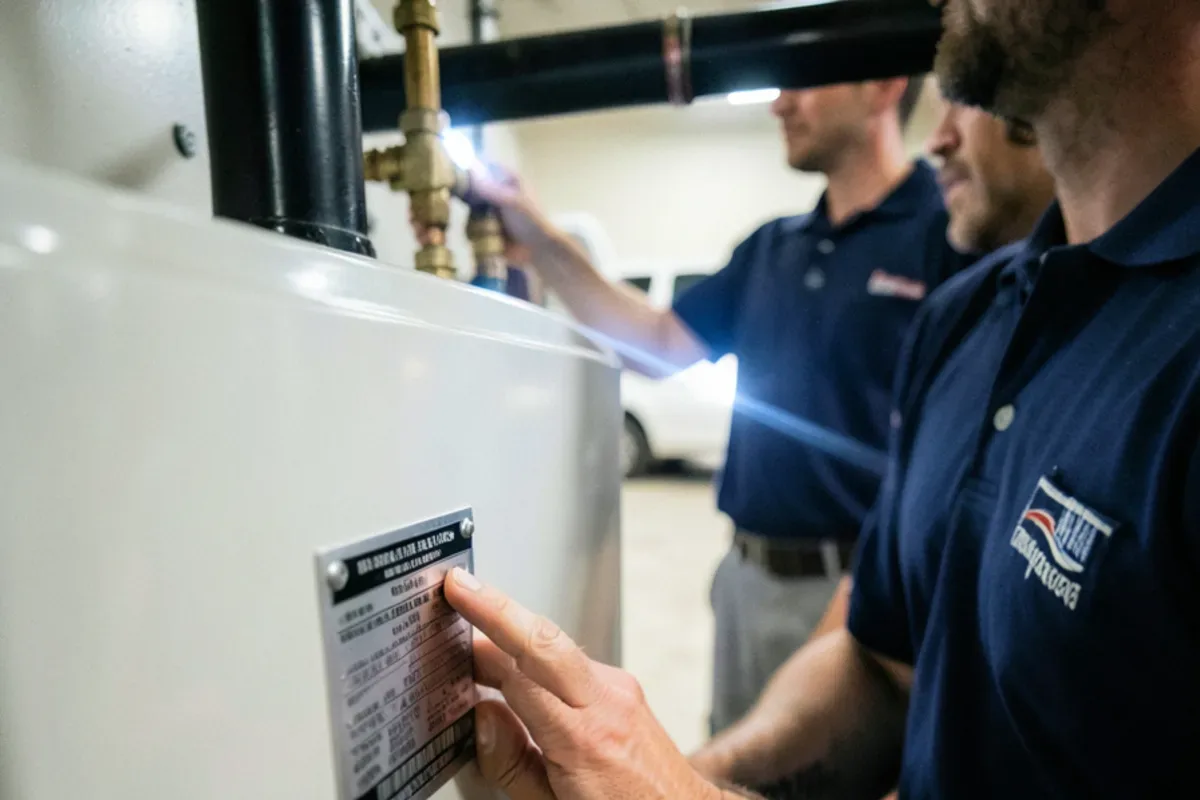
Every gas appliance has a rating plate that lists its input in BTUs per hour. A gas line is sized for the total of everything it feeds, how far that load is from the meter, and the pressure the system delivers. Code tables set the minimum size. An undersized line starves appliances, and burners struggle to stay lit.
Adding a large load is where older systems run out of room. A house piped in the 1960s for a furnace, a tank water heater and a range wasn't sized for a tankless heater or a whole-house generator on top of that. Some of those jobs need a new main from the meter, and the utility may need to confirm that the meter itself can carry the added load. If you're weighing a tankless unit, tankless water heater installation covers the gas supply question in more depth.
Signs the existing piping is the limit: a range burner that dips when the furnace kicks on, a new appliance whose rating would push the total past what the main was sized for, or heavy rust where the pipe comes through the rim joist from the meter.
Who can run a gas line in Warren?
Michigan regulates gas piping as mechanical work. State rules define a fuel gas piping license, which covers piping from the point of delivery to the shutoff valve at each appliance, and a separate fuel gas piping and venting license. A holder of an HVAC equipment license doesn't need either specialty license. Whether a plumbing license by itself covers gas piping isn't settled, so don't assume it does.
The practical step is simple. Ask anyone quoting your gas line which mechanical license they hold, then look it up on the State License Search through LARA's license lookup page.
Permits, inspection and the pressure test
Warren's list of permits that may be required names gas piping as its own item, and residential gas piping appears on the city's mechanical permit application. The city warns that work done without permits can bring fines of up to $1,000. Warren's permit forms also require new work to stay exposed until the Building Division accepts it, and inspections are arranged with the Division at least a day ahead.
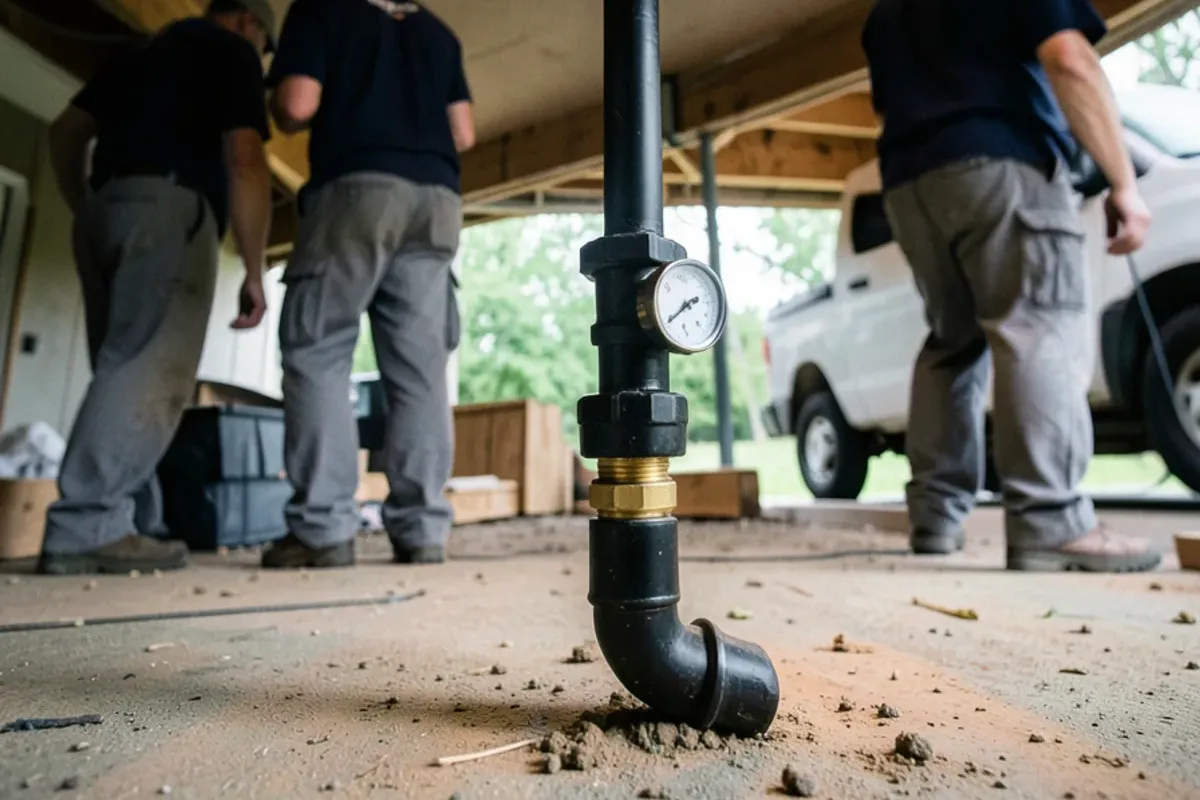
Code requires new gas piping to pass a pressure test before it's covered up or put into service. The new run is capped, filled with air or an inert gas to a pressure above what it will carry in use, and watched on a gauge for the required period. Any drop means a leak, and the system doesn't pass until it holds. Oxygen is never used for testing. After it passes and is inspected, the line is connected, purged of air, and each joint is checked again with gas in it.
For buried lines to a garage, grill or generator, MISS DIG has to be called three working days before anyone digs, so existing utilities are marked first.
How a gas line installation goes, start to finish
Walk-through and route
Where the appliance goes, where the existing piping can be tapped, and how a new line gets there with the fewest holes. The total load gets added up here too.
Permit
The mechanical permit is filed with Warren's Building Division before the work starts.
Shutoff and tie-in
Gas is turned off for the tie-in, so pilots and appliances in the house go out for a while.
Run the pipe
The line is strapped along the joists, with a shutoff valve within reach of the appliance and a sediment trap where one is needed.
Test and inspect
The new piping is pressure tested and inspected while it is still exposed.
Turn on and relight
Gas is restored, the line purged and leak-checked, and every appliance relit.
The piping itself is often a day's work or less for a single appliance in an open basement. The calendar time depends on permit and inspection scheduling, and on how much finished wall or ceiling is in the way.
Gas line repair or replacement?
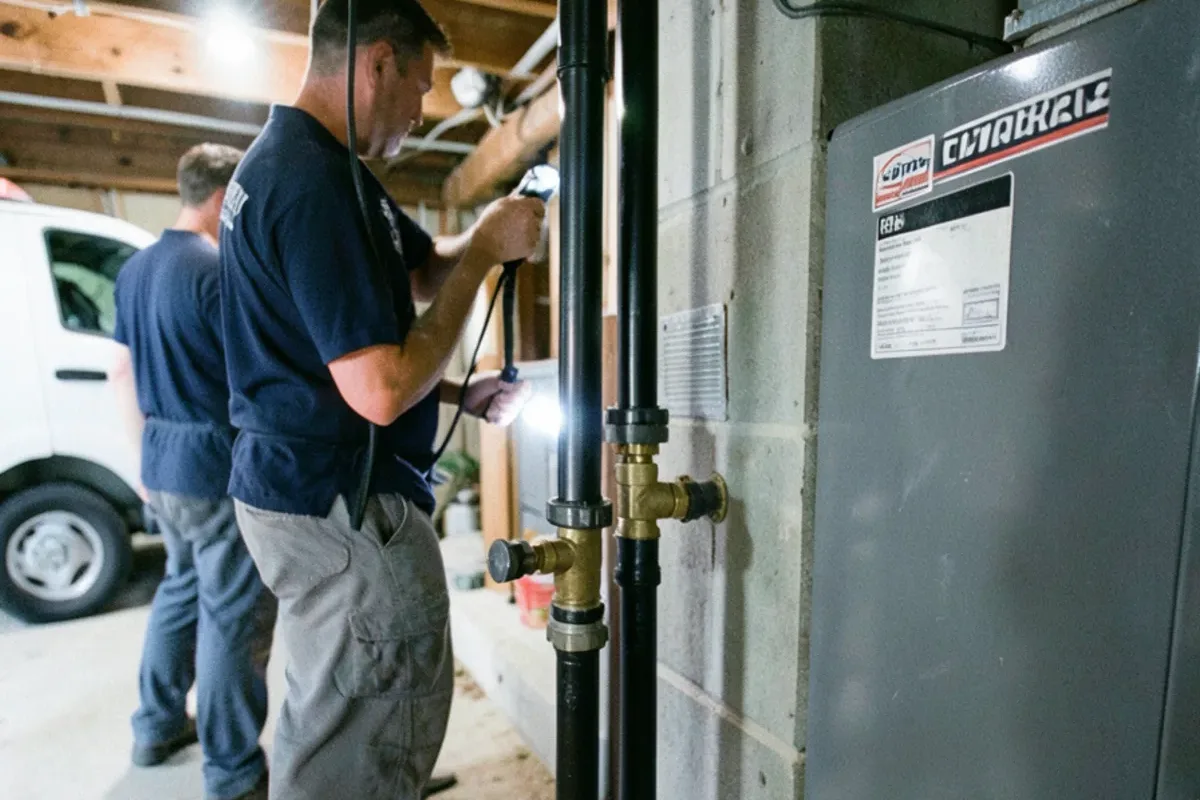
A repair fits when one thing is wrong: a leaking union at the water heater, a damaged appliance connector, a single rusted nipple. Replacement makes sense when the problem is the pipe itself, such as heavy rust where the line passes through the rim joist from the meter, a branch too small for the appliance now on it, or old uncoated brass connectors throughout the house. Abandoned lines left from a removed appliance should be capped properly instead of left behind a closed valve. When a gas smell is part of the story, start with the leak, not the new line.
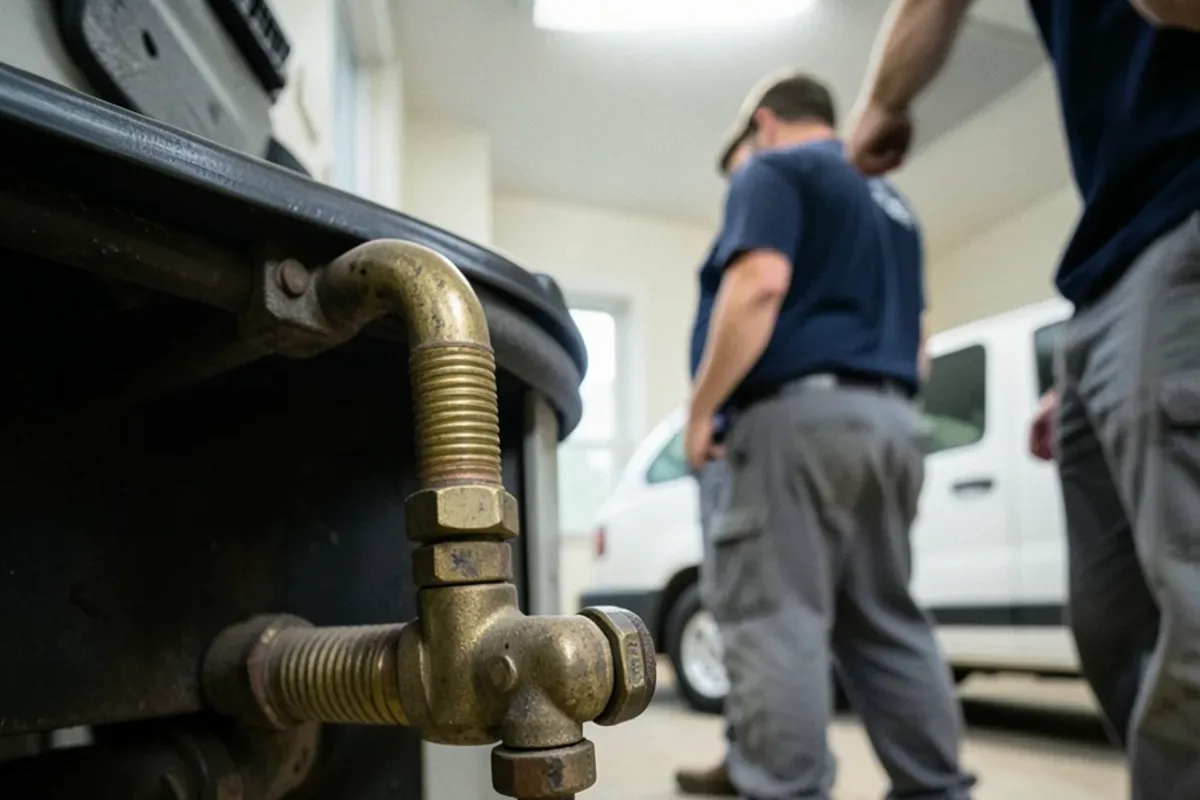 Before
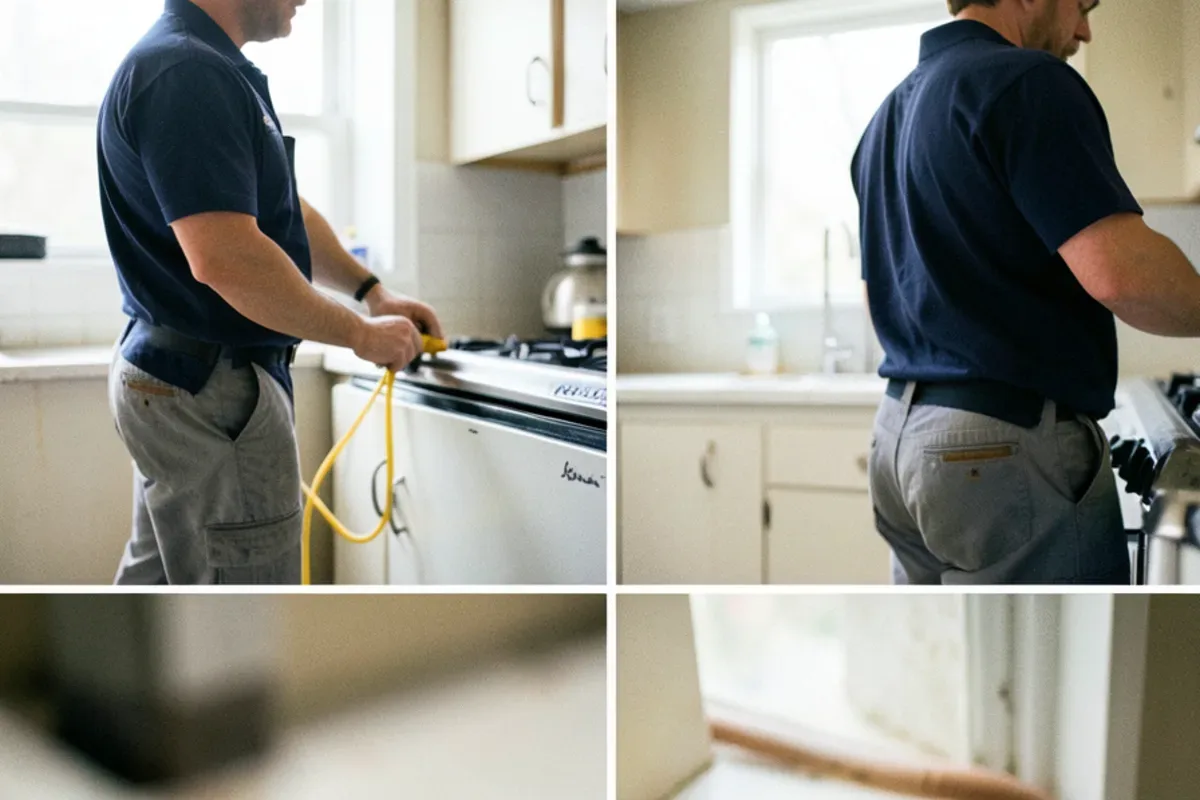 After
What changes the cost of a gas line job
- Length of the run and how many appliances it feeds, which sets the pipe size.
- Material: threaded black iron takes more labor per foot; CSST adds bonding.
- How much finished wall, ceiling or flooring sits between the meter and the appliance.
- Outdoor work, such as trenching a buried line to a garage or generator.
- Whether existing piping has to be upsized, or the utility has to change the meter for a bigger load.
Black iron in a dry basement lasts for decades; moisture at the meter wall and kinked connectors shorten that. Replace the connector each time you replace an appliance, and learn how to shut off gas to an appliance before you need to. If you're replacing a tank heater, our water heater installation page explains how the gas hookup fits into that job.
Planning a gas line with our Stephens Rd office
Our office is at 11355 Stephens Rd in 48089, among Warren's oldest houses, where original gas piping was laid out for far fewer appliances than kitchens and laundries carry now. Homeowners adding a range or generator, landlords switching a unit's dryer to gas and businesses planning new equipment all start with the same phone call. We find out what the line has to carry before recommending anything, explain what moves the cost, put the scope in writing, and tell you which Warren permit applies and which state license the work calls for.
Gas line installation and repair around Warren and nearby cities
- Plumber in Sterling Heights
Also on Consumers Energy, with gas heat in 89 percent of homes; a generator or tankless heater means re-adding a 1970s system’s load.
- Plumber in Troy
Larger post-1960 homes with more baths and hot water demand, so a tankless conversion starts with a gas sizing check.
- Plumber in Fraser
Condo water heaters often sit in closets or shared mechanical rooms, where association rules matter before a gas line changes.
- Plumber in Royal Oak
With 61 percent of homes built before 1960 and 83 percent on gas heat, original piping predates today’s ranges and dryers.
- Plumber in Roseville
Gas heats 87 percent of homes, mostly 1950s and 1960s houses where a new dryer or range tees off old black iron.
- Plumber in Eastpointe
Gas heats 89 percent of homes, and small block basements leave few easy routes for a new branch.
- Plumber in Oak Park
1950s ranches keep the furnace and tank heater in one basement utility area, so new lines usually start there.
- Plumber in Clinton Township
1970s and 1980s homes and condos on later-generation tanks, where a tankless swap needs the gas line sized first.
- Plumber in Hazel Park
Cape Cods and bungalows with small utility areas, where routing a new range or dryer branch takes planning around tight joists.
Gas line installation and repair questions from Warren customers
Can a plumber install a gas line in Michigan?
No, don't assume a plumbing license alone covers it. Gas piping in Michigan falls under mechanical licensing. The state defines fuel gas piping licenses, and HVAC equipment license holders are also covered. The question isn't settled, so ask whoever quotes the job which mechanical license they hold and check it on LARA's license search.
Do I need a permit for a gas line in Warren?
Yes, plan on it. Warren lists gas piping as an item that may need its own permit, and residential gas piping is on the city's mechanical permit application. The new line has to stay exposed until it's inspected, and it must pass a pressure test before gas is turned into it.
Can a gas line be repaired, or does it have to be replaced?
Yes, often. A single bad joint, connector or short rusted section can usually be repaired and retested. When rust is spread along the pipe, a branch is too small for its appliances, or several old brass connectors are in use, replacing that part of the system is often the better choice. A suspected leak always comes first.
How long does a gas line installation take?
For one appliance on an open basement ceiling, the piping work is often done in a day. The full timeline depends on the permit, the inspection schedule, and whether walls or a trench are involved. Gas to the house is off only during the tie-in, and appliances are relit afterward.
Do I need a bigger gas line for a tankless water heater or a generator?
Yes, often. Manufacturers' sizing guides put many whole-house tankless units among the largest gas loads in a home, and a standby generator adds another big one. Their rating plates get added to everything already on the system and checked against code sizing tables for the length from the meter. Sometimes that means a new main, and the utility may need to confirm the meter can carry it.
Still not sure what you're dealing with? Describe it on the phone and we'll tell you what we'd check first.
(207) 419-2600Last updated October 25, 2026