
 By Plumber in Warren, MI, plumbers on Stephens Rd in WarrenPublished October 25, 2026Last updated October 25, 2026
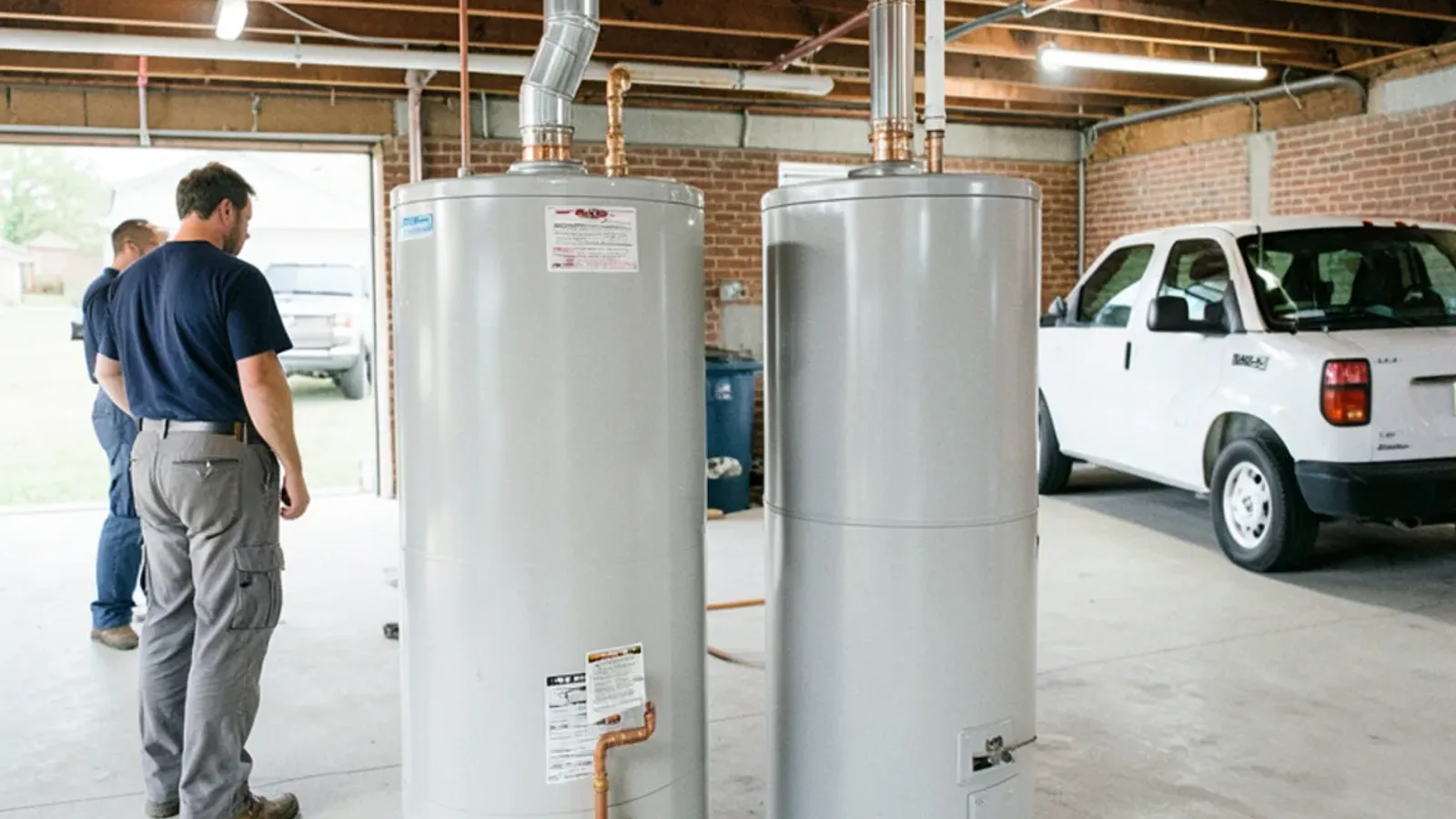
Size a water heater by your household's busiest hour, not by the gallons printed on the tank. Add up the hot water used in that hour, then pick a heater whose first-hour rating matches it or runs slightly higher. That's the method A. O. Smith recommends, and it works for gas and electric tanks alike.
As a rough guide, the same manufacturer suggests 30 to 40 gallons for one or two people, 40 to 50 for three, 50 to 75 for four and 75 to 100 for five.
Those ranges are a starting point. Two tanks with the same gallon number can deliver very different amounts of hot water, and the first-hour rating is how you tell them apart.
Tank size and first-hour rating are different numbers
Tank size is how much water the tank holds. The first-hour rating is what the federal test procedure calls an estimate of the maximum volume of hot water a storage heater can supply within an hour, starting fully heated. It depends on the tank, but also on how fast the burner or elements reheat incoming cold water. A gas tank with a strong burner can outdeliver a bigger electric tank because it recovers faster.
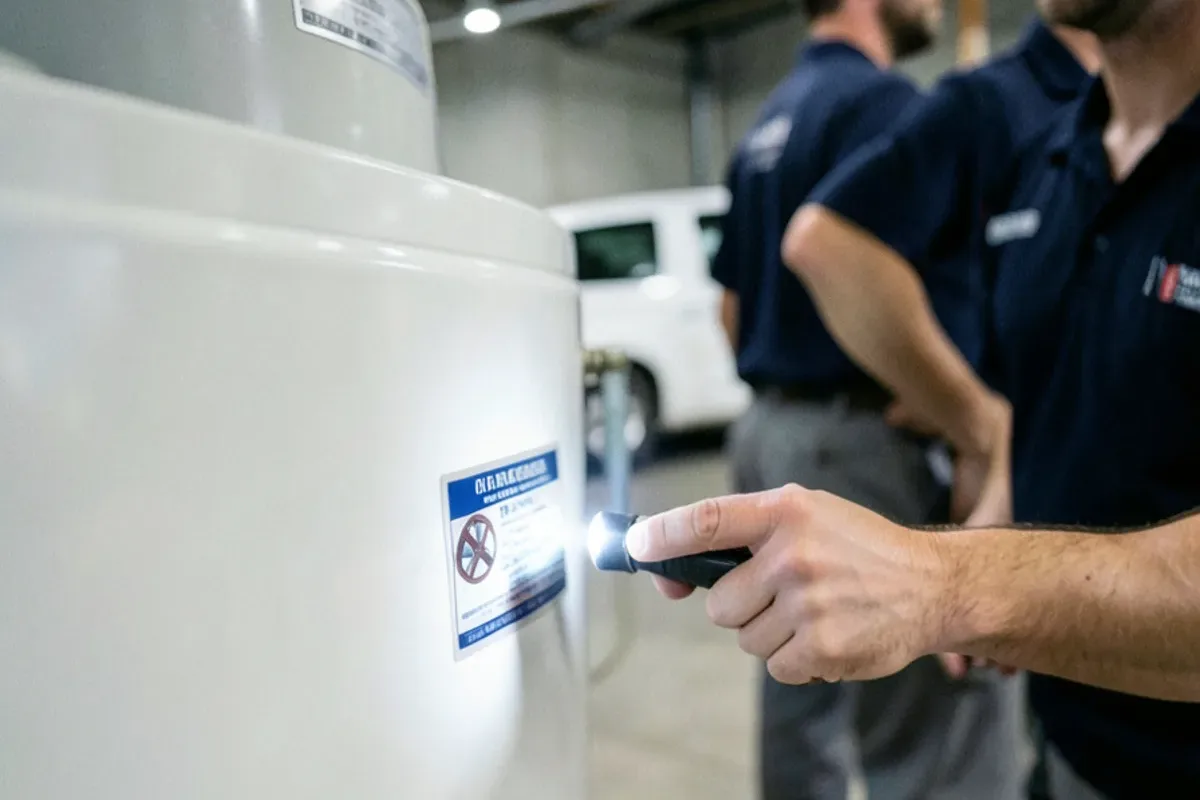
The test uses 58°F incoming water and delivers it at 125°F. Federal rules sort heaters by the result: a first-hour rating from 18 to under 51 gallons is tested as low usage, 51 to under 75 as medium and 75 or more as high. You'll find the rating on the manufacturer's spec sheet for the model number on your heater's label.
How to work out your peak hour
Pick the hour of the day when your household uses the most hot water. For most families that's the morning rush or the evening run of showers, dishes and laundry. Then add it up using typical amounts per use.
| Activity | Hot water used |
|---|---|
| Shower | About 20 gallons, more for long showers |
| Bath | About half the tub's capacity |
| Washing dishes by hand | About 3 gallons |
| Automatic dishwasher | About 7 gallons |
| Clothes washer | 20 to 25 gallons, depending on load size |
A family of four whose busiest hour is three showers plus a dishwasher run needs about 67 gallons, so a heater with a first-hour rating around 67 to 75 gallons fits. Add a load of laundry in that same hour and it's closer to 90. Shifting the laundry or the dishwasher out of the rush is often cheaper than buying a bigger tank.
Showerheads change the math too. The EPA says standard showerheads use 2.5 gallons per minute, while WaterSense models use no more than 2.0. Long showers on an old high-flow head, or a teenager who showers for twenty-plus minutes, can blow through any estimate.
What size water heater do I need for my household?
For a quick check, use the household ranges above, then adjust. Go toward the top of the range, or a higher first-hour rating, if you have a large soaking tub, a shower with body sprays, back-to-back showers every morning or teenagers. Stay toward the bottom if people shower at different times of day.
Bigger isn't free. A larger tank keeps more water hot all day and night, and it loses more heat through its walls while it waits. It also costs more to buy and takes more room. The goal is the smallest heater that covers your real peak hour.
Why Michigan winters shrink your hot water
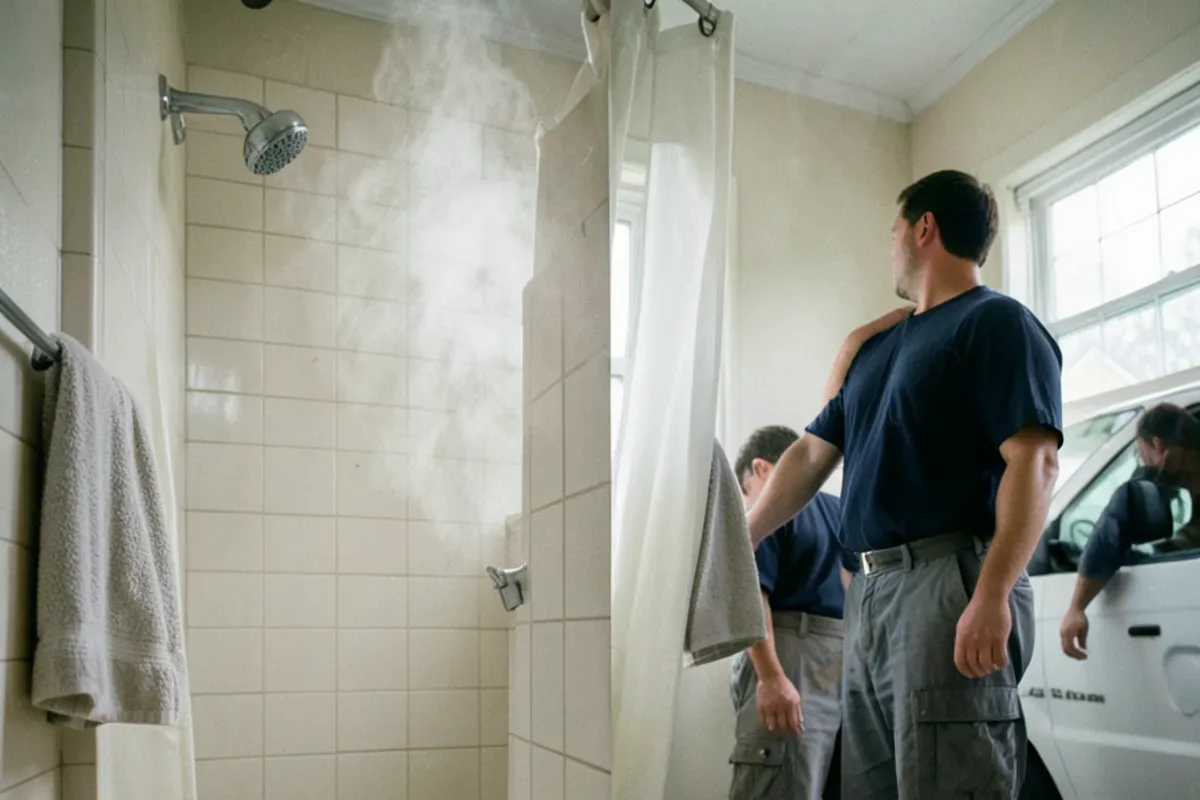
The first-hour rating assumes water enters the tank at 58°F. In a Michigan winter, the water coming in from the street is colder than that, so the heater has to raise it further and recovers more slowly. At the same time you mix less cold water into a shower, so you draw more hot water per minute. Both effects stack up. A tank that keeps up comfortably in August can run short in February.
Tankless heaters feel it even more. A. O. Smith notes that their output drops in cold weather because the gap between incoming water and your set temperature is larger. If you're sizing a tankless unit, size it for winter water.
Tankless units are sized by flow, not storage. ENERGY STAR rates gas tankless heaters by the gallons per minute they deliver over a 67°F temperature rise. That's roughly the lift from cool spring water to a hot shower. On a January morning the lift is bigger, so the same unit delivers fewer gallons per minute. Count the fixtures that run at once, add their flow rates, and check the model's chart at a winter temperature rise before you buy.
Space, venting and fuel limits on the choice
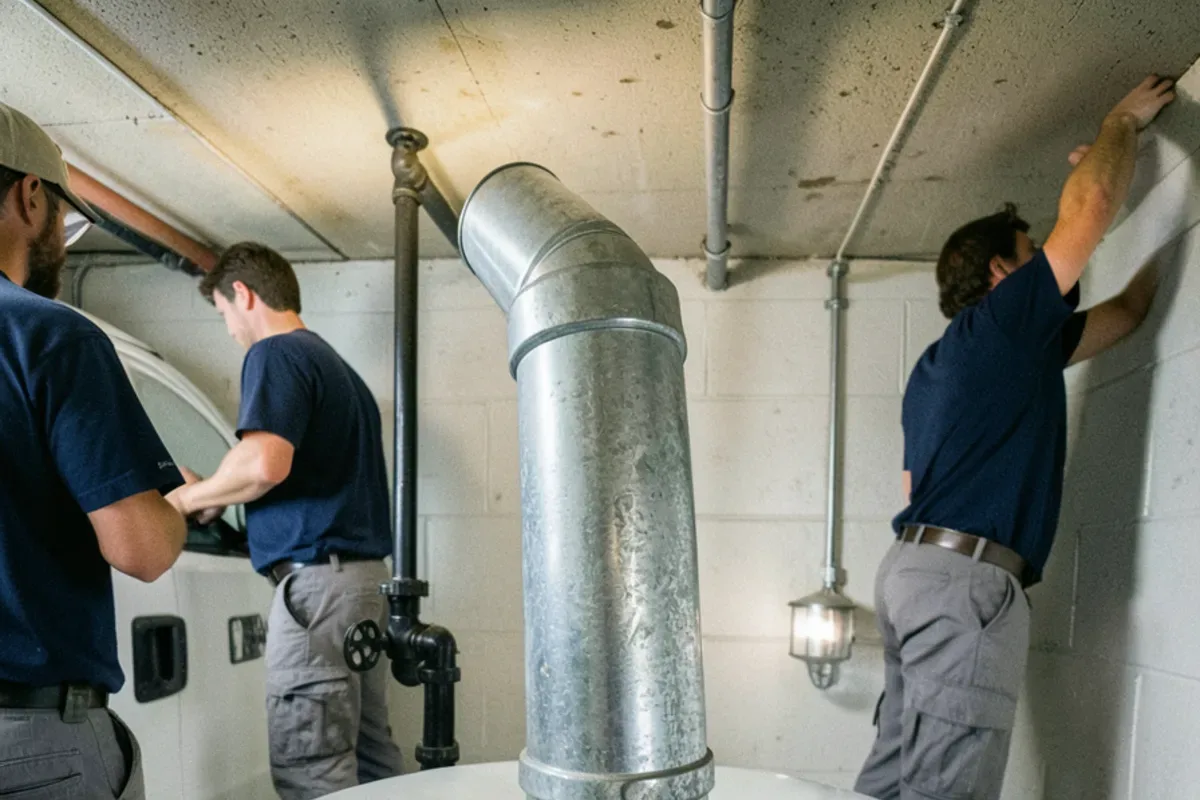
A 75-gallon tank is taller and much wider than a 40, and it has to fit down the basement stairs and through the door. A gas heater with a bigger burner may need a different vent, and the gas line has to carry enough fuel for it. An electric heater needs a dedicated circuit sized for its elements. Warren lists hot water tanks among the items that may need a permit, so a replacement is inspected either way.
These limits show up constantly in Sterling Heights, where the median home was built in 1977 and nearly nine in ten homes heat with gas. Many of those basements have since been finished, which narrows the space around the heater and raises the stakes if a tank leaks. Our water heater installation visits start with the peak-hour math, then check the vent, gas line and space before recommending a size. If your current heater stops working before you're ready to replace it, our guide on whether a plumbing problem can wait until morning covers what to check first.
Sizing mistakes a plumber checks for on a replacement
The most common mistake is copying the old tank. A 40-gallon heater that went in decades ago may have been sized for a different household, and a family that's lived with lukewarm third showers for years often doesn't realize the tank was always too small. The opposite happens too. Empty nesters keep replacing a 75-gallon tank that now keeps far more water hot than two people use, and pay to reheat it day and night.
Turning up the thermostat is the other shortcut. Storing water hotter and mixing it down at the tap does stretch a tank, and a thermostatic mixing valve at the heater makes that safer. The trade-offs are real, though: more standby heat loss, faster scale buildup in moderately hard water, and a scald risk if the mixing valve fails or isn't installed. It's a fair fix for an occasional crunch, not for a tank that runs out every morning.
Efficiency labels don't change the sizing math. An ENERGY STAR gas tank still has to cover your peak hour, and the program's minimum first-hour rating for certified gas tanks is 51 gallons. Heat pump water heaters bring their own catch. They pull heat from the air around them, and manufacturers have to report the room temperature below which the compressor shuts off, so a cold, unfinished Michigan basement can push one onto its slower backup elements in winter.
Can you pick the size yourself, or should someone measure?
If your current tank kept up fine and nothing in the house has changed, matching its first-hour rating is a safe choice you can make yourself. The model number on the label gets you there in five minutes. The same goes for a household that has shrunk: drop one size range and check that the peak-hour math still works.
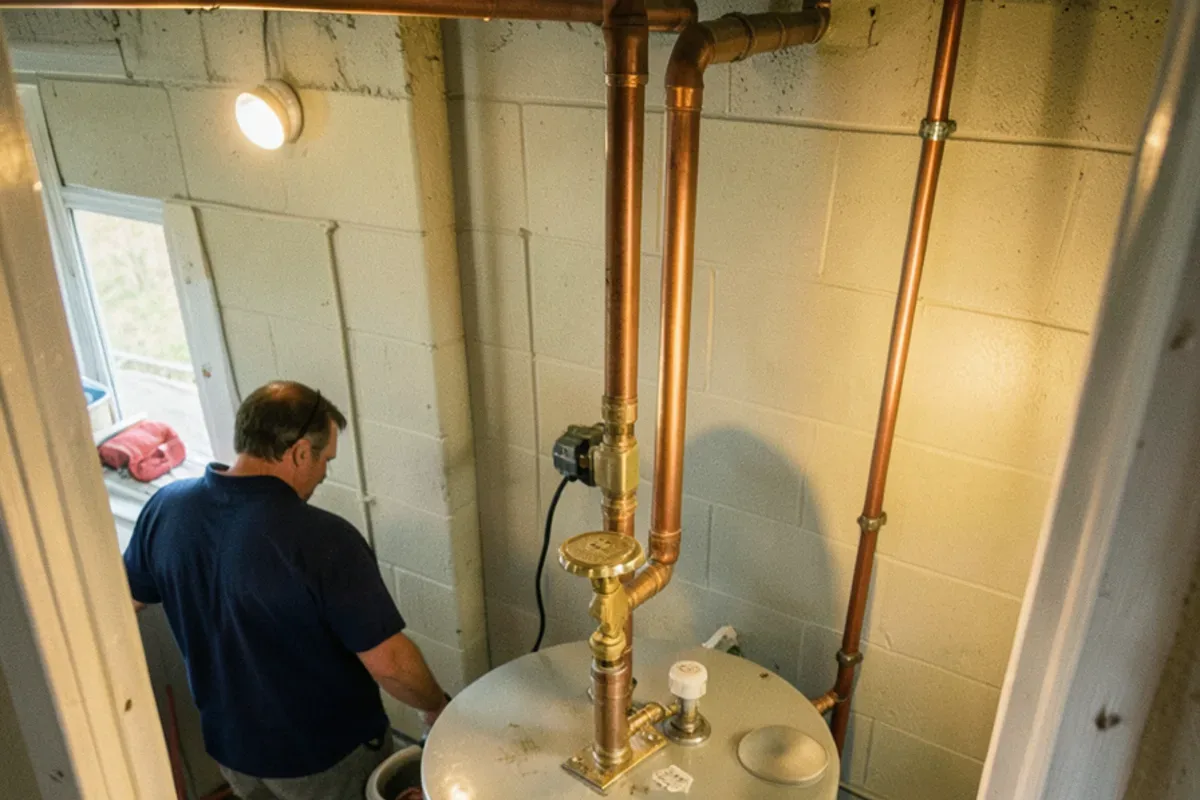
Bring a plumber in when the size is changing by more than one step, when you're switching between gas, electric, heat pump or tankless water heater installation, or when the bigger burner might outgrow the vent or the gas pipe. Those choices touch the permit, the chimney or vent run and sometimes the line back to the meter, and gas line installation and repair is mechanical-permit work in Warren. A finished basement with no floor drain near the heater is another reason to plan the install rather than rush it.
Not sure your peak hour adds up to a 50 or a 75? Give us a call with your household's morning routine and the label from your current tank, and we'll work through the size before anything gets ordered.
Questions people ask about this
Is a 40-gallon water heater enough for a family of four?
Yes, if showers are spread through the morning. A 40-gallon gas tank with a strong burner and a high first-hour rating can keep up with that. If three people shower back to back every day, or a load of laundry runs in the same hour, a higher first-hour rating, often from a 50-gallon gas tank, is the safer pick.
Should I buy a bigger water heater when I replace mine?
No, not unless the old one regularly ran out. If it kept up, match its first-hour rating and spend the difference elsewhere. Going bigger costs more to buy, more to keep hot through the night and more room in the basement, and a taller or wider tank may also need vent or gas line changes.
Where do I find the first-hour rating of my current water heater?
Copy the model number from the rating label on the side of the tank and look up the manufacturer's spec sheet for that model. The first-hour rating is listed there, usually near the capacity and recovery figures. If the label is unreadable on an old tank, a photo of the whole plate often still gets you a match.
How do I size a tankless water heater?
By flow rate and temperature rise instead of gallons stored. Add up the gallons per minute of the fixtures you run at the same time, then find a unit that delivers that flow at a winter temperature rise. ENERGY STAR rates gas tankless units at a 67°F rise, and a Michigan January asks for more lift than that.
Does a gas water heater need a bigger tank than an electric one?
No, usually the opposite. A gas burner reheats water faster than electric elements, so a gas tank delivers more hot water in its first hour than an electric tank of the same size. That's why an electric household often needs one size up to match a gas tank's first-hour rating.
Want a plumber to look at your situation? We're on Stephens Rd in Warren.
(207) 419-2600