
 By Plumber in Warren, MI, plumbers on Stephens Rd in WarrenPublished October 25, 2026Last updated October 25, 2026
Deciding whether it's a plumbing emergency or not comes down to two questions: is water, sewage or gas going where it shouldn't right now, and can you stop it yourself? If water is spreading and no valve stops it, or sewage is coming up into the house, call a plumber tonight. If closing a valve stops it, most problems can wait until morning.
This guide sorts the common late-night problems into those two groups and explains what to do with each one while you wait. Gas smells and carbon monoxide alarms are their own category, and they come first.
Two questions that separate an emergency from a nuisance
The first question is about damage. Water soaking into drywall, ceiling plaster or a finished basement floor does more harm every hour it runs. Sewage in a living space is a health problem on top of a damage problem. A dripping faucet, a slow tub or a running toilet wastes water, but the house will look the same at 8 a.m. as it does at midnight.
The second question is control. Nearly every supply-side leak can be stopped at a valve: the stop under a sink or behind a toilet, the cold inlet valve on the water heater, or the main shutoff where the water line comes into the basement. Close one of those and the water stops, and you've turned an emergency into a repair. If the valve is seized or missing, or the leak is on the street side of the main valve, you haven't. Our guide to finding and shutting off your main water valve is worth ten minutes before you ever need it.
Problems that need a plumber tonight
| What is happening | Why it can't wait | What to do first |
|---|---|---|
| A pipe has split and water is spraying or pouring | Water reaches walls, ceilings and wiring within minutes | Close the main shutoff, then open a basement faucet to drain the lines |
| A leak won't stop because the valve is stuck or there is none | It keeps running until someone shuts it off at the main or the curb | Try the main; if that fails, call your city water department and a plumber |
| Sewage is coming up through a floor drain, tub or toilet | Raw sewage is a health hazard and soaks under finished floors | Stop using every fixture in the house, including the washer and dishwasher |
| Water is dripping through a ceiling | Wet plaster and drywall can sag and come down | Shut off water to the floor above or at the main, and keep people out from under the stain |
| The water heater tank itself is leaking | A rusted-through tank only gets worse | Close the cold inlet valve and turn the heater off at its gas control or breaker |
A burst pipe repair starts with finding the split and cutting out the damaged section, but the first job is the same no matter who shows up: get the water off. For anything in that table, our emergency plumbing repairs page explains what the visit involves and what to have ready.
What can usually wait until morning
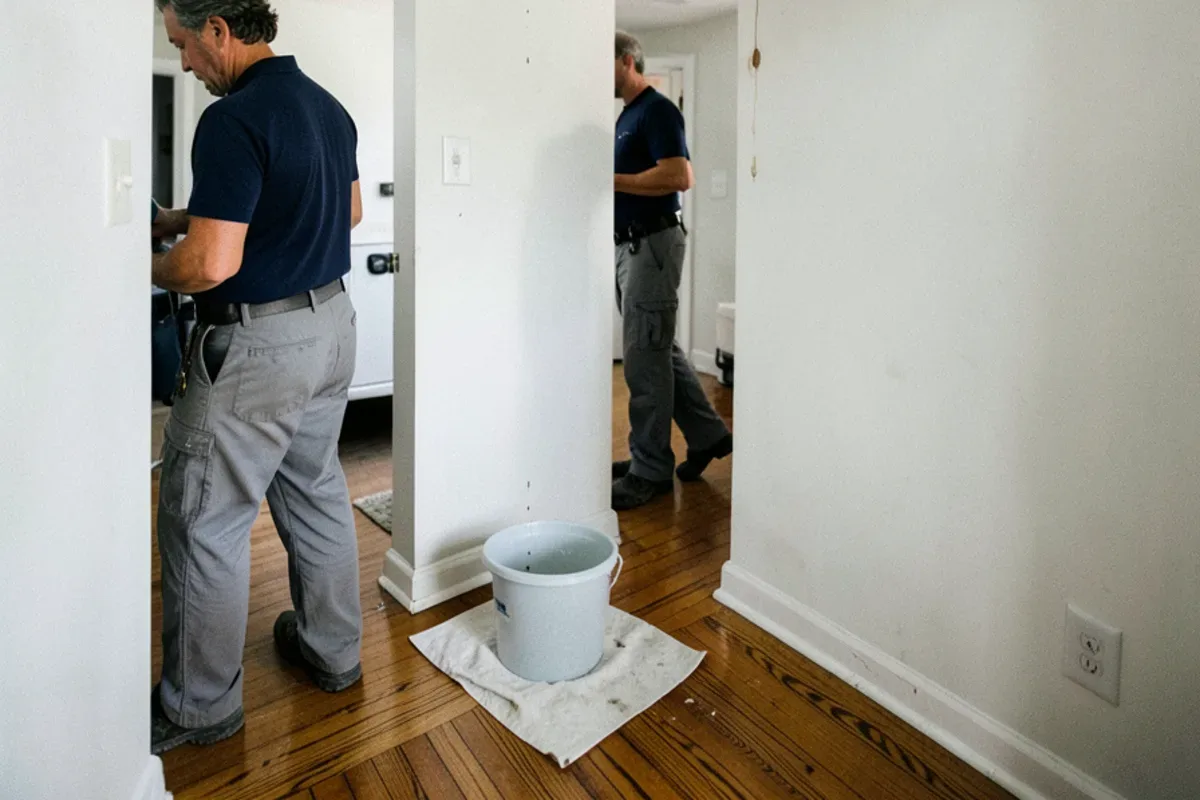
Plenty of problems feel urgent at 11 p.m. and are fine to schedule. A dripping faucet. A toilet that runs or keeps refilling, once you've closed the stop valve behind it. A single clogged sink when you have another one to use. A slow tub. A small drip under a sink that a bowl can catch after you've closed the valve. Low pressure at one faucet. A garbage disposal that hums and won't turn.
The exception is when the broken thing is the only one you have. A clogged toilet in a house with one bathroom is a much bigger deal than the same clog in a house with three, especially with small kids or an older relative at home. That's a judgment call, and you're allowed to make it.
A clog in more than one drain is different
If two fixtures back up at once, or the basement floor drain gurgles when the toilet flushes, the blockage is in the main line. Every gallon sent down any drain can come back up at the lowest opening, which is usually that floor drain. Stop running water, hold off on laundry, and treat it as a sewage backup in waiting.
What to do in the first ten minutes
Stop the water
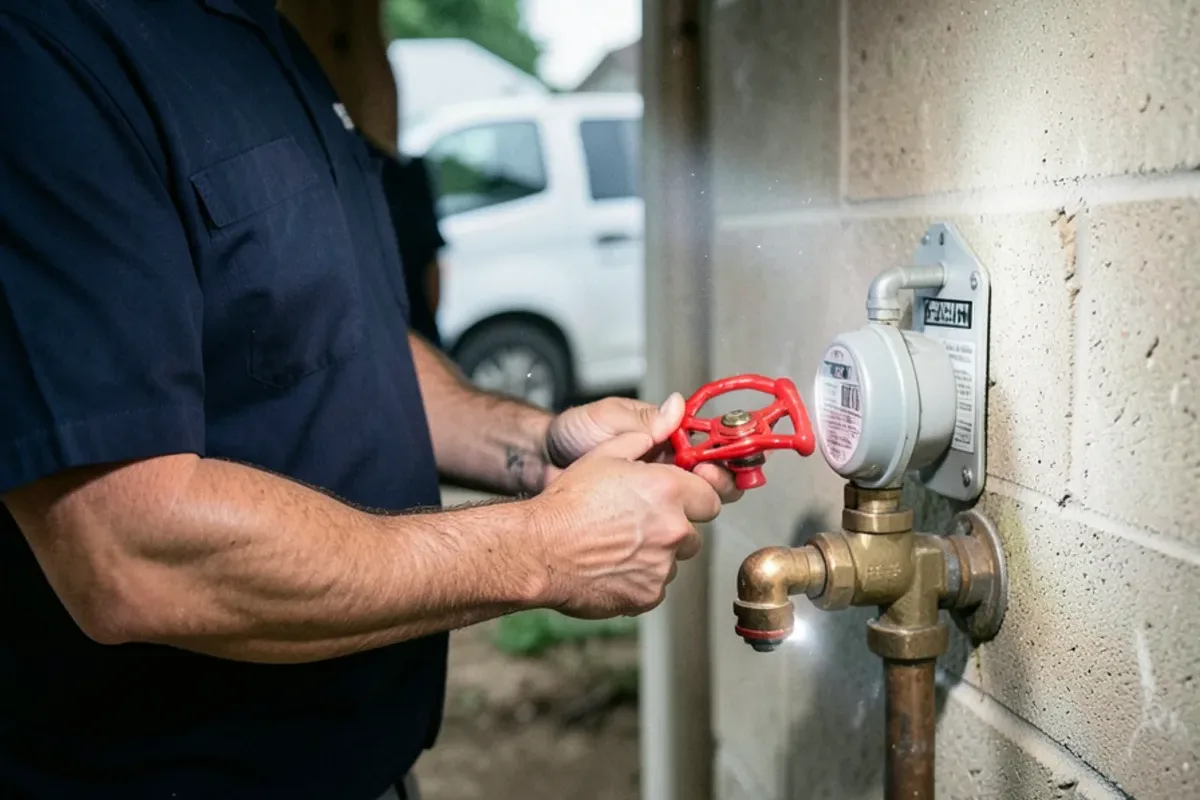
Close the fixture stop, the water heater inlet or the main shutoff. A lever-handle ball valve closes with a quarter turn. A round-handle gate valve turns clockwise until it stops; snug it, but never force it.
Drain what is left in the pipes
Open the lowest faucet in the house, often a laundry tub or basement sink, so the water still in the lines runs down a drain instead of out of the leak.
Keep people away from water and power
Stay out from under wet ceilings and out of standing water near outlets, cords or appliances. If water is near the electrical panel, don't touch it.
Move what you can
Pull rugs, boxes and electronics off a wet floor. Slide foil or plastic under furniture legs.
Take photos
Photograph the leak, the water and anything damaged before you clean up. Insurers usually ask for them.
Call with details
Say what you see, where it is and what you have already shut off. "Water coming through the kitchen ceiling under the upstairs bath, main is off" tells a plumber most of what they need.
Is no hot water an emergency?
On its own, usually not. A water heater that stops heating is an inconvenience, and most of the time it can wait for daylight. Check the simple things first. On a gas heater, see whether the burner or pilot is lit, and follow the lighting instructions on the tank label if it isn't. On an electric heater, look for a tripped breaker.
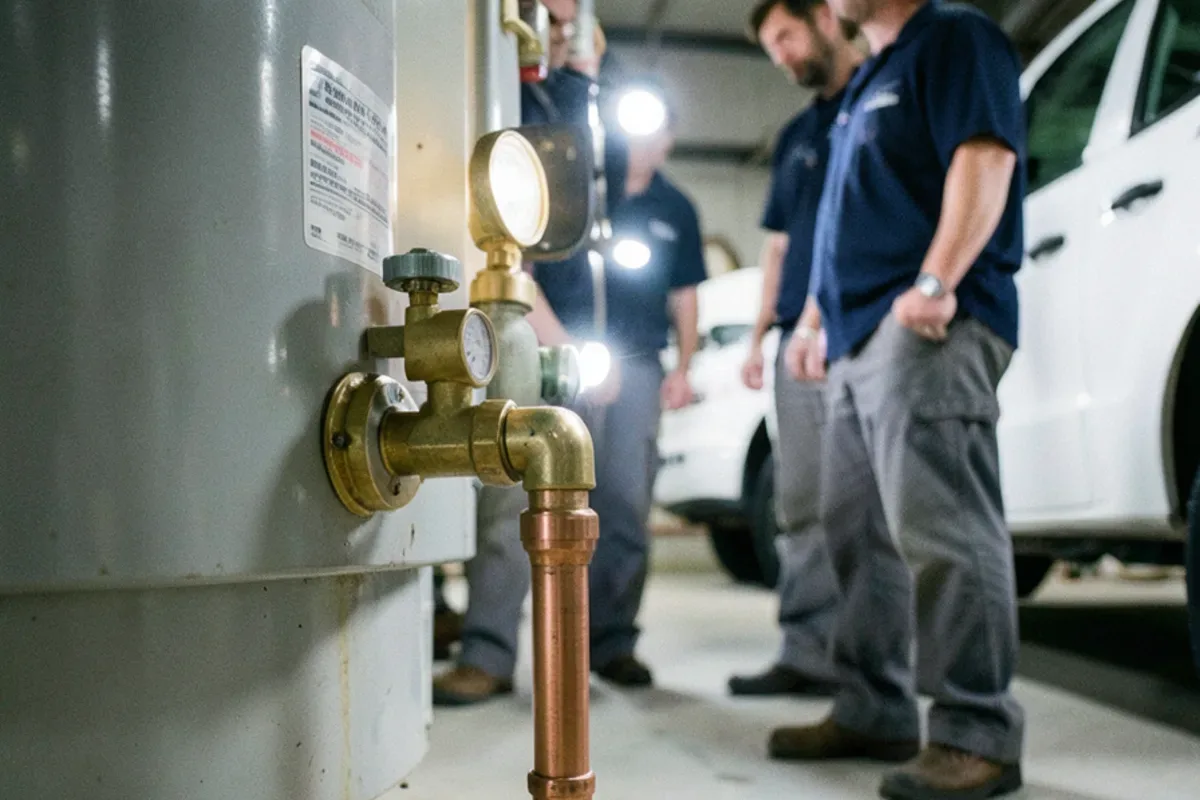
It becomes urgent when the tank is leaking, when you smell gas near it, or when the relief valve on the side of the tank is discharging hot water or steam. That valve opens when the water inside is too hot or under too much pressure. Turn the heater off, close the cold inlet valve, keep your hands and face away from the discharge pipe, and call.
How a Michigan winter night changes the answer
Cold moves some problems up the list. A furnace that quits in January isn't a plumbing problem at first, but within hours the pipes along outside walls can start to freeze. A faucet that gives only a trickle on a below-zero morning has a frozen pipe behind it, and a frozen pipe can split and then flood the moment it thaws. That's how a no-water nuisance becomes a soaked basement.
If the heat is out, open the cabinet doors under sinks on exterior walls, let a thin stream run from the faucets on those walls, and close the main if you have to leave the house. If a pipe has already frozen, our guide on thawing a frozen pipe without splitting it walks through it one step at a time.
We work in homes all around our Stephens Road office, including Center Line, which Warren surrounds on every side, and the inner-ring neighborhoods of Eastpointe along 8 Mile. The order of operations is the same in every one of them: shut it off, write down what happened, then decide whether it can wait.
What a plumber weighs on an after-hours call
A night visit aims to make the house safe and dry; the full repair can come later. A split copper line takes a repair coupling in the dark. Rusted galvanized pipe often won't, because the pipe beside the split can crumble when it's cut, so the honest choice may be capping that branch and repiping in daylight. A rodded main line flows again, but finding out why it clogged takes a camera.
Old valves are the other trade-off. In a 1950s or 1960s house, which describes most of Warren, the main may be the original round-handle gate valve. Forced after decades, one can snap its stem or weep at the packing nut, turning a drip into a spray. Leaving the main off overnight costs you showers, not drywall.
When to call, and what you can safely handle first
Closing valves, draining the lines, plunging one toilet and resetting a tripped water heater breaker are yours to handle. Call when water won't stop at a valve, sewage comes up a floor drain, the tank itself leaks and needs water heater repair, or a frozen pipe sits inside a wall. With gas, leave first and let the utility clear the house. If you're on the call side, close what you safely can and give us a call.
Questions people ask about this
Is a clogged toilet a plumbing emergency?
No, not usually. It becomes one if it's your only toilet, it's overflowing and won't stop, or other drains are backing up at the same time. Close the stop valve behind the toilet so the tank stops refilling, and a single clog in a house with a second bathroom can wait for morning.
Should I shut off the main water for a small leak?
No, not if the leak has its own valve. If it's under a sink or behind a toilet, close that fixture's stop valve and leave the rest of the house running. Use the main when there's no local valve, the local valve won't close, or you can't tell where the water is coming from.
What should I tell the plumber when I call at night?
Where the water or sewage is, whether it's still coming, what you've shut off, and roughly how old the house and water heater are. A 1950s house with galvanized pipe points to a different repair than a 1990s one. A couple of photos help, especially of the valve you tried to close.
What if the whole house suddenly has no water?
Ask a neighbor first. If their water is off too, the cause is probably a city main, which the water department handles; Warren's Water Division logged 181 broken main repairs in its 2025 fiscal year. If only your house is dry, check for a closed main valve, a frozen line on an outside wall or a leak at the meter, then call us.
Want a plumber to look at your situation? We're on Stephens Rd in Warren.
(207) 419-2600