
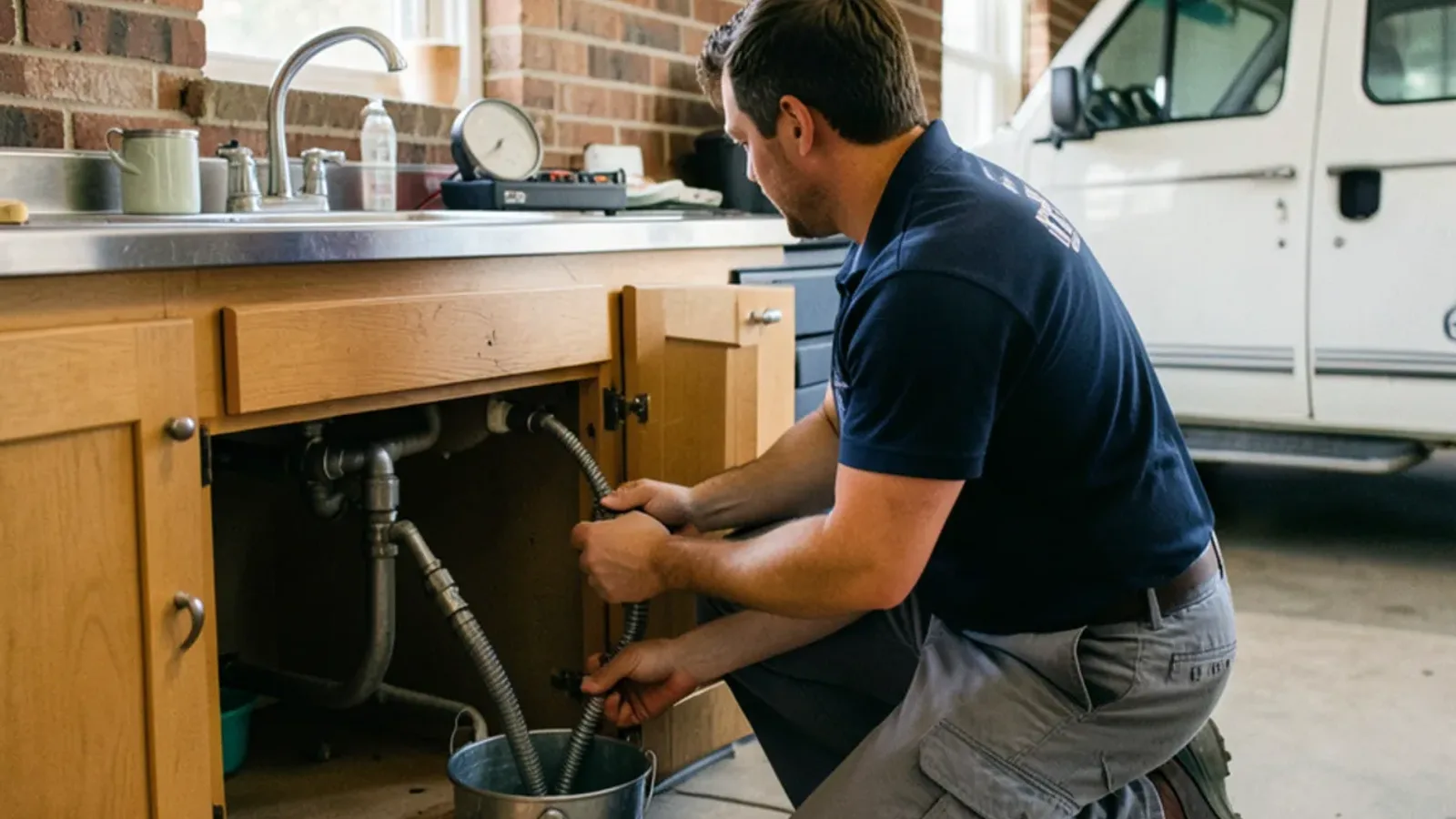
Drain cleaning in Warren usually starts with one complaint: the kitchen sink holds water, the tub drains like it is thinking about it, or the laundry tub overflows when the washer pumps out. We clear the line, then tell you what was in it and whether it is likely to come back.
The typical Warren house was built in the mid-1960s, and in the southeast corner of the city nearly half predate 1960. That usually means cast iron and galvanized drain lines inside the walls, a mix of old and newer pipe under the basement floor, and decades of grease, soap and scale built up on the pipe wall. A clog in that kind of system is rarely a single wad of hair. It is usually a narrowed pipe that finally caught something.
What drain and pipe cleaning covers
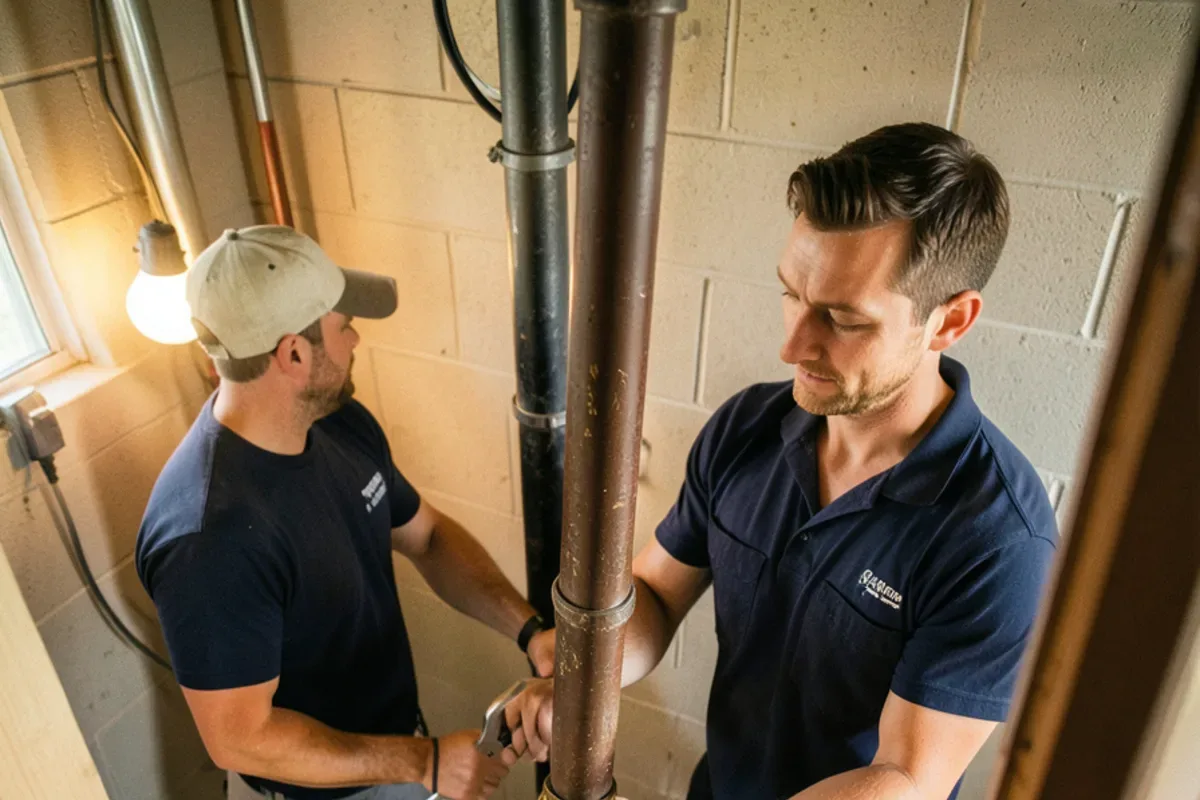
This service is for the drains inside the house: sink, tub, shower and laundry lines, the branch pipes they share and the stacks they feed. Most are 1½ or 2 inches across, small enough that the wrong cable can tear up an old galvanized fitting. A clog that starts at the floor drain, or backs up several fixtures at once, has moved past the branches and is handled as a main line job. A visit usually includes:
- Finding which fixture, branch or stack holds the clog
- Pulling and cleaning traps, with new washers where the old ones are worn
- Cabling the branch line with a head sized to 1½- or 2-inch pipe
- A full-basin flush test on every fixture we opened
- A look at what came out and whether the pipe itself is the problem
Which drain is clogged, and why it matters
Before any tool goes in, we figure out how far back the problem sits. One slow fixture points to its own trap or branch line. Two fixtures on the same wall, like a kitchen sink and a dishwasher, point to the shared branch. Water rising in the basement floor drain or a toilet gurgling when the washer drains points past the branches to the main line, and that is a different job.
| What you notice | Where the blockage usually is | What we start with |
|---|---|---|
| One sink or tub drains slowly | The fixture trap or the first few feet of its drain | Pull and clean the trap, then a small cable |
| Kitchen sink and dishwasher back up together | The kitchen branch line, often packed with grease | Cable from the trap arm or a cleanout, then a flush test |
| Tub backs up when the toilet flushes | The bathroom branch or the stack below it | Cable through the tub overflow or the toilet flange |
| Floor drain or laundry tub fills when other fixtures run | The main building drain or the sewer lateral | Main line cleaning from a cleanout, then a camera check |
If the signs point to the main line, we cover that work on our basement floor drain cleaning page. Branch clogs and fixture clogs are what this page is about.
What builds up inside older Warren drain lines
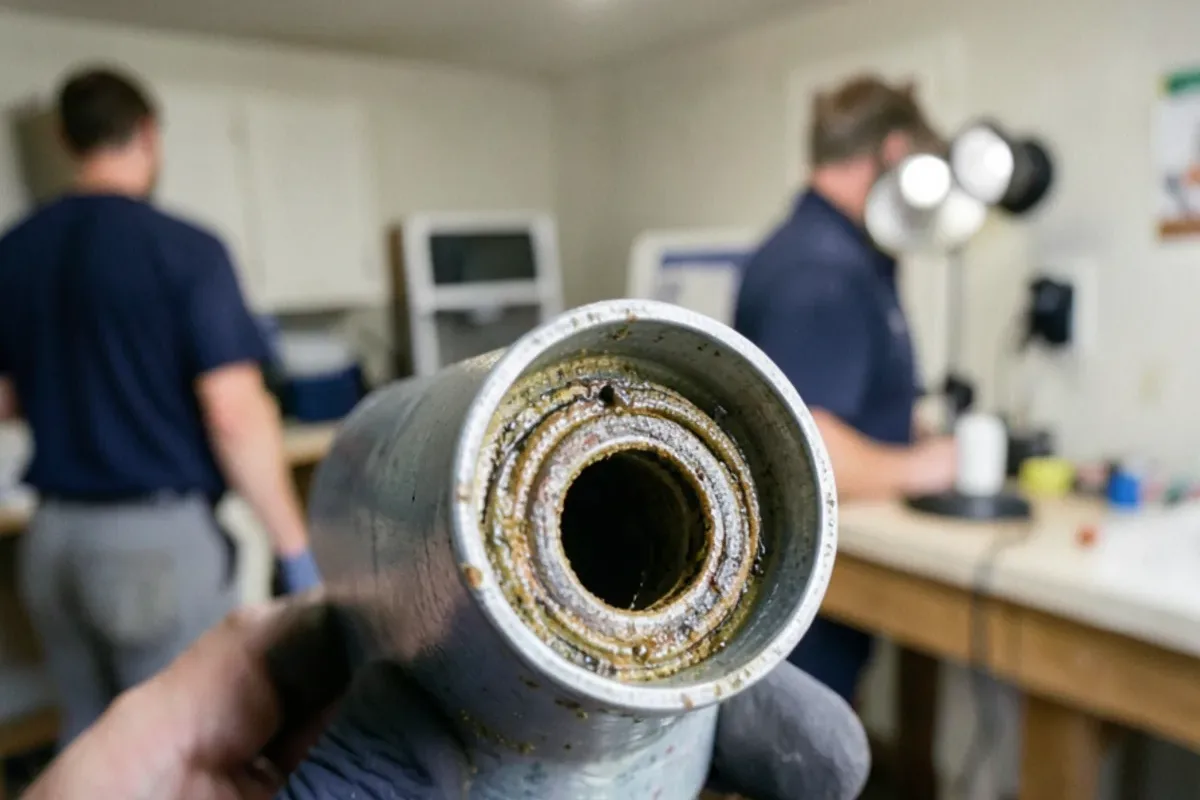
Kitchen lines collect grease that goes down warm and sets up cold. Bathroom lines collect hair bound together with soap scum. Galvanized drain pipe, common in homes from this era, also rusts from the inside, and the rough surface gives everything else something to hang onto. Cast iron does the same over time as its interior scales. By the time a drain is noticeably slow, the open part of the pipe can be a fraction of its original size.
That is why pouring a jug of drain opener down the sink tends to buy a few days at best. It burns a channel through the soft middle of the clog and leaves the buildup on the walls. In old metal pipe, repeated caustic treatments can also speed up corrosion at the joints.
How we clear a clogged drain
Protect the area and open the line
Drop cloths go down, the fixture gets bailed if it is full, and we open the line at the best access point: the trap, a cleanout, or the tub overflow. Going in through the toilet is a last resort because it means pulling the toilet.
Run the right size cable
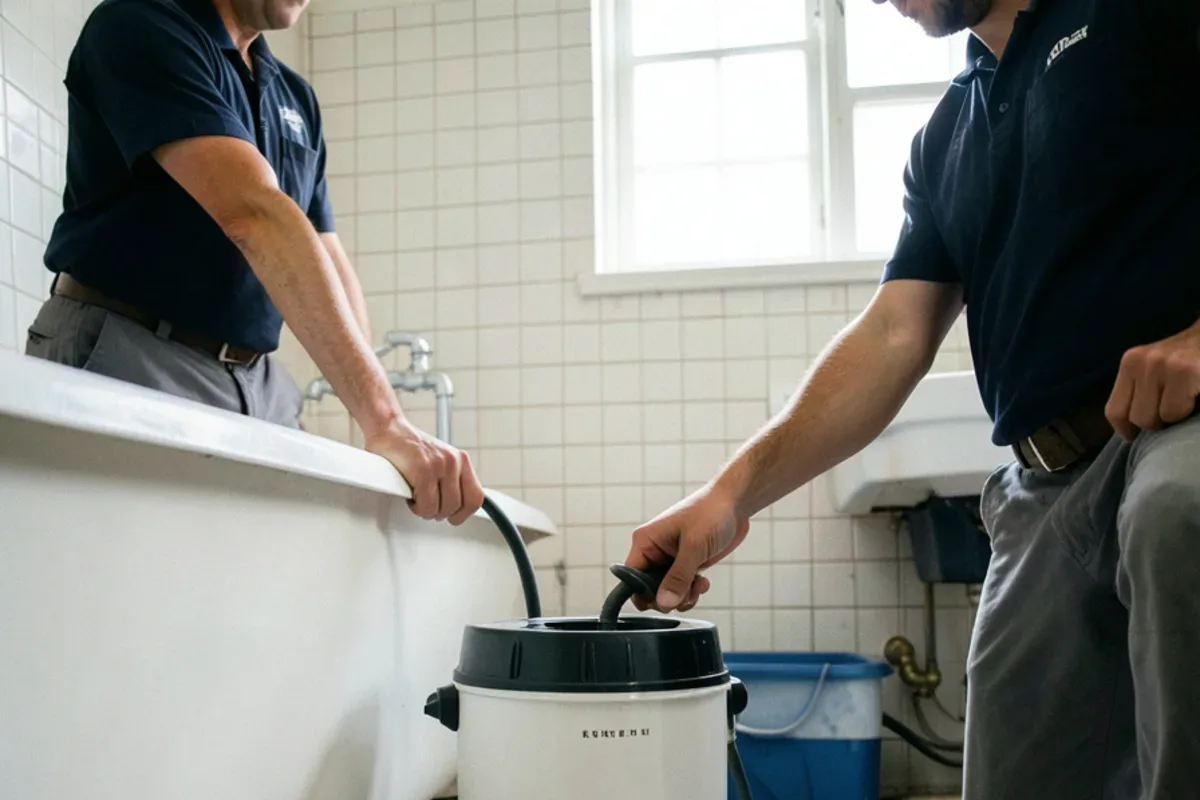
Small-diameter cables handle traps and 1½-inch fixture lines. Larger cables with cutting heads handle 2-inch branches and stacks. Using a cable that is too big for the pipe risks damaging an old fitting, so we size it to the line.
Clean the pipe wall back to full width
On a grease-packed kitchen line we work the cable back and forth with different heads until the line takes full flow. If cabling alone will not open it to full diameter, we talk about hydro jetting, which scours the walls with water instead of cutting a path through the middle.
Flush test under real load
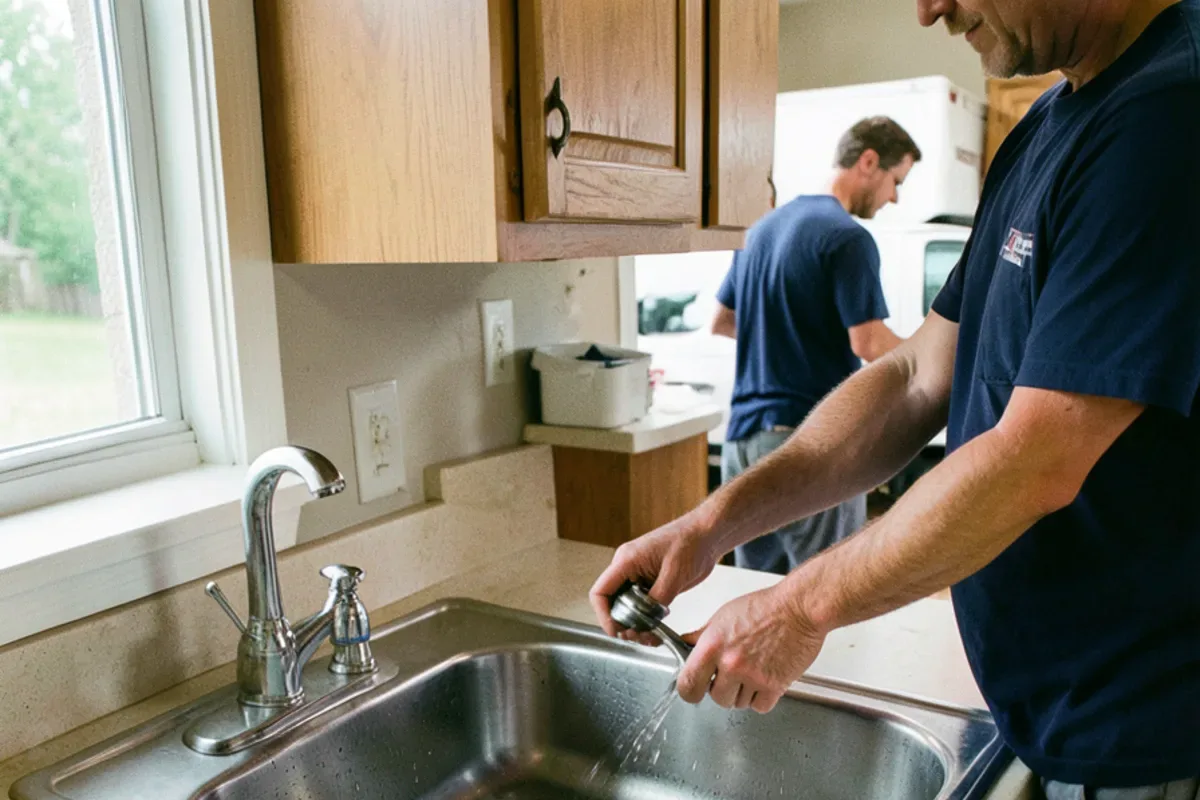
We fill the sink or tub and pull the plug, run the dishwasher drain, or run the washer through a drain cycle. A line that handles a trickle can still fail under a full basin.
Tell you what came out
Grease, hair, wipes, scale, roots. What we pulled out tells you whether the fix was the cleaning or whether something about the pipe or how it is used needs to change.
When pipe and drain cleaning is not enough
A clean line that clogs again in a few weeks is telling you something. Common reasons in homes around here are a sag in a buried drain under the basement floor, a cracked cast iron fitting, a branch with too little slope from an old remodel, or a section of galvanized pipe rusted almost shut. When the same drain comes back fast, the next step is a look inside the pipe with a camera. Our sewer camera inspection shows what the cable could only feel.
Sometimes the answer is to replace a short section of pipe. A rusted-out galvanized trap arm behind a kitchen sink, for example, is often better replaced than cleaned every few months. We will show you the pipe and explain the trade-off before suggesting anything beyond the cleaning you called about.
What affects the cost of drain cleaning
Drain cleaning is priced on the job in front of us, because a hair clog in a tub trap and a kitchen branch lined with 60 years of grease are different amounts of work. We find where the clog sits and how to reach it, then explain what is driving the cost before the cable goes in. These are the usual factors:
- Where the clog is. A trap you can reach is a short job; a stack clog two floors down takes longer.
- Access. A clear cleanout saves time. No cleanout can mean pulling a toilet or opening a trap arm in a finished wall.
- What it is made of. Hair comes out quickly. Years of grease in a kitchen branch can take several passes or jetting.
- Pipe condition. Very old galvanized or cast iron may need a gentler approach and a smaller cable.
- Whether a camera inspection is needed to explain a repeat clog.
Keeping a cleared drain open longer
Scrape plates into the trash before rinsing, and keep cooking grease out of the sink entirely. A cheap hair catcher in the tub and shower stops most bathroom clogs before they start. Wipes labeled flushable are a frequent find in toilet and main line clogs; they do not break down the way toilet paper does. Running hot water after greasy dishes only moves the grease a few feet before it cools and sticks again.
If you live in an older house and your kitchen line has needed cleaning more than once, it is worth asking about the condition of the pipe the next time we are out. A clogged drain in a 70-year-old line is often an early sign of the pipe itself wearing out, and our page on cast iron drain pipe problems covers what to look for. Enzyme drain treatments are fine as monthly prevention on a clear line; they will not open a clog that is already there.
Do you need a permit to clear a drain in Warren?
No. Clearing a clog is maintenance, and the City of Warren's permit list covers plumbing alterations, fixtures, water heaters and sewer work, not cleaning. A permit comes in when cleaning turns into replacement: new drain pipe inside a wall, a re-sloped branch or an added fixture is an alteration, permitted through the Division of Buildings and Safety Engineering, and the work stays exposed until the inspector accepts it. Michigan's Skilled Trades Regulation Act assigns that work to licensed journey or master plumbers under a plumbing contractor, with an owner exemption for one's own home under a permit; LARA's lookup verifies any license.
Why Warren households call us about a slow drain
Our office at 11355 Stephens Rd sits in 48089, among Warren's oldest houses, where galvanized kitchen branches and 1950s cast iron stacks are ordinary. So the cable is sized to old pipe, every line gets a full-load flush test, and you see what came out. If a line keeps coming back, we say so and suggest the camera rather than repeating the same cleaning. Homeowners, landlords and businesses use the same phone line, and you hear the cost factors before we start.
Drain cleaning and unclogging around Warren and nearby cities
- Plumber in Center Line
Apartment buildings off Van Dyke share drain stacks, so one tenant's kitchen clog can reach a neighbor's sink.
- Plumber in Hamtramck
About one home in five is a two-unit building, where upper and lower flats often drain through one stack.
- Plumber in Hazel Park
Cast iron stacks with lead-and-oakum joints in its oldest Cape Cods call for a cable sized gently to the pipe.
- Plumber in Eastpointe
About a third of homes predate 1950, so kitchen and bath branches feed old cast iron stacks.
- Plumber in Roseville
Duplexes and small 1950s apartment buildings put several kitchens on shared drains in a city where a third of households rent.
- Plumber in Ferndale
1920s and 1930s bungalows have cast iron soil stacks with hub joints, where an oversized cable does damage.
- Plumber in Madison Heights
Forty percent of homes went up in the 1950s, so their cast iron stacks are about 70 years old.
- Plumber in Clawson
About a fifth of housing units sit in buildings of three or more, where tenants share drain risers.
- Plumber in Detroit
1940s and 1950s houses near 8 Mile commonly have cast iron stacks carrying decades of buildup.
Drain cleaning and unclogging questions from Warren customers
Why does my kitchen sink keep clogging after I clear it?
Clearing the trap or punching a hole through the clog leaves grease on the pipe walls, and the line narrows again quickly. A full cleaning of the kitchen branch, sometimes with jetting, removes the buildup. If it still comes back fast, a camera can show a sag or damaged section.
Is it safe to use chemical drain cleaner in an older Warren home?
No, we don't recommend it. In old galvanized and cast iron pipe, caustic cleaners can sit in a slow line and speed up corrosion, and they leave the wall buildup in place. They also make the job riskier for whoever opens the line next.
How do I know if it is a drain clog or a main sewer line problem?
If only one fixture is slow, it is almost always that fixture or its branch. If water comes up in the basement floor drain, or several fixtures back up together, the main line is the likely problem and calls for basement floor drain cleaning from a cleanout.
Do you clean drains in businesses too?
Yes. Shops, offices and restaurants along Van Dyke, Hoover and 12 Mile get the same diagnosis first. Commercial kitchen lines carry far more grease than a house, so they usually need a different schedule and often jetting, timed around open hours. Our restaurant plumbing page explains how we handle them.
Still not sure what you're dealing with? Describe it on the phone and we'll tell you what we'd check first.
(207) 419-2600Last updated October 25, 2026