
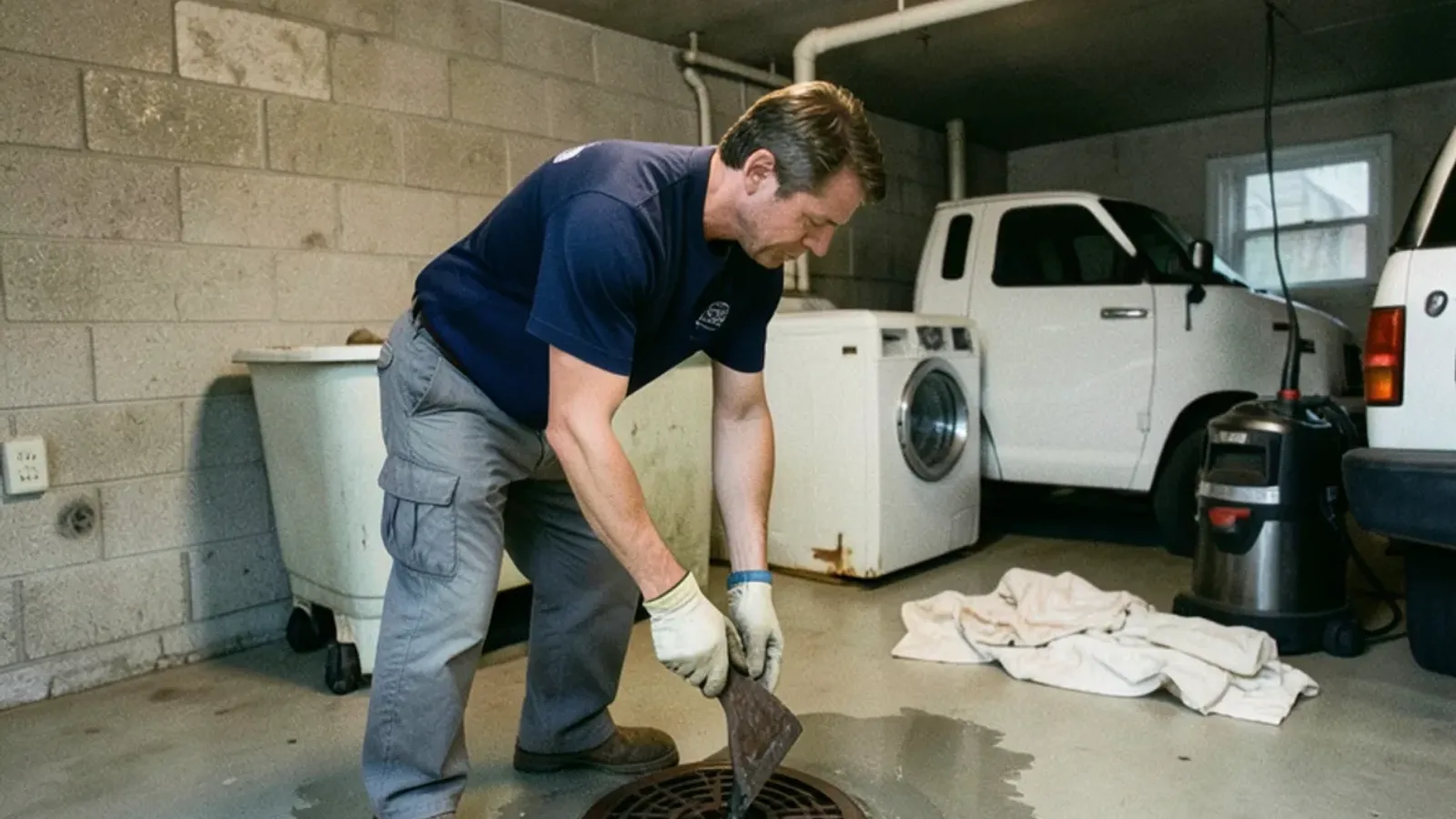
Basement floor drain cleaning in Warren is rarely about the drain grate. When gray water rises around that grate, it almost always means the pipe it ties into, the main building drain, is blocked somewhere between the basement and the city sewer. The floor drain is simply the lowest opening in the house, so it overflows first.
That is why we treat a floor drain call as a main line call. We clear the drain and its trap, run a cable or jetter through the main line from the best access point, and check that the whole run takes a full load of water before we pack up.
What a floor drain cleaning visit covers
The grate, its trap and the building drain behind it work as one system, leaving a typical Warren basement through a single cast iron or clay lateral that the owner is responsible for out to the city main. So the visit is planned around the main line. Upstairs fixture lines are a separate job unless they share the blockage.
- Clearing silt and lint from the floor drain trap and its short pipe to the main
- Running the main drain and lateral from a cleanout with a cutting head
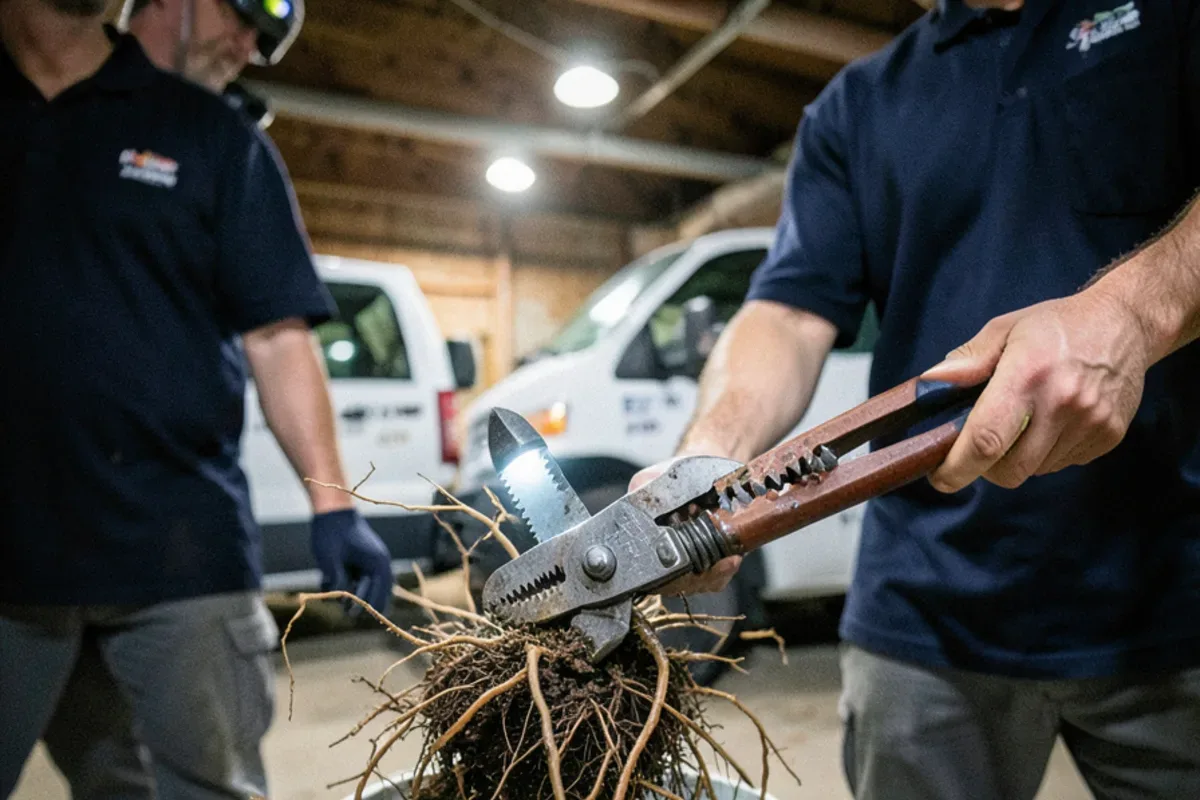
- Cutting back roots at clay or cast iron joints, noting the distance
- A load test with the washer and several fixtures draining at once
- Advice on a camera pass, jetting or backflow protection if the cable brings something back
What water at the floor drain is telling you
Where the water shows up, and when, narrows the problem down before anyone opens a cleanout. A floor drain that overflows when the washer pumps out is a different problem from one that bubbles up during a thunderstorm while nobody is using water. A drain that only smells is different again.
| What you see | Likely cause | Usual fix |
|---|---|---|
| Water rises at the floor drain when the washer drains or a toilet flushes | A clog in the main building drain or the sewer lateral | Main line cleaning from a cleanout |
| Floor drain is slow but nothing else backs up | Silt, lint or debris packed in the floor drain trap | Clean the trap and the short line to the main |
| Water comes up during heavy rain with no fixtures running | The city sewer is surcharged and pushing back | Cleaning will not stop it; look at backflow protection |
| Sewer smell from the drain, no water | The trap has dried out and lost its water seal | Refill the trap; check for a cracked trap if it keeps drying |
Only one fixture slow, like a bathroom sink upstairs? That is a branch problem, and our drain cleaning and unclogging page covers it. This page is about the floor drain and the main line it feeds.
Why does the floor drain back up when the washer runs?
A washer dumps a lot of water in a hurry. If the main line has narrowed, that surge has nowhere to go but back up, and the floor drain is usually the first place it can escape. In a lot of basements the floor drain sits a few feet from the laundry, and both tie into the same building drain under the slab.
What narrows the line depends on the house. Homes from the 1950s and 1960s, which make up more than half of Warren, often have cast iron under the floor and clay tile or cast iron running out to the street. Roots find the joints in clay pipe. Cast iron scales inside until it catches lint and paper. The city also names paper towels, diapers and feminine products as frequent causes of blocked laterals, because they do not break down in water the way toilet tissue does.
Is it a clogged main or a storm backup?
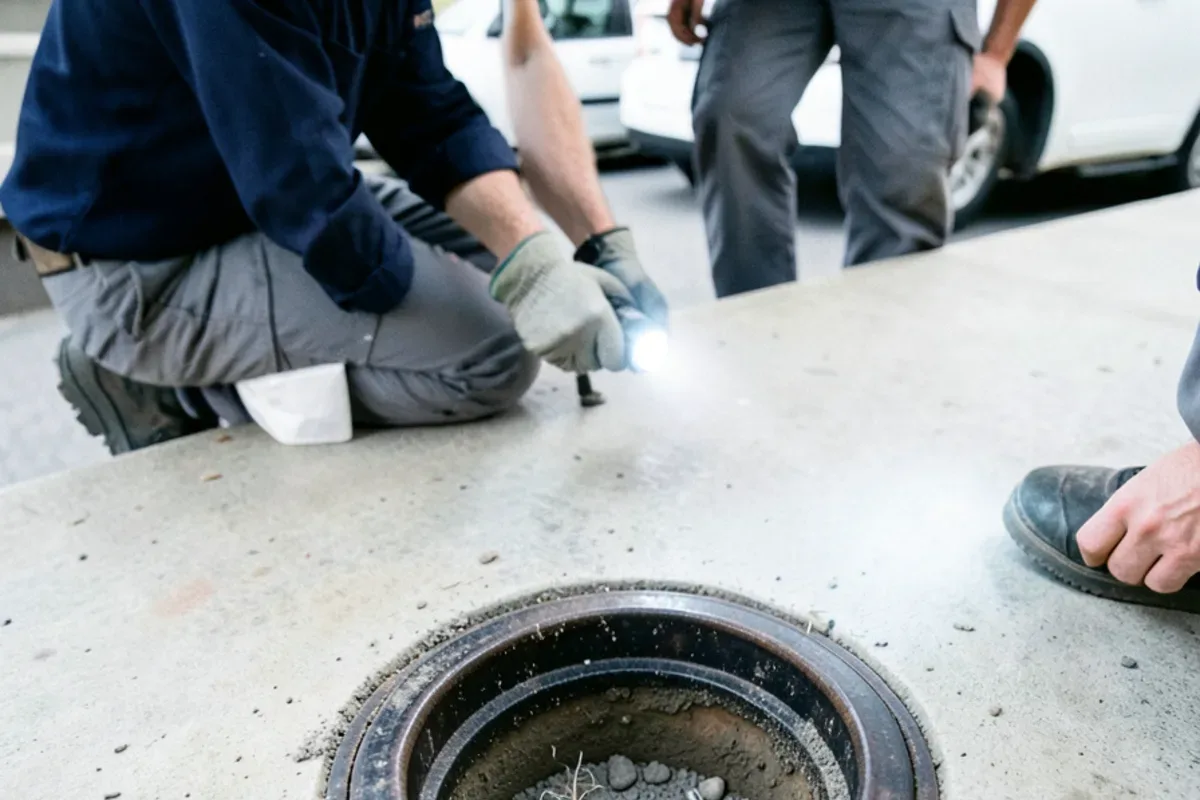
Both put dirty water on the basement floor, but they need different answers. A clog is in your pipe and cleaning fixes it. A storm backup starts in the public sewer: when heavy rain overloads the system, water in the main rises and pushes back up laterals into the lowest drains it can reach. Warren's sewer system was designed for about 2 inches of rain over several hours, and storms that exceed that have flooded basements across the city, including roughly 18,047 homes in the August 2014 storm.
If your floor drain only overflows in storms and drains normally the rest of the time, cleaning the line will not stop it. A backwater valve or a floor drain plug is the usual next step, and our post on floor drain plugs versus backwater valves walks through the difference. During a big storm, the city also asks residents to hold off on laundry and long showers so less water goes into the sewer.
How we clean a floor drain and the main line behind it
Deal with standing water first
If the floor is wet we wet-vac the area around the drain and lay down drop cloths. We ask you to stop running water upstairs while the line is open.
Find the right way in
Many houses have a cleanout on the house sewer, often a threaded plug low on the stack or near the front wall. Going in through the floor drain itself is a last choice, because its trap blocks a full-size cable.
Clean the floor drain trap
The grate comes off and we clear the trap and the short pipe that connects it to the main. Silt and lint come out by hand and with a small cable.
Cable or jet the main line
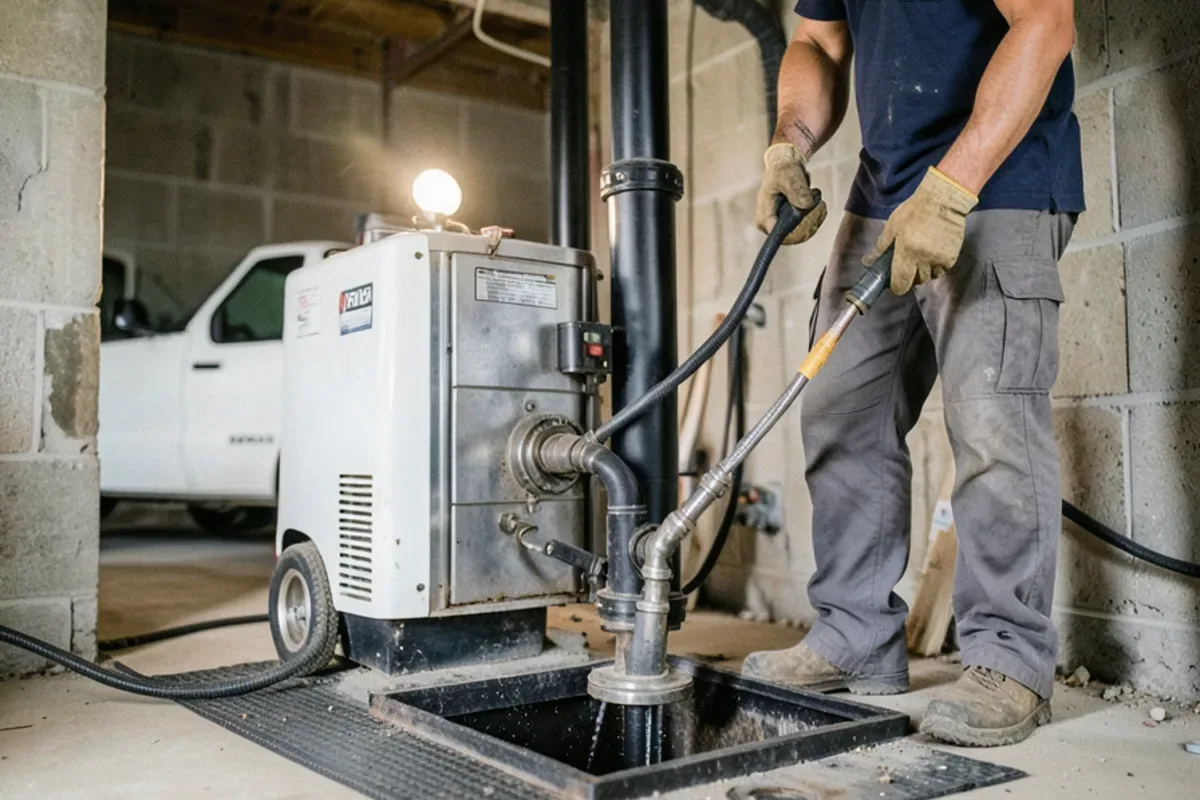
A sectional machine with a cutting head goes from the cleanout out toward the city main. Roots get cut back at the joint. Heavy grease or scale may call for hydro jetting once the line is open.
Load test and look
We run the washer and a few fixtures at once and watch the floor drain. If roots or debris came back on the cable head, we suggest a camera pass to see the pipe.
What changes the cost of main line cleaning
The price depends on where the blockage sits and what it is made of:
- Access. A cleanout we can open saves real time. No cleanout can mean pulling a toilet or working through a roof vent.
- Distance. A clog under the basement floor is closer than one at the tap to the city main under the street.
- The cause. Wipes and lint usually come out in a pass or two. A root mass at a cracked clay joint takes more passes and may come back.
- Water on the floor. Standing water that has to be pumped or vacuumed before we can work adds time.
- A camera inspection, if the line needs one to explain what we found.
- A repeat problem. A lateral that grows roots every year may cost less over time with scheduled rodding or a section repair than with the same cleaning year after year.
Keep in mind who owns what. In Warren the property owner is responsible for the sewer lateral all the way to the city main, including the stretch under the sidewalk. Our post on who owns the sewer line explains where that boundary falls.
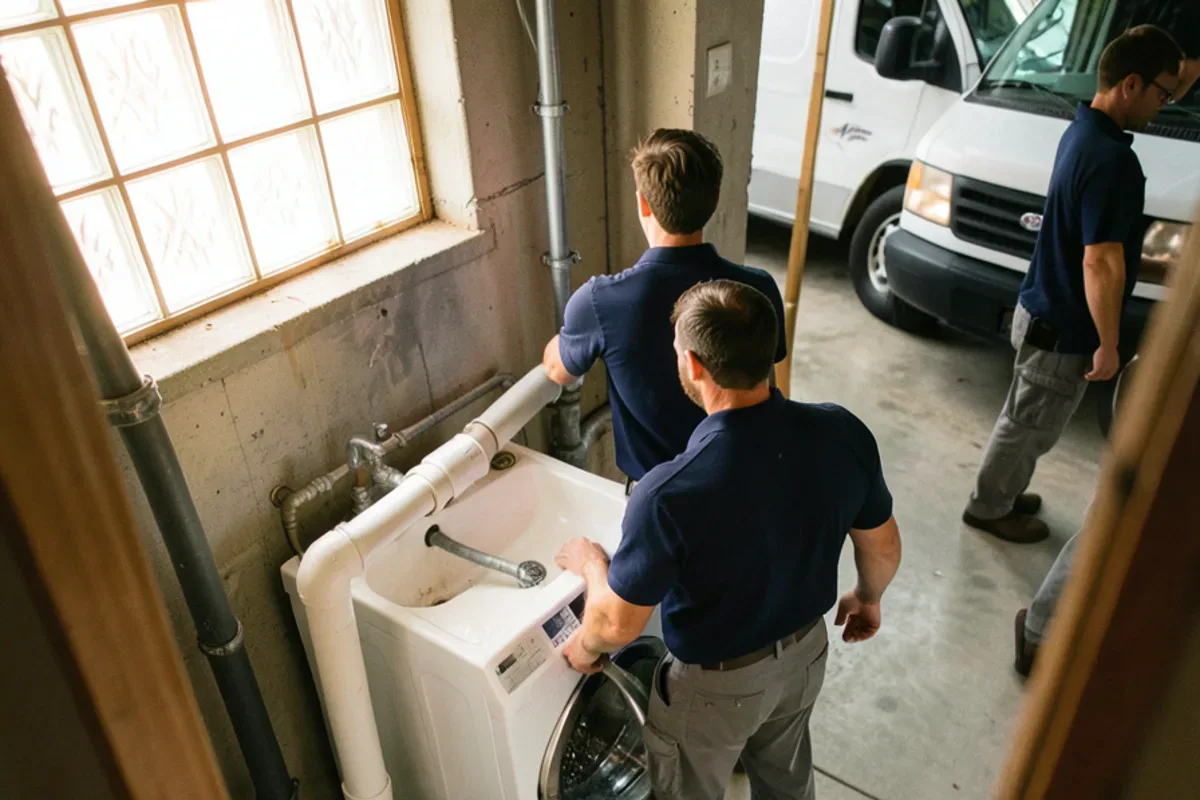
Warren rules on laterals, permits and who does the work
Cleaning a drain is maintenance and is not on the City of Warren's list of plumbing permit items. What comes after it can be. Replacing a broken lateral takes a city permit and inspection, under your yard or the right-of-way, issued by the Division of Buildings and Safety Engineering at One City Square, and a backwater valve has its own line on the permit form. Michigan's Skilled Trades Regulation Act puts permitted plumbing in the hands of licensed journey or master plumbers working for a plumbing contractor; LARA's online lookup checks any license. Owner-occupants may pull their own permit, but a rental needs a contractor.
Keeping the floor drain dry and its trap full
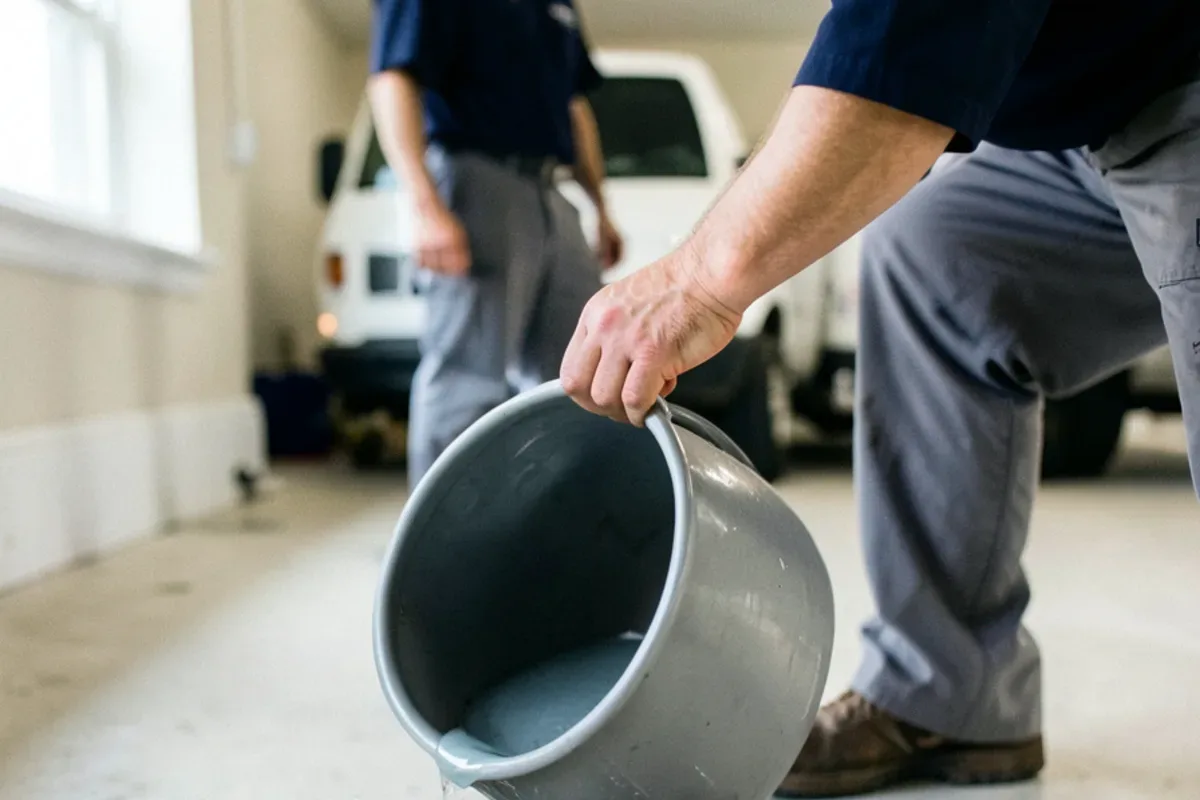
Most floor drains get almost no water, so the trap slowly dries out and sewer gas comes through. Pour a bucket of water into the drain once a month and the seal stays put. If the smell returns within days, the trap may be cracked, which our post on sewer smell in the basement covers.
A mesh lint catcher on the washer discharge keeps lint out of the main. Grease goes in a can, not the laundry tub. If roots were part of the clog, the City of Warren suggests having the lateral rodded once a year rather than waiting for the next backup, since roots that have found a joint will keep growing back.
Floor drain calls from our Stephens Rd office
We work out of 11355 Stephens Rd in 48089, the Warren ZIP code with the oldest houses, where nearly half the homes predate 1960 and cast iron floor drains are routine. Homeowners, landlords with a flooded rental basement and businesses with a back-room drain all reach the same phone line.
We settle whether it is your pipe or a surcharged city sewer before recommending anything. If the main has backed up before, the camera goes in after cleaning, and you get the cost factors and a written scope before work starts.
Basement floor drain cleaning around Warren and nearby cities
- Plumber in Center Line
Half of Center Line's homes predate 1960, with floor drains on clay laterals; city sewer service stops at the property line.
- Plumber in Madison Heights
Kuhn combined-sewer district, where 1950s brick ranches often have floor drains below street level.
- Plumber in Roseville
The July 2019 flash flood pushed sewage-mixed water into basements whose 1950s floor drains tie to the sanitary lateral.
- Plumber in Eastpointe
About 78 percent of homes predate 1960, with block basements draining through a floor drain on the sanitary line.
- Plumber in Ferndale
A combined sewer about 80 years old by the city's count, with floor drains as the low point when it fills.
- Plumber in Berkley
In the August 2017 storm, combined-sewer water came up through basement floor drains across the city.
- Plumber in Royal Oak
Owners maintain their sewer cleanout, and the city names roots, diapers and grease behind floor drain backups.
- Plumber in Detroit
Laterals usually run to an alley sewer, and DWSD warns sewer water can rise above the basement floor.
Basement floor drain cleaning questions from Warren customers
Why does water come up through my basement floor drain?
Usually because the main line is blocked further downstream and the floor drain is the lowest opening in the house. If it only happens during heavy rain while nobody is using water, the city sewer is probably surcharging instead. The first is a cleaning job. The second calls for backflow protection such as a backwater valve.
Can I clean a basement floor drain myself?
Yes, partly. You can lift the grate and scoop silt and lint out of the trap, and that fixes a slow floor drain more often than people expect. A rental cable from the floor drain rarely reaches a main line clog, though, and it can kink in the trap. If water rises when other fixtures run, the main needs cleaning from a cleanout.
Why does my floor drain smell like sewer?
In most basements the trap under the grate has dried out, so nothing blocks sewer gas. Pour in a bucket of water and the smell usually stops within a day. If it keeps coming back, the trap or the pipe around it may be cracked, and a camera can check it.
Should I plug my basement floor drain?
No, not as your only protection. A floor drain plug can stop storm backups at that one opening, but the water then looks for the next lowest fixture, like a basement toilet or shower. A backwater valve protects the whole building drain. Our post comparing floor drain plugs and backwater valves lays out the trade-offs.
Still not sure what you're dealing with? Describe it on the phone and we'll tell you what we'd check first.
(207) 419-2600Last updated October 25, 2026