
 By Plumber in Warren, MI, plumbers on Stephens Rd in WarrenPublished October 25, 2026Last updated October 25, 2026
The floor drain plug vs backwater valve choice comes down to how many openings you need to protect. A floor drain plug seals one drain, the floor drain, when sewer water starts rising. A backwater valve sits in the main building drain and protects every basement drain at once.
Because the valve stops sewer water from flowing back into the house at all, it covers the floor drain, the basement toilet, the shower and the laundry tub together.
If the floor drain is the only opening below ground level, a plug can be a reasonable stopgap. If anything else drains in the basement, a plug tends to move the backup rather than stop it.
What a floor drain plug actually does
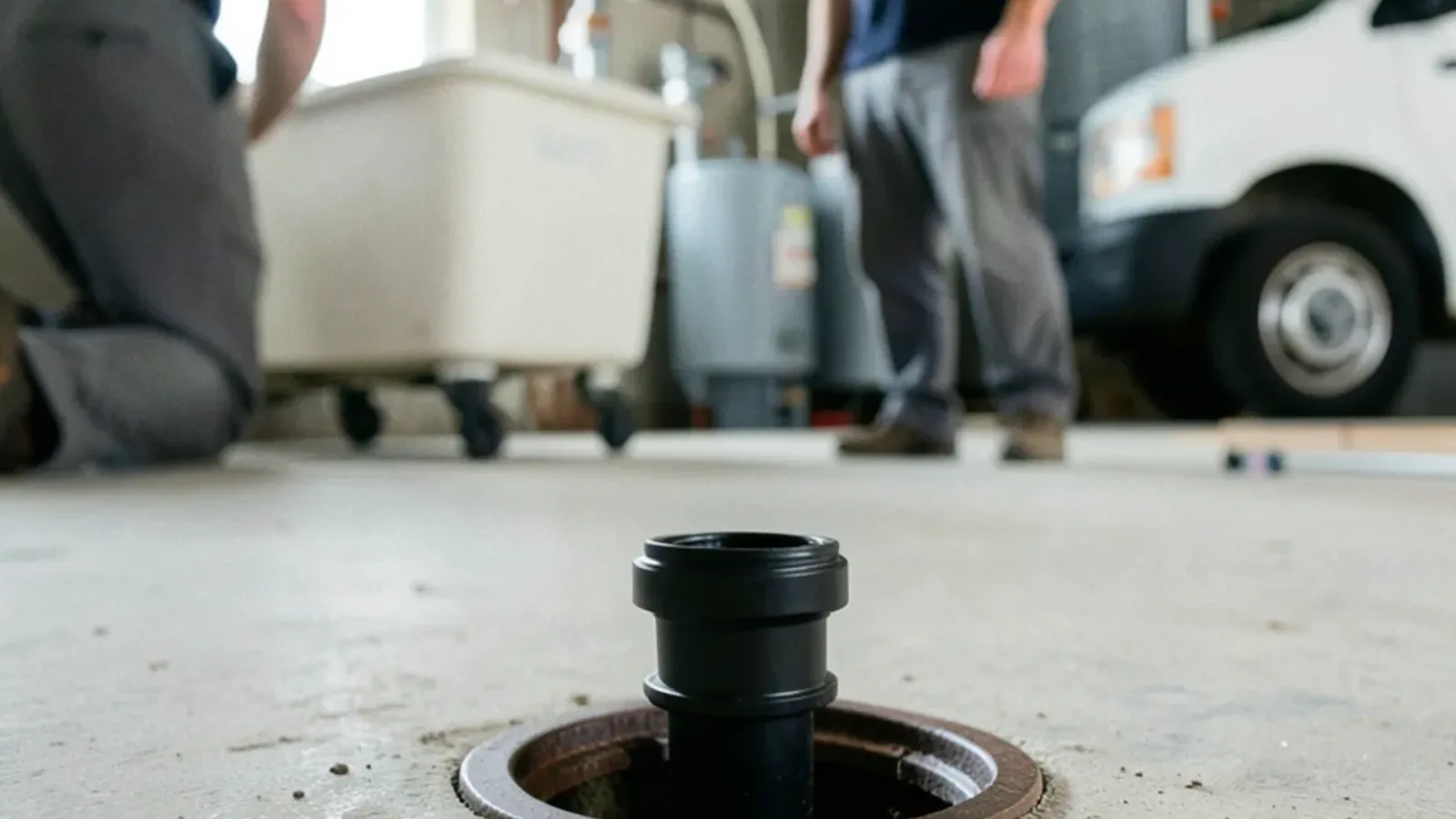
Most plugs sold for backup protection are floating-ball types. A rubber ball sits loose in a short housing that you push or thread into the drain opening. Normal water from a washer overflow or a leaking water heater runs past the ball and down the drain. When sewer water pushes up from below, the ball floats against a seat and seals the opening. Other versions use a spring-loaded flap. A solid threaded cap or an expanding test plug seals the drain permanently, which stops the floor drain from doing its everyday job.
The weakness is pressure. Sewer water rising in a surcharged lateral doesn't stop because one opening is closed. It looks for the next lowest one. In a basement with a laundry tub, a shower or a toilet, that's where it comes out, sometimes with more force than it had at the floor drain. A ball can also hang up on grit or hair and fail to seat, and nobody notices until the night it matters.
Two other low-tech options show up in flood guides. A standpipe is a length of pipe threaded into the floor drain and standing a few feet tall, so rising sewer water climbs inside the pipe instead of spreading across the floor. It works only while the sewer level stays below the top, and it shares the plug's weakness with every other low opening. A solid twist or expanding plug seals completely, which makes sense if you're leaving home ahead of a flood warning, but anything that overflows in the basement while it's in stays on the floor.
How a backwater valve protects the whole system
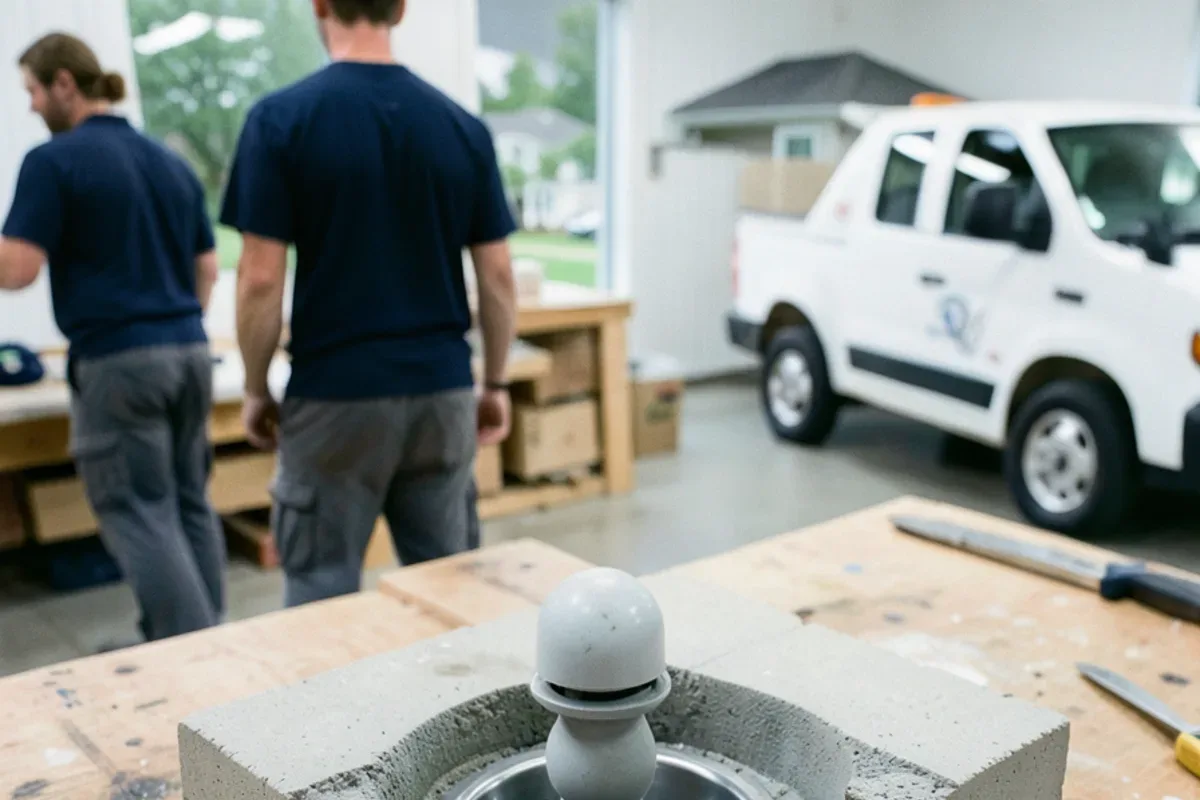
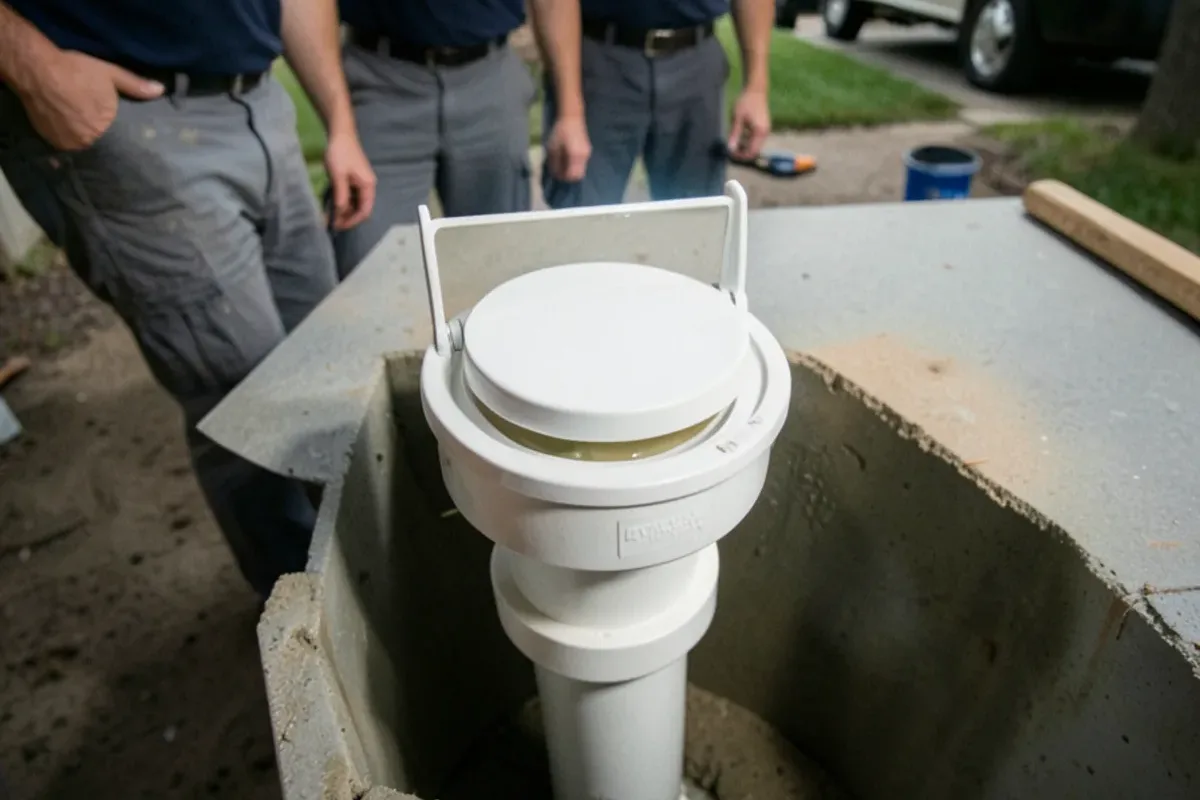
A backwater valve is a check valve built into the building drain, usually under the basement floor near where the pipe leaves the house. Inside is a flap or gate. Water flowing out to the sewer pushes it open. Water flowing back toward the house presses it shut. Because it sits downstream of every basement fixture, it protects all of them at once.
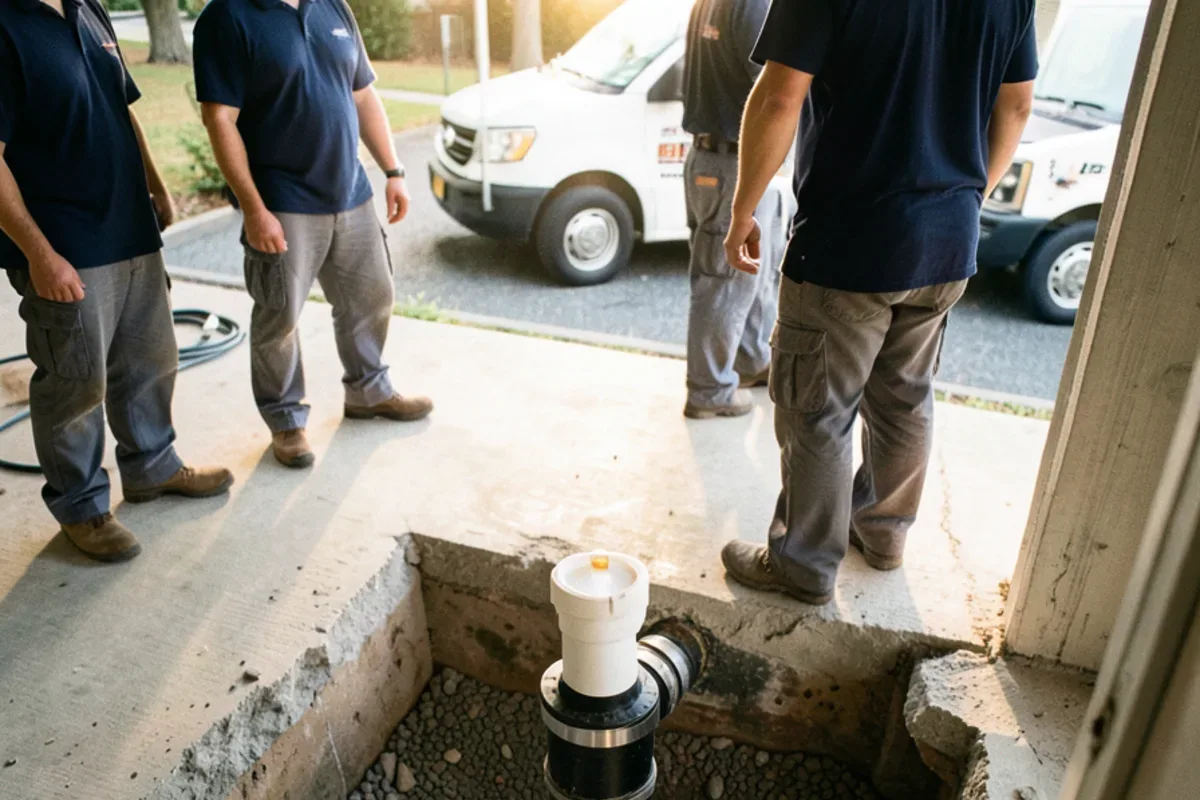
Installing one means cutting the concrete floor, exposing the drain, cutting in the valve and setting an access box over it so the flap can be inspected and cleaned. In Warren, backwater valves appear on the city's plumbing permit form, so the work is permitted and inspected. Our backwater valve installation page walks through how we locate the drain and pick the valve.
| Floor drain plug | Backwater valve | |
|---|---|---|
| What it protects | The floor drain only | Every fixture downstream of it in the basement |
| Installation | Pushed or threaded into the drain by hand | Floor cut open, valve set in the building drain, permit and inspection |
| Upkeep | Check that the ball or flap moves freely | Open the access box and clear debris from the flap |
| Cost factors | The plug itself | Floor thickness, drain depth and material, access, permit, concrete patch |
| Main weakness | Pushes the backup to the next lowest drain | Nothing drains out while it is closed |
What happens when the valve closes during a storm
A closed valve keeps the sewer out, and it also keeps your own water in. Everything upstairs still drains into the building drain, which is now a dead end. Run a load of laundry or a long shower while the valve is shut and that water backs up inside the house and comes out of the lowest basement opening. That's why the advice Warren shares for big storms, cutting water use until the rain passes, matters even more once a valve is installed.
The same goes for footing drains. In many older houses they feed the sanitary line. If they connect upstream of the valve, groundwater keeps arriving while the valve is closed and has nowhere to go. A plumber checks where the footing drains tie in before choosing a valve location, and some homes need a sump to take that water instead.
Which one fits your basement?
Only a floor drain below grade
An unfinished basement with a floor drain and nothing else draining below grade can get by with a floating-ball plug, at least as a first step. Make sure nothing depends on that drain that the plug would block, like a water heater relief line or a condensate hose, and check the ball every few months.
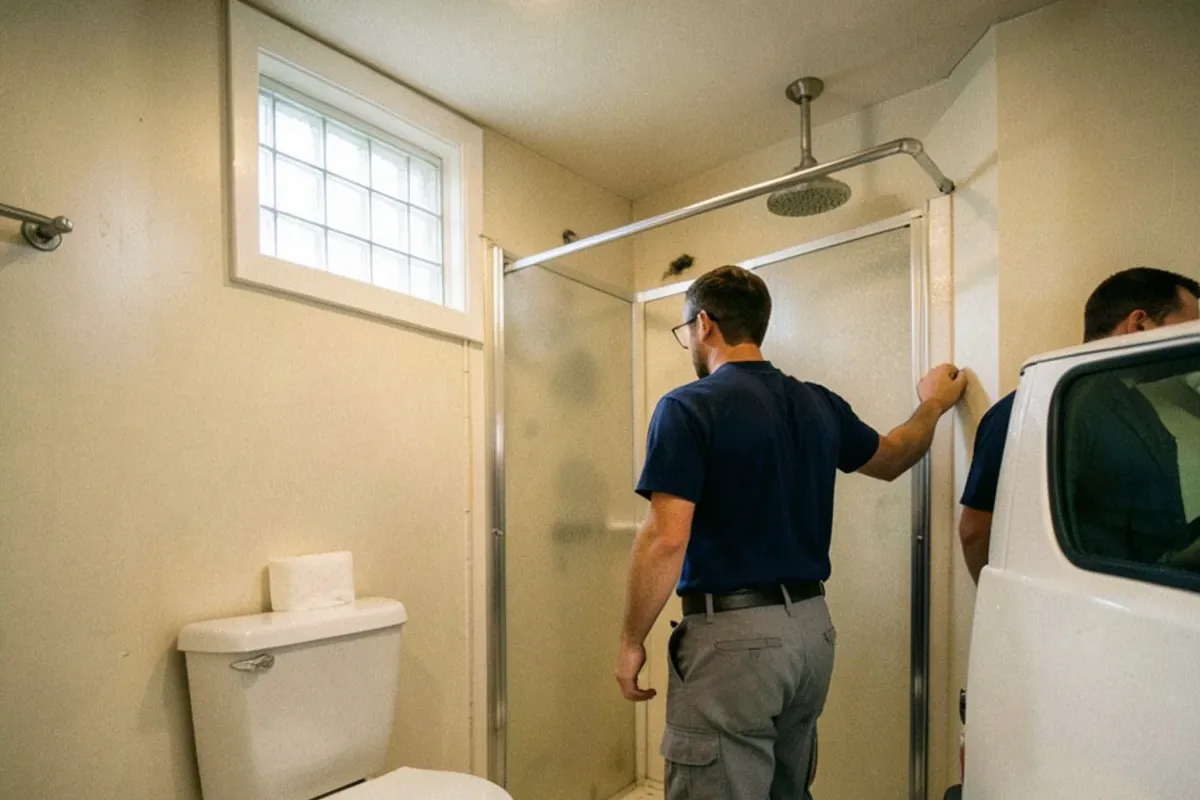
A basement bathroom, laundry tub or shower
Go with a backwater valve. A plug in the floor drain leaves every other opening exposed, and a finished basement has the most to lose.
Backups plus groundwater
If you get clear water at the walls as well as sewer water at the drain, the valve handles the drain and a sump pump handles the groundwater. Heavy storms and power outages tend to arrive together, so a battery backup sump pump keeps that side working when the lights go out.
Lakeshore suburbs see the same storms. In St. Clair Shores, local TV reported about four inches of rain in a single hour during a summer 2025 storm, the kind of cloudburst that tests every one of these choices at once. For what drives those backups in the first place, see what causes basement backups during big storms.
Keeping either one ready to work
Pull a floor drain plug out once or twice a year, rinse it, and confirm the ball drops and seats freely. Keep the trap below it filled with water so sewer gas stays out. For a backwater valve, open the access cover in spring and fall, look for debris holding the flap open, and make sure the flap swings without sticking. A valve that's jammed open by a wad of wipes gives no protection, and one stuck shut causes its own backup. If you've had sewage come up already, our guide to what to do after a basement sewage backup covers the cleanup.
How a plumber picks the valve and where it goes
Two basements with the same symptom can need different valves, or a different spot for the same valve. These are the calls that get made before the floor is cut.
- Flap that rests open or rests closed. A flap that hangs open lets solids and air pass freely and only closes when water reverses. One that rests closed seals sooner but gives debris more to catch on, so it needs cleaning more often.
- A manual gate or not. Some valves add a gate you can close by hand ahead of a storm or while you're away. It's a second line of defense, and it's one more thing to remember to open again.
- Where the footing tile joins. The valve has to sit so groundwater from the footing drains isn't trapped behind it, which sometimes means moving that tile to a sump first.
- The condition of the old drain. Warren basements from the 1950s and 1960s often have cast iron building drains. Cutting a plastic valve into old cast iron takes transition couplings and sound pipe on both sides, so a camera run from a cleanout comes first.
In some houses the upstairs drains can be split off so they bypass the valve and keep working during a surcharge, since the street's water level rarely climbs that high. Whether that's possible depends entirely on how the stack and building drain are laid out, and a sewer camera inspection usually settles it.
When a plug is enough on your own, and when to call about a valve
Buying and setting a floating-ball plug is a homeowner job. So is checking it twice a year, keeping the trap filled and cutting water use during a storm. If the floor drain is the only opening below grade and you've never had sewage come up, that may be all you need for now.
Call a plumber when there's a toilet, shower or laundry tub in the basement, when you've already had a backup, or when clear water shows up at the walls along with sewer water at the drain. Those basements need a valve sized and placed around the footing drains, with a Warren permit and inspection. If that sounds like your house, call us and we'll look at the drain layout before anyone cuts the floor.
Questions people ask about this
Can I install a floor drain plug myself?
Yes. Floating-ball plugs are made for homeowners and push or thread into a standard floor drain. Measure the drain opening and look at how the grate is held in before you buy one. Make sure no water heater relief line, condensate hose or softener discharge depends on that drain, since the plug narrows the opening it empties into.
Does a backwater valve need maintenance?
Yes. Open the access cover in spring and fall, clear anything caught on the flap or seat, and swing the flap by hand to make sure it moves. A valve held open by debris won't close when the sewer surcharges, and one stuck shut backs up your own drains. A home with heavy grease or wipe use needs more frequent checks.
Do I need a permit for a backwater valve in Warren?
Yes. Warren's plumbing permit form lists backwater valves as their own item, and the Division of Buildings and Safety Engineering inspects the work before the floor is patched, so the trench stays open until it passes. Homeowners can pull a permit for their own owner-occupied home; a rental needs a plumbing contractor to pull it.
Is a backwater valve better than a floor drain plug?
Yes, for most basements. A plug protects only the floor drain, while a valve in the building drain protects every opening below it, including a basement toilet, shower or laundry tub. A plug can still make sense in an unfinished basement where the floor drain is the only low opening, or as a stopgap until a valve goes in.
Want a plumber to look at your situation? We're on Stephens Rd in Warren.
(207) 419-2600