
 By Plumber in Warren, MI, plumbers on Stephens Rd in WarrenPublished October 25, 2026Last updated October 25, 2026
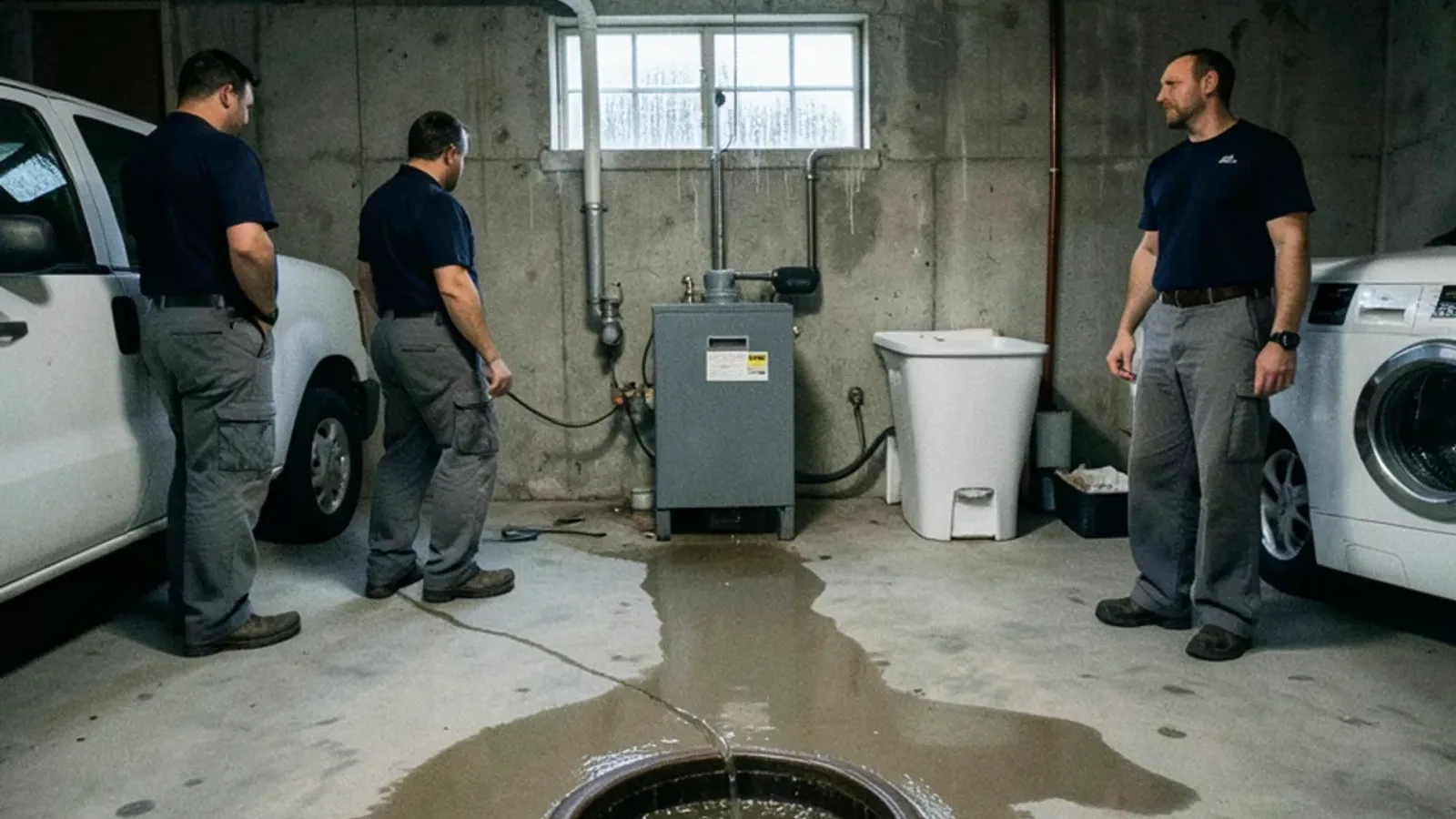
A basement backup during a storm usually starts out at the street. Rain gets into the sanitary sewer, the main fills faster than it can empty, and the water level in the pipes climbs. Your lateral is connected to that main, so the water rises in it too and comes out at the lowest open drain in the house.
Rain finds its way in through footing drains, cracked pipe and leaky manholes. In most basements the lowest opening is the floor drain, which is why that's where the trouble shows first.
That is one kind of storm backup. Two others look similar from the stairs and have different fixes, so it pays to know which one you had before spending money on any of them.
Why does the sewer back up into my basement when it rains?
A sanitary sewer is sized for what goes down toilets, tubs and washing machines, plus some allowance for groundwater that seeps in. It is not sized for a summer cloudburst. In older systems, though, a lot of rain gets in anyway. Warren's own sewer handout shows footing drains around the foundation tied into the house sanitary lead, and the city asks homeowners to extend downspouts away from the house to cut the water reaching those footing drains. Multiply one house by a whole subdivision and the main is carrying far more than it was built for.
When the main surcharges, meaning it runs full and under pressure, water backs up every lateral connected to it. It rises until it finds an opening lower than the water level in the main. A floor drain set in a basement floor several feet below the street is often the first place it gets out.
| What you see | Where it comes from | What usually stops it |
|---|---|---|
| Gray or brown water with a sewage smell rising from the floor drain during heavy rain | A surcharged public sewer pushing back up your lateral | A backwater valve on the building drain |
| Floor drain backing up in moderate rain, or a slow drain and gurgling on dry days too | A partial blockage or broken section in your own lateral | Cleaning the line, then a camera inspection |
| Clear water at the wall and floor joint, or a sump crock overflowing | Groundwater, overloaded footing drains or a failed sump pump | Downspout extensions, grading and a working sump with backup power |
How the pipes under your floor connect to the street
Every fixture in the house drains into the building drain, a pipe that runs under the basement floor or along a basement wall. It leaves through the foundation and becomes the sewer lateral, which slopes down to the city main, usually under the street and in some Warren neighborhoods in a rear-yard easement. The floor drain ties into that same building drain, so it shares the lateral with every toilet in the house.
Homes built in the 1950s and 1960s often have exactly this layout, with the footing drains feeding the same line. That's normal for the era. It also means a heavy rain can load your lateral from both ends at once: footing drain water coming in from your side and surcharged sewer water pushing up from the main.

What Warren's big storms showed
On August 11, 2014, storms dropped 5.2 inches of rain on Warren according to AP reporting, and the city estimated about 18,047 homes were flood-damaged. The June 2021 storms brought another federal disaster declaration covering Macomb County. On January 26, 2024, the city told residents its storm water and sewer basins were at capacity and the pump station was running flat out.
Warren's wastewater officials have said the system was designed for about 2 inches of rain over several hours. The Stephens Road Detention Basin, opened in February 2025, holds 22 million gallons of overflow in very wet weather. Public storage like that reduces how often the system overflows. It does nothing about a cracked lateral, a footing drain tied into the sewer, or a floor drain that sits lower than the main's water level during the worst hour of a storm.
Neighboring cities have seen the same pattern. In a July 2019 flash flood, Roseville homes on Blumfield Street near I-696 had floodwater mixed with sewage in their basements, and the city manager said no pumps failed. The system was simply overwhelmed.
When the backup is coming from your own line
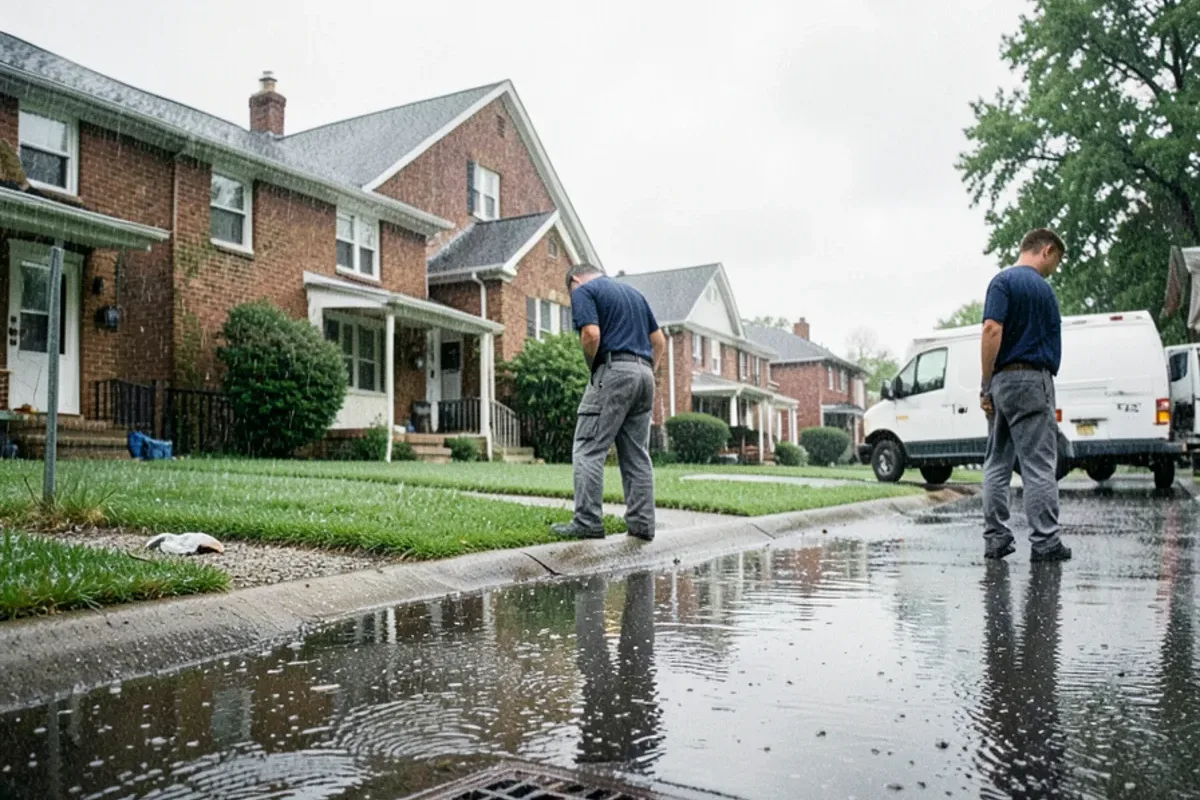
Not every storm backup is the city's sewer. A lateral that is partly blocked by roots or grease, or that has a sag holding water, can handle normal household flow and still choke when footing drain water piles on during a storm. Clues that point to your own line: the floor drain gurgles when the washer drains, you get water in moderate rain while the neighbors stay dry, or a toilet is slow on a dry day.
In Warren, the owner is responsible for the lateral all the way to the city main, including the part under the right-of-way. Basement floor drain cleaning from a cleanout clears the line, and a camera afterward shows whether roots came in through a cracked joint or a section has dropped. If it has, cleaning buys time, and repair is the real fix.
Which fix stops which backup
Match the fix to the source. Buying the wrong one is how people end up with a sump pump that runs fine while sewage still comes up the floor drain.
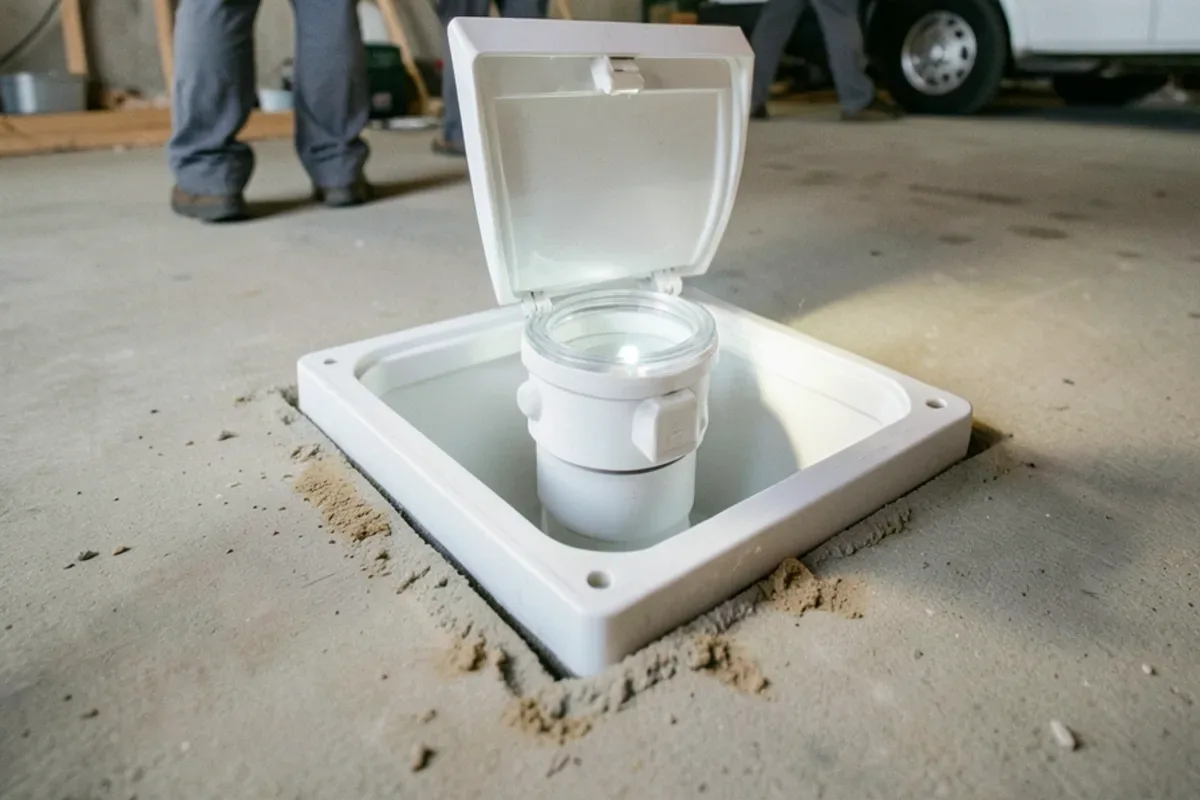
- Surcharged public sewer: a backwater valve installed in the building drain closes when sewer water flows the wrong way and protects every basement fixture at once. Warren's plumbing permit form lists backwater valves, so plan on a permit.
- Only a floor drain below grade: a floating-ball floor drain plug is a cheaper partial measure. Our comparison of a floor drain plug and a backwater valve explains where each one falls short.
- A blocked or broken lateral: cleaning, a camera inspection and a repair of the failed section.
- Clear water from the walls: downspout extensions that throw water away from the foundation, grading that slopes away from the house, and a sump pump that keeps running when the power goes out.
Across 8 Mile, the Detroit water department has run a program to install backwater valves and sump pumps in neighborhoods with a history of backups during big rains. We work on homes in Detroit near the Warren border too, and the same logic applies there: find the source first.
Trade-offs a plumber weighs before protecting a storm-prone basement
The simplest-sounding fix isn't always the one that holds up. These trade-offs come up on almost every backup job.
- A closed backwater valve works both ways. While it holds back the street, nothing in the house drains out, so laundry run during a long surcharge ends up at your own floor drain.
- Footing drains decide the design. If the footing tile joins the building drain on the house side of the valve, a closed valve traps groundwater in the basement, and the tile may need rerouting to a sump pit first.
- A floor drain plug moves pressure rather than removing it. Water heads for the next-lowest opening, like a laundry tub or basement toilet.
- Valves need upkeep. A flap fouled with grease won't seal, so check it through the access box every spring.
For severe, repeated backups the bigger option is an overhead sewer setup: basement fixtures drain to a sealed ejector pit, and a pump lifts the water above the level the main can reach. It needs power and more work.
What to do while the storm is still going
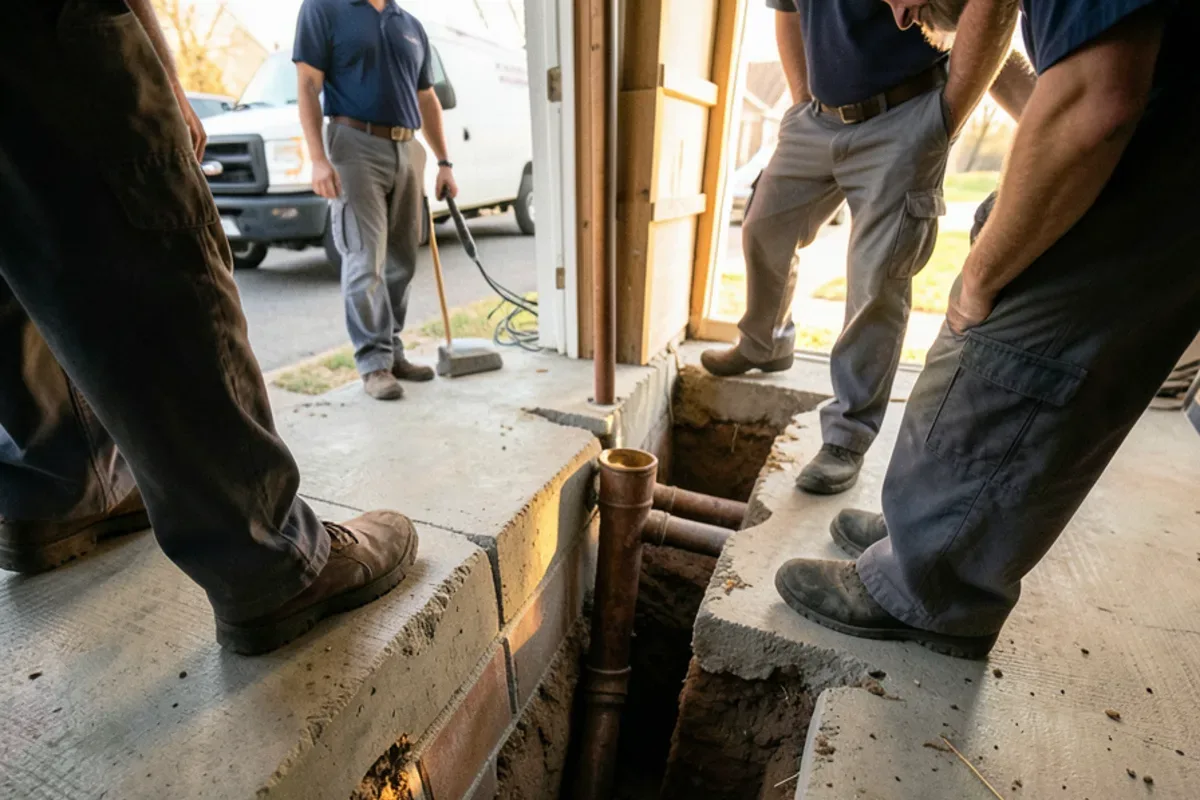
Stop sending water down the drains. Warren passes along Clinton River Watershed Council advice for big storms: shorter showers, wait on the laundry and the dishwasher, and flush less. Every gallon you use has to go through the same full pipe, and in a backup it comes out in your basement. Move boxes, rugs and anything stored on the floor away from the floor drain.
Report a backup to the city's Water Division so it knows which streets surcharged. Once the water goes down, our guide on what to do after sewage backs up into your basement covers safe cleanup, photos for the insurer and tracking down the cause.
Which storm problems are yours to handle, and which need a plumber
Plenty of storm prep is homeowner work: extending downspouts, filling a low spot against the foundation, keeping stored things off the floor and testing the sump with a bucket of water.
Bring in a plumber when sewage has come up the floor drain, when the drain gurgles on dry days, or when you get water in moderate rain while the street stays clear. The same goes for a backwater valve or a battery backup sump pump, since a valve means cutting the floor and pulling a City of Warren permit. If the last storm brought water up your floor drain, call us and we'll find out whether it came from the street or your own line.
Questions people ask about this
Does homeowners insurance cover a sewer backup from a storm?
No, often not. Warren's sewer handout says most homeowner policies don't cover sewer backups, and it suggests asking your insurer whether backup coverage can be added as a rider. Ask before storm season, because coverage added after a backup won't pay for that one.
Can a backwater valve stop all basement flooding?
No. It stops sewer water from coming back up the drains, and that's all it does. Groundwater coming through walls, cracks or the joint where the wall meets the floor is a sump pump and drainage problem. On Warren's flat clay lots, many basements need both a valve and a sump that keeps running when the power goes out.
Why did my basement back up when my neighbor's didn't?
Floor drain height, the condition of each lateral, whether the footing drains tie into the sewer and whether a backwater valve is installed all differ house to house. Two homes on the same main can behave very differently in the same storm.
Who is responsible when the sewer backs up in a storm, the city or me?
It depends on where the problem is. Warren maintains the mains, and the owner maintains the lateral all the way to the main, including under the right-of-way. An overloaded main is a public problem, but protecting your basement from it is on the owner's side. Report every backup to the Water Division.
Want a plumber to look at your situation? We're on Stephens Rd in Warren.
(207) 419-2600