
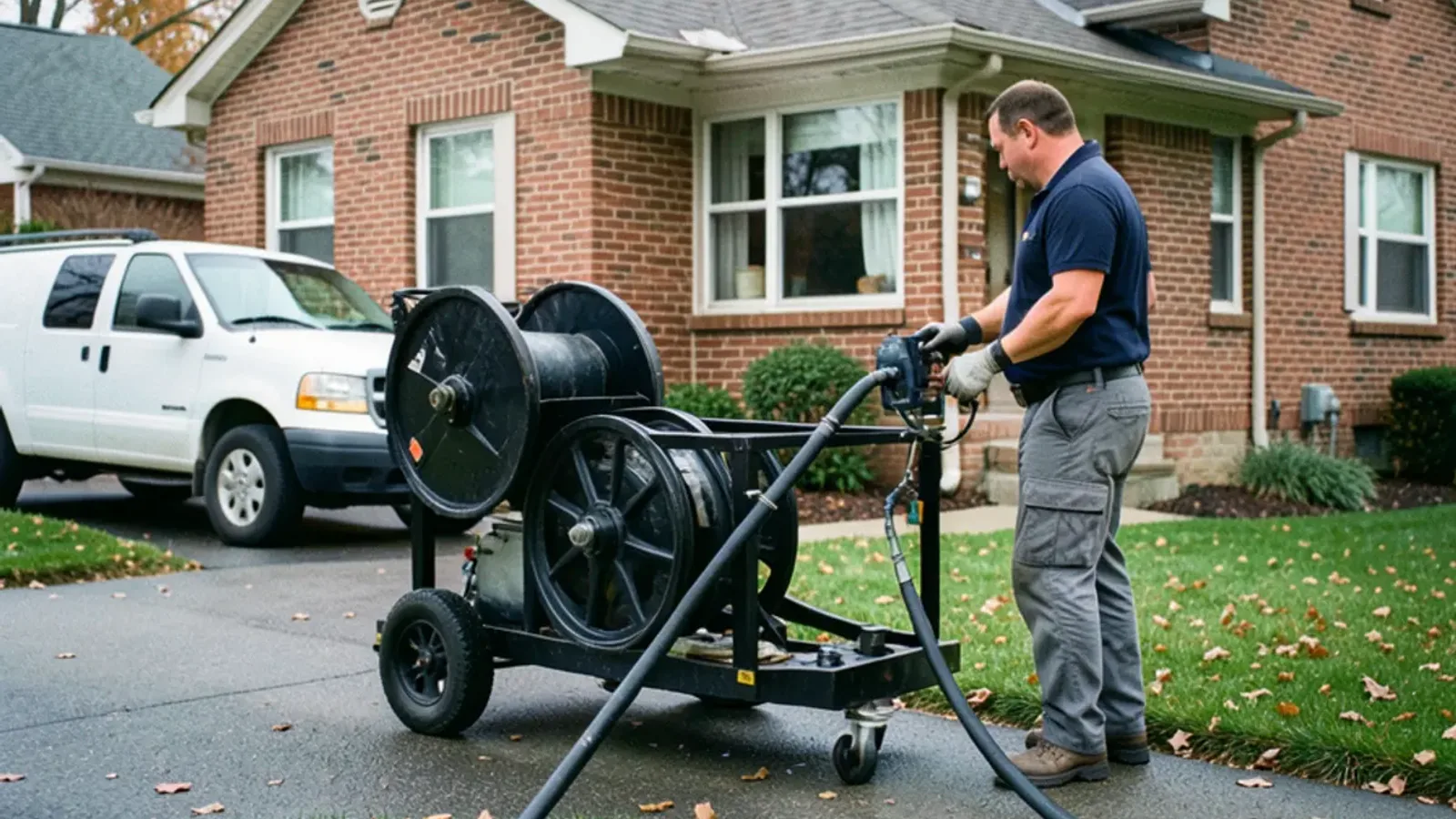
Hydro jetting in Warren comes up when a drain or sewer line keeps clogging after it has been cabled. A cable punches a hole through a blockage. A jetter sends water at very high pressure through a nozzle that scours grease, scale, sludge and root fragments off the inside of the pipe and flushes them out to the city main.
It is a strong tool and the wrong one for some pipe. Before we jet an older lateral we want to know what it is made of and whether it is still whole, so a camera usually goes in first.
What hydro jetting does inside a drain or sewer line
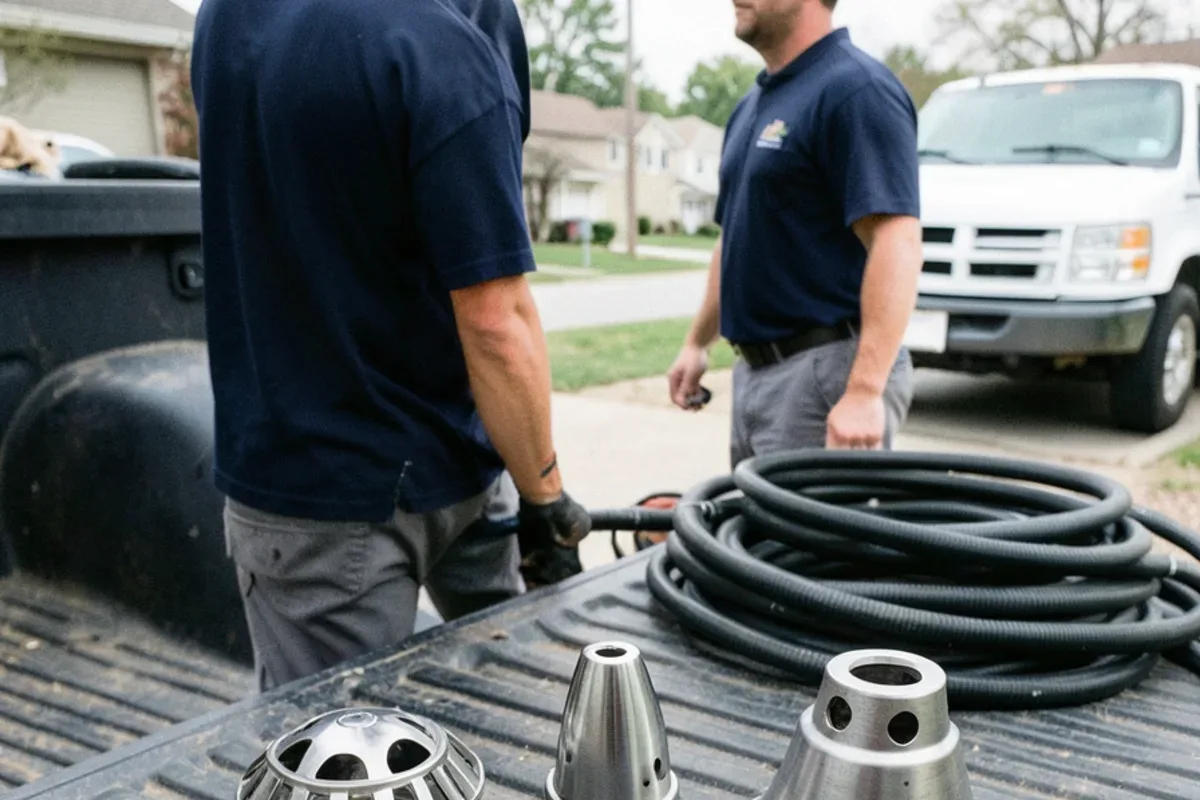
The jetter pumps water down a reinforced hose to a nozzle with small orifices. Most of the jets face backward. They pull the hose forward into the pipe and blast the wall at an angle as it goes. A forward jet in some nozzles breaks into the face of a blockage. When we retract the hose slowly, everything loosened washes downstream.
Two numbers matter. Pressure, in psi, cuts and scrubs. Flow, in gallons per minute, carries the debris away. A line full of grease needs both. A sand-filled line needs flow more than pressure. We pick a nozzle for the job, often a rotating head for grease and scale, a penetrating head for a hard plug, and a root-cutting nozzle or a mechanical cutter where roots have grown in.
- Kitchen and laundry branches, 2-inch and up, coated in grease or soap
- Main building drains and 4- or 6-inch laterals out to the city main
- Root fragments flushed out after a cable has cut the mass
- Sand and sludge moved out of a sagging section
- Camera passes before and after, so you can see the wall come clean
- Commercial grease lines on a schedule, before or after business hours
When a line needs jetting and when a cable is enough
| Situation | Cable | Jetter |
|---|---|---|
| Hair or a wipe stuck in a branch line | Usually enough on its own | Rarely needed |
| Kitchen line coated in grease | Opens a channel that closes again | Scours the wall back to full diameter |
| Roots at a clay joint | Cuts the root mass first | Flushes out fragments after cutting |
| Sand, silt or sludge settled in a belly | Stirs it up but leaves most behind | Moves it out with flow |
| Cracked, broken or very thin pipe | Gentler, used with care | Can make the damage worse |
For a single slow fixture, plain drain cleaning with a cable is the right first step. Jetting earns its place on lines that come back within weeks, on main lines with grease or scale buildup, and on any line we want clean enough to see clearly on camera.
Is hydro jetting safe for older Warren sewer pipe?
Usually, if the pipe is still sound. Most Warren houses went up in the 1950s and 1960s, and homes of that era often have cast iron under the basement floor and clay tile or cast iron out to the street. Sound clay and cast iron handle jetting well. The problem is the pipe that is no longer sound: a clay joint that has separated, cast iron with the bottom rusted thin, or a section that has already cracked. High-pressure water can open those up further and push water into the soil around them.
So on an old lateral we run a camera before or right after a cable pass. If the video shows a break or a badly offset joint, we tell you, adjust the nozzle and pressure or skip jetting, and talk about sewer line repair for that section.
How sewer drain jetting works on a Warren lateral
Open the line and check it
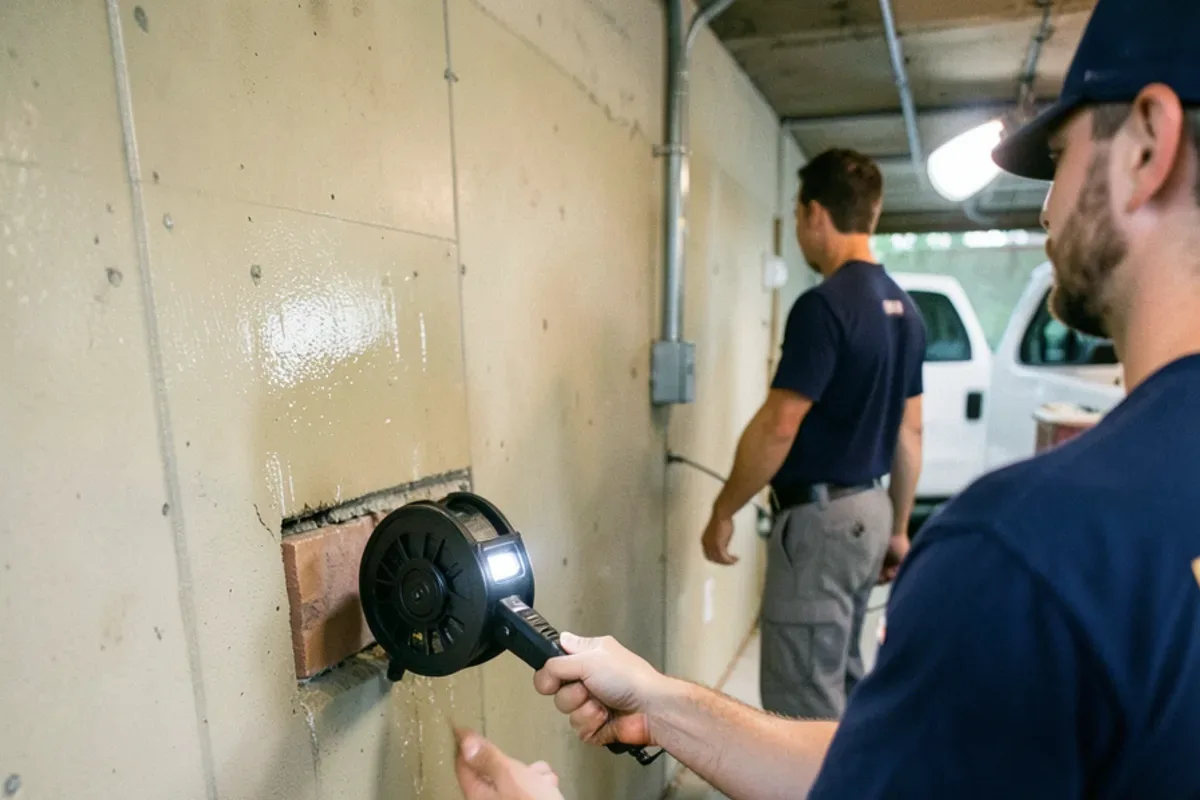
We open the cleanout, relieve any standing water with a cable if the line is fully blocked, and run a camera to see the pipe material and condition.
Choose the nozzle and set the pressure
The pipe size, its material and what is in it decide the nozzle. Older pipe gets lower pressure and a gentler head.
Jet out toward the city main
The hose goes in from the cleanout and works out in passes. We pull back and go again through heavy spots like grease at the kitchen tie-in or roots at a joint.
Flush and confirm
Clean water runs through the line until it comes back clear. A second camera pass shows whether the wall is clean and where any damage sits.
Tidy up
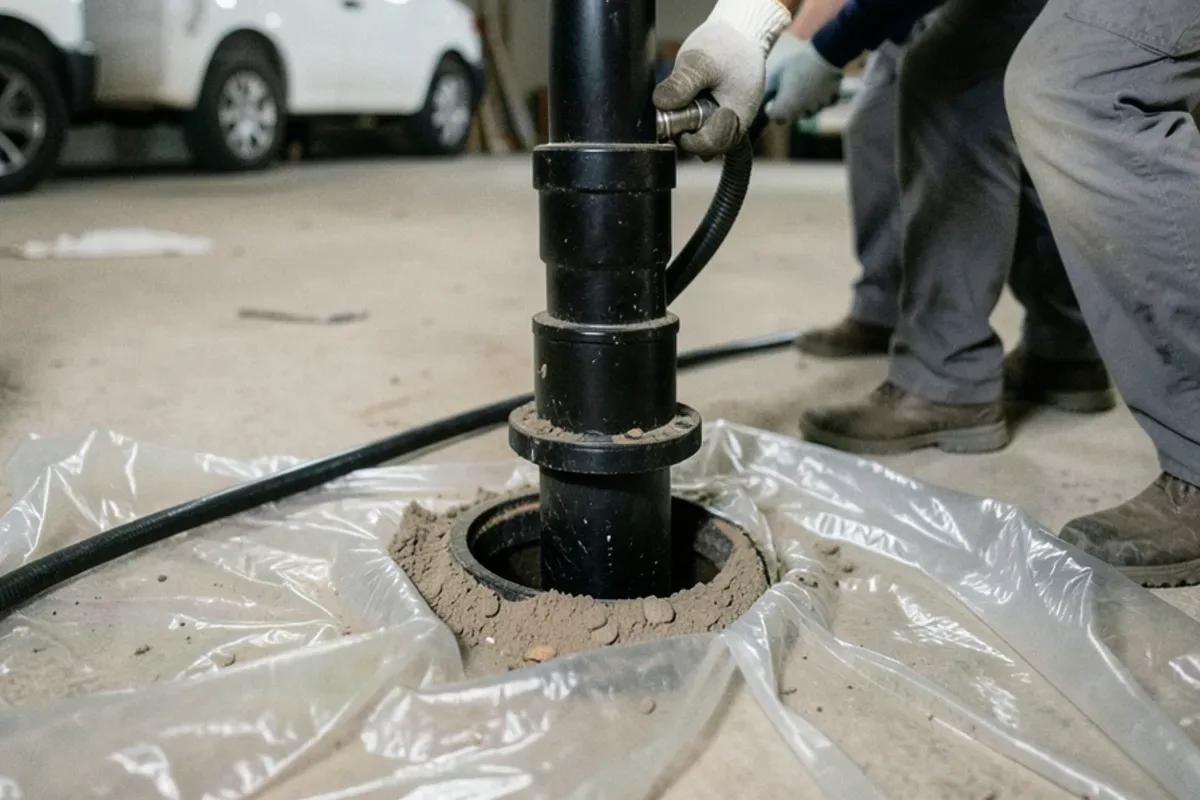
Jetting is wet work. Hose paths get protected, the cleanout is resealed and the floor around it is dried before we leave.
Jetting grease lines for restaurants and commercial kitchens
Commercial kitchen drains carry far more grease than a house, and it sets up as hard as soap in the line between the sinks and the grease interceptor. Cabling those lines rarely holds. Scheduled jetting, often done before or after business hours, keeps them open between interceptor service. Our restaurant plumbing page covers the rest of a kitchen's drain system, and our post on restaurant grease and drain jetting explains why grease lines need their own schedule.
Winter is a factor here too. A jetter puts a lot of water on the ground, so on cold days we work from indoor cleanouts where we can and keep hoses drained between runs.
What sets the cost of a jetting job
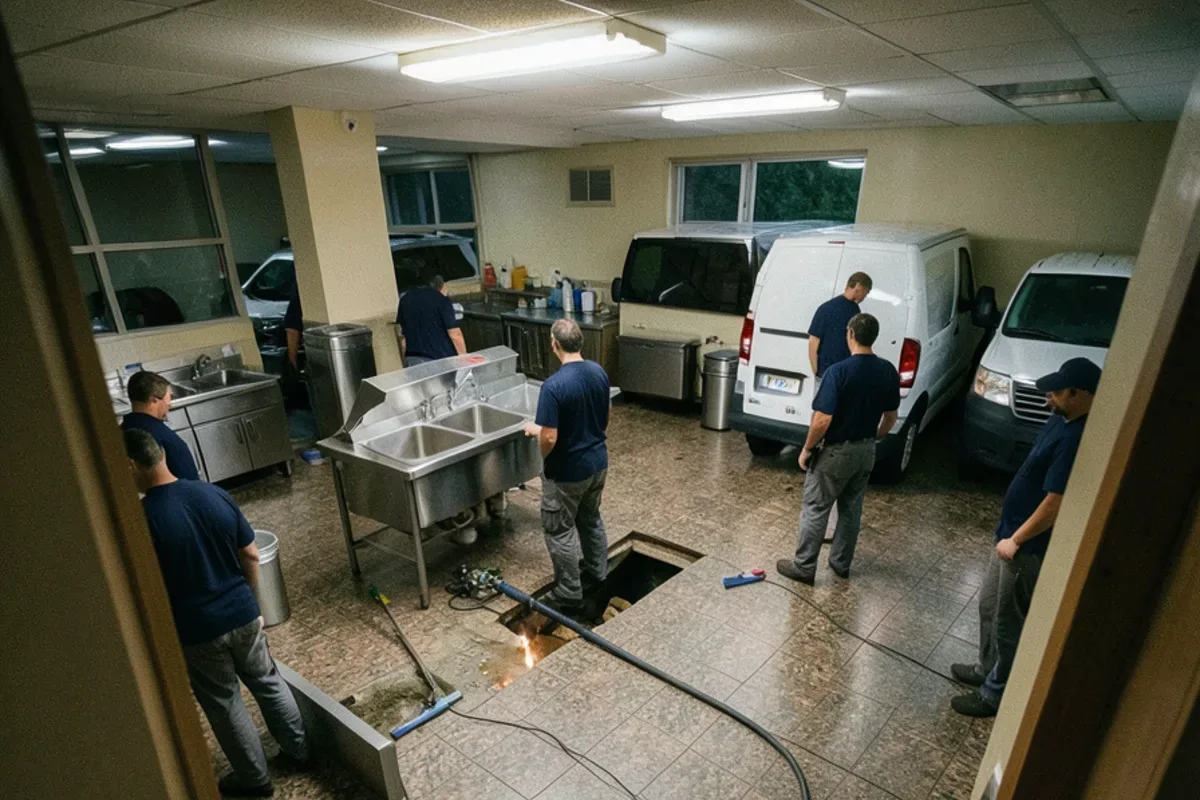
Jetting is priced by the line in front of us. We look at how big and how long the pipe is, what is fouling it and how we can reach it, and we explain which of those is driving your number before the hose goes in. On an older lateral the camera passes are part of the job from the start, not an add-on. A house without a cleanout pays for that missing access on every visit, so on a line that gets jetted on a schedule, adding one is worth discussing.
- Line size and length. A 2-inch kitchen branch is a smaller job than a long 6-inch commercial main.
- What is in it. Light sludge flushes out in a pass. Hardened grease or heavy scale takes several.
- Access. An open cleanout near the problem saves time; a roof vent or a pulled toilet adds it.
- Roots, which may need cutting with a cable before the jetter goes in.
- Camera passes before and after, which most older lines need.
- Timing, if a business needs the work done while it is closed.
How often should a sewer line be jetted?
A house with a sound lateral may never need it. A line with grease buildup or roots at a cracked joint often does better on a schedule than on emergency calls. The City of Warren suggests yearly rodding where roots keep returning, and jetting after the cut cleans out what the cable leaves. Commercial kitchens usually need a shorter cycle, set by how soon the line fouls. The camera footage from each visit is the best guide: if the wall is building up again, we shorten the interval.
Warren permits, grease rules and who does the work
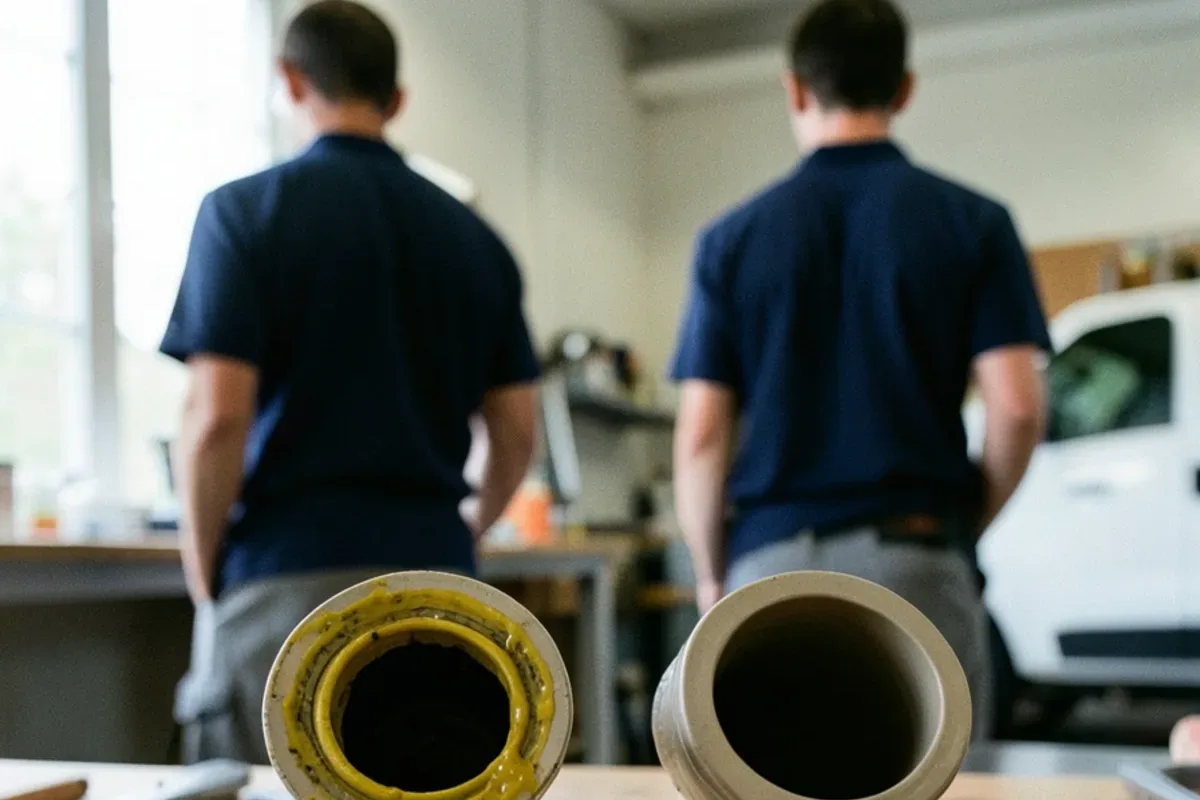
Jetting a line is cleaning, and cleaning is not on the City of Warren's plumbing permit list. Two rules sit close by. For restaurants, the city's food service best practices send grease-laden wastewater to a maintained grease trap or interceptor, and installing an interceptor is a plumbing permit item; jetting keeps the line to it open but does not replace pumping it. And if the camera after jetting shows a broken lateral, replacing it takes a permit and inspection from the Division of Buildings and Safety Engineering, on private property and in the right-of-way. That work falls to licensed journey or master plumbers under a plumbing contractor, which LARA's online lookup lets you verify.
Jetting from our Stephens Rd office, camera first
Our office is at 11355 Stephens Rd in 48089, where nearly half the houses predate 1960 and clay and cast iron laterals are common. That is the pipe where jetting takes judgment, so on older lines the camera goes in first and you watch the footage with us. If a pipe is too far gone to jet, we say so instead of running the machine anyway. Homeowners, landlords and restaurants on the corridors call the same phone line, and before any hose goes in you hear the cost factors and get the scope in writing.
Hydro jetting around Warren and nearby cities
- Plumber in St. Clair Shores
A 2016 city study traced basement backups to tree roots and grease, the two things jetting clears best.
- Plumber in Ferndale
The city tells owners to have their sewer line surveyed, snaked and jetted regularly by a trained plumber.
- Plumber in Detroit
DWSD's handbook calls for jetting a lateral when large root balls turn up, and cleaning it at least every two years.
- Plumber in Madison Heights
Businesses and light industry carry about 60 percent of the tax roll, and their grease and process lines need scheduled jetting.
- Plumber in Eastpointe
About 78 percent of homes predate 1960, so a camera confirms the clay is sound before high pressure goes in.
- Plumber in Hamtramck
Prewar laterals feed an undersized combined sewer, and jetting only follows once a camera shows the clay is whole.
- Plumber in Royal Oak
The city names roots, diapers and grease as cleanout blockages, and grease is where jetting beats a cable.
- Plumber in Hazel Park
Cast iron with lead-and-oakum joints in its oldest homes calls for lower pressure and a gentler nozzle.
- Plumber in Troy
Office and retail kitchens along the Big Beaver corridor have grease lines that hold up better on a jetting schedule.
Hydro jetting questions from Warren customers
Can hydro jetting clear a sewer line, or only drains?
Yes, both. The same machine handles a 2-inch kitchen branch and a 4- or 6-inch sewer lateral, with a different hose and nozzle. On a sewer line we jet from the cleanout out toward the city main, then follow with a camera to check the pipe wall and joints.
Does sewer jetting get rid of tree roots?
No, not on its own. It clears fine roots and flushes out what a cable cuts loose, but a heavy root mass is usually cut mechanically first. Neither method fixes the joint the roots came through, so they grow back. If they return within months, the cracked section may be worth repairing instead of cleaning every year.
Is hydro jetting better than snaking?
Yes, for grease, scale and sludge, because it cleans the whole pipe wall instead of opening a channel. For a single hair clog or a toy in a toilet, a cable is simpler. On an old pipe that is already broken, a cable is the safer tool until the break is repaired.
Can jetting damage my pipes?
Yes, if the pipe is already weak. Sound pipe handles it well. Pipe that is already cracked, separated or rusted thin can get worse under high pressure, which is why we look with a camera first on older lines and lower the pressure or skip jetting where the pipe is weak.
Still not sure what you're dealing with? Describe it on the phone and we'll tell you what we'd check first.
(207) 419-2600Last updated October 25, 2026