
 By Plumber in Warren, MI, plumbers on Stephens Rd in WarrenPublished October 25, 2026Last updated October 25, 2026
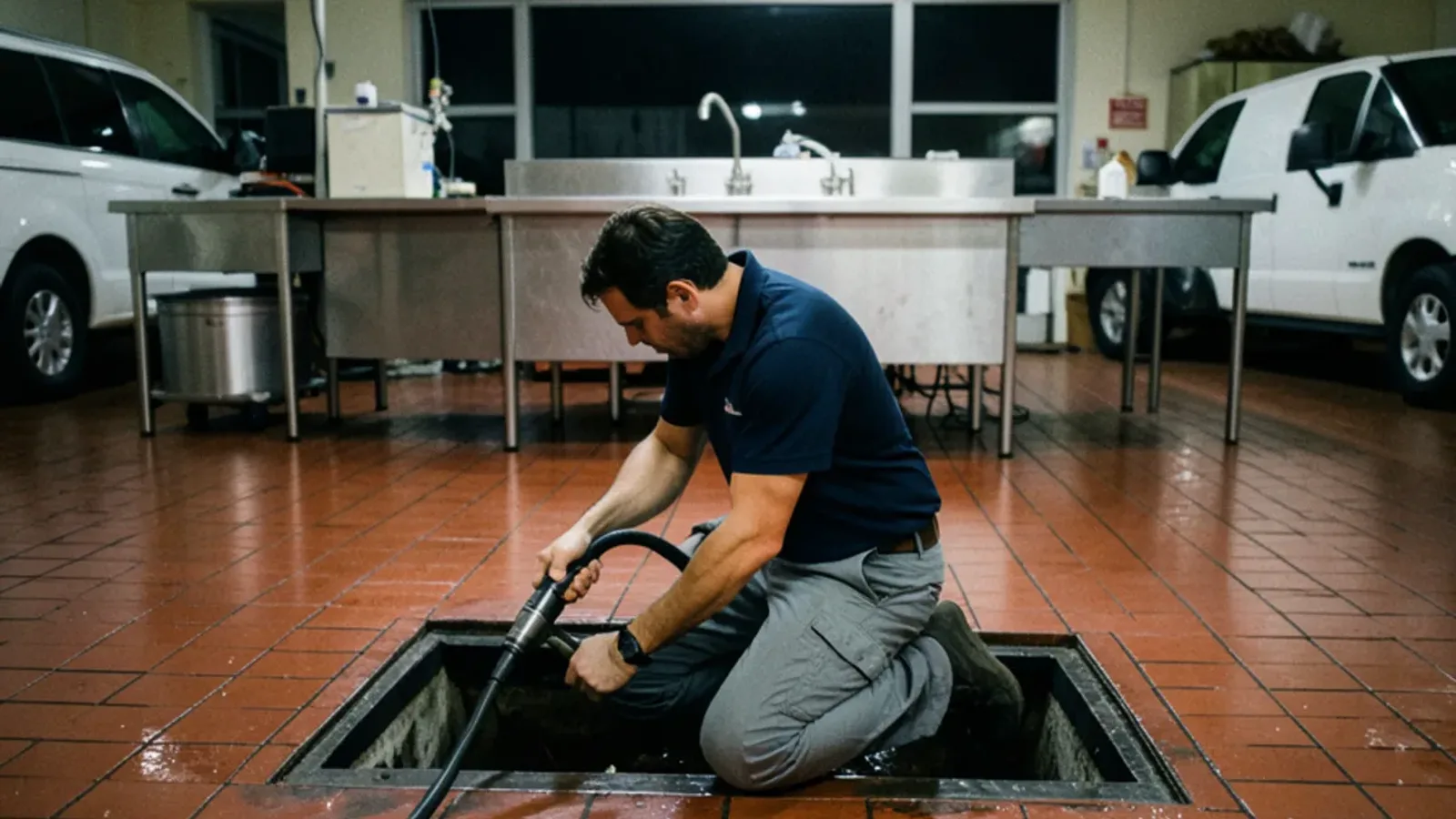
Restaurant drain jetting clears grease that a drain cable can only poke a hole through. A jetter scours the full diameter of the pipe with high-pressure water, so the line goes back to close to its original size instead of a narrow channel through the middle. Busy kitchens need it on a schedule set by how fast grease returns.
Hot water from the dish machine and three-compartment sink carries fat, oil and food solids into the line, and as that water cools in the pipe, the fat sets up on the pipe wall.
How often a kitchen needs it depends on the menu, the volume and how the pipes run. The reliable way to set a schedule is to jet the lines, look inside with a camera, and see how fast the buildup comes back. This guide walks through each piece of that.
How grease closes off a kitchen drain line
Fats, oils and grease don't stay liquid for long once they leave a warm sink. They cool, stick to the pipe and to each other, and grab food particles and soap residue as they go. Over weeks the deposit hardens into a waxy layer. It builds fastest where the water slows down: at bends, on long flat runs, at low spots where a pipe has sagged, and on the rough inside of old cast iron.
A grease interceptor catches most of the fat before it reaches the sewer, but it does nothing for the pipe between the sinks and the interceptor. That stretch, often running under the kitchen floor from the dish area, prep sinks and floor sinks, is where most restaurant backups start. A neglected interceptor adds a second problem downstream, when grease passes through and coats the building sewer.
It's a big problem past the property line too. EPA's grease-management materials cite a 2004 report to Congress that found blockages behind 74 percent of sanitary sewer overflows nationally, with grease responsible for 47 percent of those blockages.
Why jetting works better than a cable on grease
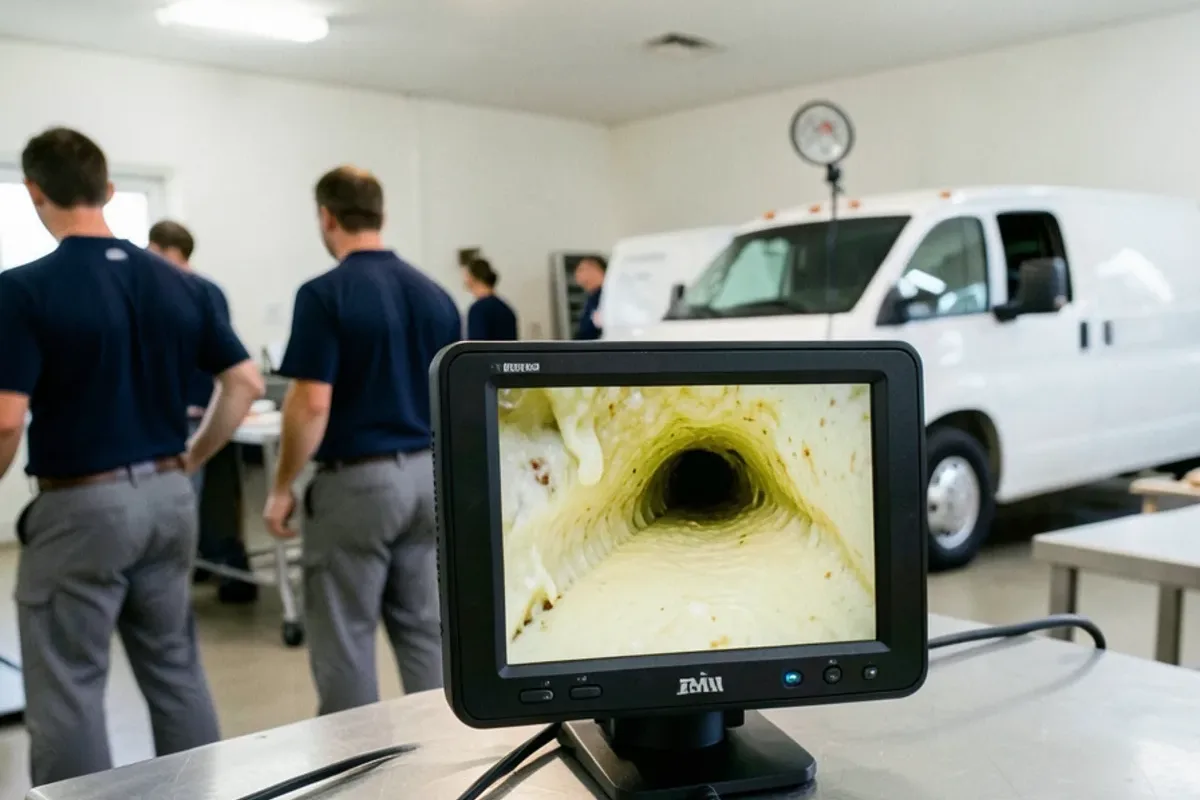
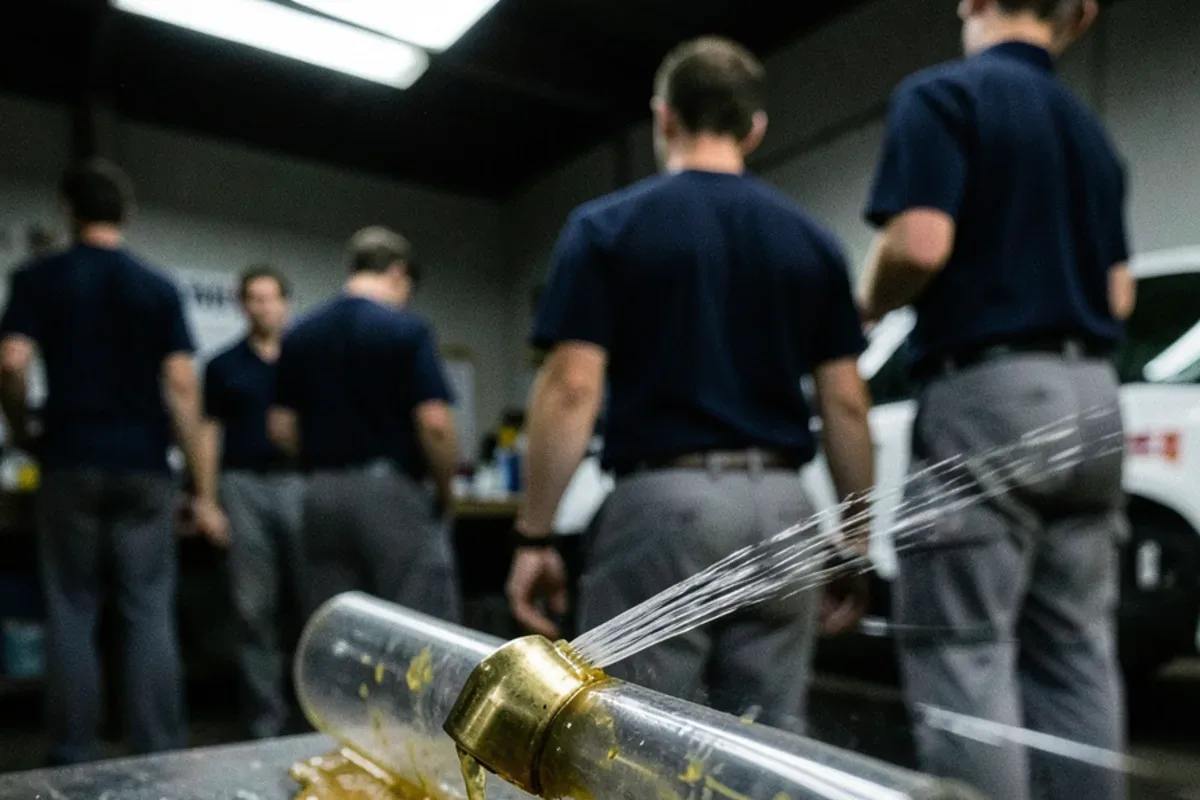
A drain cable spins a cutting head through the blockage. On a hair clog that's the whole job. On grease, the head bores a hole roughly its own size and leaves the rest of the deposit on the walls, so the line clogs again in weeks. Jetting attacks the walls. The nozzle has jets angled backward that pull the hose forward and blast the pipe surface as it travels, and the loosened grease washes downstream.
Find the access
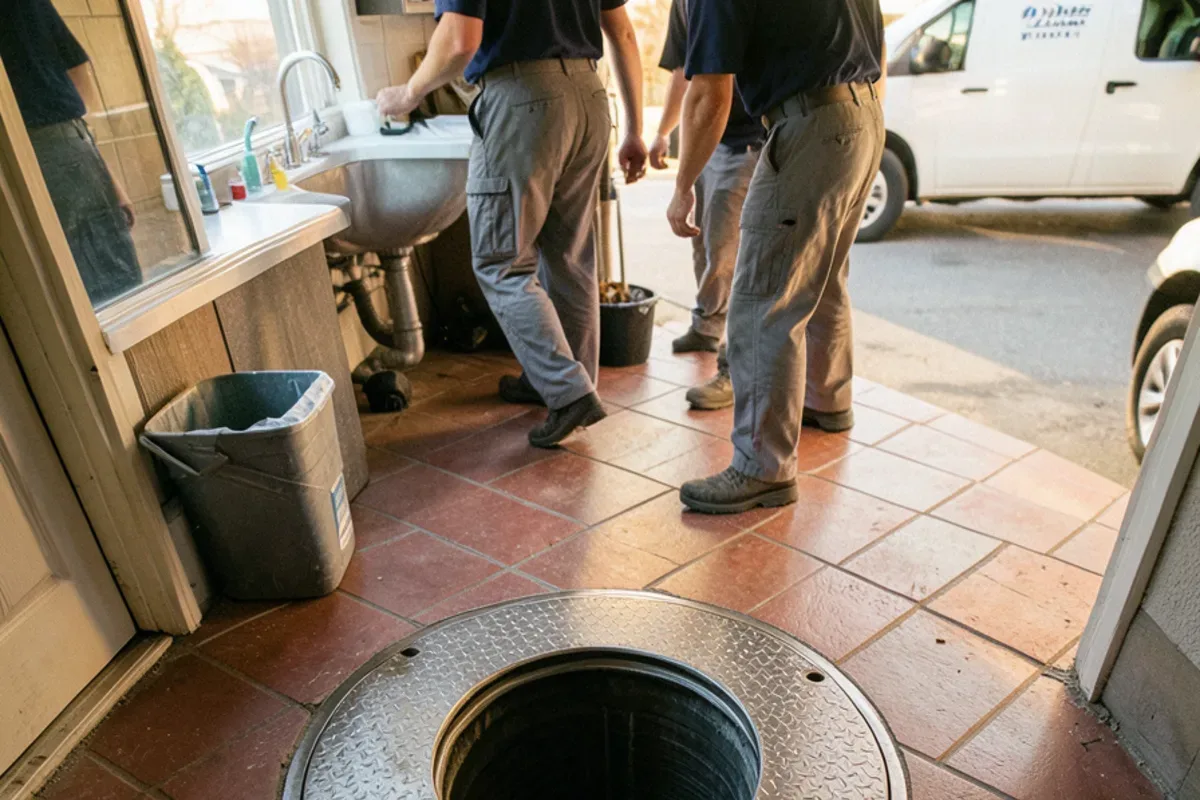
Jetting goes in through cleanouts, floor sinks or a pulled trap. A cleanout buried under shelving or a walk-in cooler floor adds time, so knowing where yours are helps.
Match pressure and nozzle to the pipe
A 2-inch branch under a prep sink and a 4-inch line to the interceptor need different nozzles and settings. Old, thin cast iron gets gentler treatment than new PVC.
Work each line in sections
The hose goes in, scours, pulls back and goes again until the water runs clear and the line takes full flow.
Check with a camera
A camera pass afterward shows whether the walls are clean and turns up sags, broken joints or a bad section of pipe that jetting cannot fix.
Our hydro jetting services page explains the equipment in more detail. In a busy kitchen the timing matters as much as the method, which is why this work is usually booked after close or before the first prep shift.
How often should a restaurant jet its drain lines?
There's no single number that fits every kitchen. A fryer-heavy kitchen doing hundreds of covers a night may need jetting every few months. A coffee shop with a small menu may go a year or longer. The factors below push the interval one way or the other.
| Factor | Shortens the interval | Lengthens it |
|---|---|---|
| Menu | Fryers, griddles, roasted meats, heavy sauces | Baked goods, cold prep, coffee and drinks |
| Volume | Long hours, high covers, catering | Short hours, small dining room |
| Pipe layout | Long flat runs, sags, many bends | Short runs with good slope to the interceptor |
| Pipe material | Old cast iron with a rough interior | Newer PVC with a smooth wall |
| Interceptor care | Pumped late or overfilled | Pumped on time and kept in good repair |
| Kitchen habits | Pans rinsed straight into the sink | Plates scraped and pans wiped first |
The practical approach is to jet and camera the lines, then camera them again after a set stretch, say three months, to see how much has come back. If the pipe is already a quarter closed, move the interval up. If it's still clean, stretch it. Slow floor sinks, gurgling at the three-compartment sink and a sour smell near the floor drains at closing time all mean it's due sooner than planned.
Kitchen habits that keep grease out of the line
The City of Warren's best-practice flyer for food service businesses is short and worth posting near the dish station. Keep fats, oils and grease out of sinks and storm drains. Send grease-laden wastewater to a grease trap or interceptor and keep it maintained. Keep outdoor grease bins covered and leak-free. On the line, a few more habits make a measurable difference:
- Scrape plates and pans into the trash or compost before they reach the sink.
- Wipe greasy pans with a paper towel before washing them.
- Keep strainer baskets in every sink drain and empty them into the trash, not the disposal.
- Never pour fryer oil or pan drippings down any drain. Use the rendering container.
- Don't count on hot water to flush grease away. It carries the grease a few feet farther and drops it there.
What jetting can and can't do for an older kitchen line
Jetting is the right tool for soft and medium grease, but hardened deposits that have sat for a year or more behave more like candle wax set into the pipe. Hot-water jetting and rotating nozzles soften and cut that layer, and it may still take more than one visit to get an old line fully open. Ask to see the camera footage after the first pass.
Pipe condition sets the limits. Thin, scaled cast iron under an old kitchen floor can't take the same pressure as newer PVC, so the plumber runs it gentler and accepts a less complete clean rather than risk blowing out a weak spot. A sag is the other limit. Jetting empties it, but the low spot refills with grease and water every night, so a line with a belly will always need a shorter interval until that section is repaired. That's where a sewer camera inspection pays for itself, because the footage shows the distance and depth of the problem.
Enzyme and bacteria drain products come up on almost every kitchen call. They can loosen fresh grease in a trap arm, but grease that's been broken up can set again farther down, in the building sewer where it's harder to reach. They don't stand in for scraping plates, a maintained interceptor or a jetting schedule.
Keeping a backup off a busy night
Most kitchen backups give warning. The trouble is that the warning shows up at 9 p.m. on a Friday, when nobody wants to stop and deal with it. Book jetting and interceptor pump-outs on your slowest days, ideally close together so the line and the interceptor are both clean at once. Keep cleanouts clear of shelving and stock. Make sure the closing crew knows which sinks to stop using if a floor sink starts to rise.
If the same line keeps closing up even on a tight schedule, the pipe may be the problem. A sag holds grease in place, and old cast iron that has worn rough holds it even better. If your building is older, read up on how cast iron drains wear out before the next camera visit. Adding or replacing a grease interceptor is a bigger job, and in Warren it needs a plumbing permit. Grease trap services and broader restaurant plumbing cover that side of the kitchen.
Grease rules differ from city to city, so check with your own city or sewer authority before you change an interceptor. We work with kitchens on the downtown blocks around Nine Mile and Woodward in Ferndale, along the commercial strips of Madison Heights and throughout Warren.
What the kitchen crew can handle and when to call
Your staff can keep strainer baskets in place, scrape and wipe before washing, keep cleanouts clear, and log when floor sinks start to drain slowly. A plunger on a single slow hand sink is fine. What they shouldn't do is pour hot water and dish soap down a slow floor sink to push it through, or open a cleanout on a line that's already backed up; the water above the blockage comes out onto the floor with it.
Call when more than one fixture is slow, when water rises in a floor sink while the dish machine drains, when there's a sour sewer smell at closing, or when the line backed up within weeks of the last cleaning. Those point to the main kitchen line or the building sewer, not one trap. If your kitchen lines are slowing down before the end of service, give us a call and we'll set up a jetting and camera visit around your hours.
Questions people ask about this
Can hydro jetting damage old drain pipes?
Yes, jetting at the wrong pressure can harm pipe that is already badly worn. That is why the nozzle and setting are matched to the pipe size and material, and why thin cast iron gets a gentler pass than newer PVC. A camera look first shows whether a line is sound enough to jet hard.
Does jetting replace pumping the grease interceptor?
No. Pumping empties the interceptor. Jetting cleans the pipes leading to it and the building sewer after it. A kitchen needs both, and they work best when they are scheduled close together, so the clean line is not feeding into a full interceptor or the other way around.
Should drain jetting be scheduled outside business hours?
Yes, usually. The lines being jetted cannot take water while the work is going on, and the kitchen floor gets wet around the access points. Booking it after close or before morning prep gives the floor time to dry before service.
Is jetting better than snaking a restaurant drain?
Yes, for grease. A cable punches a hole through the deposit and leaves most of it on the pipe wall, so the line tends to close again within weeks. Jetting scours the full circumference and flushes the grease downstream. Snaking still has a place for a solid object or a quick opening during service.
Want a plumber to look at your situation? We're on Stephens Rd in Warren.
(207) 419-2600