
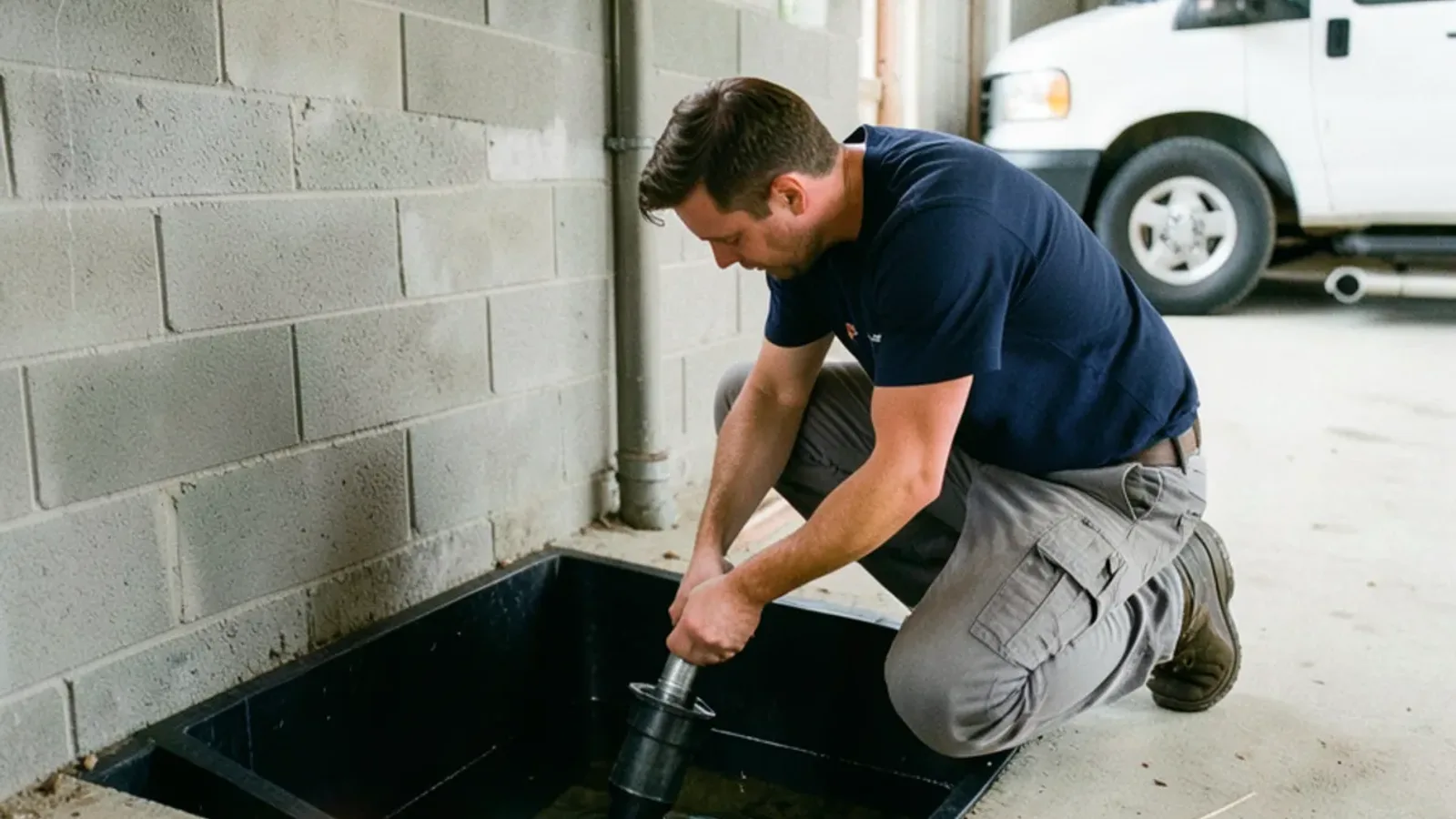
Sump pump repair in Warren is mostly a spring and summer call. The pit fills after a long rain, the pump hums but moves nothing, or the float hangs up and the motor runs until it overheats. We find the part that quit, repair it or install a new pump, and check where the water goes once it leaves your basement.
The city engineer describes Warren as extremely flat and says most of it sits on heavy clay. Clay holds rainwater against a foundation instead of letting it soak away, so the footing drain around a basement keeps feeding the sump for days after a storm. A pump that keeps up in a dry month can fall behind in April.
Why is my sump pump running nonstop or not at all?
Most failures trace back to the switch, the check valve, the discharge line or the motor. The sound the pump makes, and how often it runs, tells us where to start.
| What the pump is doing | Likely cause | Usual fix |
|---|---|---|
| Hums, but no water moves | Jammed impeller, stuck check valve or frozen discharge line | Clear the intake, replace the valve, thaw the line |
| Runs constantly in dry weather | Float stuck on, or water falling back through a failed check valve | Free or replace the switch, swap the valve |
| Cycles every minute or two in a storm | More inflow than the pit and pump can handle | Reset the switch or move up in capacity |
| Never starts while the water rises | Tripped GFCI or breaker, dead float, seized motor | Power first, then switch, then pump |
Check the GFCI outlet first; a tripped reset button is sometimes the whole repair. If the pump still won't start, unplug it before you reach into the pit.
Clay soil, footing drains and the groundwater under your floor
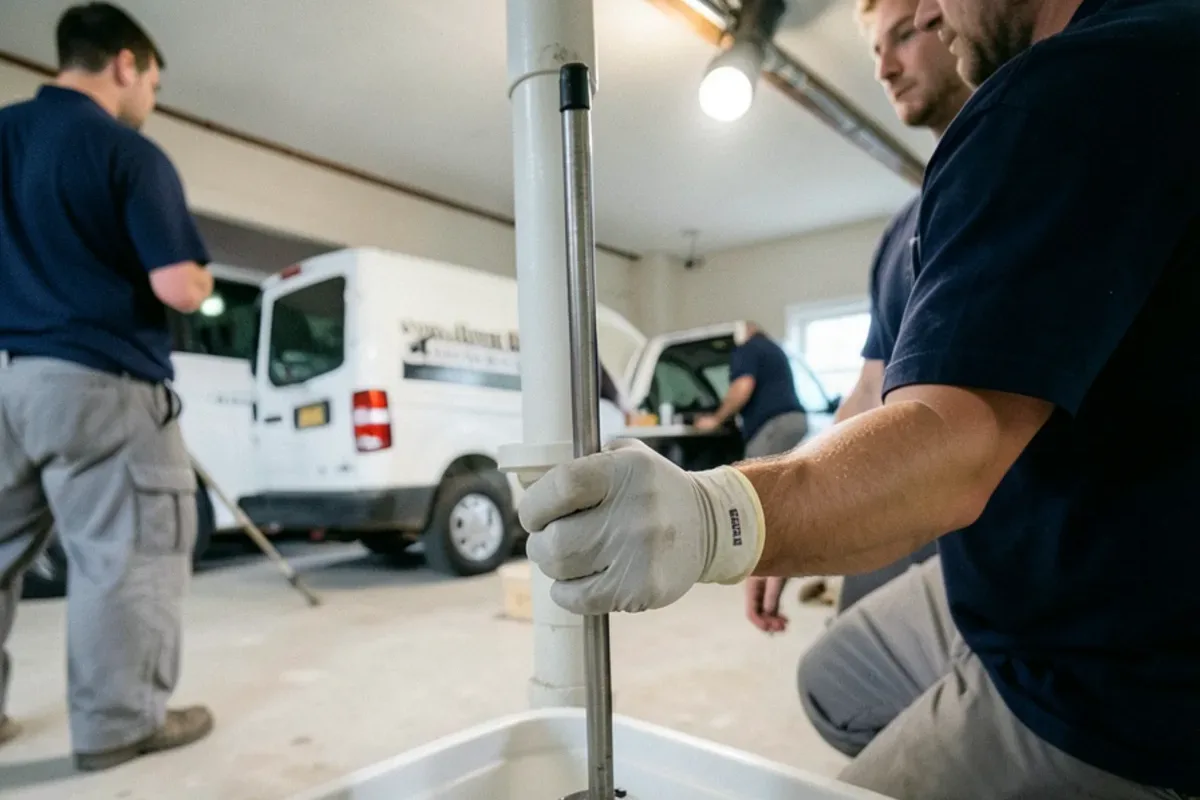
A sump handles groundwater. Drain tile along the footing collects water that would otherwise push up through the floor or seep in where floor meets wall, and the pump lifts it outside. On flat clay lots that water has nowhere else to go. Downspouts that dump at the foundation make it worse, and the city urges homeowners to extend them away from the house and off the neighbor's lot.
Houses from the 1950s and 1960s often have clay tile footing drains that silt up or crack, and many had a sump added long after construction. If water comes up through the floor drain instead, it is probably sewage, a different problem handled by backwater valve installation. If it floods only when the power fails, you need a battery backup sump pump, and our post on what causes basement backups in storms sorts out the rest.
What sump pump repair and installation include
A service call starts at the outlet and works down into the pit. We check the breaker and GFCI, lift the float by hand, listen for the check valve slamming or leaking back, and time how fast the pit refills. Then we follow the discharge out of the house to see where the water lands, because a pipe that dumps beside the foundation sends the same water back to the footing drain. Most visits end with a repaired part or a new pump; some with a new pit, and a few with the news that the water came from the sewer, not the ground.
- Diagnosis of power, float switch, check valve and motor
- Switch, check valve and discharge piping repairs
- Replacement submersible or pedestal pumps sized to your pit
- New basins cut into the slab at the low corner
- Discharge rerouting with a freeze-relief fitting
- A hose test of the finished system and the city permit where it applies
Sump pump repair or replacement, and how we decide
Switches, check valves and discharge piping can each be replaced on their own, and on a newer pump that is usually the right call. A seized motor, a cracked housing or a burned smell at the cord means the pump is finished. A pump that has run hard through many wet springs is near the end even if it still turns, and a new switch on a worn motor tends to buy one season.
A pump that runs every ninety seconds through an ordinary storm is too small for the water arriving, or the pit is too shallow. We time the cycles and measure the lift before suggesting a larger unit.
Choosing a pump for a basement sump pump installation
| Option | How it works | Trade-offs |
|---|---|---|
| Submersible pump | Sealed motor sits in the pit under the water | Quieter and water-cooled; must be pulled out for service |
| Pedestal pump | Motor sits on a column above the pit | Easy to reach, fits narrow pits; louder, usually less capacity |
| Vertical float switch | Float rides up and down a rod | Works in tight basins; can hang up if the pump shifts against the wall |
| Tethered float switch | Float swings on a short cord | Longer, gentler run cycles; needs room to swing freely |
The Michigan Plumbing Code asks for a pump with capacity and head suited to the expected use, and a pit at least 18 inches across and 24 inches deep with a solid floor. We size from how often the current pump cycles in heavy rain, the vertical lift to where the pipe leaves the house, and how far the water travels after that.
What happens during a sump pump installation
Pick the spot
In a basement that never had a sump, we find the low corner where water shows up first and where the footing drain can reach the pit by gravity.
Cut the floor and set the basin
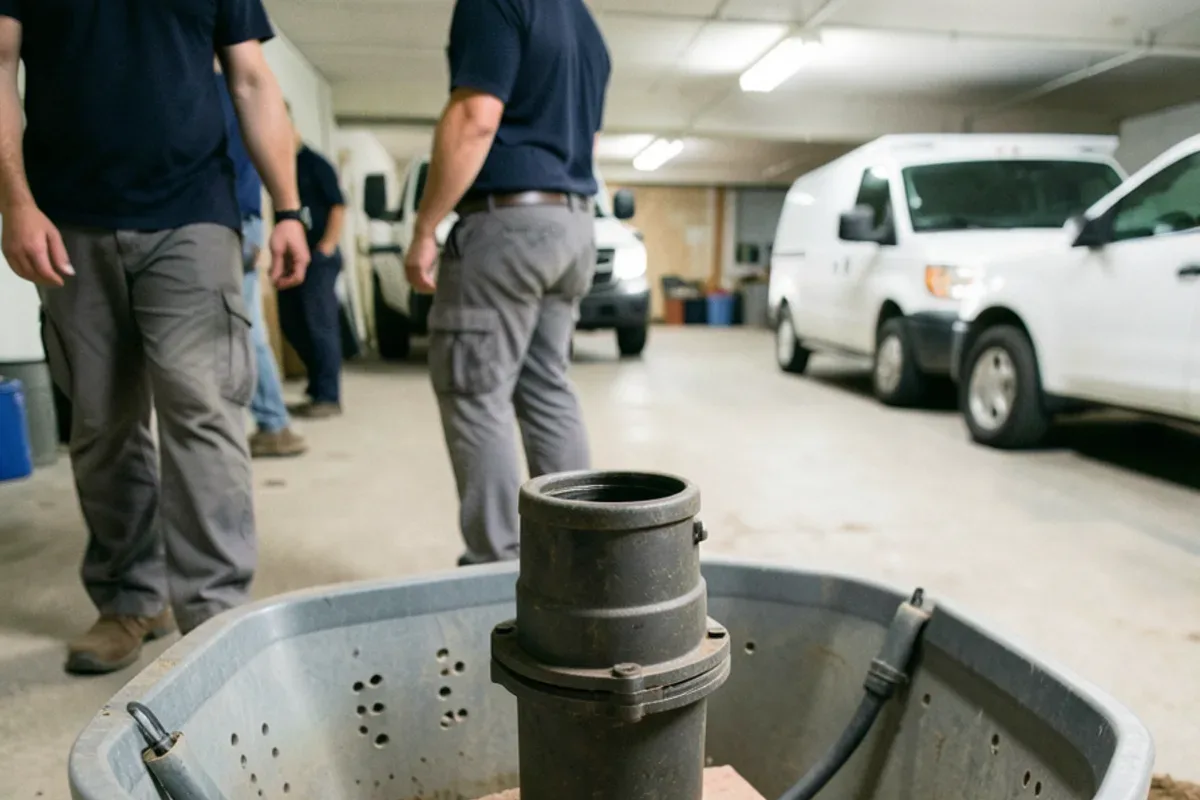
The slab is cut, the hole goes below the drain tile, and a perforated basin is set on a firm base with washed stone around it. Concrete is patched back to the rim.
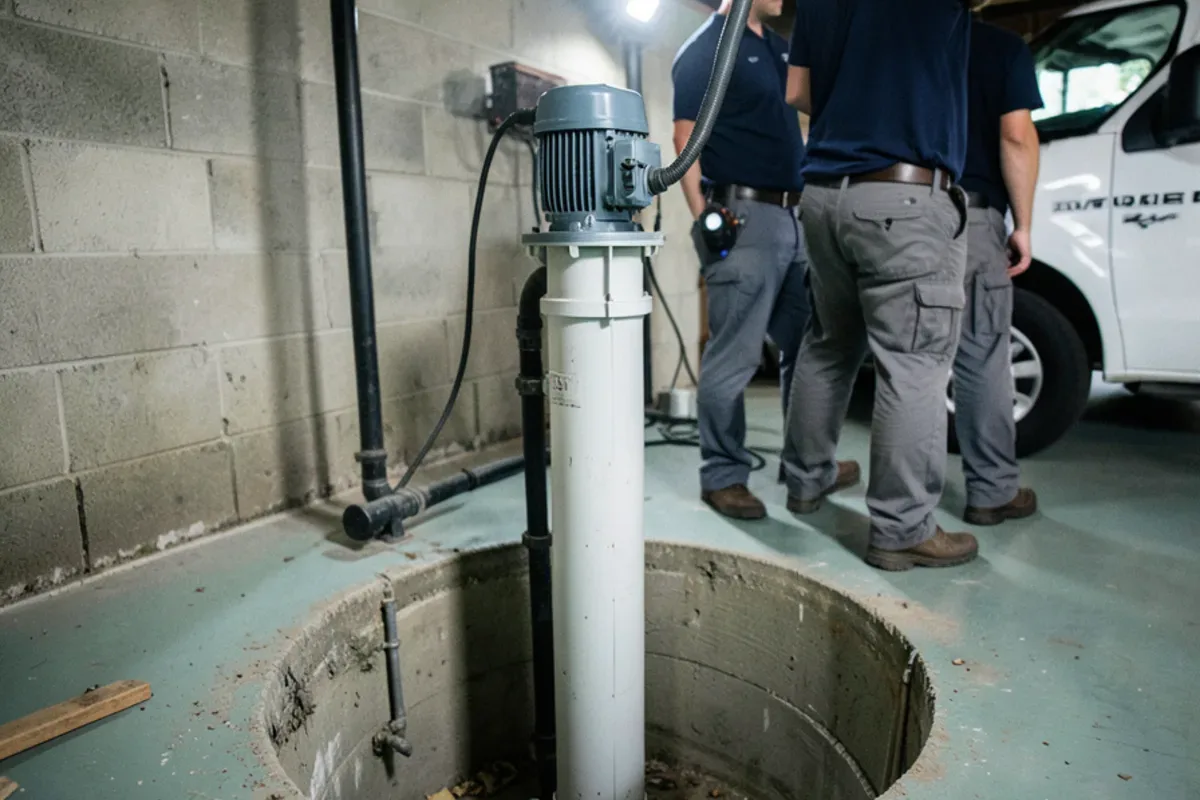
Install the pump and check valve
A check valve on the discharge stops the water in the pipe from falling back each time the pump shuts off; the code requires one on one- and two-family homes. A union above it lets the pump come out later without cutting pipe.
Route the discharge
The pipe leaves through the rim joist and empties far enough out that the water does not soak back to the footing. Warren requires new houses to send sump water to the storm sewer; on an older house we check where it goes now.
Test and permit
We fill the pit with a hose and watch the pump start and stop. Warren lists sump pumps among items needing their own permit, and the work stays exposed until the Building Division signs off.
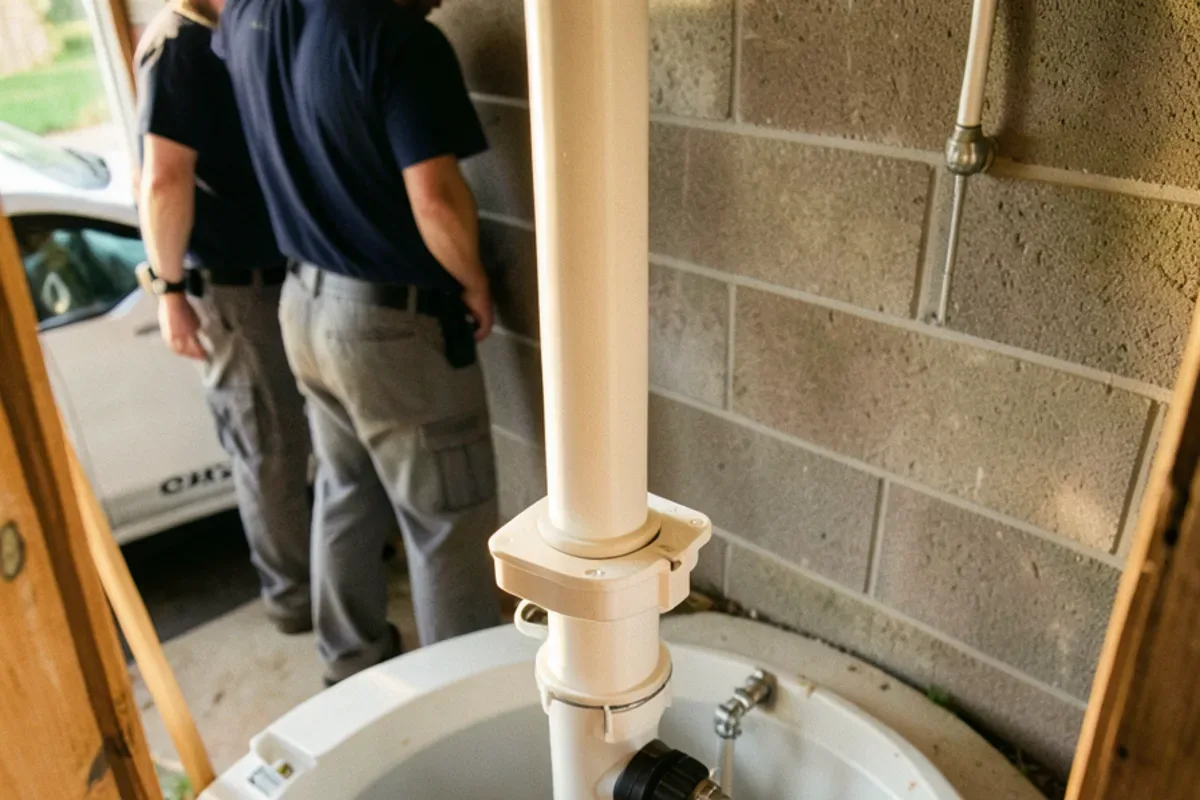
Where should sump pump water go in a Michigan winter?
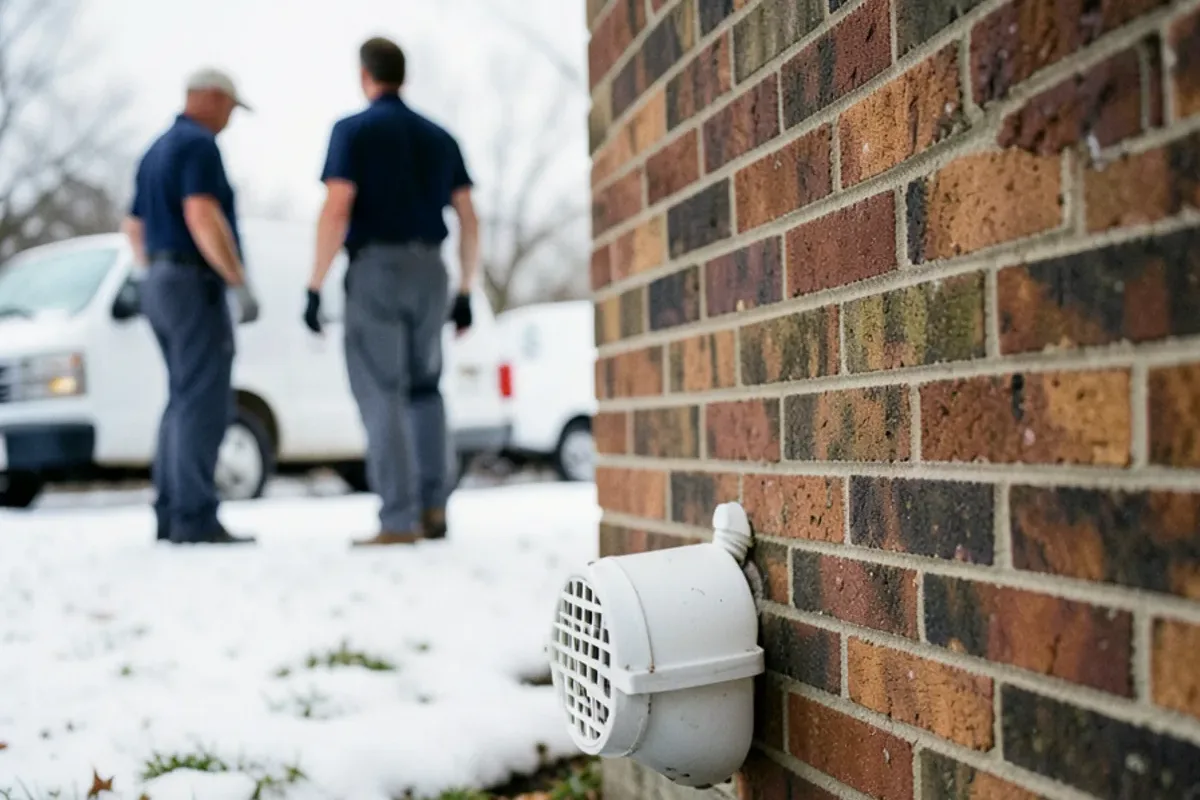
Sumps run during January thaws, and a discharge line frozen solid leaves the pump pushing against ice until the motor overheats. We pitch exposed pipe to drain back toward the pit and add a freeze-relief fitting at the wall so water can spill out there if the line beyond is blocked. Buried lines must sit below the frost and end somewhere they can drain.
Sewage ejector pumps for basement bathrooms
A sewage ejector looks like a sump pump but does another job. When a basement toilet or shower sits below the main drain, the waste collects in a sealed basin and the ejector lifts it to the building drain. The code calls for a gastight lid, a vent, and a check valve plus a full-open valve on the discharge. An odor, a high-water alarm or a slow basement toilet points to the ejector, its switch or its vent.
Groundwater and sewage stay in separate pits. Planning a basement bath? Our page on bathroom remodel plumbing covers the rough-in, and the guide to sewer smell in the basement covers odors near an existing basin.
What changes the cost of sump pump work
A new float switch on a sound pump and a fresh pit cut through a 1960s slab are both sump work, and they sit at opposite ends. Concrete work, a long buried discharge or a finished wall usually moves the total more than the pump does. We explain which of these apply to your basement and put the scope in writing first.
- Whether a pit exists. Cutting the slab for a new basin is the biggest variable.
- The pump: capacity, housing and switch type.
- The discharge route, short and through the rim joist or long and buried.
- Whether a dedicated outlet is needed near the pit, which is electrical work.
- Finished basements, where flooring or paneling has to come up.
- Adding a backup pump or alarm at the same visit.
Warren sump permits and where the discharge may go
On the City of Warren plumbing permit, a sump and sump pump get a line of their own, and the Division of Buildings and Safety Engineering inspects the work before the pit lid or patched concrete covers it. An owner-occupant may take out that permit under the city's homeowner affidavit; rentals and commercial buildings need a plumbing contractor, licensed through Michigan LARA. Warren's new-house rules require sump water to go into the storm sewer, and the city asks owners to keep downspouts and discharge away from the foundation and off the neighbor's yard. A new outlet beside the pit is electrical work with its own rules.
Sump service out of southeast Warren
We are based at 11355 Stephens Rd in 48089, where seven in ten homes predate 1970 and a sump added years after the house is a common find. Calls come in from owners, landlords and business tenants all over the city, and all of them dial the same line. The GFCI and the float get checked before anyone suggests a new pump, and if the real problem is sewer backflow or a dead primary during an outage, we say so and point you to the right fix. Cost factors and a written scope come before the work, and the sump permit is pulled the way Warren expects.
Sump pump installation and repair around Warren and nearby cities
- Plumber in Clinton Township
The township inspects new, repaired or rerouted sump discharge lines before backfill, and the water has to reach an approved outlet.
- Plumber in Sterling Heights
The 1970s are the city's biggest building decade, and basements from that era commonly drain footing tile to an interior sump crock.
- Plumber in Troy
Most Troy homes date from 1960 on, with footing drains piped to a sump pit rather than the sanitary sewer, often below finished rooms.
- Plumber in Fraser
Alongside 1960s and 1970s ranches, Fraser has many attached condos, where a sump can sit in a shared room and association rules set upkeep.
- Plumber in Macomb County
The county median home dates from 1975, and subdivisions from the 1970s on more often have sump pits than the postwar houses farther south.
- Plumber in St. Clair Shores
A city ordinance keeps downspouts off footing drains, and a 2016 spot check found homes that had reconnected them, adding roof water to the tile.
- Plumber in Madison Heights
In 1950s Kuhn-district ranches the footing drain often ties into the sewer, so we trace where the tile goes before cutting a new pit.
- Plumber in Wayne County
DWSD's basement protection program installed backwater valves and sump pumps in 11 flood-prone Detroit neighborhoods, depending on what each house needed.
Sump pump installation and repair questions from Warren customers
How do I know if my sump pump needs to be replaced?
Replace it if the motor is seized, the housing is cracked, or it hums without moving water once the intake and check valve are clear. A pump that short-cycles through every storm is usually too small for the water reaching the pit. A worn pump with a new switch rarely lasts long.
Can you install a sump pump in a basement that never had one?
Yes. We cut the floor at the low corner, dig below the footing drain, and set a perforated basin on a firm base. If the house has no working drain tile, a pit alone may only catch water in one corner, and we will tell you that before any concrete comes out.
What should I do if my sump pump stops during a storm?
Check the breaker and the GFCI outlet first, then unplug the pump before touching anything in the pit. If the float is stuck against the wall, freeing it may restart the pump. If the power is out, a battery backup sump pump is the part that would have kept running.
How often should I test my sump pump?
Test it each season and before the spring thaw. Pour a bucket of water into the pit and watch the pump start, empty the basin and shut off. If water runs back in after it stops, the check valve is failing. Make sure the outdoor end of the discharge is clear, too.
Do I need a permit for a sump pump in Warren?
Yes, in most cases. Warren lists sump pumps among the items that may need their own permit, and the inspection happens before the work is covered. Homeowners can pull a plumbing permit for their own owner-occupied house. When we do the job, the permit and inspection are part of it.
Still not sure what you're dealing with? Describe it on the phone and we'll tell you what we'd check first.
(207) 419-2600Last updated October 25, 2026