
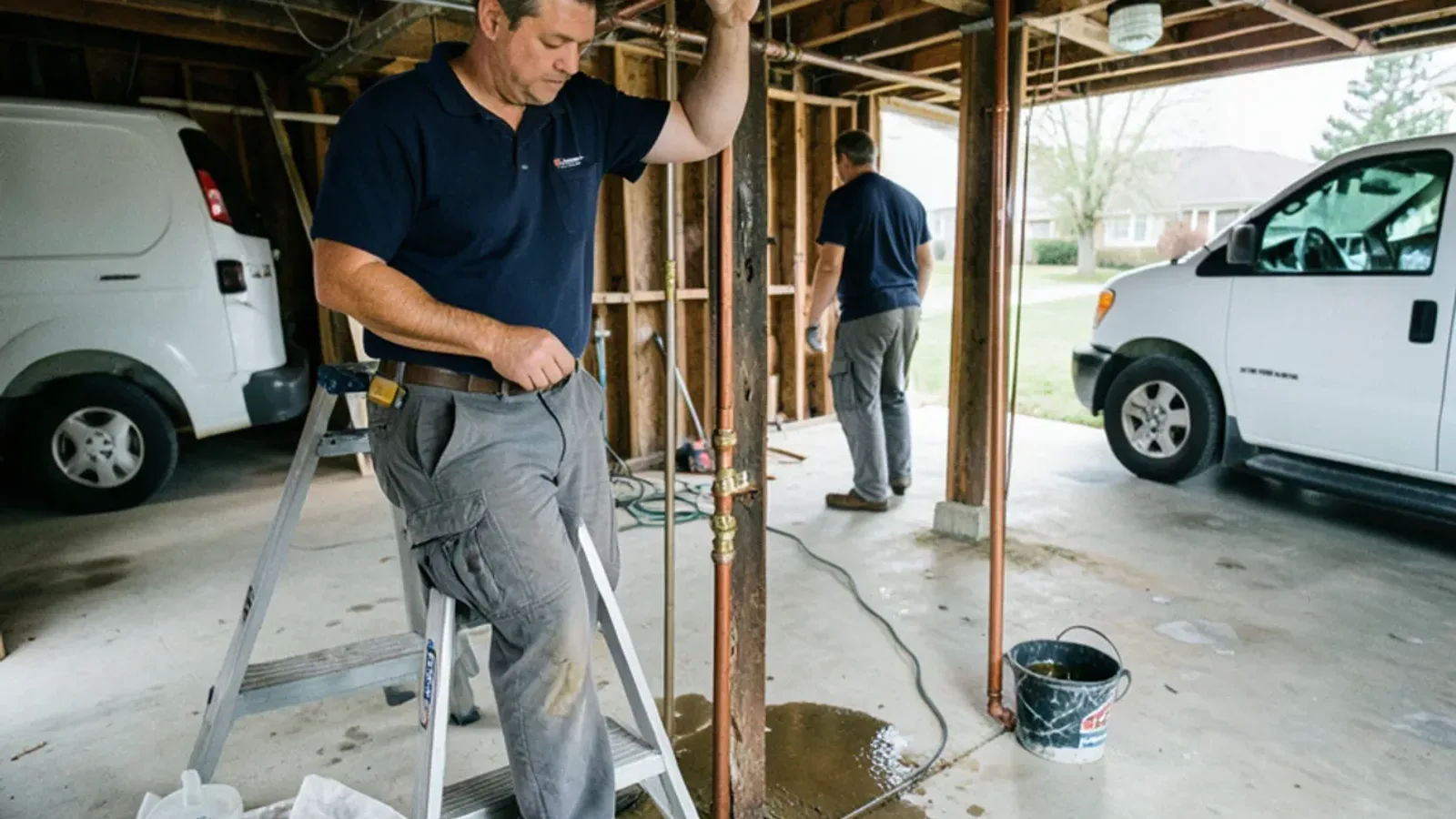
Burst pipe repair in Warren usually starts with a sound nobody expects: a hiss above the basement ceiling, a drip that turns into a stream, or water running out from under the kitchen sink on the first mild afternoon after a hard freeze.
Close the main valve before you do anything else. Then the split gets found, cut out and replaced with pipe that suits what's in your walls.
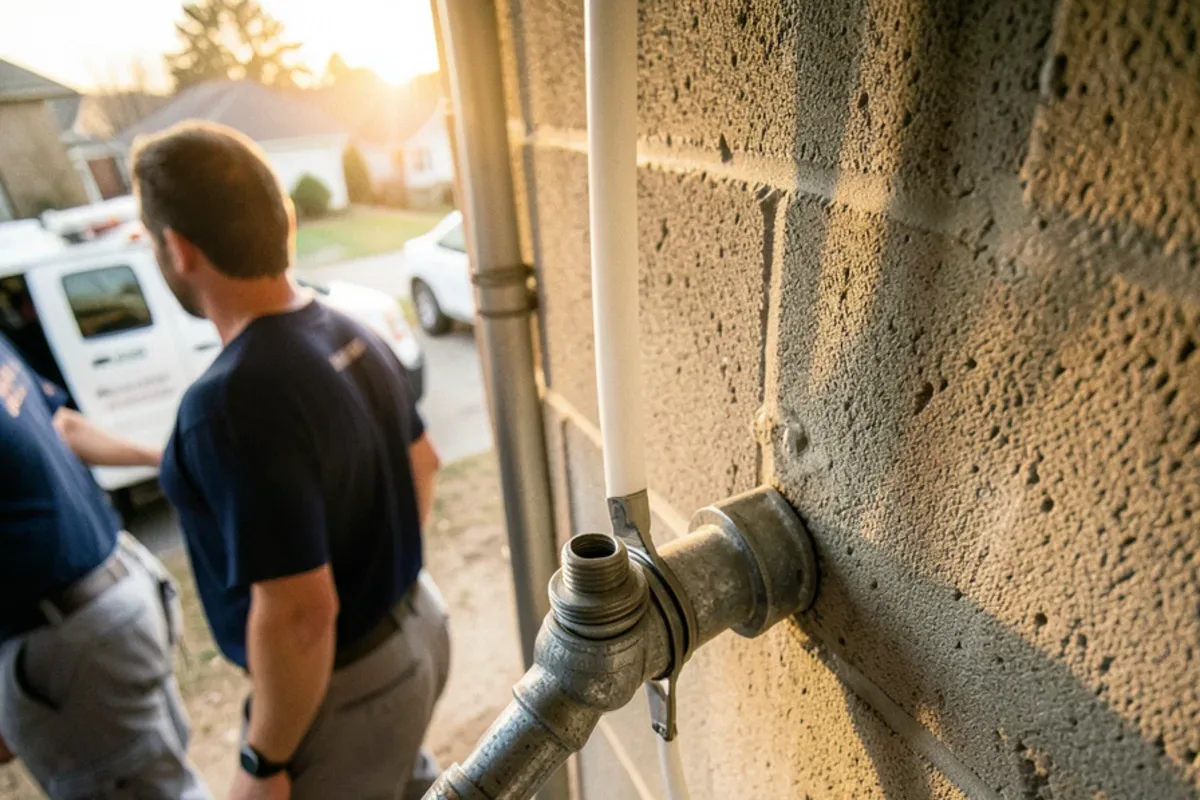
What breaks depends on the house. A 1940s or 1950s home near 8 Mile may still have galvanized steel supply lines, and those tend to let go at a rusted thread. Houses from the 1960s and 70s, which make up most of north Warren, usually have copper, which splits along its length when it freezes. Remodels add PEX and CPVC, where the pipe often survives and a fitting cracks instead.
Is it a burst pipe or a leak that can wait?
| What you see or hear | What usually failed | How urgent |
|---|---|---|
| Water spraying or pouring from a ceiling, wall or cabinet | A split pipe or a fitting that blew apart | Close the main now |
| A ceiling stain that keeps growing, or water dripping from a light fixture | A split in the floor above, running along a joist | Close the main and turn off that circuit |
| Water only shows up when a certain faucet is on | A cracked fitting or split on that branch | Close the fixture valve; schedule the repair |
| The meter spins and you hear water with every tap closed | A hidden break inside a wall, under the slab or on the service line | Close the main and call |
| Water inside the wall below an outdoor faucet the first time you use the hose in spring | A frost-free hose bib that froze with a hose attached | Close the valve that feeds it |
A pipe that has frozen but hasn't split yet is a different job, covered on our frozen pipe repair page. If no water is showing but your bill or the meter says it's going somewhere, leak detection and repair is the place to start.
Stopping the water and protecting the house
Close the main valve
It is next to the water meter, usually low on the basement wall facing the street. Clockwise to close. If the handle is frozen in place, stop before you break it and catch water while you call.
Drain what is left in the pipes
Open the lowest faucet in the house, often a laundry tub, and one upstairs. The pipes empty through the faucets instead of through the split.
Kill power near the water
If water reached a ceiling light, outlet or the furnace, turn off that breaker, as long as the floor in front of the panel is dry.
Document it
Photos of the split, the stain and anything wet, taken before you start moving things, are what an adjuster will want to see.
Why pipes burst or break in older Warren houses
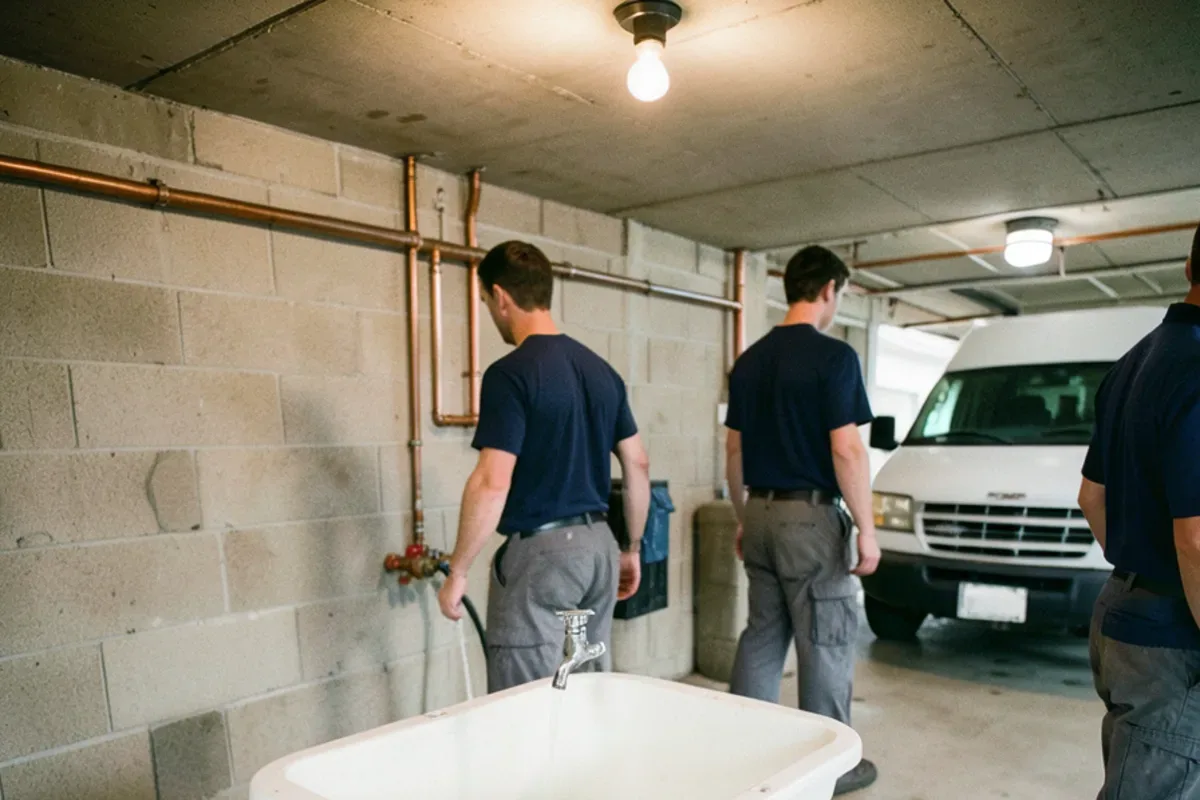
Cold is the usual cause in a Michigan winter. When ice forms in a line, it pushes the water ahead of it toward the closed faucet. Pressure builds in that trapped stretch, and the pipe gives way there, often a few feet from the ice itself. Pipes in the rim joist and in kitchen walls that face the outside are the usual suspects, as our post on why pipes freeze on exterior walls explains.
Not every burst is about cold. Galvanized pipe rusts from the inside, and the threads at each joint are the thinnest metal in the run, so a 70-year-old fitting can simply give out on an ordinary Tuesday. A nail that clipped a pipe during a remodel can also corrode through years later.
What a burst pipe repair includes in a Warren house
A burst pipe repair is more than one new piece of copper. The water is stopped and traced, the split cut out along with any thin or cracked pipe beside it, and the run tested before anyone talks about drywall. In Warren's older houses it often means deciding on the spot whether a corroded galvanized branch gets one more patch or a transition to new pipe. The visit usually covers:
- Confirming the main is closed and tracing where the water traveled
- Opening the ceiling or wall at the split, not under the wettest stain
- Cutting out the damaged section and any weak pipe next to it
- Permanent soldered, pressed or crimped joints, or a transition off galvanized
- A slow repressurize, a meter check and advice on drying out
Finding the split behind a wall or ceiling
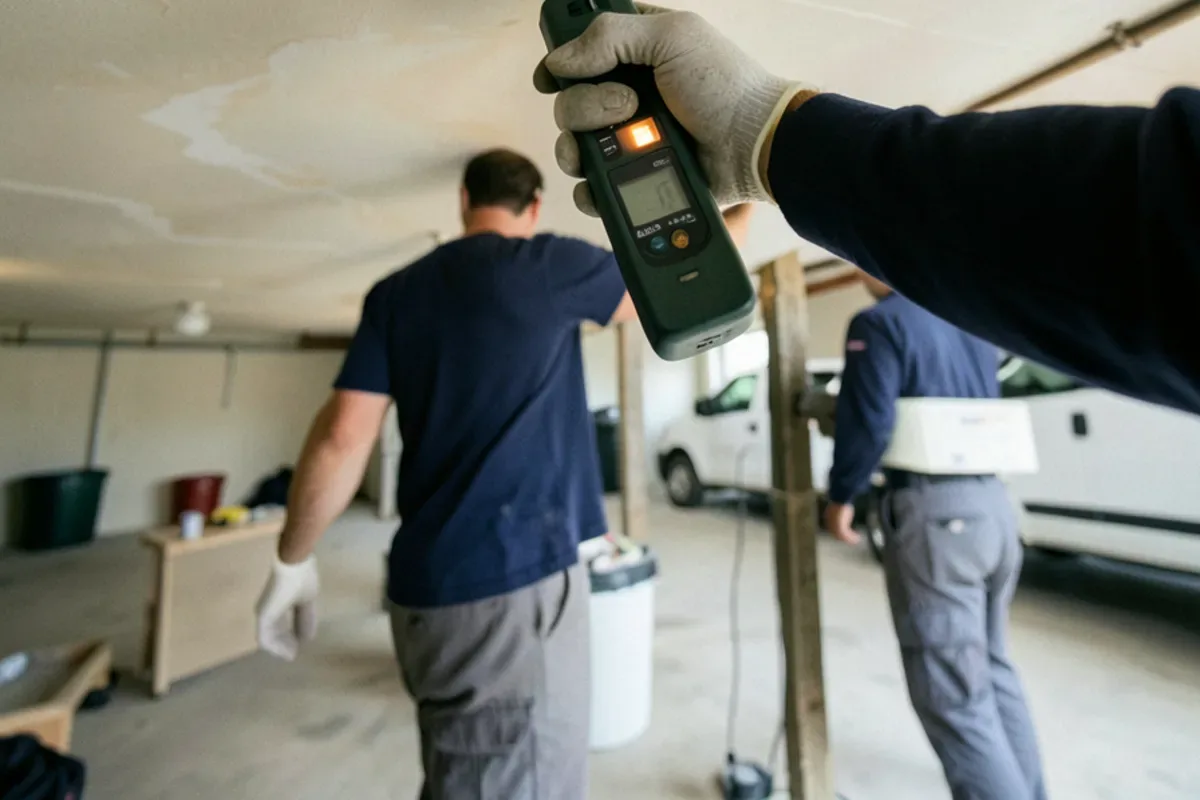
Water runs along joists and pipes before it shows, so the wettest spot on the ceiling isn't always under the break. We trace the path with a moisture meter, and a thermal camera where the drywall is finished, before cutting anything.
One split doesn't mean one problem. A freeze often stresses several joints in the same cold run, so once the first one is found we look along the rest of it before the water goes back on.
Burst pipe repair options for copper, galvanized and plastic lines
| Pipe | How it usually fails | Typical repair | Trade-off |
|---|---|---|---|
| Copper | Lengthwise split from freezing; pinholes in old soft copper | Cut out the split, new section soldered or press-fitted | A clean permanent joint; the area must be dry for soldering |
| Galvanized steel | Rusted threads let go at a joint | Cut back to sound pipe, transition to copper or PEX | The pipe beside the break is often just as thin |
| PEX | A cracked brass or plastic fitting; the pipe itself often survives a freeze | New crimp or expansion fittings | Simple to fix; check other fittings in the same cold spot |
| CPVC | Brittle pipe cracks, especially when cold or bumped | Cut out and solvent-weld a new section | Old CPVC can crack again near the repair |
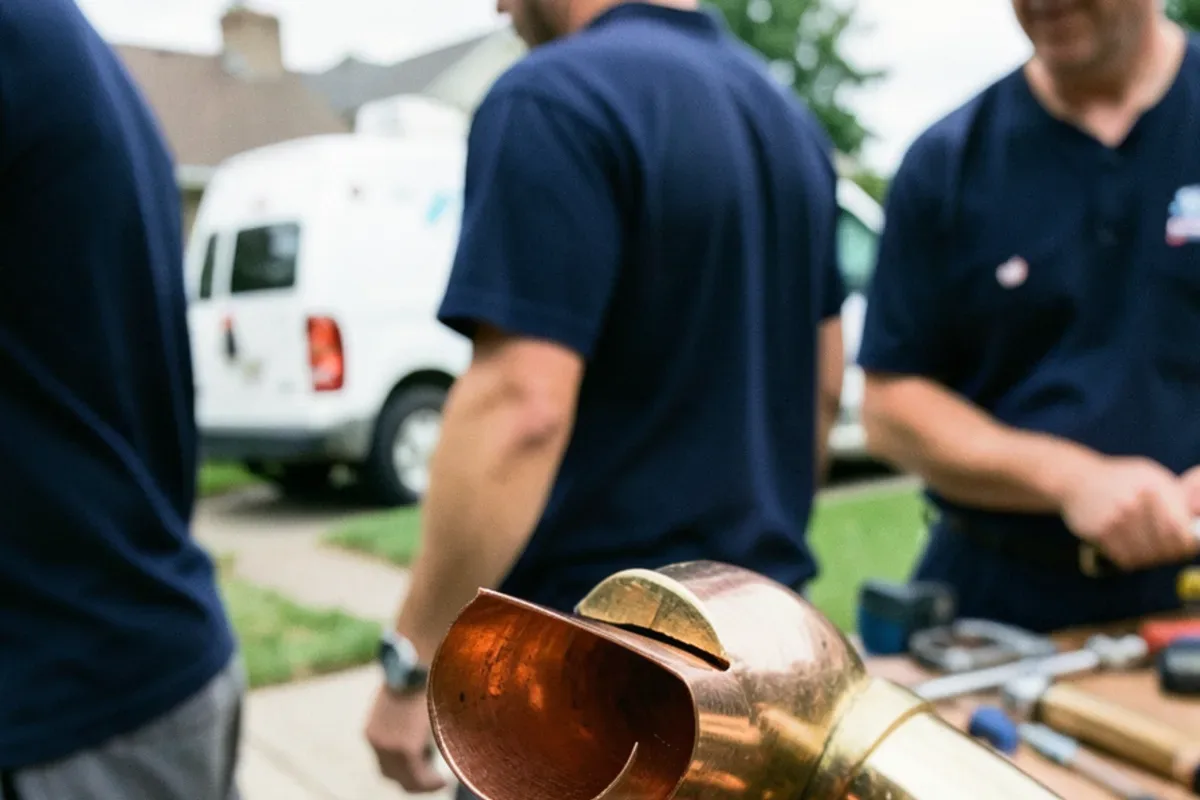
Push-to-connect couplings have a place, especially for getting water back on, but inside a closed wall we prefer a soldered, pressed or crimped joint you never have to think about again. When a galvanized system has started failing at the joints, repairing one break at a time usually means more breaks. Our page on galvanized pipe replacement covers when it makes sense to replace the run.
The repair visit and the days after
Check the shutoff and map the wet area
The main is confirmed closed and a moisture meter shows how far the water spread.
Open only what the repair needs
The cut is sized to reach sound pipe on both sides of the split.
Cut back to good pipe
The split comes out, along with any thin or cracked pipe beside it.
Make a joint for the material
Soldered or pressed copper, crimped PEX, or a transition off old galvanized.
Repressurize and walk the run
The main opens slowly, then every joint on the same cold run and the meter get checked.
Leave it open to dry
The opening stays uncovered, and any follow-up work is written down for you.
Getting the water back on
With the bad section replaced, the main is opened slowly so air can push out through a faucet instead of hammering the new joint. Then we watch the repair and the meter. If the meter is still moving with every fixture closed, there's another leak, and it gets found before we leave.
Drying out
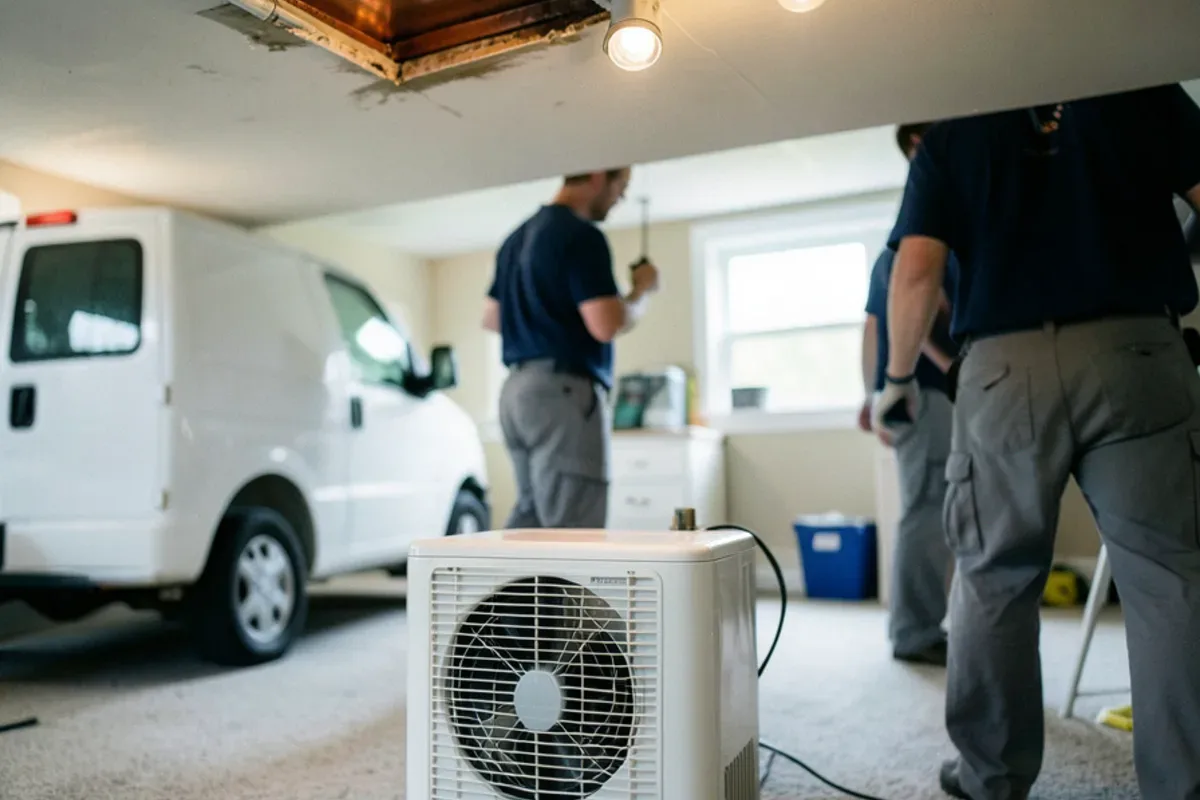
Leave the opening in the ceiling or wall uncovered for now. Wet insulation and drywall need air to dry, and closing them up early invites mold. A fan and a dehumidifier handle a small area. A soaked finished basement is a job for a water restoration company.
When a permit comes into it
Replacing a short split section is a repair. If the fix grows into replacing a run of supply pipe, that's an alteration, and Warren's Building Division lists plumbing alterations among the work that may need a permit. Under Michigan's Skilled Trades Regulation Act, plumbing is done by a licensed journey or master plumber working for a contractor who pulls the permit, and Michigan LARA's online lookup shows whether a contractor's license is current. The 2021 Michigan Plumbing Code, in force since March 2024, sets the materials and joints. Owners may pull a permit from the Division of Buildings and Safety Engineering for the house they live in; a rental needs a contractor.
What affects the cost of fixing a burst pipe?
- Where the split is. An exposed basement line is the simplest repair. Inside a tiled wall or a finished ceiling takes longer.
- Pipe material, and whether galvanized has to be cut back several feet to find sound metal.
- How many joints the freeze damaged along the same run.
- Whether the break is underground on the service line between the curb stop and the house, which means digging.
One clean split in exposed copper and a galvanized branch that crumbles every time it's cut back are different jobs, even in the same basement, so we don't quote a burst pipe before seeing it. Drywall, insulation and tile repair are usually separate from the plumbing, and so is restoration in a soaked finished basement. You hear which factors apply before anything is cut.
Split pipes in south Warren’s galvanized houses, handled from Stephens Rd
We work out of 11355 Stephens Rd, in the 48089 ZIP, where 46.5 percent of homes predate 1960 and galvanized lines that let go at a thread are ordinary work. Homeowners, landlords with a tenant's soaked ceiling and businesses all call the same number. The approach doesn't change for a burst pipe: find where the water is really coming from before quoting a fix, explain what drives the cost, put the scope in writing before anyone cuts, and say so when a repair has grown into permit work.
Keeping the repaired line from splitting again
If cold caused the break, the same spot will be cold next January. Foam sleeves help on exposed pipe, but they don't add heat; what fixes a rim-joist run is sealing the gaps in the sill and band board so outside air stops blowing across it. Sometimes the answer is moving a line into the heated side of the wall. And know your main; how to shut off your main water valve walks through finding it.
Burst pipe repair around Warren and nearby cities
- Plumber in Sterling Heights
Mostly 1960–1989 homes, where a finished basement turns split 50-year-old copper into a drywall job.
- Plumber in Troy
Finished basements in 1970s colonials let a burst supply line soak drywall before it shows.
- Plumber in Madison Heights
The city averages about 65 main breaks a year, and its 1950s service lines are just as old.
- Plumber in Harper Woods
Nearly half its water mains went in during the 1950s, the same decade as most houses.
- Plumber in Roseville
Early postwar galvanized supply, and duplexes on one main where a single split shuts off two households.
- Plumber in Oak Park
Shared risers in 1960s and 1970s apartment buildings let one split pipe soak the units below.
- Plumber in St. Clair Shores
The city calls its water system over 80 years old, and half its homes are 1950s builds.
- Plumber in Royal Oak
With 61 percent of homes built before 1960, a galvanized branch rusted at the thread is the likely break.
- Plumber in Clinton Township
A quarter of units are in buildings of five or more, where one burst comes through a neighbor’s ceiling.
Burst pipe repair questions from Warren customers
Who do I call for burst pipe repair in Warren?
If the break is in the house or between your curb stop and the meter, a plumber. Close the main first. If water is coming up in the street or around the curb box near the sidewalk, call the city's Water Division, since Warren owns the service line from the main to the curb stop.
Can an underground pipe be repaired without digging up the whole yard?
Yes, usually. A break on the service line is located first, then the excavation is kept to that spot. Anyone digging has to call MISS DIG three working days ahead so buried utilities get marked. If the line is old and failing in several places, main water line repair explains when replacing it is the better choice.
Why did my pipe burst in a spot that never gets cold?
Ice in a cold section pushes water toward the closed faucet, and pressure builds in that stretch until the weakest point gives way. The split can show up a few feet from the frozen spot. In older homes, a corroded galvanized joint can also fail with no cold involved at all.
Does homeowners insurance pay for a burst pipe?
No, not in every case. Many policies treat a sudden break differently from a slow leak, and some pay for the water damage but not the pipe itself. Photograph the split, the stain and anything wet before cleanup, keep the cut-out section and the written repair description, and talk to your insurer before the ceiling is closed up.
How long does a burst pipe repair take?
An exposed split on copper or PEX is usually fixed in one visit once the water is off. A break inside a finished wall or tiled bathroom takes longer because of access, and the framing may need days to dry before the drywall goes back. A buried service line break depends on locating it and waiting for utility marks before digging.
Still not sure what you're dealing with? Describe it on the phone and we'll tell you what we'd check first.
(207) 419-2600Last updated October 25, 2026