
 By Plumber in Warren, MI, plumbers on Stephens Rd in WarrenPublished October 25, 2026Last updated October 25, 2026
Why do pipes freeze when the thermostat says 70? Because a pipe in an exterior wall or along the top of a basement wall isn't sitting in 70-degree air. It sits inches from the outdoors, and wind pushes cold air through gaps in the siding, sill plate and rim joist. When that air stays below freezing, the water freezes.
That's why the same kitchen sink or the same basement corner freezes every January. The fix is almost never more heat in the house. It's getting the pipe out of the cold air, or keeping the cold air off the pipe.
Why do pipes freeze in a heated house?
Three things decide whether a pipe freezes: how cold the air around it gets, how long it stays that cold, and whether water is moving. Research from the University of Illinois Building Research Council, which the Insurance Institute for Business and Home Safety cites, found that uninsulated pipes in unheated space began to freeze when outdoor temperatures fell to about 20°F. Wind lowers that threshold for a pipe exposed to drafts, because moving air pulls heat out much faster than still air.
The burst usually isn't where the ice is. Once ice blocks the pipe, more freezing pushes water toward the closed faucet with nowhere to go, and the pressure splits the pipe in that trapped section. A faucet left open relieves that pressure, which is why a thin stream on a bitter night works.
The rim joist is the coldest spot in most basements
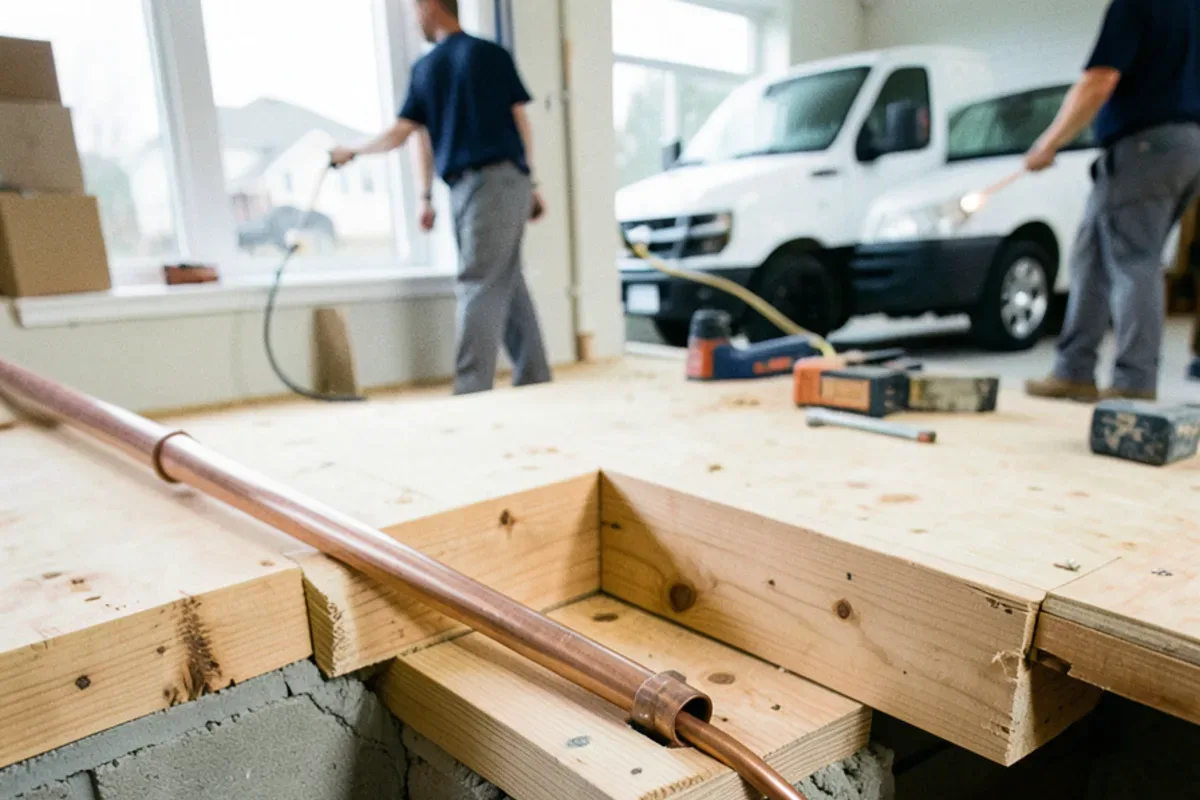
Walk around the top of your basement walls in January and put your hand on the wood where the floor framing sits on the foundation. That board, the rim joist, is often the only thing between the basement and the outside. In older houses it was rarely insulated, and the sill plate under it may not be sealed to the concrete at all. Supply pipes often run right along that joist on their way to an outside wall.
If your house is in one of the basement subdivisions north of 14 Mile in Sterling Heights, start your search here. In a basement house, the line to the kitchen or an outdoor faucet often follows the rim joist for part of its run. Stuffing fiberglass batts into the joist bay helps a little, but fiberglass doesn't stop air. The cold air moves right through it and onto the pipe.
Kitchen sinks on outside walls
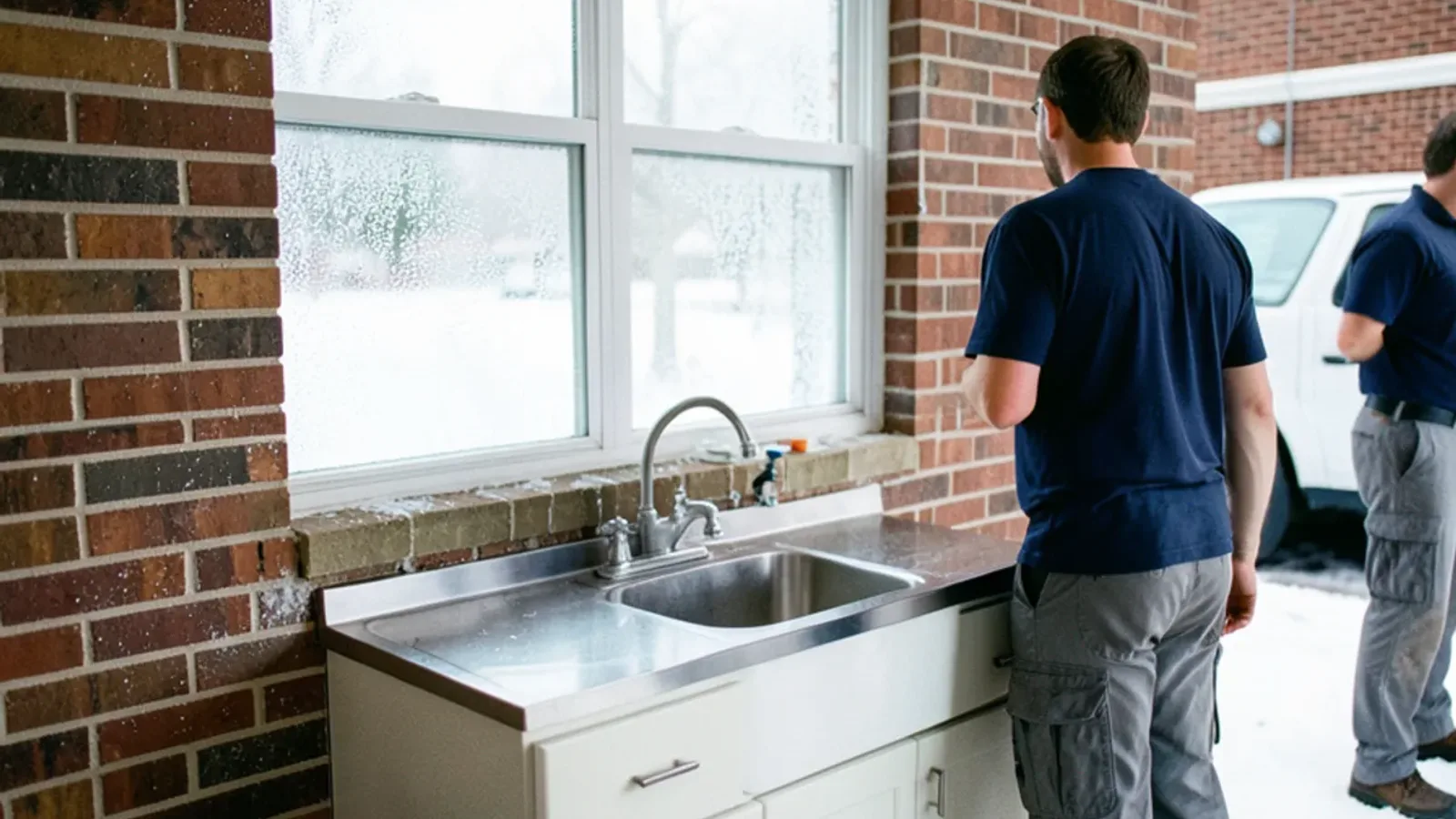
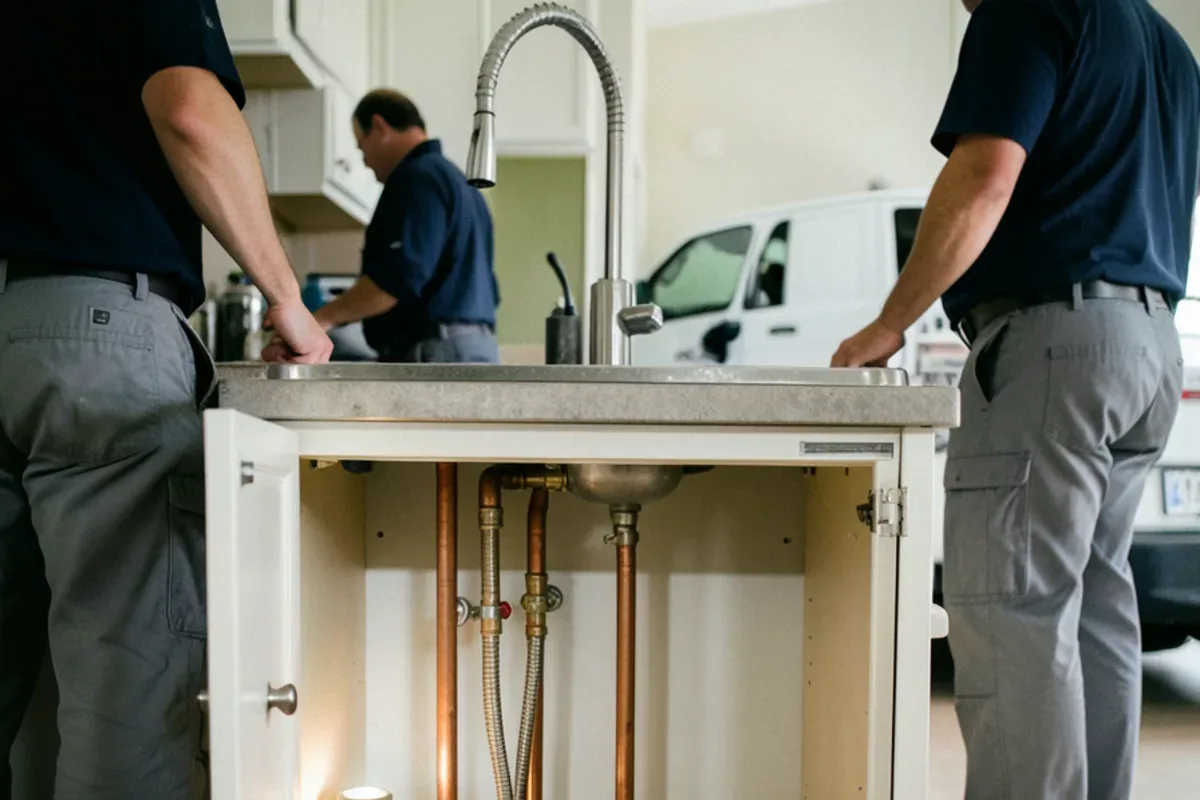
Kitchens are usually laid out with the sink under a window, and windows are on outside walls. So the supply pipes to the most-used faucet in the house come up through the floor into a closed cabinet against the coldest wall. The cabinet doors block room heat. At night, with the faucet off, the water sits still.
Add an addition or a bump-out and it gets worse. A sink in a bay window or a kitchen extension often sits over a floor with less insulation and more exposed framing than the original house.
Other spots that freeze in Michigan houses
| Where the pipe runs | Why it freezes | Fix that lasts |
|---|---|---|
| Along an uninsulated rim joist | Outdoor air leaks past the sill plate and through the joist bay | Seal the gaps, add rigid foam or spray foam on the cold side of the pipe |
| Inside an exterior wall to a sink | Pipe sits between the sheathing and the insulation | Reroute the pipe into an interior wall or the heated floor below |
| Garage ceiling under a bathroom | Garage is unheated and the ceiling is the only barrier | Insulate between the pipe and the garage, or reroute through heated space |
| Line to an outdoor faucet | Short run through the rim joist to an old-style hose bib | Frost-free sillcock with its valve inside the heated wall, plus an inside shutoff |
| Crawl space under an addition | Vents and gaps let outdoor air flow under the floor | Seal and insulate the crawl space walls, and insulate the pipes |
| Cantilevered floor or bay window | Floor framing hangs past the foundation with little insulation | Insulate and seal the overhang, keep pipes on the warm side |
The rule behind every row is the same. Insulation only helps when it sits between the pipe and the cold. Insulation between the pipe and the warm room makes things worse, because it blocks the heat that was keeping the pipe from freezing.
Short-term protection for a cold snap
- Open the cabinet doors under sinks on outside walls so room heat can reach the pipes.
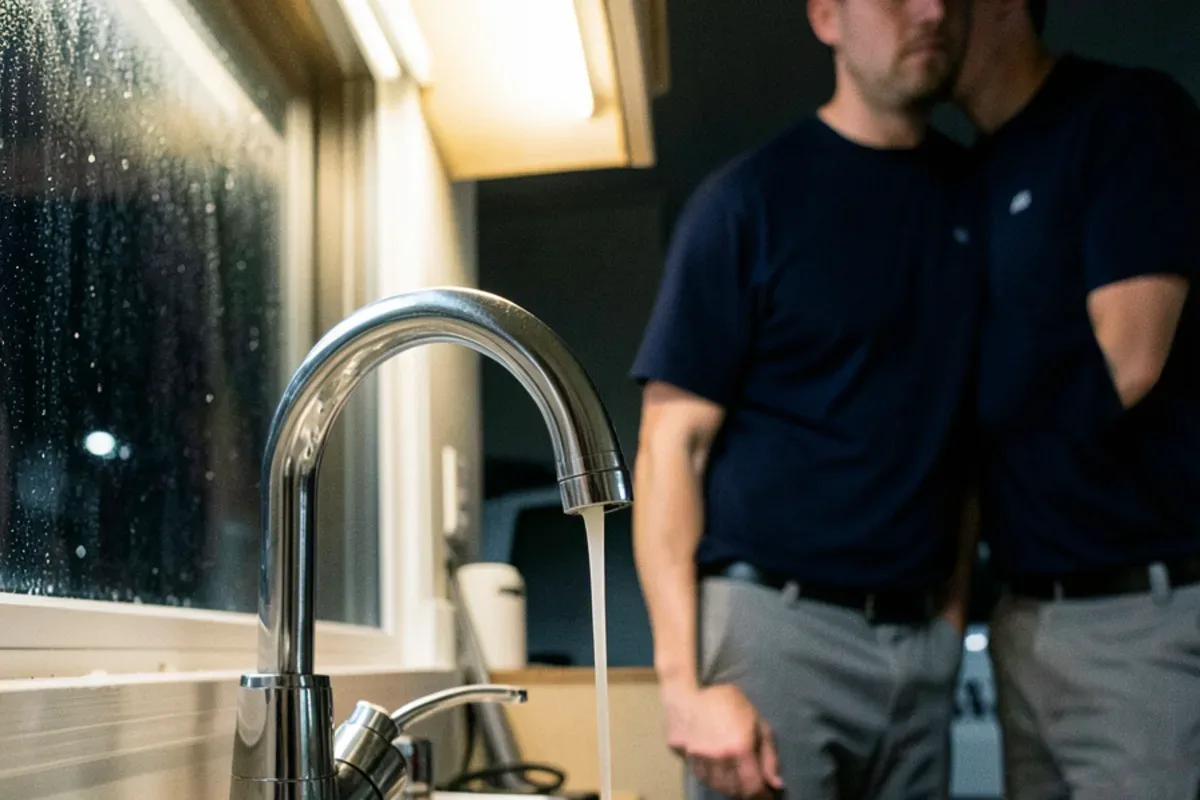
- Let the faucet on that wall run a thin, steady stream on nights near zero. Moving water is much harder to freeze, and an open faucet relieves pressure if it does.
- Keep the thermostat at the same setting day and night during a cold snap, and leave it there when you travel.
- Close the garage door, and seal any obvious gaps around pipes where they pass through the rim joist.
- Disconnect garden hoses and close the inside valve to any outdoor faucet before the first hard freeze.
- Know where your main water shutoff is and how to close it in case something splits anyway.
If a pipe has already frozen, open its faucet before you add any heat. The full steps, and the heat sources to avoid, are in our guide to thawing a frozen pipe safely.
Fixes that keep the same pipe from freezing again
Dripping faucets and open cabinets are what you do in January. The permanent fix happens when the weather allows and the walls can be opened. A frozen pipe repair that stops at thawing the line or patching a split leaves the same pipe in the same cold spot.
Reroute the pipe
Moving a supply line out of an exterior wall and into an interior wall, or running it up through the cabinet floor from heated basement space instead of through the wall, is the most reliable fix. It's usually a short run, since the kitchen sink only needs to move a few feet of pipe.
Seal and insulate on the cold side
Where the pipe can't move, seal the air leaks first with foam or caulk at the sill plate and around penetrations, then add insulation between the pipe and the outside. Pipe sleeves alone slow freezing but won't stop it in a drafty joist bay, because the pipe has no heat source inside the sleeve.
Replace an old hose bib
A frost-free sillcock puts the shutoff inside the heated wall, so the part outside drains when you close it. It still freezes if a hose is left connected, because the hose holds water in the valve body.
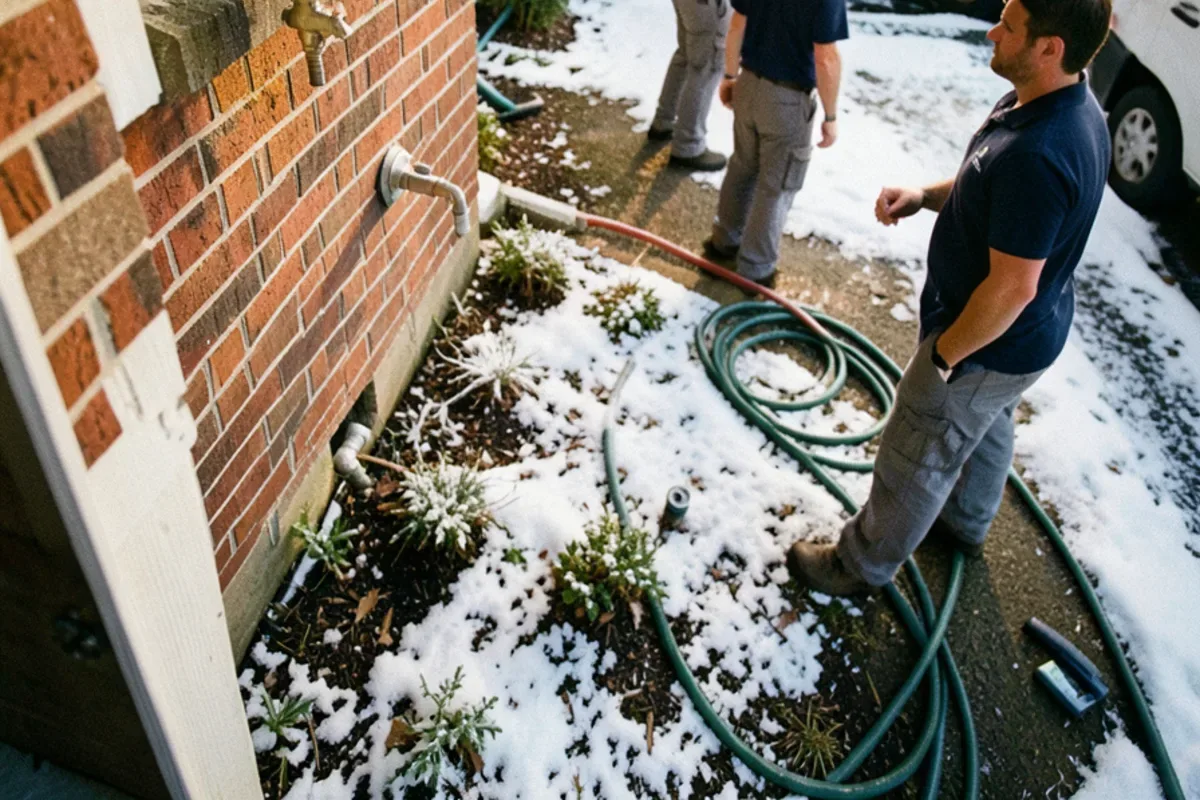
What a plumber looks for when a pipe freezes every winter
The first job is finding where the cold air gets in, not where the ice formed. On a cold day a plumber follows the line back from the faucet with an infrared thermometer or thermal camera, looking for the board, gap or pipe hole that reads far colder than the wood around it. In a house built between 1950 and 1979, like about three in four Warren homes, that spot is often an unsealed sill plate or the hole drilled for an old hose bib.
Then comes the honest trade-off. Rerouting a sink line into an interior wall or up from the heated basement is the surest fix, but it means opening a cabinet back or some drywall. Sealing and insulating the rim joist costs less and warms the whole basement, though a much tighter basement can change how a natural-draft furnace or water heater gets its air, so have the draft checked after big air-sealing work. Heat cable is the fallback for a pipe that can't move, and it protects nothing during a power outage.
What you can fix this fall and what needs a plumber
Foaming the gaps around pipe holes, taking hoses off outdoor faucets, sleeving exposed pipe and fitting rigid foam behind a pipe on the rim joist are good fall weekend jobs. Call a plumber when the pipe sits inside a finished exterior wall, a line needs rerouting, an old hose bib should become a frost-free sillcock, or a thawed wall pipe leaves a stain that calls for leak detection. If the same faucet has frozen two winters running, give us a call before the first cold snap.
Questions people ask about this
At what temperature do pipes freeze?
Water freezes at 32°F, but a pipe inside a house usually needs a sustained hard cold outside before it freezes. The University of Illinois research cited by IBHS puts the onset for uninsulated pipes in unheated space around 20°F outdoors. Wind and air leaks make exposed pipes freeze at milder temperatures.
Does wrapping pipes with foam sleeves stop them from freezing?
No, not on its own. It slows freezing, which is enough on some nights. It won't stop a pipe in a drafty wall from freezing during a long cold stretch. A sleeve slows heat loss but adds no heat, so still water in cold air gets there eventually.
Why does only one faucet in my house freeze?
Its supply line runs through a colder spot than the others, usually an outside wall, a rim joist, a garage ceiling or an addition. Following that pipe back from the faucet usually shows exactly where. Frost on the wood or a cold draft at the sill plate along that run marks the spot to fix.
Should I drip both the hot and cold side of the faucet?
Yes, when that faucet's lines run along an outside wall. Hot lines freeze too, because the water in them sits still and cools overnight. Set a single-handle faucet to the middle, or crack both handles of a two-handle faucet to a thin stream. Start when the forecast nears 20°F, close to the normal January low of 19°F at the Detroit weather station.
Want a plumber to look at your situation? We're on Stephens Rd in Warren.
(207) 419-2600