
 By Plumber in Warren, MI, plumbers on Stephens Rd in WarrenPublished October 25, 2026Last updated October 25, 2026
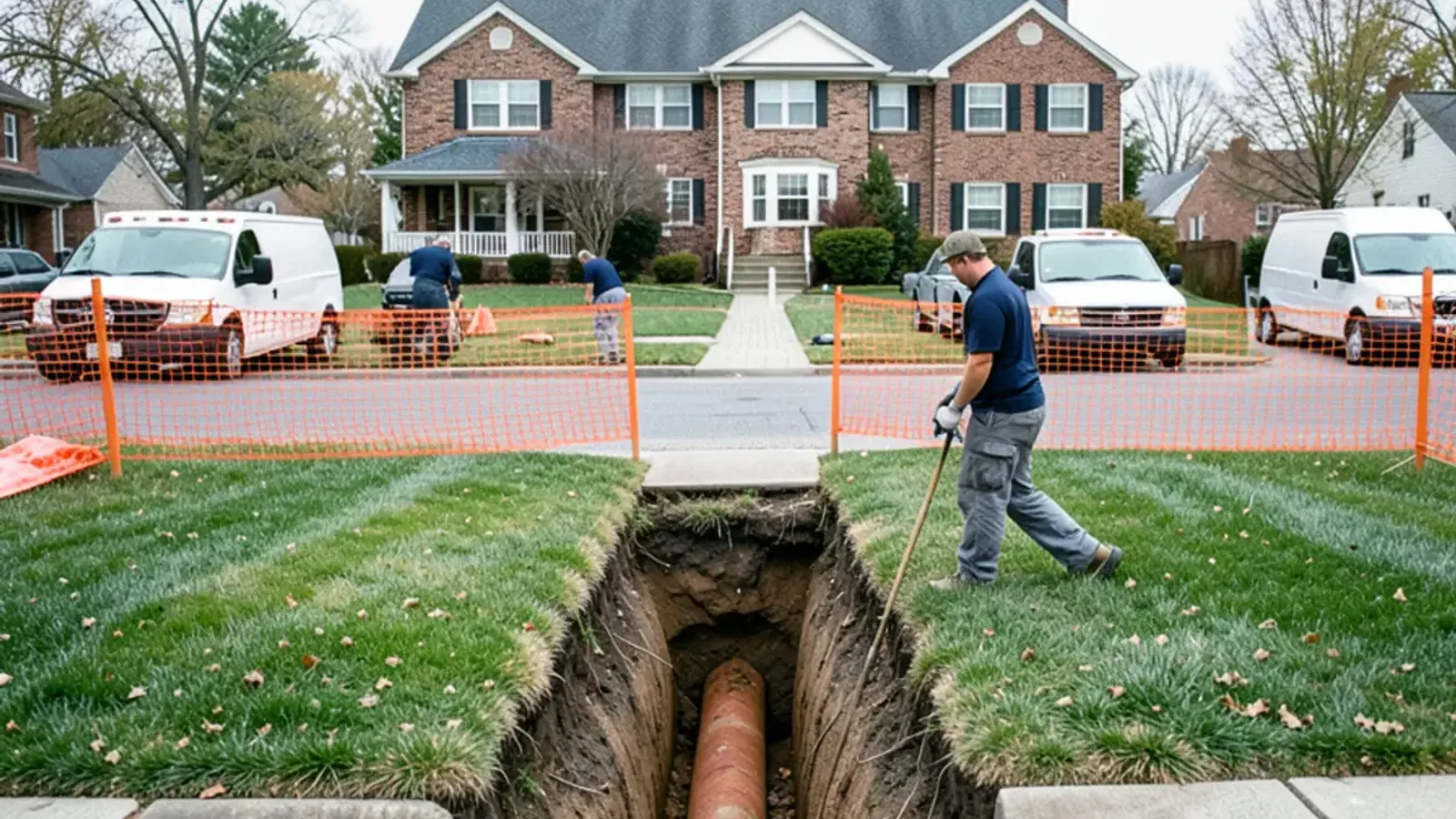
Who is responsible for the sewer line between your house and the street? In Warren, and in many cities around it, you are, for the whole length. The city maintains the sewer main. The property owner maintains the lateral, the pipe from the house to that main, including the section under the sidewalk, the tree lawn and the road.
Plenty of people assume the city's part starts at the property line. For sewers here, it usually doesn't. The water line works differently, which adds to the confusion. Here's how each one splits, and how to find out for your own street.
Who is responsible for the sewer line in Warren?
Warren's sewer handout spells it out. Property owners are responsible for the sanitary service line and its connection from the home or business to the main sewer line. The city maintains the mains, which usually run in the street's public right-of-way and in some neighborhoods in utility easements along the rear of the lots. The city's diagram labels the whole house sewer lead, from the foundation to the main, as the property owner's responsibility.
Replacing the lateral needs city permits and inspection, both for the part on private property and for the part in the right-of-way or easement. So even though the pipe under the street is yours to maintain, you can't dig it up without the city's sign-off.
Why the water line and sewer line split in different places
Warren's water service has a handoff point. The city owns and maintains the water line from the main to the curb stop, a shutoff valve usually near the property line. From the curb stop to the meter inside your house is yours. Lead service lines are handled separately under the city's water service line program.
The sewer lateral has no equivalent valve and no handoff halfway. It's one pipe, it carries your waste, and responsibility follows it to the main.
| Section of pipe | Water service | Sewer lateral |
|---|---|---|
| Inside the house | Owner | Owner |
| From the foundation to the curb stop | Owner | Owner |
| From the curb stop to the main | City | Owner |
| The connection at the main | City | Owner |
| The main itself | City | City |
Rear-yard mains, shared lines and other cities
If your block has its main in a rear easement, your lateral runs out the back of the house instead of the front, and the same ownership rule applies along that route. Duplexes and small apartment buildings sometimes share one lateral between units, which makes it a shared repair for the owners.
Other cities set their own rules, so check with your public works department rather than assuming. Royal Oak's answer matches Warren's: the property owner is responsible for the sewer lead from the building to the main, including the connection to the main, and the city maintains the main only. When a basement in Royal Oak floods and the sewer won't drain, the city sends someone to check. If the main is blocked, a city crew clears it; if the problem is in the private line, the owner is told to call a plumber or a sewer cleaning company. We work on older homes in Royal Oak as well as Warren.
How to find out where the problem is
During a backup, call your city first. If the main is plugged, that's theirs, and you've saved a service call. If the main is flowing, the problem is between your floor drain and that main.
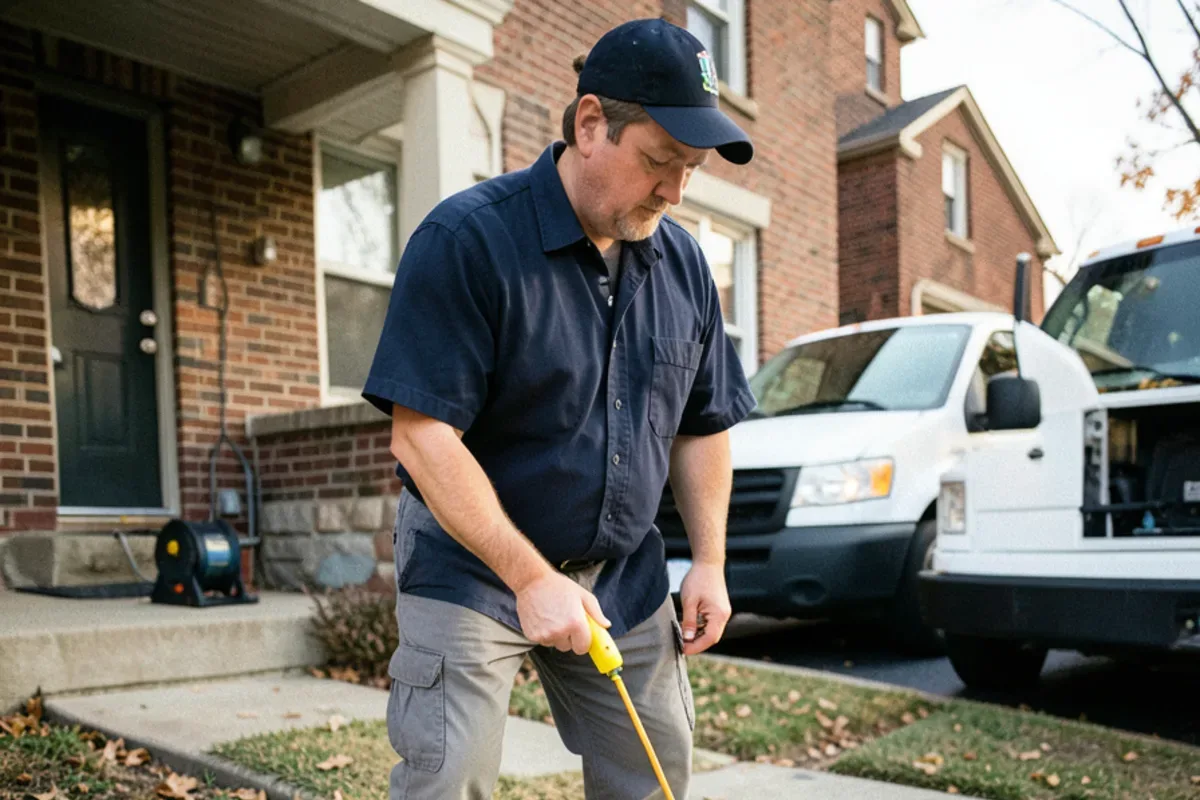
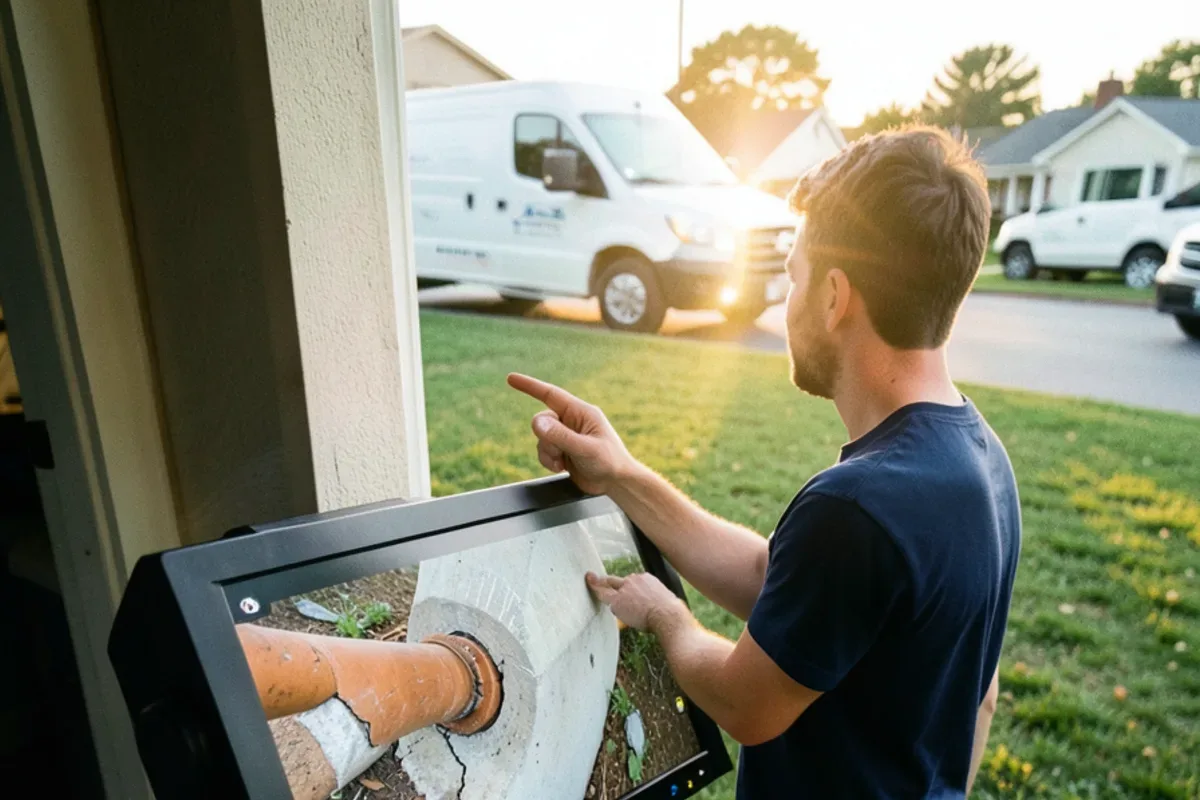
A sewer camera inspection answers the rest. The camera goes in through a cleanout and records the pipe on its way to the main, with a footage counter on screen. A locator above ground picks up the camera head's signal, so the plumber can mark the exact spot of a crack or root mass on your lawn or the pavement and tell you how deep it is. Compare that distance with where the sidewalk and curb sit and you know whether the repair is in your yard or under the road.
What a lateral repair under the street involves
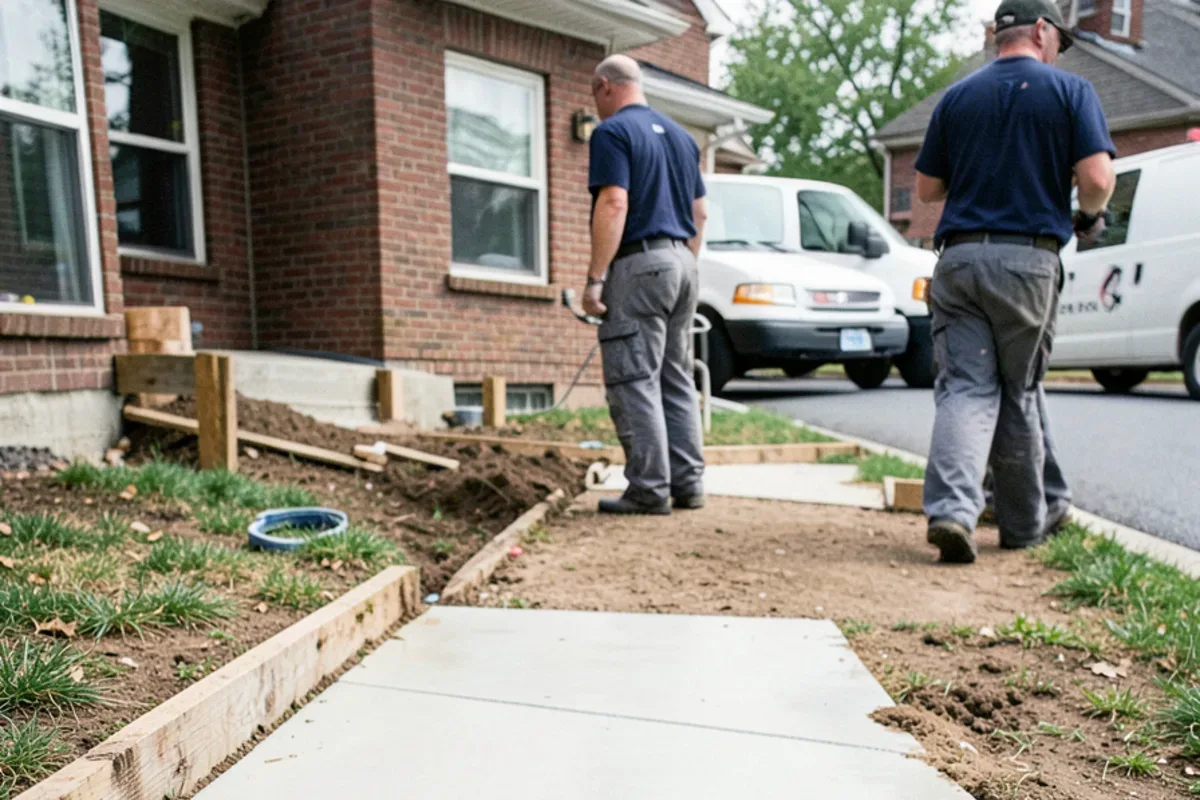
Work in the right-of-way brings extra steps. There's the city permit, and MISS DIG has to mark buried utilities at least three working days before digging. Then there's restoring whatever was cut: sidewalk panels, the curb, a section of road. The deeper the main, the bigger and more carefully shored the excavation.
Houses that face a state highway have one more layer. Van Dyke (M-53), Groesbeck (M-97) and 8 Mile (M-102) are state trunklines, and a lateral that crosses one runs under road the state controls. When a lateral collapsed under M-40 in the village of Paw Paw in 2022, the state transportation department said its role was limited to issuing a permit for work in its right-of-way, and the repair also needed traffic control and a contractor the state accepts. The owner still paid for the pipe. If your lateral runs under one of Warren's state roads, ask the city's building division which state permits apply before anyone schedules the dig.
Trenchless methods can cut the digging down to a pit at each end. Our comparison of pipe lining and pipe bursting covers when each one fits. The cost of sewer line replacement depends mostly on length, depth, how much pavement sits above the pipe, trees and their roots, and which method the pipe's condition allows.
Insurance and the line protection offers in your mailbox
Because the lateral is yours, so is the bill when it fails. Warren's handout notes that most homeowner policies don't cover sewer backups and suggests asking about adding coverage. The city also says it has nothing to do with the water and sewer line warranty offers that arrive by mail and doesn't recommend any of them. Read what any plan excludes before buying it. If your house has a cast iron building drain, our post on cast iron drain pipe problems covers the inside half of the same system.
What a plumber checks before saying whose pipe failed
An honest answer to "is it mine or the city's" takes more than a guess from the basement. These are the details that decide it, and the limits of each one.
- The footage counter measures cable, not ground. A lateral bends and drops, so the number on screen can run a few feet longer than the straight-line distance. Locating the camera head from above and marking it on the surface is what pins a defect to your yard, the sidewalk or the road.
- The last few feet are the hardest to see. The camera often can't turn into the main, and the joint where the lateral meets it, a wye fitting or a saddle cut into the main, is a common failure point. In Warren that connection is still the owner's.
- Standing water hides the bottom of the pipe. A sag holding water can conceal a crack, so it helps to film right after the line drains.
- Footage is evidence. If the camera shows the main itself blocked or broken, that video and the measured distance are what you hand the city. Ask for the file and the written distance rather than a verbal summary.
The repair choice has trade-offs too. A spot repair under the curb means paying for a dig and restoration in the right-of-way to fix a few feet of pipe. When the rest of an old clay or cast iron lateral is in rough shape, replacing or lining the whole run can make more sense than coming back to dig a second spot in a few years. A lining also has to be sealed properly at the main connection, or roots and water find that joint.
Calling the city, calling a plumber, or both
Some steps are yours to take right away. During a backup, call the city's Water Division so a crew can check the main, stop running water, and photograph the floor drain and any damage. Find your cleanout and keep it clear of mulch and lawn so it's easy to open.
Call a plumber when the city finds the main flowing and your drains still back up, when backups keep returning after rodding, or when you're buying a house with an old lateral and want to know what you're taking on. A sewer line repair and inspection visit clears the line, films it and measures where any break sits. Call us before the next backup and you'll know which side of the curb the problem is on.
Questions people ask about this
Is the cleanout near the sidewalk part of the city sewer?
No. In Warren's diagram, the sanitary cleanout near the sidewalk sits on the house sewer lead, which is the owner's responsibility. It's an access point into your own lateral, and it's where a plumber usually starts cleaning or filming the line toward the main. Keep the cap tight and visible, since a buried or cracked cap makes every sewer call slower.
Do I need a permit to replace my sewer lateral in Warren?
Yes. Warren requires permits and inspection for replacing a sewer service line, both on private property and in the public right-of-way or utility easements. Sewer repair is its own line on the city's plumbing permit form. Digging also means calling MISS DIG at least three working days ahead so buried utilities get marked first.
Who fixes a blocked or broken sewer main?
The city does. Warren maintains the mains, which usually run under the street and in some neighborhoods in rear-yard easements. If a city crew checks the main during a backup and finds it flowing while your house still backs up, the problem is in your lateral or building drain, and that repair falls to you as the owner.
Are the sewer line warranty letters in my mailbox from the city?
No. Warren says it has nothing to do with the water and sewer line insurance and warranty offers mailed to residents, and it doesn't recommend any of them. If you're weighing one, read what it excludes, how it handles lines under the street, and whether it covers restoring the sidewalk or road. Ask your homeowner insurer about a sewer-backup rider separately.
Want a plumber to look at your situation? We're on Stephens Rd in Warren.
(207) 419-2600