
 By Plumber in Warren, MI, plumbers on Stephens Rd in WarrenPublished October 25, 2026Last updated October 25, 2026
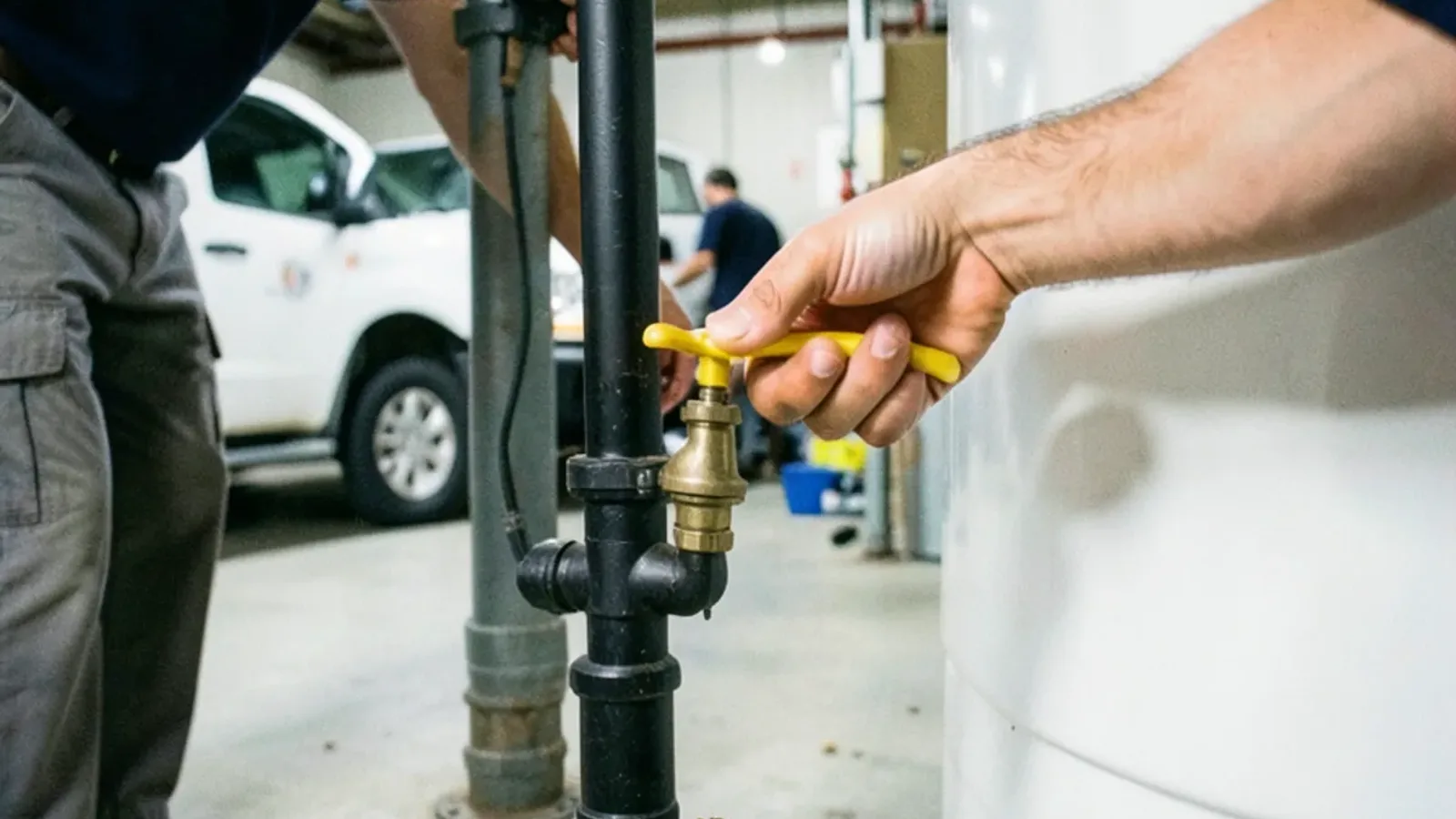
To turn off gas to a water heater, first make sure you don't smell gas; if you do, leave the house and call from outside. Otherwise, follow the black gas pipe down beside the tank to the small valve a foot or two above the floor, and turn its yellow or red lever a quarter turn, crosswise to the pipe.
Ranges and dryers have the same kind of valve, tucked on the wall behind the appliance. The smell-gas rule still comes before any of it: don't go hunting for valves, get everyone outside. This guide covers where each appliance valve hides, the older valve styles you might run into, and the point where the work belongs to someone who holds the right gas license.
Smell gas? Leave before you touch any valve
Warren's natural gas comes from Consumers Energy, and the utility's advice for a suspected leak is blunt. Walk out to a spot where you can no longer smell it. On the way, leave lights, phones, garage door openers and anything with a flame alone, because any of them can spark. Don't try to find the leak and don't close appliance valves. Don't start a car in the garage. Once you're clear, call 911 and the utility, then stay out until a Consumers Energy worker tells you the house is safe.
The utility's emergency number and full instructions are on Consumers Energy's report-an-issue page. If your bill comes from DTE instead, use DTE's natural gas leak page. Save whichever applies in your phone today, so you're not searching for it in the driveway.
So when is the appliance valve the right move? When nothing smells wrong and you have a planned reason. You're swapping out a dryer, pulling the range out to clean behind it, or the water heater tank has started leaking water. Maybe the pilot keeps going out and you want the heater off until someone looks at it, or you're leaving a house empty for the winter.
Which way is off on a gas valve?
The handle tells you. On a lever valve, a handle lying along the pipe means gas is flowing. Turn it a quarter turn so the handle sits across the pipe, like the top of a T, and the valve is closed. It stops at ninety degrees. There's no partway on these valves, and no need to crank.
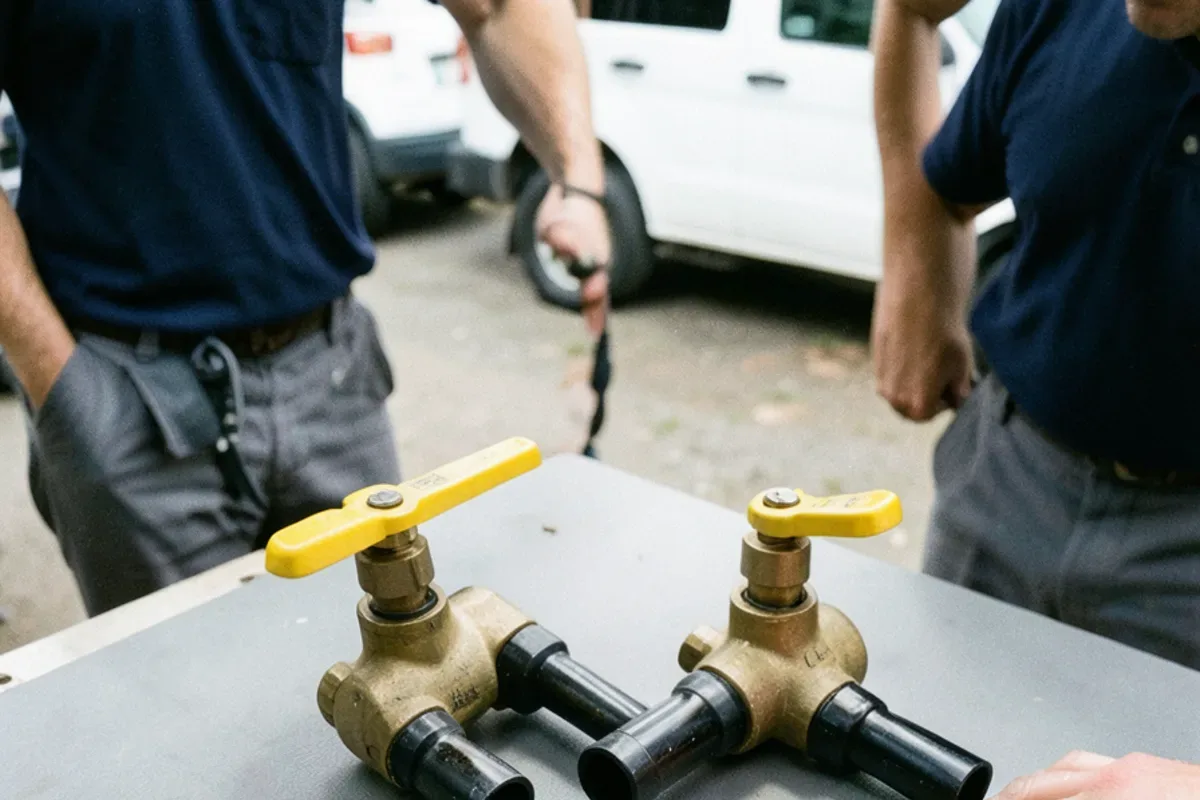
| Valve | How to spot it | Closed position | Watch for |
|---|---|---|---|
| Ball valve | Brass body with a flat yellow or red lever | Lever across the pipe | A lever that spins freely has a broken stem |
| Plug valve | Older brass body with a flat tab or square nub, no lever | Tab across the pipe; often needs a wrench | Old ones get stiff; forcing them can crack the body |
| Water heater control knob | Round knob on the gas control at the bottom of the tank, marked On, Pilot and Off | Turned to Off | Shuts the burner and pilot but leaves gas in the line up to the control |
If a plug valve won't budge with steady pressure from a wrench, stop. A cracked valve body on a live gas line is a far bigger problem than the one you started with.
Finding the shutoff behind each appliance
Gas water heater
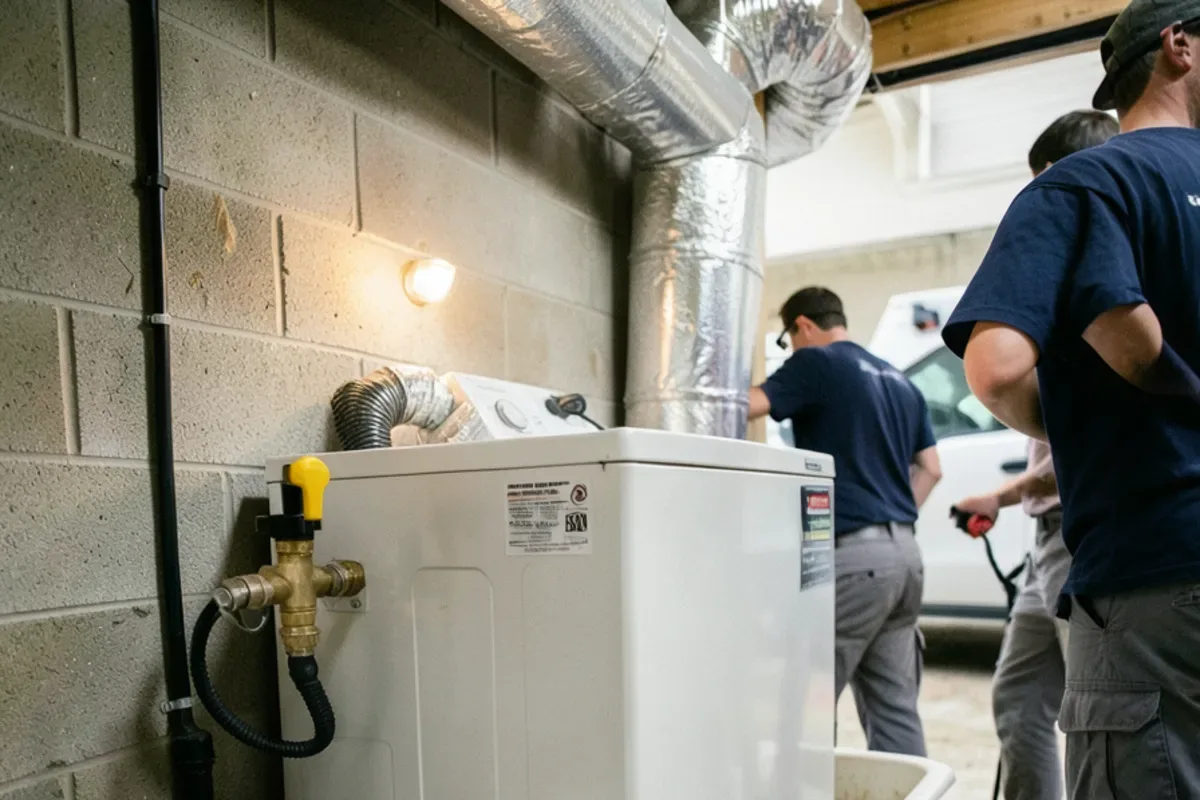
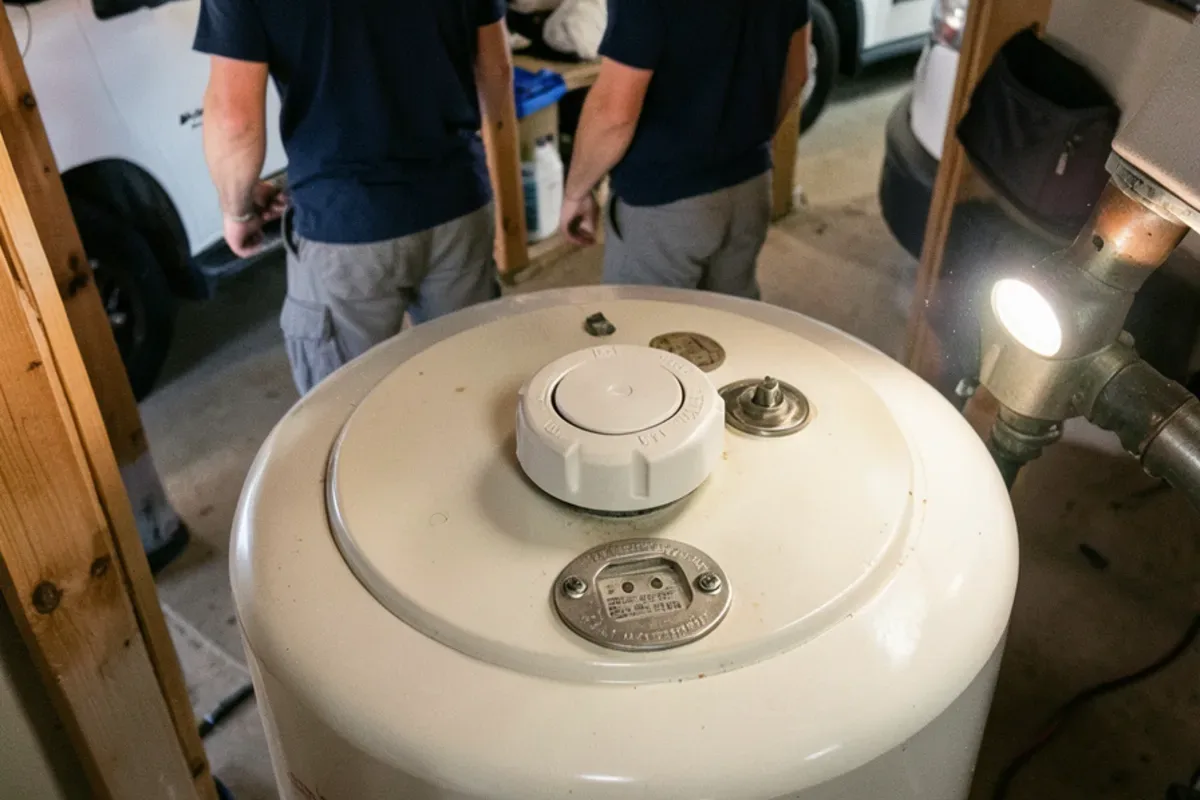
The valve is on the vertical pipe feeding the gas control, usually above a tee with a short capped pipe hanging below it. That capped stub is a sediment trap, also called a drip leg, and it catches debris before it reaches the burner. Close the lever valve to cut gas to the whole heater. If the tank is leaking water, shut the gas first, then close the cold water valve on the pipe entering the top of the tank.
Range or cooktop
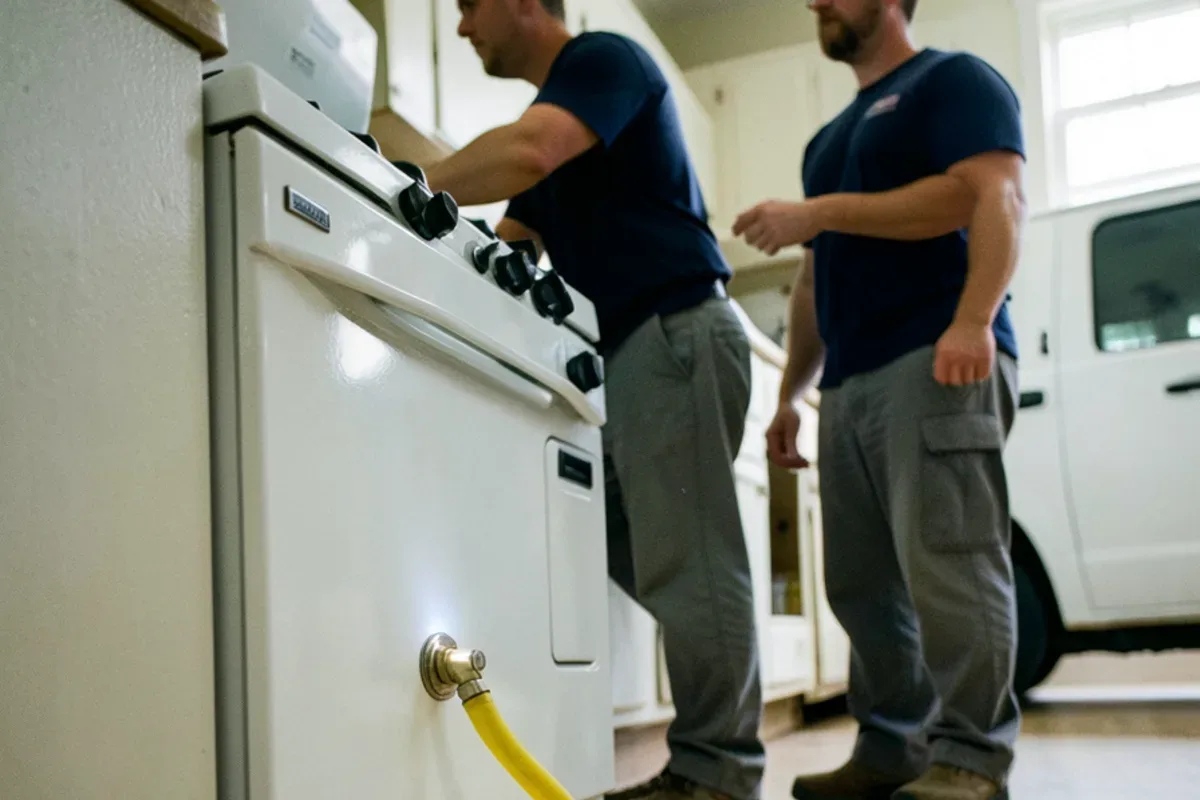
Look low on the wall behind the range. On many ranges you can reach the valve by pulling out the bottom storage or warming drawer and looking through the opening with a flashlight. Otherwise, slide the range forward a few inches at a time, and watch the flexible connector so it doesn't kink or pull tight.
Dryer
The dryer valve sits on the wall behind the machine, usually near the floor beside the vent. Pull the dryer straight out, keeping an eye on the gas connector and the vent hose. A dryer shoved back hard against the wall is a common way connectors get crushed.
Each gas appliance should have its own shutoff close by. If you can't find one at all, or the only valve is at the meter, treat that as something to fix rather than something to work around.
Turning the gas back on and relighting
Check the connection first
If an appliance was disconnected or moved, make sure the connector is attached, straight and not kinked before any gas reaches it.
Open the valve
Turn the lever back so it lines up with the pipe. Do it slowly and deliberately.
Relight by the label
Older water heaters have a standing pilot with lighting steps printed on the tank. Newer heaters, ranges and dryers usually light themselves. Follow the label exactly, and stop if the pilot will not stay lit after you have done it right.
Use your nose
If you smell gas after opening the valve, close it, leave the house and call the utility from outside.
Leave the valve at the gas meter to the utility. Closing it puts out every pilot in the house, and turning it back on means relighting each one safely. Warren came close to finding out what that looks like at scale in January 2019, when a fire at a Consumers Energy facility during extreme cold led Macomb County officials to warn that gas to about 130,000 Warren customers might be cut. The shutoff was avoided. Had it happened, every one of those homes would have needed its pilots relit before the heat came back.
When a valve or connector needs replacing
A few things mean the valve itself is the problem. A lever that spins without stopping. A plug valve frozen in place. A valve that closes but still lets the burner flicker. Connectors wear out too, especially old uncoated brass ones with a dull, flaking finish, or any connector that has been kinked, crushed behind an appliance or stretched to reach a new range.
Who can do that work matters. Michigan licenses fuel gas piping under its mechanical trades, through a fuel gas piping license or an HVAC equipment license, and a plumbing license alone isn't treated as covering it. In Warren, residential gas piping goes on the city's mechanical permit. Our pages on gas leak detection and repair and gas line installation and repair explain what each kind of job involves.
The same advice holds outside Warren. If you're in one of the postwar houses along I-94 in Harper Woods, check which company bills you for gas and keep its leak page handy. And while you're in the basement, it's worth finding your main water shutoff too, since a leaking water heater needs both valves closed.
What a gas fitter checks when an appliance goes back in
Most gas trouble around appliances starts at the connector, not the valve. When a range or dryer goes back in, the connector should reach without stretching, run without kinks and be a coated flexible connector rated for that appliance. Reusing one that has been bent back and forth for years is a gamble a careful gas fitter won't take. After the gas is on, every joint gets checked with a leak-detection solution or an electronic detector, never a flame.
Two trade-offs come up often. A stiff plug valve that still closes can wait through a planned job, but if it takes real force, replacing it before the next emergency is the safer bet. And a power-vent water heater has a plug as well as a gas valve; unplugging it stops the fan, but only the closed valve stops the gas. For a trip, you may not need the valve at all: the vacation or pilot setting keeps the tank idle without relighting.
Close it yourself, leave the house or call for repair?
Close an appliance valve yourself for a planned move, a leaking tank or a pilot that won't stay lit, as long as nothing smells wrong. Leave without touching any valve if you smell gas, hear a hiss or see dead grass or bubbles over the line; the utility goes first, every time. Call for repair when a valve spins, won't close or sits on an old, kinked or crushed connector. For that last group, close what you safely can and give us a call to talk through the repair.
Questions people ask about this
Is it safe to turn off the gas to my water heater myself?
Yes, as long as you don't smell gas. Closing the lever valve on the supply pipe is a normal homeowner task, and it takes a quarter turn with no tools. If you do smell gas, skip the valve, leave the house and call the utility from outside.
Should I shut off the gas at the meter?
No, not for a single appliance. The appliance valve isolates just that one. The meter valve shuts off the whole house, puts out every pilot and is best left to the gas utility. Even during a suspected leak, the utility's own advice is to get out of the house rather than close valves.
Do I need to turn off the gas before moving a dryer or range?
Yes, whenever you disconnect the appliance or pull it far enough to strain the connector. For a short slide to clean behind it, keep the connector slack and straight, and check it for kinks before you push the appliance back against the wall.
Should I turn off the gas to my water heater for a vacation?
No, not for most trips. For a week or two, the vacation or pilot setting on the gas control keeps the tank idle without relighting. For a longer absence, turn the control to Off, close the gas valve, then close the cold water supply. In a Michigan winter, keep the furnace running whatever you do with the heater.
Want a plumber to look at your situation? We're on Stephens Rd in Warren.
(207) 419-2600