
 By Plumber in Warren, MI, plumbers on Stephens Rd in WarrenPublished October 25, 2026Last updated October 25, 2026
Flush a tank water heater once a year, and every six months if your water is hard or a yearly flush still runs gritty. That's the baseline Rheem and A. O. Smith both give. In Warren, once a year is a sensible minimum, because the city's water is moderately hard and nobody softens it before it reaches your tank.
Warren's water averaged 105 mg/L of hardness in the city's 2025 water quality report, which the USGS scale calls moderately hard. Move to every six months if a flush brings out a lot of grit or the tank has started to rumble.
Flushing isn't complicated, but it involves scalding water, a gas burner or electric elements, and a drain valve that may not have been touched in years. Here's what it does and how to do it without creating a new problem.
Where water heater sediment comes from
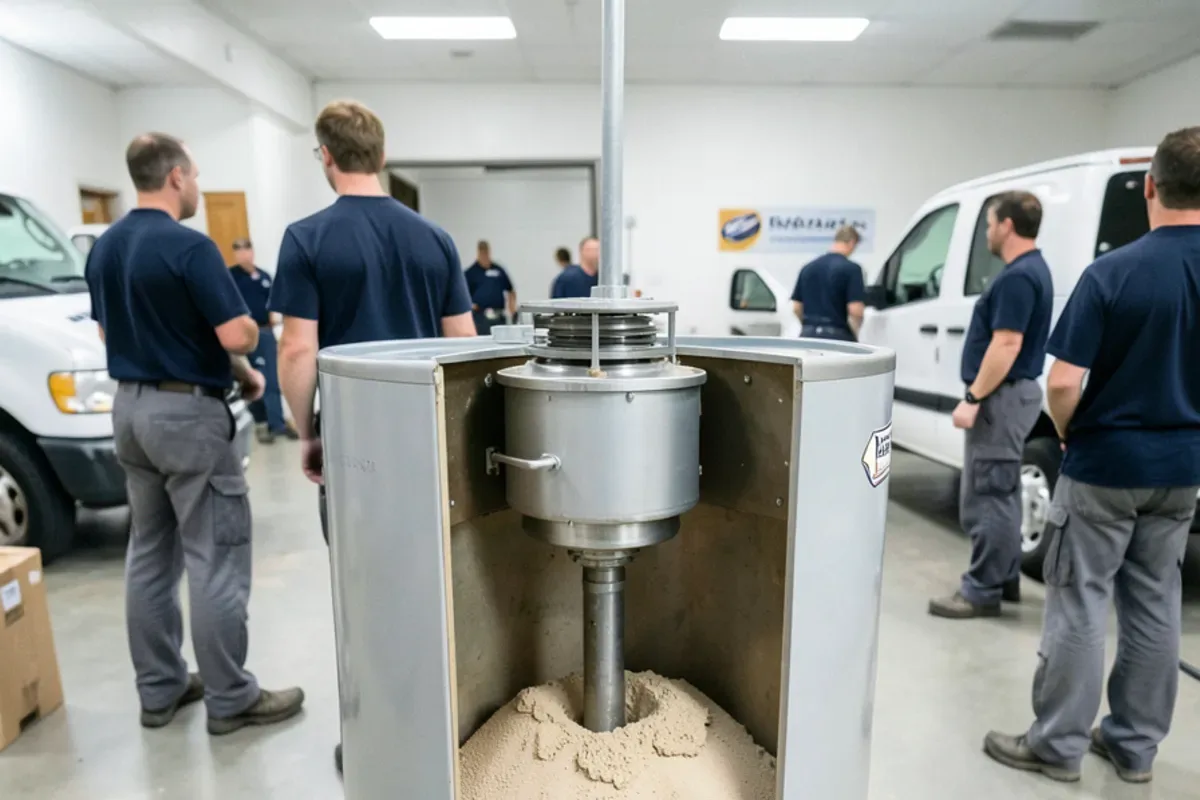
Hard water carries dissolved calcium and magnesium. Heat drives some of it out of solution, and it settles to the bottom of the tank as a sandy, chalky layer. Warren's supply is treated by the Great Lakes Water Authority with corrosion control, but the city's report says nothing about softening, so every tank in town collects some of it. Flakes from a corroding anode rod add to the pile.
On a gas heater, the burner is under the tank, so the sediment sits between the flame and the water. Water trapped under the layer flashes to steam, and you hear it as rumbling or popping when the burner runs. The heater burns longer to deliver the same hot water. On an electric heater, the lower element can end up buried, and an element packed in scale runs hot and burns out early.
How often to flush a water heater in a Warren home
| Your situation | How often to flush | Notes |
|---|---|---|
| Most households on Warren city water | Once a year | Moderately hard water; adjust based on what comes out |
| Large household, or the yearly flush runs gritty for a long time | Every six months | Manufacturers call for twice a year with hard water |
| Thermostat set high, or the tank works hard every day | Every six to twelve months | More heat drives more minerals out of the water |
| Home with a water softener | Once a year | Less scale, but anode wear and debris still collect |
| New tank | Start in the first year | Easiest before any buildup hardens |
| Tank never flushed and more than about ten years old | Ask a plumber first | Disturbing heavy sediment can cause leaks |
A. O. Smith also recommends a yearly look at the anode rod, with a professional checking it at least every five years, and testing the relief valve at annual service. Those three jobs fit together well on one afternoon.
Signs your tank is overdue
- Rumbling, popping or crackling from the tank while the burner or elements are on.
- Hot water running out sooner than it used to, with no change in how the house uses it.
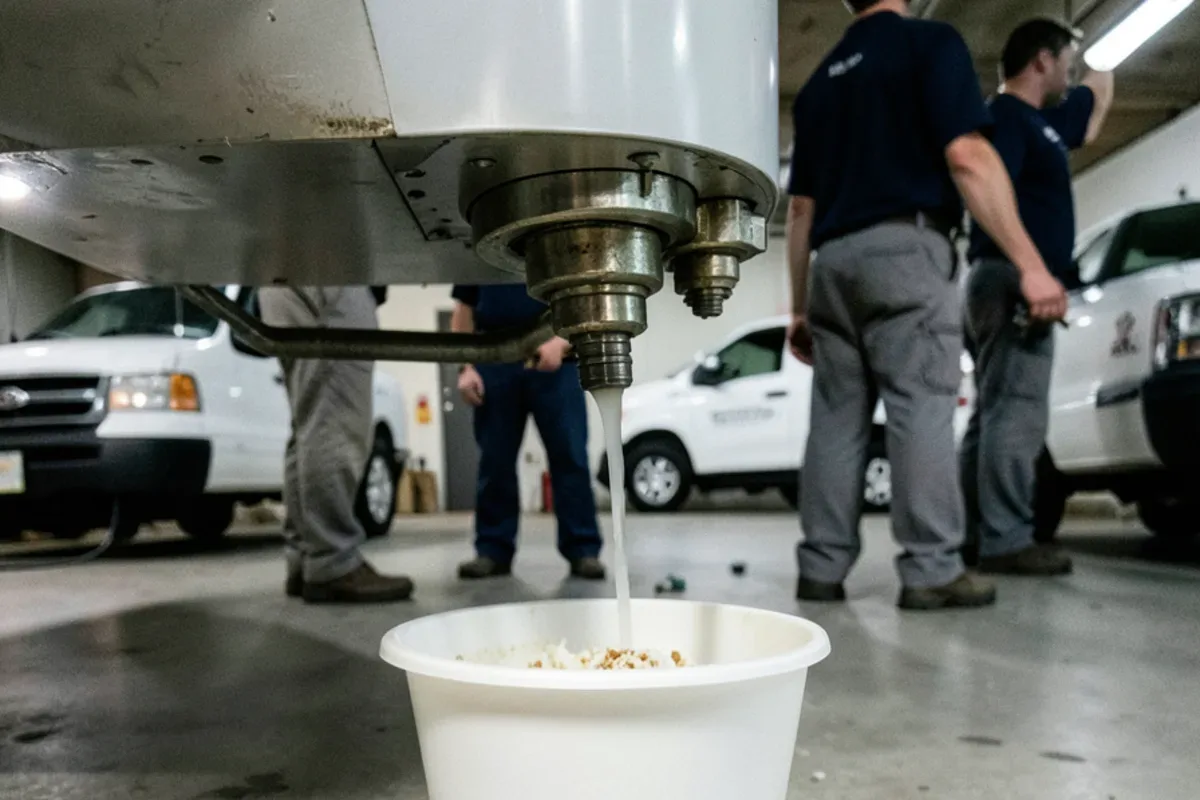
- Water from the drain valve that comes out milky, sandy or full of white flakes.
- Longer recovery time between showers.
- On an electric heater, a lower element that has failed more than once.
- Rusty or cloudy hot water while the cold side runs clear.
- A gas or electric bill that climbs without any change in how much hot water the household uses.
None of these alone means the heater is failing. They do mean the bottom of the tank needs attention. Rusty hot water can also mean the anode rod is spent and the steel itself has started to corrode.
How a water heater flush is done
Shut off the heat
On a gas heater, turn the control to off or pilot, as the label on the tank describes. On an electric heater, switch off its breaker. Our guide to shutting off the gas to a water heater shows where the valve is.
Close the cold supply
Turn off the cold water valve on the pipe feeding the top of the tank. If the water is very hot, you can let it cool for a few hours first.
Connect a hose
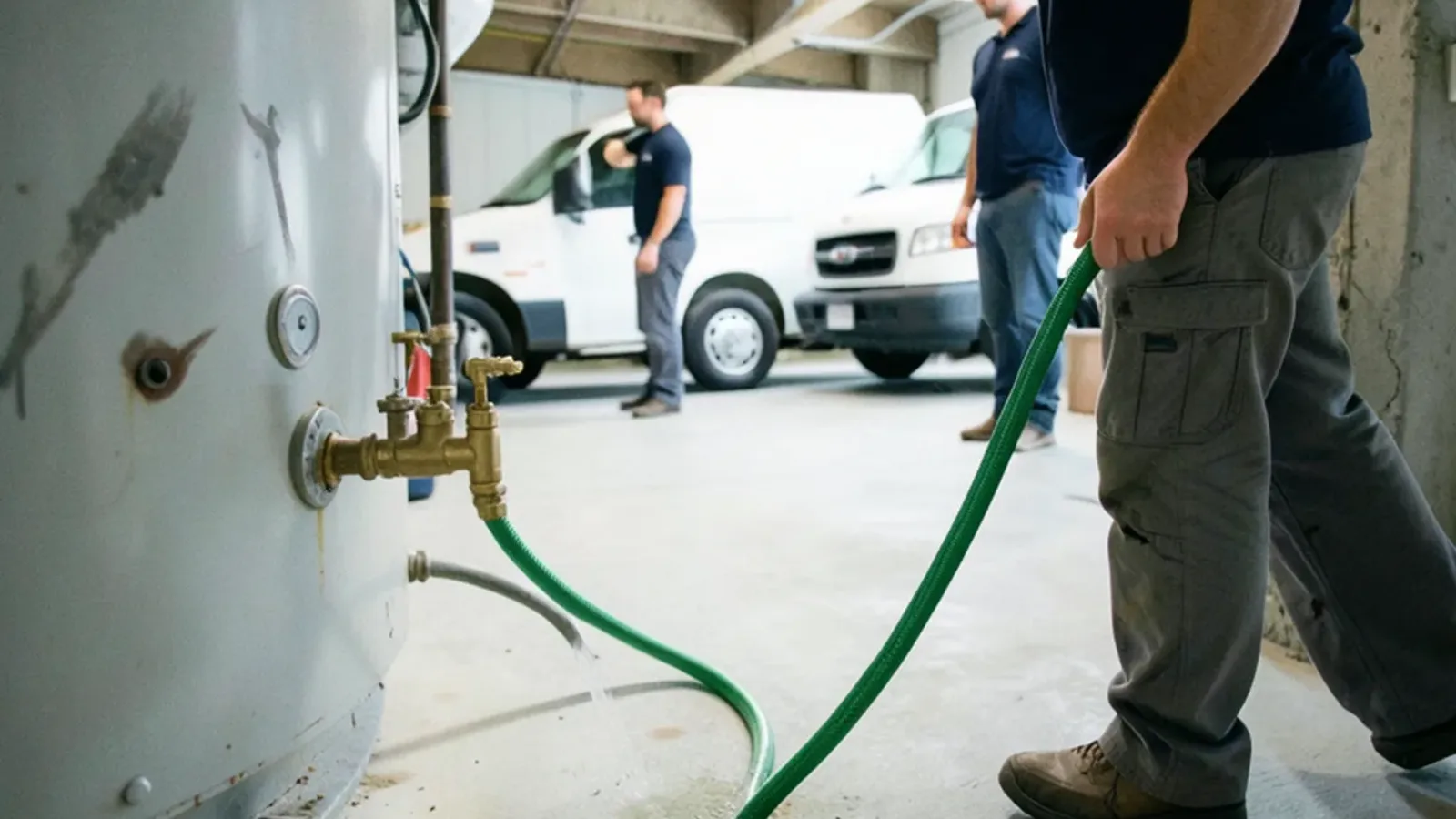
Thread a garden hose onto the drain valve at the bottom of the tank and run it to a floor drain or outdoors, somewhere hot water won't damage anything or anyone.
Let air in and drain
Open a hot water faucet upstairs or lift the relief valve lever, then open the drain valve. Let the tank empty. Opening the cold supply for short bursts with the drain open stirs up sediment and pushes it out.
Refill before restoring heat
Close the drain valve, open the cold supply and leave a hot faucet open until water runs steadily with no sputtering air. Only then turn the gas back on or reset the breaker.
What a hose flush can and can't fix
A flush moves loose sediment. It doesn't move scale that has hardened onto the tank bottom or fused around an electric element. If a flush runs clear within a minute but the tank still rumbles, the problem is baked-on scale, and the honest options are living with the noise or planning a replacement.
The drain valve is the other weak point. Many tanks leave the factory with a small plastic valve that clogs with grit and slows to a trickle partway through. Swapping it for a full-port brass ball valve on the first service visit makes every later flush faster and cleaner, and the new valve closes tight afterward.
The anode rod is where most of a tank's life is decided. It corrodes on purpose so the steel doesn't, and A. O. Smith says to replace it once about six inches of core wire shows. A water softener shifts the balance: softened water leaves less sediment but tends to wear the anode faster, so a softened house needs more frequent anode checks.
Then there's pressure. A relief valve that drips after a flush is often doing its job. When a check valve, pressure-reducing valve or backflow device closes the system, heated water has nowhere to expand, and model plumbing code calls for an expansion tank. Warren is adding testable backflow devices on residential irrigation lines, so a dripping relief valve here deserves a pressure check before anyone replaces it.
When an old tank shouldn't be flushed
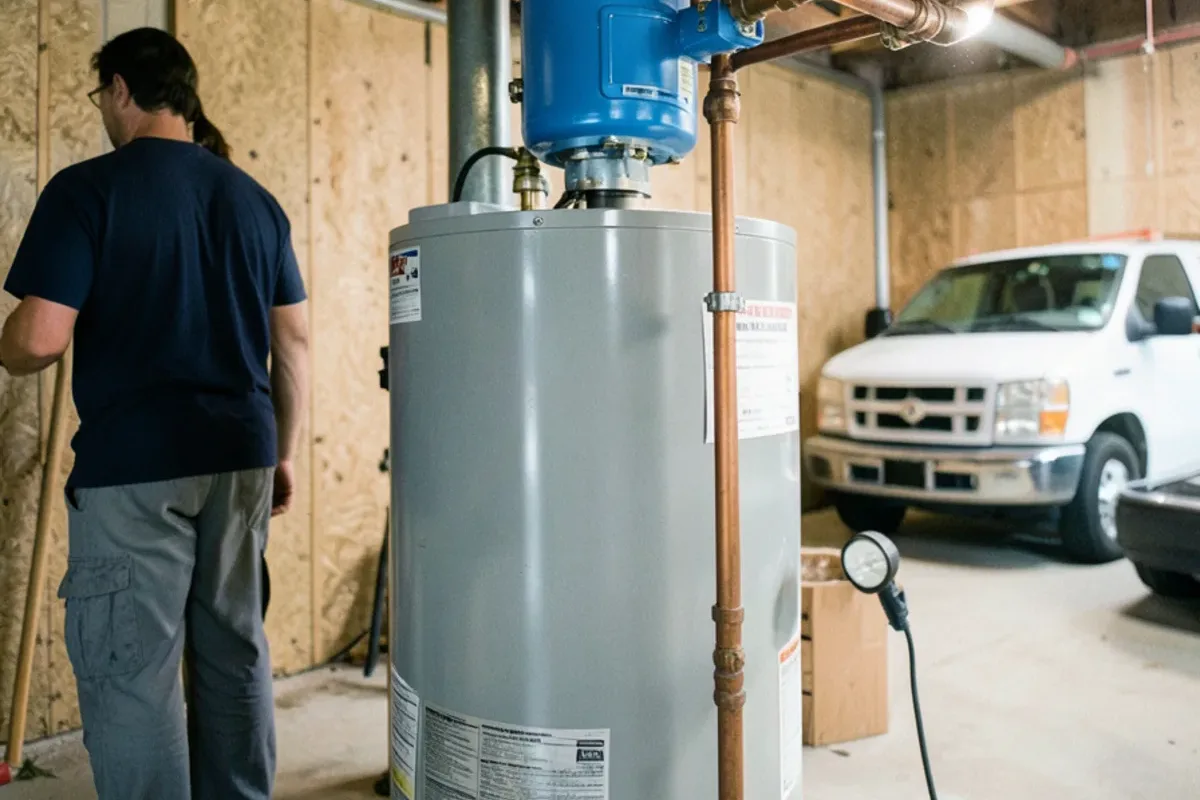
Rheem cautions that flushing an older or heavily sedimented tank yourself can lead to leaks, and suggests calling a professional once a heater is about 8 to 12 years old. A thick crust on the bottom can be all that's sealing a rusted spot, and plastic drain valves on older tanks sometimes snap or refuse to close once they've been opened. Sometimes the right answer is to leave the sediment alone and start planning a replacement.
A service visit for water heater repair and maintenance covers the flush, the anode check and the relief valve test, and tells you honestly whether the tank is worth maintaining. We do this work for homes and rentals in Center Line, the small city surrounded on every side by Warren, and across the area. If a relief valve starts dripping or the tank leaks at the base, our guide on whether a plumbing problem can wait until morning helps you decide how fast to act.
Flush it yourself or call a plumber?
A yearly flush on a tank under about eight years old, with a drain valve that opens and closes cleanly, is a reasonable homeowner job. Flushing is maintenance, so it needs no permit; Warren's Building Division lists hot water tanks as a permit item when a heater is replaced, not when it's drained.
Call instead when the drain valve won't open or won't stop dripping, when rust or white crust covers the fittings on top of the tank, or when the noise keeps going after a good flush. A tank that's wet at the base is past maintenance; that's a conversation about water heater installation. A tankless water heater installation trades the yearly flush for a yearly descale.
If your tank is rumbling, running short or hasn't been touched since it went in, give us a call and we'll tell you whether it needs a flush, a new anode or a plan for replacement.
Questions people ask about this
Can I flush my water heater myself?
Yes, on a tank that has been maintained and has a drain valve that opens and closes cleanly. Turn off the gas or the breaker first, keep clear of the scalding water at the hose end, and refill the tank completely before turning the heat back on. On an old, never-flushed tank, get it looked at first.
What happens if you never flush your water heater?
Sediment keeps piling up on the tank bottom and acts like insulation, so a gas burner runs longer and an electric lower element can burn out in a bed of scale. Eventually grit clogs the drain valve, and a crust may end up being the only thing covering a rusted spot.
How long does it take to flush a water heater?
It depends on the tank size, how much sediment is inside and how fast the drain valve flows. A maintained tank with a full-port valve drains and refills fairly quickly, while a plastic valve clogged with grit can turn the job into a slow trickle. Plan for the tank to cool first, and never restore heat until the tank is full again.
What if the drain valve keeps dripping after a flush?
Sediment often lodges in the valve seat. Opening and closing it a couple of times can flush the grit out. If it still drips, a brass hose cap on the outlet stops it for now, and the valve can be replaced with a brass ball valve that seals better.
Does a tankless water heater need flushing too?
Yes, but it's a different job called descaling. A small pump circulates a descaling solution through the heat exchanger using the unit's service valves, then the system is rinsed. A. O. Smith suggests doing it once a year, or twice a year with hard water. Warren's moderately hard city water makes the yearly descale worth keeping on the calendar.
Want a plumber to look at your situation? We're on Stephens Rd in Warren.
(207) 419-2600