
 By Plumber in Warren, MI, plumbers on Stephens Rd in WarrenPublished October 25, 2026Last updated October 25, 2026
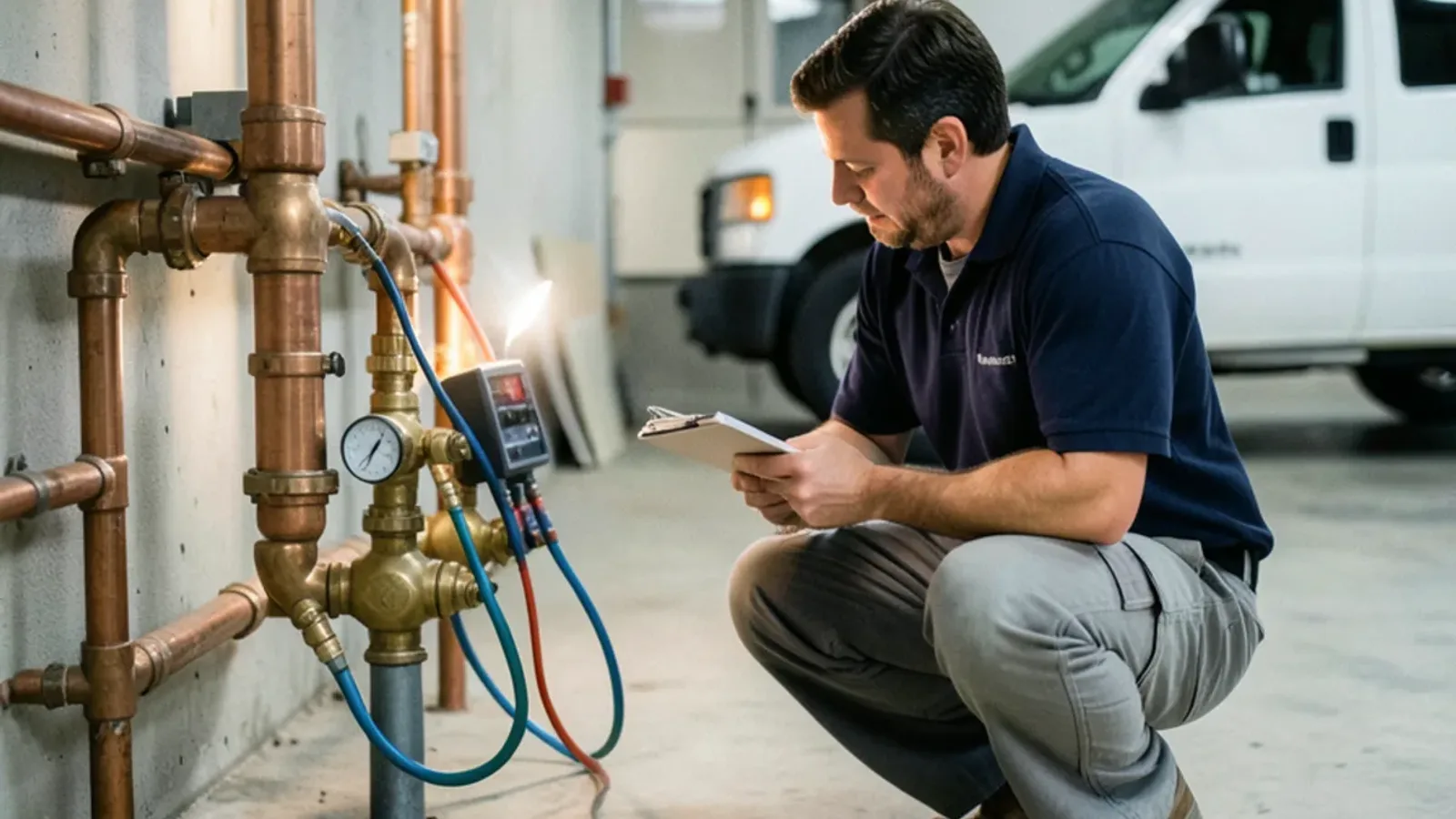
An annual backflow test checks that the backflow assembly on your building's water line still closes the way it was built to, so water from inside can't flow back into the public supply. A certified tester connects a differential pressure gauge to the test cocks, runs a set sequence and sends the readings to the water system.
In Warren, the city's cross connection ordinance requires a test right after installation, every year after that, and any time the assembly is moved or repaired.
Here's who that applies to, what happens during the visit, and what to do if an assembly fails.
Which businesses need a yearly backflow test
Any building with an existing or potential cross connection needs protection, and the assembly protecting it needs testing. A cross connection is any point where drinking water piping meets something it shouldn't mix with. Part 14 of the Michigan Safe Drinking Water Act sets the cross connection rules every public water system has to follow, and Warren adopted them in City Ordinance Chapter 41-33.
In practice, that covers most commercial and industrial buildings. Typical sources of risk include boilers with treatment chemicals, fire sprinkler lines, lawn irrigation, chemical dispensers at mop sinks, carbonated drink machines, dental and medical equipment, car washes and process water in a shop. Warren's Water Division surveys business facilities to find cross connections, and someone who knows the building's plumbing has to walk through with the city inspector.
Homes are starting to come into it too. Warren's 2025 water quality report says that starting in late 2025, residential underground irrigation systems need backflow testing, with results due every five years. The city estimates more than 20,000 homes have those systems, so it's working through five areas of the city, one per year, and notifying owners by mail or door tag.
What the tester checks on each type of assembly
Backflow assemblies all do the same job in different ways, and the test is different for each. The tester bleeds each test cock, attaches the gauge hoses, closes valves in a set order and watches how the pressure across each check valve behaves.
| Assembly | Where you usually find it | What a passing test shows |
|---|---|---|
| Reduced pressure zone (RPZ) | High-hazard lines such as chemically treated boilers, labs and some process water | The relief valve opens before the pressure difference falls below about 2 psi, and both check valves hold tight |
| Double check valve assembly | Lower-hazard lines and many fire sprinkler connections | Each check valve holds at least about 1 psi of pressure difference without leaking back |
| Pressure vacuum breaker (PVB) | Lawn irrigation, often outdoors above the highest sprinkler head | The air inlet opens at about 1 psi and the check valve holds |
The readings go on a test report along with the assembly's make, model, size, serial number and location, and the tester's own credentials. A shaky reading or a valve that won't hold is a fail, even if the assembly looks fine from outside.
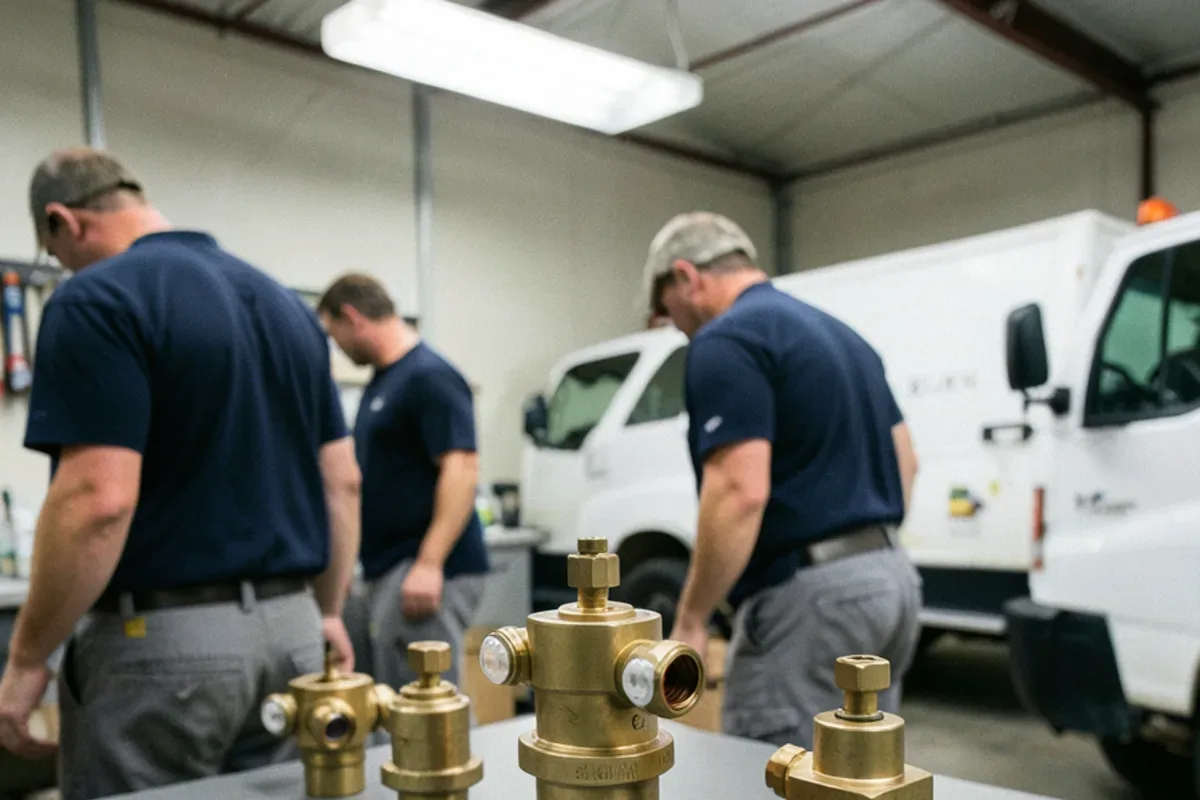
What happens during an annual backflow test?
The notice arrives
Warren's Water Division keeps records on every assembly in its system and sends owners an annual test notice. Other cities do the same through their own water departments.
Plan for a short shutdown
The tester closes the shutoff valve downstream of the assembly during the test, so whatever that line feeds is without water for a short while. For a building with a single assembly on the main service, that can mean the whole building.
The test sequence
Test cocks are flushed, the gauge goes on, and the tester checks each valve in order. Readings are written down as they are taken.
Back in service
Valves are reopened slowly and the tester confirms water is flowing to the building again.
The report goes in
In Warren, the tester sends a copy of the test report to the Water Division. Keep your own copy with the building's maintenance records.
Irrigation assemblies make sense to test in spring, right after the system is turned back on and charged. Testing a dry assembly tells you nothing, and testing in November means draining it again right after.
Who is allowed to test and repair a backflow assembly
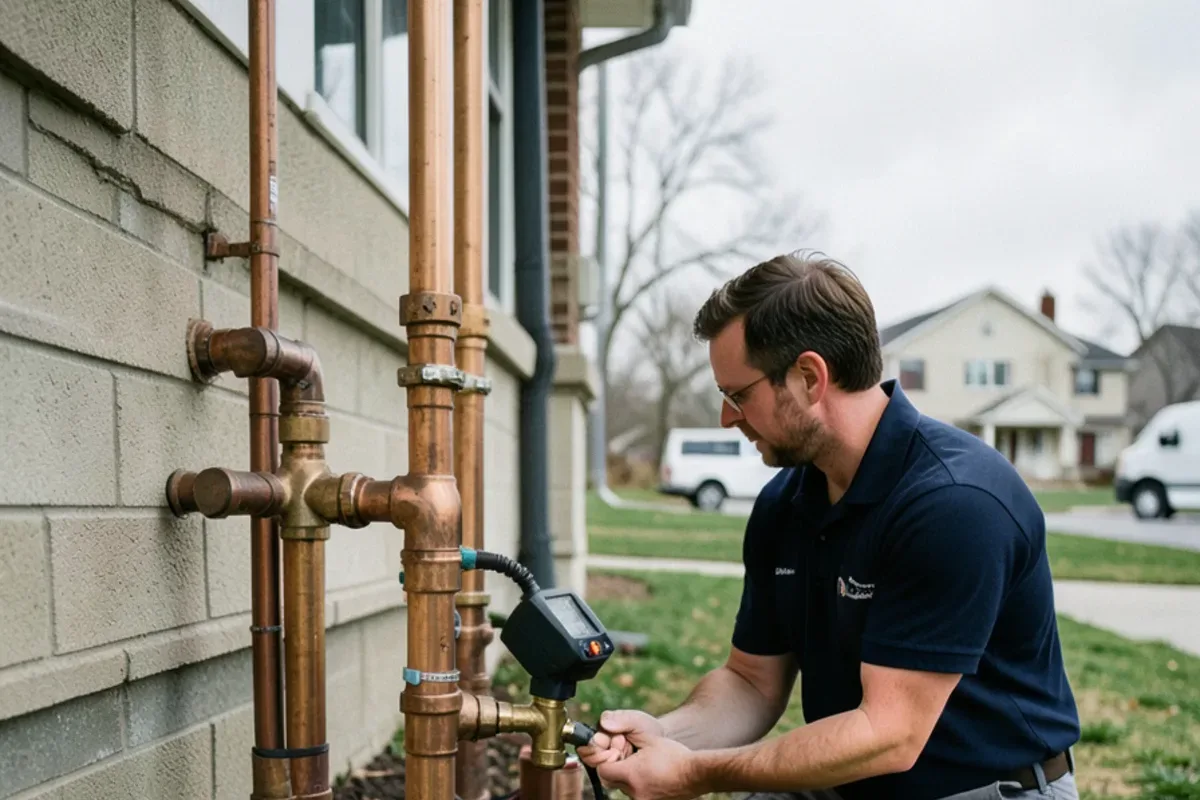
Michigan tightened this in 2023. An August 7, 2023 notice from EGLE says backflow testers need a valid ASSE 5110 certification and also a plumbing license as a master or journey plumber, or an apprentice working under direct supervision. Water systems are told to accept reports only from testers who hold both, and to check those credentials on each report. Warren's own brochure says the test has to be done by a state-certified backflow tester, and that work on a facility's internal plumbing has to be done by a master plumber.
Repairs usually mean a rebuild. The check discs, springs, seats and relief valve diaphragm are replaceable, and a kit restores most assemblies. Installing a new assembly or changing its size or location is a plumbing permit item in Warren, and the city also issues a cross connection permit for each device. After any repair, the assembly has to be retested by a certified tester before it counts as passing. Our backflow prevention and testing page covers installation and repairs in more detail.
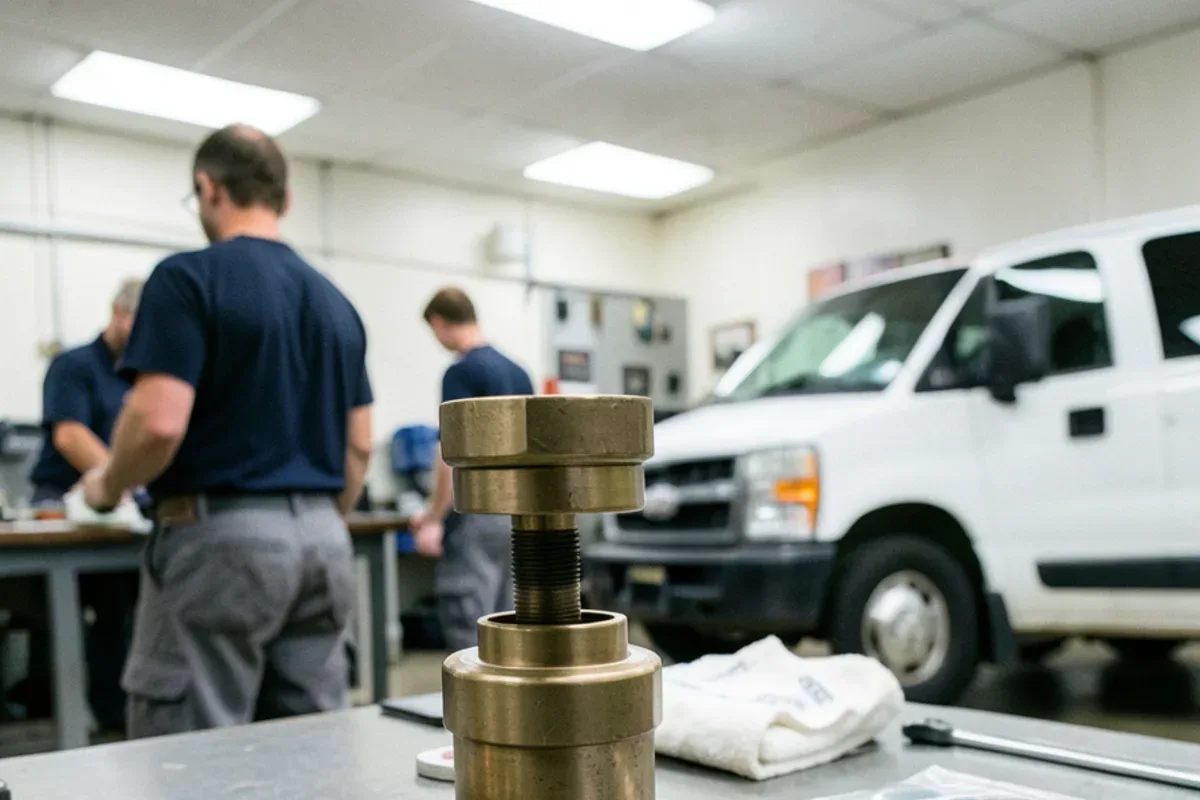
Test-day problems that have nothing to do with the assembly
A lot of failed or postponed tests come down to the plumbing around the assembly. The test depends on the two shutoff valves on either side of it. If the downstream valve is seized open or lets water by, the tester can't isolate the assembly, and a leaking valve can make good check valves read as bad. Old gate valves that haven't been turned since the last test are the usual culprits, and replacing them is plumbing work that comes before the retest.
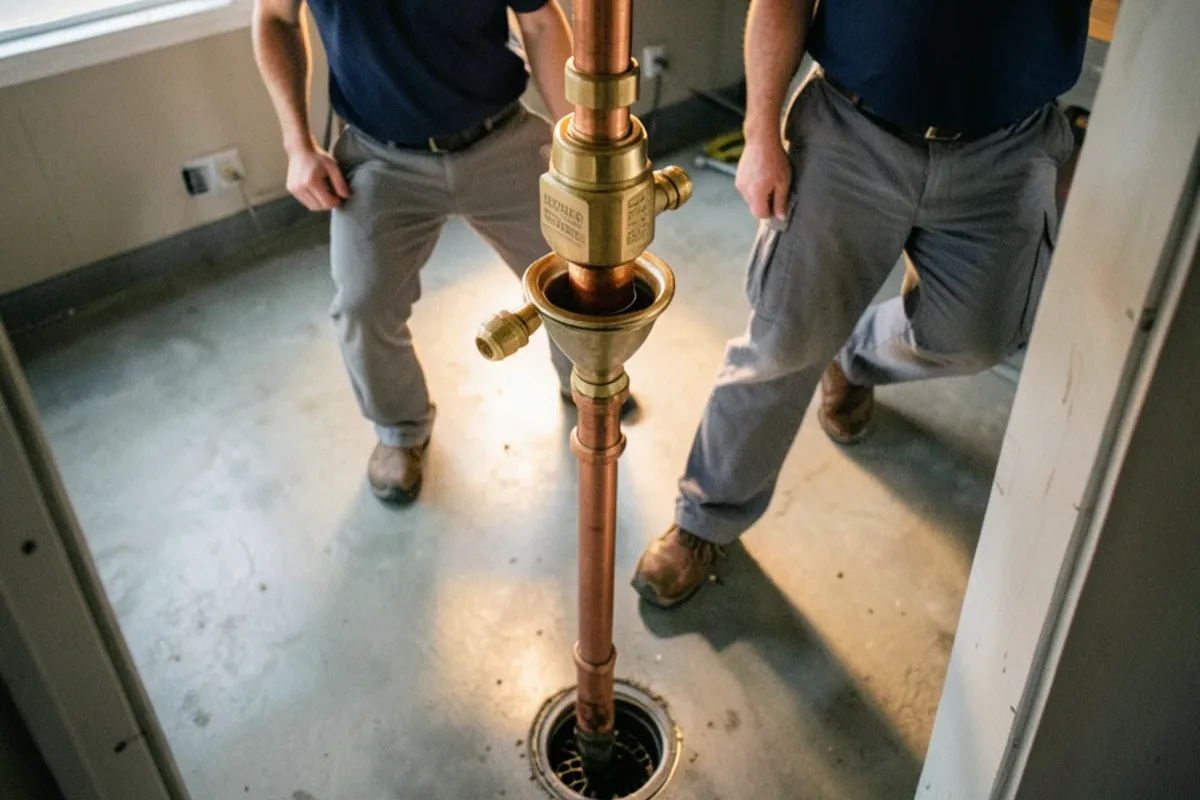
Access is the next issue. Assemblies end up above drop ceilings, behind racks in a storeroom or in a pit outside, and the tester needs room to reach every test cock. An RPZ also needs a place for its relief water to go. When the relief valve opens fully it can dump a lot of water fast, so an RPZ mounted over a finished floor with no drain is a flood waiting for its first failure. An air-gap funnel piped to a floor drain sized for that flow is the usual answer.
Then there's downtime. A building that can't lose water for even a short test, like a restaurant mid-prep or a medical office, can have a second assembly installed in parallel so one stays in service while the other is tested or rebuilt. It doubles the yearly tests, so it only makes sense where a shutdown really hurts. One more side effect: a backflow assembly on the main service closes the building's plumbing, so heated water can't expand back toward the street. That is why a water heater relief valve can start dripping after an assembly goes in, and why an expansion tank often comes up in the same conversation.
Why assemblies fail and what to do next
Debris is the most common cause. A chip of scale or sand from water main work lodges on a check seat and keeps it from sealing. Rubber parts harden and wear with age. Michigan winters add a third cause. An RPZ or vacuum breaker left full of water in an unheated spot can crack in a hard freeze, the same cold that splits the pipes along exterior walls of a house. An RPZ that dribbles or dumps water from its relief port between tests is telling you something is wrong inside.
If yours fails, get it repaired and retested promptly, and don't remove or bypass it. Pulling an assembly leaves the cross connection unprotected and the building out of step with the city's ordinance. For buildings with several assemblies, a commercial plumbing services visit can line up repairs and retests in one trip.
Each public water system in Michigan runs its own cross connection program under those state rules. An office building in Troy or an industrial site in Auburn Hills gets its notice and reporting instructions from that city's water department, so follow the address and deadline on the notice you received.
What an owner can handle and what goes to a certified tester
Owners and facility managers can do a lot to make the test go smoothly. Keep a list of every assembly with its location and serial number, keep the area around each one clear, and file each year's report. Watch RPZ relief ports for drips between tests. Book irrigation assemblies for spring and building assemblies for your slowest day of the week.
The test itself belongs to a tester who holds both credentials, and repairs to the assembly or the plumbing around it fall under a plumbing license. Shutoff valves that won't close, an RPZ with nowhere to drain, a new assembly or a relocated one, and a building that needs a parallel setup are all plumbing jobs that come before the retest. If your notice is due or an assembly just failed, give us a call and we'll go over the plumbing side of the repair and how to line it up with the retest.
Questions people ask about this
Will the water be shut off during a backflow test?
Yes, briefly, for whatever the assembly feeds. If the only assembly is on the main water service, the whole building loses water during the test, so schedule it for a quiet time. Buildings that can never be without water sometimes add a second assembly in parallel so one stays in service.
How long does a backflow test take?
Usually well under an hour for a single assembly in good shape. The City of Wyoming, Michigan, tells its utility customers most tests take 30 minutes or less unless repairs are needed. Seized shutoff valves, hard-to-reach test cocks or a failed check add time, and a repair means a second visit for the retest.
What happens if a backflow preventer fails its test?
It needs repair, usually a rebuild with new rubber parts and a cleaning, followed by a retest from a certified tester. The new passing report then goes to the water system. Leave the failed assembly in place while that happens, because removing or bypassing it leaves the cross connection unprotected.
Do Warren homes with lawn sprinklers need backflow testing?
Yes, under the program Warren began in late 2025. Results are due every five years instead of every year, and the city is working through five areas, notifying owners by mail or door tag when their part of the city comes up. Business assemblies stay on the annual schedule.
Want a plumber to look at your situation? We're on Stephens Rd in Warren.
(207) 419-2600